Snowshoe Hare Numbers Through the Cycle
It’s a peculiar thing, isn't it? One autumn, you’re walking through a poplar bluff or a dense spruce stand in Alberta, and every second clump of willows seems to explode with snowshoe hares. They’re everywhere – darting across trails, leaving tracks in every patch of snow, practically tripping over themselves. Then, just a few seasons later, you return to those same spots, and it’s eerily silent. The tracks are gone, the bush feels empty, and you wonder, "Where did all the hares go?" This dramatic fluctuation isn't just your imagination; it’s a classic, cyclical phenomenon that governs snowshoe hare populations, and understanding it can give you a deeper appreciation for the wild places we hunt and enjoy.
Understanding the Snowshoe Hare Cycle
The disappearing act of the snowshoe hare is one of nature's most iconic and well-studied population dynamics. It's a boom-and-bust cycle that has fascinated biologists and hunters for generations, particularly in the northern latitudes where these adaptable creatures thrive. This isn't just a random rise and fall; it's a predictable, albeit complex, dance of life and death that shapes entire ecosystems.
The 10-Year Boom and Bust
The most defining characteristic of snowshoe hare populations is their regular, often dramatic, oscillation, typically over a period of about eight to eleven years. Picture it like a roller coaster: a gradual climb, a thrilling peak where hares seem to be literally everywhere, and then a precipitous, almost catastrophic, drop. During the "boom" phase, hare numbers can explode, reaching densities of several thousand animals per square kilometre in prime habitat. I've personally walked into areas west of Whitecourt during a peak year where every second step seemed to flush another hare. The woods truly feel alive with them.
However, this abundance is fleeting. After the peak, numbers plummet, sometimes by as much as 90% or more, leaving vast stretches of their former territory almost devoid of hares. This "bust" period can last for several years before the slow, arduous climb back to abundance begins anew. This isn't unique to Alberta; it's a pattern observed across their North American range, from the Boreal Forest to the foothills. These cycles are not perfectly synchronized across vast distances, meaning one region might be on the upswing while another is still in the trough, but the underlying mechanism is consistent.
Predation Pressure as a Driving Force
While many factors contribute to the hare cycle, predation is undeniably one of the most significant and visible drivers, especially during the downswing. As hare populations climb, so too do the populations of their primary predators. Think of it: more food means more successful litters for lynx, coyotes, great horned owls, and various raptors. These predators experience a delayed response; their numbers peak a year or two after the hare peak. For an interesting deeper dive into one of these key relationships, check out our piece on Lynx and Snowshoe Hare Cycles.
When hares are abundant, life is good for predators. They're fat and healthy, and their offspring survive in greater numbers. But as hare numbers start to decline due to other stressors (like food scarcity or disease), this inflated predator population now exerts immense pressure on a dwindling food source. Suddenly, every remaining hare becomes a prime target. A single lynx, for instance, relies heavily on hares for its survival, and when hares are scarce, that lynx will hunt relentlessly. This intense, concentrated predation can quickly decimate an already stressed hare population, pushing it further into the "bust" phase. It's a classic ecological feedback loop, and it's a stark reminder of the interconnectedness of our wild ecosystems. You can see similar dynamics, albeit on a different scale, with other predator-prey relationships, like what we discuss in What Coyotes Do to Alberta Fawns.
Factors Influencing Hare Populations in Alberta
Beyond the dramatic predator-prey dynamics, a myriad of other environmental and biological factors play crucial roles in shaping the trajectory of snowshoe hare numbers in Alberta. It’s a delicate balance, and any shift in these variables can amplify or dampen the cyclical patterns.
Habitat and Food Availability
Snowshoe hares are creatures of dense cover, and the quality and availability of that habitat are paramount to their survival and reproductive success. They thrive in thick coniferous or mixed-wood forests, where a dense understory of young trees, shrubs, and especially willows provides both food and crucial refuge from predators. Think about the impenetrable tangle of a regenerating cutblock, a willow-choked creek bottom, or the dense edges of a boreal muskeg. These are prime hare real estate. When you’re scouting new areas, a tool like GoHunt can be incredibly useful for pinpointing these types of dense habitat features by reviewing satellite imagery, allowing you to quickly identify areas that might hold hares, or later, their predators.
During a population boom, hares will literally eat themselves out of house and home. Their sheer numbers can decimate the available browse, especially preferred species like willow, aspen, and various evergreens. This over-browsing leads to nutritional stress, weakening the hares, making them more susceptible to disease, and reducing their reproductive output. Imagine a deer yard that's been hammered by a harsh winter; the effect on hares during a population peak is similar, but self-inflicted by their own success. This habitat degradation forces them into more open areas where they are much more vulnerable, accelerating the decline. We touch on similar habitat considerations when we talk about Hunting a Boreal Muskeg Edge or Hunting a Willow Run in Farm Country.
Disease and Parasites
When animals live in high densities, disease and parasites become significant, often silent, killers. During the peak of a hare cycle, the sheer number of animals in close proximity creates ideal conditions for the rapid spread of pathogens. Diseases like tularemia, often called "rabbit fever," can sweep through dense populations, causing widespread mortality. These diseases are particularly effective at culling weakened or nutritionally stressed animals, which become more common as food sources dwindle and competition increases.
Beyond bacterial diseases, parasites also take a heavy toll. Hares can be plagued by fleas, ticks, mites, and various internal parasites like tapeworms and nematodes. While a healthy hare can typically withstand a moderate parasite load, the combination of high numbers, nutritional stress from over-browsing, and increased predator vigilance means that even a minor parasitic infection can become a fatal burden. An animal weakened by parasites is slower, less alert, and expends more energy, making it an easier target for predators or simply less able to cope with harsh environmental conditions. The cumulative effect of these health issues is a major contributor to the swift decline observed during the bust phase, and it's something we look at more broadly in our discussion of Ticks and Parasites in Big Game.
The Role of Climate and Environment
While cycles are inherent to snowshoe hare biology, the specific environmental conditions in Alberta can significantly influence the timing, intensity, and duration of these population swings. The vast landscapes and varied climates across the province mean that a hare cycle might play out slightly differently depending on where you are.
Winter Conditions and Snow Depth
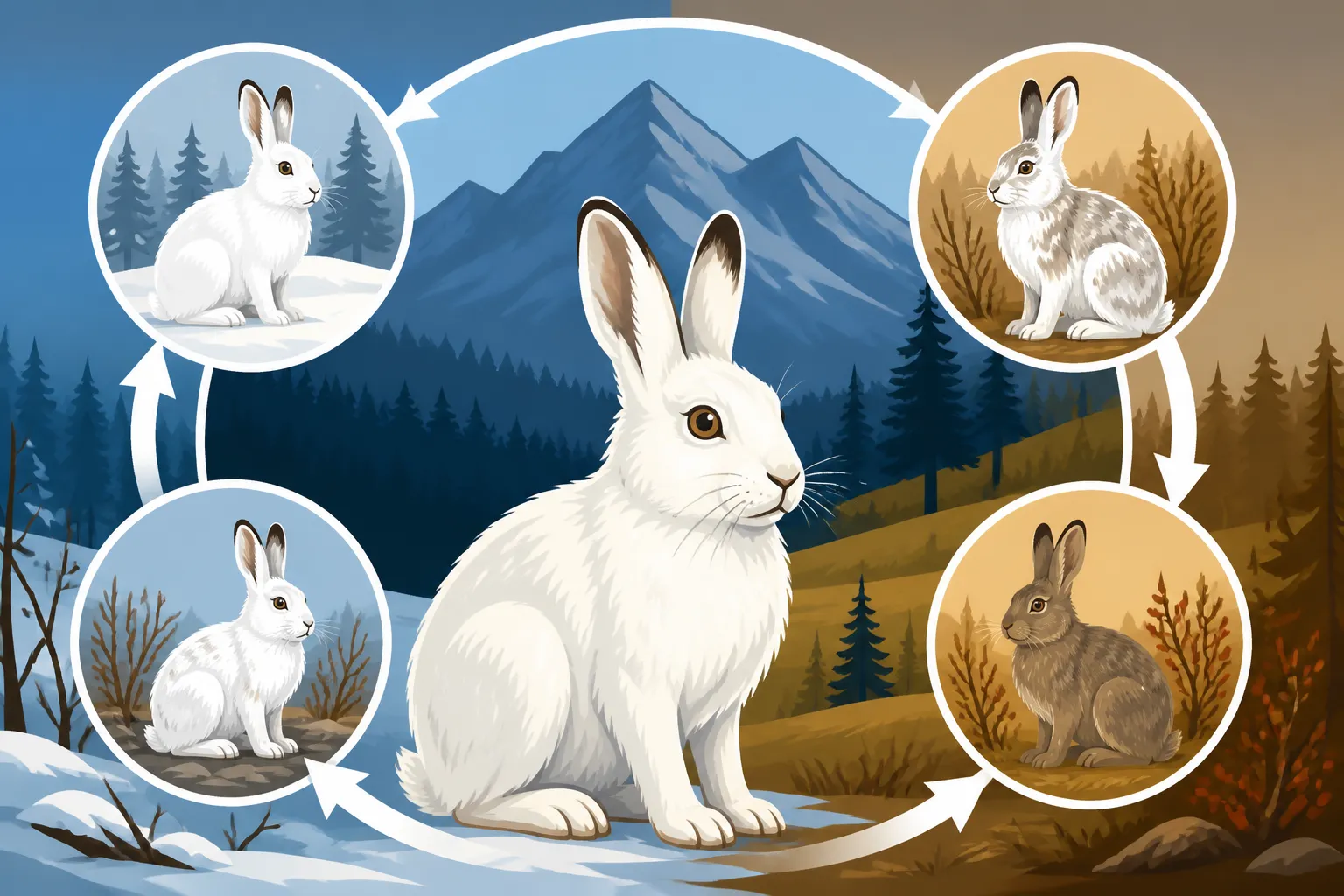
For an animal named "snowshoe" hare, winter conditions are incredibly important. The depth and duration of snow cover play a dual role in their survival. On one hand, deep, soft snow can provide critical insulation and access to elevated browse, allowing hares to reach branches they couldn't otherwise. Their large, fur-covered hind feet act like natural snowshoes, enabling them to move across the snow's surface with relative ease, giving them an advantage over many predators who might sink. This increased mobility helps them escape danger and conserve energy. This is a survival strategy unique to them in deep snow, which can be brutal for other species, as we discuss in Hunting Alberta Winter Weather Safely.
On the other hand, too much snow can bury food sources entirely, and extremely cold temperatures increase metabolic demands, requiring more food intake at a time when finding it is already challenging. Mild winters, conversely, can also be detrimental. Less snow cover means less protection from aerial predators like owls and hawks, and it can also make them more vulnerable to ground predators as they lose their "snowshoe" advantage. The camouflage provided by their white winter coat is also less effective in patchy or absent snow, making them stand out against the brown forest floor.
Regional Variations in Alberta
Alberta is a big province with vastly different ecosystems, and these regional differences can lead to variations in the snowshoe hare cycle. While the general boom-and-bust pattern holds true, the amplitude and specific timing might not be uniform. For instance, in the dense, continuous tracts of the northern Boreal Forest, where prime habitat is widespread and predator populations like lynx and wolves are well-established, the cycles might be more pronounced and synchronized over larger areas. Here, you'll find extensive areas like those discussed in Hunting Alberta's Northern Boreal Roads, which are perfect hare habitat.
Conversely, in the more fragmented "white area" (settled agricultural land) or the transitional Parkland regions, hare populations might be smaller, more isolated, and less prone to the extreme highs and lows seen further north. Here, habitat patches are often smaller, and predator communities might be different, with coyotes and great horned owls being more dominant than lynx. Local factors like specific logging practices (creating new browse-rich clearcuts), wildfire patterns (Hunting a Burned-Over Boreal Block), or even localized disease outbreaks can cause certain areas to deviate from the broader cycle. Using tools like GoHunt, you can examine specific WMUs or even quarter sections, observing habitat changes over time and how they might influence local hare numbers, giving you a predictive edge on where to find small game, or where their predators will be.
Implications for Hunters and Wildlife Enthusiasts
For those of us who spend time in Alberta's wild places, understanding the snowshoe hare cycle is more than just an academic exercise. It offers insights into the health of the ecosystem and can even help us plan our own adventures, whether we're looking to hunt hares, predators, or simply observe wildlife.
Predicting Hunting Success
If you're an avid small game hunter, knowing where the hare cycle is at can make a huge difference in your success. During a peak year, hare hunting can be incredibly productive and a fantastic way to spend a crisp winter day. The sheer abundance means you're almost guaranteed action, and it's a superb opportunity to introduce new hunters, especially youth, to the sport without the pressure of bigger game. Conversely, during a bust year, you might walk for hours through prime habitat and only see a handful of tracks, if any. Adjusting your expectations and strategies based on the cycle is key.
Beyond hunting hares themselves, their numbers profoundly impact the populations of their predators. When hares are abundant, so too are lynx, coyotes, and various raptors. If you're looking to hunt coyotes in Alberta farm country or even explore some areas for wolves, understanding the hare cycle in that region can give you an indication of the local predator density. A strong hare population often means healthier, more abundant predators, which can be an important consideration for your hunting plans. For instance, if you're out Calling Coyotes in Alberta Stubble, knowing the local hare population can inform your expectations for success.
Management and Conservation
From a wildlife management perspective, the snowshoe hare cycle is a perfect example of nature's self-regulating mechanisms. Unlike some other species, direct human intervention to manage hare populations (e.g., culling or supplementary feeding) is rarely necessary or effective. The cycle is primarily driven by natural ecological forces, and the populations rebound naturally after each crash. This highlights the incredible resilience of wild systems when they have healthy habitats.
The most important conservation effort related to snowshoe hares, therefore, revolves around habitat preservation. Maintaining diverse, dense forest ecosystems – including early successional stages that provide abundant browse and cover – is crucial for supporting robust hare populations, which in turn support the health of the entire food web. Healthy hare numbers are an indicator of a healthy forest, and a vibrant cycle means a vibrant ecosystem, from the smallest vole to the largest moose. The interconnectedness means that even efforts like minimizing human impact when Quad and Side-by-Side Rules on Crown Land are followed responsibly, contribute to preserving these vital habitats.
| Population Cycle Stage | Hare Numbers | Food Availability | Predator Abundance | Predator Hunting Success | Hare Health/Reproduction | Hunter Success (Hares) |
|---|---|---|---|---|---|---|
| Low (Bust) | Very Low | High | Low | Low | Increasing | Very Low |
| Rising | Increasing | Moderate/High | Increasing Slowly | Moderate | High | Low to Moderate |
| Peak (Boom) | Very High | Decreasing | High (Lagged) | Moderate/High | Decreasing | Very High |
| Falling | Decreasing | Low | Very High | High | Very Low | Low |
Disclaimer
This article is for general informational purposes only and does not constitute professional advice. Laws, prices and regulations vary by location and change over time. Consult a qualified professional for guidance on your specific situation.