Why Burned Ground Grows Big Bulls
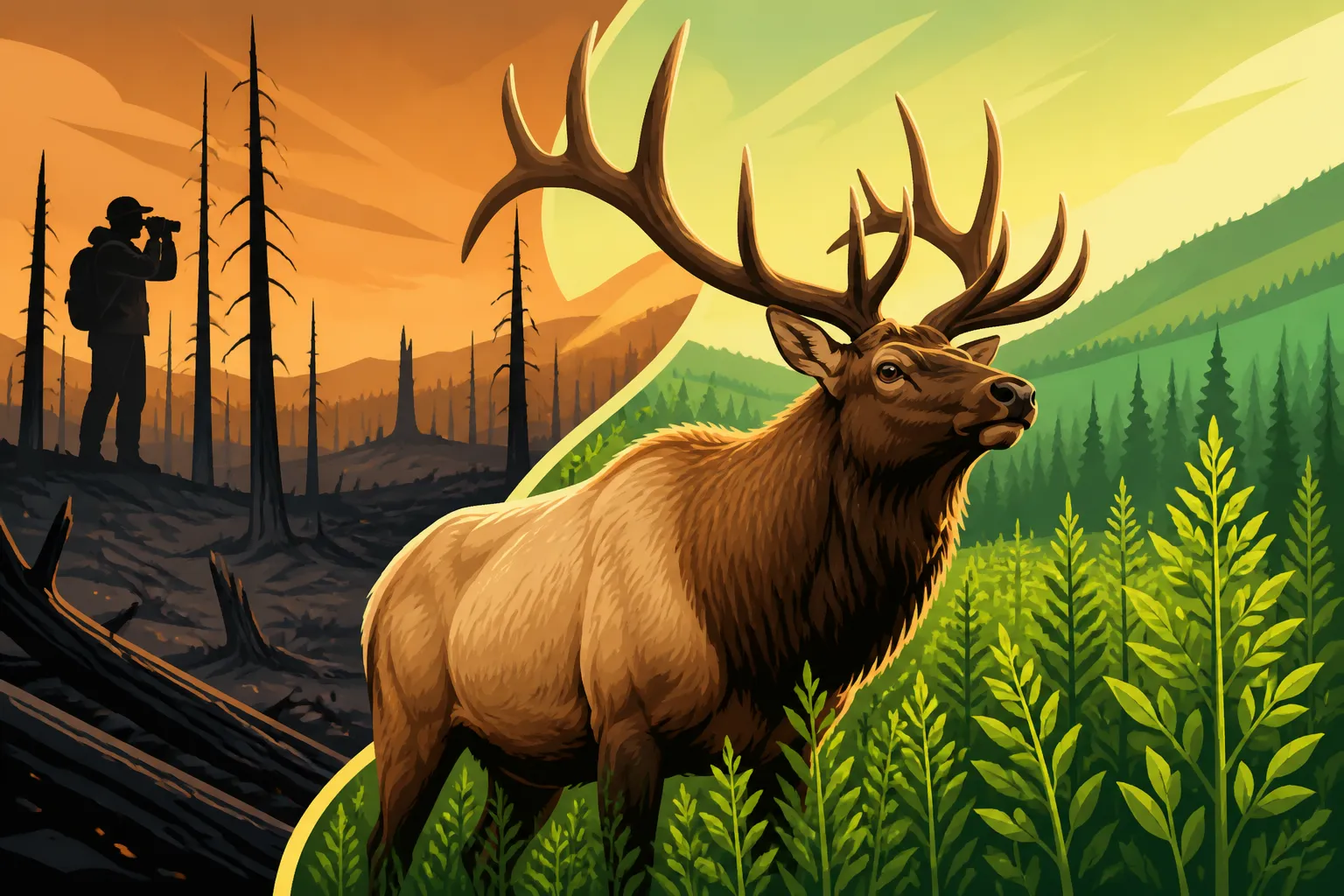
If you've spent any time hunting in Alberta's backcountry, particularly in areas that have seen recent wildfires, you've probably heard the old adage about "burns growing big bulls." It's more than just a campfire tale; there's a real, scientific reason behind why both elk and moose seem to flourish in these seemingly devastated landscapes, often producing some truly exceptional antler growth. Many hunters notice the phenomenon but don't quite understand the intricate ecological dance happening beneath their boots. This guide is going to peel back the layers and explain exactly why burned ground is such a goldmine for growing those massive antlers and how you can leverage this knowledge for a more successful hunt.
The Immediate Aftermath: Fire's Initial Impact on the Landscape
When a wildfire tears through a forest, it can look utterly destructive. Trees are scorched, underbrush is incinerated, and a pall of smoke hangs heavy in the air. Yet, beneath this scene of apparent devastation, a remarkable transformation begins almost immediately, setting the stage for a burst of new life that directly benefits our big game species. It's not just about what's destroyed, but what's created.
Destroying Old Growth and Competition
One of the most significant impacts of fire is the removal of dense, mature forest cover and accumulated undergrowth. Older forests, while providing some cover, often have a very shaded forest floor, which limits the growth of nutritious forage. The understory becomes thick with less palatable, woody shrubs or a dense layer of needles and leaves that choke out more desirable plants. Fire acts as a reset button, clearing out this older, less productive vegetation. It removes the competition from established, shade-loving species and creates a blank slate for new growth. This includes the removal of diseased or weakened trees, ultimately creating a healthier overall ecosystem in the long run. It's a harsh pruning, but one that rejuvenates the entire system.
Soil Enrichment and Nutrient Release
Think of a forest fire as a massive, natural fertilization event. As woody debris, leaf litter, and even standing timber burn, the organic matter is rapidly converted into ash. This ash, rich in minerals like potassium, calcium, and phosphorus, is then deposited back into the soil. Crucially, the heat from the fire can also unlock nutrients that were previously tied up in the soil or in the plants themselves, making them more readily available for new plant growth. It's like giving the soil a powerful shot of vitamins and minerals. The dark ash also helps the soil absorb more sunlight, warming it and promoting faster germination and growth once moisture returns. This sudden influx of accessible nutrients is a game-changer for the plants that are about to emerge.
Opening Up the Canopy
Before a fire, the forest canopy can be incredibly dense, particularly in coniferous stands. This thick overhead cover blocks sunlight from reaching the forest floor, making it difficult for many forage plants to thrive. A significant burn opens up this canopy dramatically, allowing sunlight to penetrate directly to the ground. This sudden exposure to light, combined with the enriched soil and removal of competition, creates ideal conditions for a wide array of pioneer plant species. These fast-growing, sun-loving plants are often highly nutritious and exactly what elk and moose need to pack on weight and grow impressive antlers. It changes the entire light dynamic of the landscape, turning a shaded, somewhat barren forest floor into a sun-drenched garden.
The Nutritional Boom: How Post-Fire Vegetation Fuels Growth
Once the smoke clears and the rains arrive, the burned landscape quickly transforms. What was once a black, barren expanse soon sprouts with a vibrant tapestry of green. This isn't just any green; it's often a buffet of highly nutritious plants perfectly tailored to fuel the growth of big game animals. It’s this change in diet that directly translates to bigger bodies and, yes, bigger antlers.
Forage Quality: A New Menu for Ungulates
The plants that colonize burned areas are often different from those found in mature forests. Instead of tough, woody shrubs or acidic needles, you'll find an abundance of fire-following species. These can include various grasses, forbs (broad-leafed herbaceous plants), and young deciduous saplings like aspen, willow, and birch. These pioneer species are typically more digestible and packed with higher concentrations of protein, energy, and minerals compared to the older vegetation they replace. For a bull moose or elk, this new menu is like switching from a diet of stale crackers to a prime steak dinner. They can consume more of it, digest it more efficiently, and extract maximum nutritional value. This superior diet, especially during crucial growth periods, is fundamental to antler development. You might observe animals moving extensively into these areas, as described in Glassing a Burn for Alberta Moose, specifically because of this improved forage quality.
Increased Palatability and Protein
Not only are the post-fire plants more nutritious, but they are also often far more palatable. Young, succulent shoots and leaves are easier to chew and swallow than older, tougher woody browse. This means animals spend less energy foraging and more time digesting and absorbing nutrients. The protein content in these regenerating plants can be significantly higher, which is critical for muscle development and, most notably, antler growth. Antlers are one of the fastest growing tissues in the animal kingdom, and their development demands an enormous amount of protein and minerals. When a bull has access to a protein-rich diet from early spring through summer, his body can dedicate more resources to growing a larger, denser rack. It's a direct correlation: better food equals bigger antlers.
Faster Regrowth and Accessibility
One of the often-overlooked benefits of burned areas is the speed at which vegetation regrows, and its increased accessibility. Without the dense canopy, plants on the forest floor receive ample sunlight and can regenerate quickly after the initial flush. This means a continuous supply of fresh, tender shoots throughout the growing season. Furthermore, the removal of heavy underbrush makes these plants much easier for large animals like elk and moose to access and consume. They don't have to push through thick tangles of old growth, saving energy and allowing them to feed more efficiently. In essence, the burn creates an open-concept buffet where the food is both delicious and easy to get to, making it a highly attractive feeding ground. This accessibility is a key factor in why you might find animals spending a considerable amount of time in Hunting a Burned-Over Boreal Block.
Habitat Dynamics: Why Bulls Thrive in Burned Areas
Beyond the immediate food benefits, burned ground also offers a unique set of habitat advantages that contribute to the overall health and success of bull elk and moose. It's not just about what they eat, but also where and how they live in these regenerating landscapes.
Shelter and Escape Cover Considerations
While a fresh burn might initially look devoid of cover, this changes rapidly. The standing dead trees (snags) left after a fire provide some thermal cover and structure, particularly in the immediate years post-fire. More importantly, the rapid regrowth of young deciduous trees and shrubs creates dense pockets of new cover relatively quickly. These younger plants offer excellent visual screening, allowing bulls to bed down and move undetected. They might not offer the same heavy timber cover as an old-growth forest, but the new, dense saplings provide a different kind of refuge. Furthermore, the mosaic pattern of a burn, often interspersed with unburned islands of timber or adjacent forest edges, offers a perfect combination of feeding grounds and nearby security. An animal can graze in the open burn then quickly duck into an unburned patch for cover, or into the new, dense, young growth that comes up rapidly. This balance is especially important when considering strategies like those for Elk Hunting Alberta's Foothills.
Reduced Predator Pressure
In some cases, burned areas can temporarily reduce predator pressure. Large predators like wolves or bears might initially find it harder to navigate or stalk prey in a wide-open, recent burn. The lack of dense, mature forest cover can make ambush tactics more challenging. While predators will certainly adapt, the initial changes in terrain might give ungulates a slight advantage in detecting threats. However, this is a nuanced point, as some burns, especially those with extensive new growth, can also provide ideal ambush cover once the vegetation reaches a certain height. It really depends on the size and type of the burn, and the specific predator populations in the area. Still, the altered landscape forces predators to adapt their hunting strategies, which can, at least temporarily, provide some relief to prey animals.
Year-Round Benefits for Herds
The benefits of burned ground aren't just seasonal; they can extend throughout the year. In spring and summer, the high-quality forage fuels growth and recovery from winter. In the fall, residual browse and protected pockets within the mosaic can still provide valuable food sources. Even in winter, the sparse snow cover in certain parts of a burn might make it easier for animals to access remaining vegetation or paw down to ground-level forage. The open nature of some burns also means less deep snow accumulation under dense canopy, which can be advantageous for animal movement. Ultimately, the consistent availability of quality food and appropriate cover throughout the annual cycle contributes to healthier, more robust herds, and consistently puts more energy into growing those impressive antlers year after year. How Wildfire Changes Game Range delves deeper into these long-term ecological shifts.
Hunting Burned Ground: Strategies for Success
Understanding why burned ground produces big bulls is one thing; successfully hunting them in these unique landscapes is another. It requires different scouting, different tactics, and a keen eye for how animals utilize these regenerating areas. The dynamic nature of burns means conditions can change dramatically year to year, demanding adaptability from the hunter.
Scouting the Regrowth Patterns
When hunting a burn, your scouting needs to be hyper-focused on the regrowth. Look for areas where specific forage plants are abundant – tender aspen saplings for moose, or lush forb patches for elk. Pay attention to the age of the burn; a one-year-old burn will look and hunt very differently from a five-year-old burn. Early burns will have lots of ground forage and exposed areas, while older burns might have thick, dense young timber that offers incredible cover. Satellite imagery is your best friend here. Services like GoHunt, for example, allow you to study the burn perimeter, identify unburned islands, and track the stages of regrowth. Look for where the burn meets unburned timber, agricultural fields, or water sources. These edges are often travel corridors and feeding transition zones. Animals will often bed in the remaining timber or dense young growth and move into the more open, nutritious parts of the burn to feed. This makes understanding Scouting With Satellite Imagery in Alberta absolutely critical.
Understanding Animal Movement in Burns
Animals in burned areas often move differently than in dense timber. The increased visibility in many burns means they might be more active during low light periods – dawn, dusk, and even overnight – retreating to denser cover during the day. However, those dense patches of new growth can be incredibly hard to penetrate, so understanding how to hunt Hunting an Old Logging Road in the Foothills or similar linear features within or adjacent to a burn becomes vital. Pay attention to wind direction, as the open nature of burns can make swirling winds more common. Watch for game trails leading into and out of dense pockets, connecting feeding areas with bedding sites. Calling can be incredibly effective in burns, as sound carries well, and animals might be more apt to investigate when the visibility is greater, but also keep in mind they can see you better too. Patience, glassing large expanses, and slowly working edges are often key.
Access and Safety Considerations
Hunting burned ground comes with its own set of practical challenges and safety concerns. The ground can be uneven, full of hidden holes from burned-out roots, and covered in unstable deadfall. These snags, or "widowmakers," can fall without warning, especially in windy conditions or after heavy snow. Access roads might be washed out or require different vehicle capabilities. If you're venturing deep into a large burn, consider the need for robust recovery gear, as getting stuck can be a real possibility in remote, challenging terrain. What to Do If You Get Stuck in the Bush is not just a good read, it's essential preparation. It's also easy to get disoriented in a large, uniform burn, so reliable navigation tools and a solid plan are paramount. Always let someone know where you're going and when you expect to return. The rewards of hunting these productive areas can be immense, but respectful and prepared hunters are safe hunters.
| Burn Age | Primary Vegetation | Nutritional Impact | Cover Type | Hunting Strategy Focus |
|---|---|---|---|---|
| 1-3 Years | Grasses, Forbs, Small Saplings | Very High Protein, Digestible | Limited (Snags, Low Scrub) | Glassing, Long Shots, Edges |
| 4-7 Years | Dense Young Deciduous Trees | High Protein, Abundant Browse | Excellent (Thick Saplings) | Still-hunting, Calling, Trails |
| 8-15 Years | Developing Forest, Mixed Growth | Moderate to High Browse | Good (Developing Canopy) | Traditional Still-hunting, Travel Routes |
This table illustrates that while burns are always beneficial, their specific characteristics change over time, requiring hunters to adapt their tactics to the prevailing conditions.
Disclaimer
This article is for general informational purposes only and does not constitute professional advice. Laws, prices and regulations vary by location and change over time. Consult a qualified professional for guidance on your specific situation.