Whether Alberta Outfitters Take US Dollars
One of the most common questions that comes up when hunters from the United States begin dreaming of an Alberta adventure is, "How do I even pay for this hunt?" The fluctuating exchange rate between the Canadian and US dollar can be a real head-scratcher, leaving many wondering if their hard-earned greenbacks will be accepted at face value. This guide will help clarify how Alberta outfitters typically handle US dollars, what your options are, and how to avoid any unwelcome surprises when booking your dream hunt.
The Currency Conundrum: Understanding Canadian vs. US Dollars for Your Hunt
It’s completely understandable why the question of currency can feel like such a hurdle. You’re planning a significant investment in a hunting experience, and you want to ensure your funds are handled efficiently and transparently. For many American hunters, the idea of converting thousands of dollars can be daunting, especially with rates constantly shifting.
Why the US Dollar Question Comes Up So Often
Alberta is a prime destination for big game hunting, attracting a significant number of hunters from south of the border each year. Whether it's the legendary whitetail bucks in the agricultural zones or the majestic bighorn sheep in the Rockies, Alberta offers world-class opportunities that are within reasonable travel distance for many US residents. Given this strong cross-border traffic, it's natural for hunters to hope for a straightforward payment process, ideally one that allows them to use their native currency without extra steps or confusing conversions. The frustration often stems from wanting to simplify logistics and predict the true cost, rather than dealing with fluctuating exchange rates.
Beyond just the convenience, there's often a lingering question about whether outfitters might offer a special rate or simply accept US currency at par, much like some border towns might. While that might happen in very specific retail situations, a professional outfitting service handling large sums will always be dealing with official exchange rates. It's a business, after all, and they need to ensure they receive the agreed-upon amount in their operating currency, which is Canadian dollars. The dynamic nature of currency markets means that what a US dollar is worth today can be slightly different tomorrow, and these small shifts can add up over the course of a multi-thousand-dollar hunt.
The Legal Tender Aspect
It's important to remember that the legal tender in Canada is, of course, the Canadian dollar. While many businesses, especially those catering to tourists or cross-border clients, might choose to accept foreign currency as a courtesy, they are under no legal obligation to do so. This means an Alberta outfitter is perfectly within their rights to insist on payment in Canadian dollars. If they do accept US dollars, they will invariably apply their own exchange rate to the transaction.
This exchange rate might not always perfectly align with the "mid-market" rate you see on financial news sites. Businesses often factor in a small buffer for conversion fees they incur or for market fluctuations. Therefore, if an outfitter does accept US currency, it's crucial to understand what rate they will be using and how that rate is determined at the time of payment. Never assume that your US dollars will be taken at a 1:1 ratio or at the exact interbank rate you might find online. Always clarify this detail well in advance of sending any money.
How Alberta Outfitters Typically Handle US Dollars
When it comes to payment, Alberta outfitters generally fall into one of three categories regarding US dollars: direct acceptance at a posted rate, requiring payment strictly in Canadian dollars, or a hybrid approach. Knowing which one your chosen outfitter uses is paramount to budgeting and planning.
Direct Acceptance at a Posted Rate
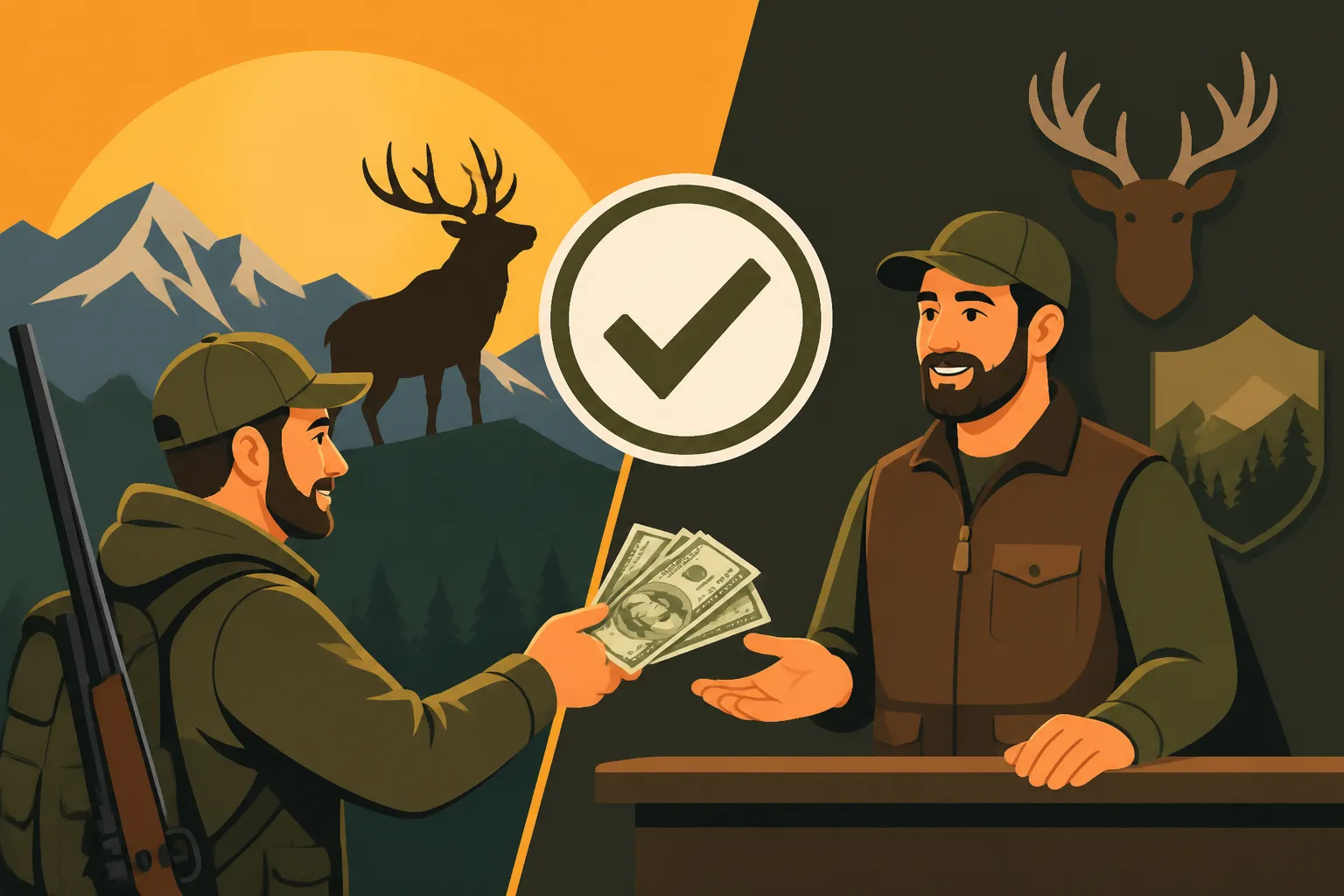
Some Alberta outfitters, recognizing their significant American clientele, will indeed accept US dollars directly. This can be a huge convenience for hunters who prefer not to deal with bank transfers or credit card foreign transaction fees. However, this convenience often comes with a trade-off: the exchange rate applied by the outfitter might be slightly less favorable than what you could achieve through a bank or credit card company. The outfitter needs to protect their business from currency fluctuations and the costs associated with converting the foreign currency they receive into Canadian dollars for their own operations.
For example, an outfitter might quote a hunt price in Canadian dollars, say $8,000 CAD, and then offer a US dollar equivalent of $6,500 USD, even if the interbank rate would suggest $6,300 USD. That difference accounts for their risk and administrative costs. This rate should be clearly communicated to you upfront, ideally in writing. If an outfitter offers this option, ensure you understand how that rate is determined – is it a fixed rate for the duration of your booking, or does it fluctuate with the market right up until the payment is processed? Asking these detailed questions upfront can prevent misunderstandings down the line.
Requiring Payment in Canadian Dollars
Many Alberta outfitters simply require all payments to be made in Canadian dollars. This is a very common and perfectly legitimate business practice. In this scenario, the responsibility for currency conversion falls squarely on the hunter. This means you will need to actively convert your US dollars into CAD before sending payment, or your bank or credit card company will do it for you at the time of transaction.
If an outfitter requires CAD, you'll typically have options like bank wire transfers, credit card payments, or occasionally a Canadian money order. Each method has its own implications for exchange rates and fees. For instance, a bank wire transfer will use your bank's exchange rate on the day the transfer is processed, and both your bank and the outfitter's bank might levy transfer fees. Using a credit card for payment means your card issuer will handle the conversion, often applying their own exchange rate and potentially a foreign transaction fee. It’s critical to factor these potential costs into your overall budget for the hunt. If you're looking into these options, our article on Currency and Payment on an Alberta Hunt can offer more detailed insights.
Hybrid Approaches and Negotiation
In some cases, you might encounter an outfitter who uses a hybrid approach. Perhaps they'll accept your initial deposit in US dollars at an agreed-upon rate, but require the final balance to be paid in Canadian dollars closer to the hunt date. This could be a way for them to manage some of their immediate operating costs while protecting against longer-term currency shifts. Or, in a less common scenario, an outfitter might offer to "lock in" a US dollar price for your hunt if you pay a substantial portion upfront, essentially absorbing some of the exchange rate risk themselves.
While negotiation is always a possibility in any business transaction, it’s generally not something you should expect with outfitting services. These are well-established businesses with set pricing structures. If you do attempt to negotiate on currency terms or payment methods, ensure that any agreements are put in writing, detailing the exact exchange rate, fees, and timelines. The goal is clarity, not confusion. Before you even get to this stage, make sure you've covered all your bases. For a deeper dive into the financial aspects, checking out What an Alberta Guided Hunt Costs can be very helpful.
Best Practices for Paying Your Alberta Outfitter
Navigating international payments doesn't have to be a headache. With a bit of planning and clear communication, you can ensure a smooth transaction process for your Alberta hunting adventure. The key is to be proactive and informed.
Asking the Right Questions Upfront
This is perhaps the single most important piece of advice: ask all your currency and payment questions before you sign any contracts or send any money. Don't assume anything. When you first make contact with an outfitter, whether through their website or a service like BookYourHunt or GoHunt, make sure these financial details are part of your initial conversation. Here’s a checklist of questions you should definitely cover:
- "What currency do you prefer for deposits and final payments?"
- "Do you accept US dollars? If so, what exchange rate do you use, and how is it determined (e.g., daily bank rate, a fixed rate, etc.)?"
- "Are there any additional fees for processing payments in US dollars or for using a credit card?"
- "What payment methods do you accept (e.g., bank wire, credit card, check, money order)?"
- "When are the deposit and final payment due, and are they due in the same currency?"
Getting these answers in writing, perhaps as part of your booking confirmation or via email, will provide you with a clear roadmap and protect you from any surprises. A reputable outfitter will be transparent and happy to answer these questions fully. For a comprehensive list of what to discuss with potential guides, our guide on Questions to Ask Before Booking is an excellent resource.
Exploring Your Payment Options for Canadian Dollars
If your outfitter requires payment in Canadian dollars, you have several reliable ways to handle the conversion and transfer. Each comes with its own set of pros and cons regarding fees, exchange rates, and convenience.
| Payment Method | Pros | Cons | Typical Exchange Rate Source |
|---|---|---|---|
| Bank Wire Transfer | Secure for large amounts; direct transfer. | Can have fees from both sending and receiving banks; slower. | Your bank's daily rate. |
| Credit Card | Convenient; quick; sometimes offers rewards. | Foreign transaction fees (check your card); outfitter may add surcharge. | Your credit card company's rate. |
| International Money Order / Bank Draft | Relatively secure; good for smaller, fixed amounts. | Slower to process; less flexible; can be difficult to track. | Issuing bank's rate at purchase. |
| Bring Cash (CAD) | No direct conversion fees at point of sale (if you pre-convert). | Customs declaration limits; security risk; less convenient for large sums. | Bureau de Change or your bank's rate. |
Bank Wire Transfer: This is a common and secure method for substantial payments. Your bank will convert the US dollars to Canadian dollars at their prevailing exchange rate on the day of the transfer. Be sure to inquire about any wire transfer fees from your bank, and ask the outfitter if their bank charges a receiving fee. These fees can sometimes add up, so factor them into your overall cost.
Credit Card: Using a credit card is often the most convenient. Your credit card company will handle the currency conversion based on their exchange rate for international transactions. However, many credit cards charge a "foreign transaction fee," typically around 2-3% of the total amount. Some outfitters might also add a surcharge for credit card payments to offset their processing fees. It's vital to check your specific card's terms and conditions before you pay. Also, if given the option to pay in USD or CAD at the point of sale in Canada, always choose CAD – letting your bank do the conversion usually results in a better rate than the merchant's "dynamic currency conversion."
International Money Order/Bank Draft: While less common for large outfitter payments due to their slower nature, these can be an option. You purchase them from your bank in Canadian dollars. They are secure as they are guaranteed by the issuing bank, but they can take time to clear, so plan well in advance.
Cash: Bringing a large amount of cash across the border has specific declaration requirements with Canadian customs. For instance, any amount of cash or monetary instruments equal to or greater than $10,000 CAD (or its equivalent in foreign currency) must be declared. While some hunters might prefer to pay a final small balance in cash, it's generally not recommended for large deposits or full hunt payments due to security risks and logistical hurdles. Always plan for primary payments through banking channels. When considering your overall trip budget, including expenses like Tipping an Alberta Guide, keep these payment methods in mind.
Locking in Exchange Rates and Avoiding Surprises
The fluctuating nature of currency markets means that the cost of your hunt in US dollars can change from the day you book until the day your final payment is due. This uncertainty can be stressful. While you can't completely eliminate it, you can take steps to minimize the impact.
If you are booking a hunt well in advance, say Booking an Alberta Hunt a Year Ahead, consider talking to your bank or a foreign exchange specialist about options to lock in an exchange rate for future payments. Some financial institutions offer services that allow you to convert funds at today's rate for a future transfer, providing certainty. For smaller amounts, diligently monitoring exchange rates and converting your funds when the rate is favorable might be an option, but this involves more risk and speculation. When it comes to significant financial commitments like booking a hunt, having a clear understanding of the exchange rate that will be applied to your payments, and when, is key to sound financial planning. This foresight also extends to other crucial aspects of your trip, like organizing necessary travel documents and understanding rules such as What Non-Resident Aliens Must Do or even Crossing the Border With a Rifle. Always remember to factor in potential currency swings into your overall Travel Insurance for a Hunting Trip considerations, as unexpected financial shifts can also impact your peace of mind.
Disclaimer
This article is for general informational purposes only and does not constitute professional advice. Laws, prices and regulations vary by location and change over time. Consult a qualified professional for guidance on your specific situation.