What Non-Resident Aliens Must Do
Hunting in a new country, especially as a non-resident alien, can feel like navigating a dense, unfamiliar forest where every turn brings a new regulation or requirement. Many hunters dream of Alberta's incredible big game and vast landscapes, but the thought of deciphering all the permits, forms, and rules often feels overwhelming. This comprehensive guide is here to untangle that complexity, walking you step-by-step through exactly what you need to do to make your Alberta hunting adventure a reality.
Understanding Non-Resident Alien Status and Alberta's Rules
When you're looking to hunt in Alberta, the first crucial step is to understand how the province classifies you. This isn't just a formality; it directly dictates which rules apply to you, what permits you'll need, and how you're even allowed to hunt. Skipping this foundational understanding can lead to frustrating delays, or worse, legal issues before you even set foot in the bush.
Defining "Non-Resident Alien" for Alberta Hunting
In Alberta, a "non-resident alien" is essentially anyone who isn't a resident of Alberta or a resident of any other Canadian province or territory. This means if you're coming from the United States, Mexico, or any other country outside of Canada, these are the rules you'll be operating under. It's a specific designation that triggers a set of unique requirements, particularly when it comes to guiding services and licensing. It's not just about where you live; it's about your legal residency status in relation to Canada itself.
For instance, someone from Montana might be a "non-resident" to Alberta, but not a "non-resident alien" if they hold Canadian citizenship, even if they reside primarily in the U.S. Conversely, a U.S. citizen living in Alberta for work on a temporary visa might still be considered a non-resident alien for hunting purposes, depending on the length and nature of their stay as defined by the provincial regulations. Always double-check the specific definitions in the current Alberta hunting regulations to ensure you correctly identify your status.
Why the Rules Are Different for You
The primary reason for these differentiated rules boils down to conservation, management, and maintaining opportunities for resident hunters. Alberta's wildlife is a shared resource, and the province manages it carefully. By requiring non-resident aliens to engage a licensed outfitter or hunter host, the province ensures that these hunters are accompanied by someone knowledgeable about local regulations, species identification, fair chase principles, and safe hunting practices. This also helps distribute hunting pressure and ensures that harvest levels remain sustainable, while providing economic benefits through the outfitting industry.
Another aspect is access. While Canadian residents have certain rights and privileges for accessing Crown land, non-resident aliens often have more restricted access or must adhere to specific conditions. The outfitter or host acts as a crucial link, often possessing the necessary permits or relationships to access private lands or guide effectively on public lands, ensuring a safe and legal experience for all involved. It’s a system designed to protect the resource, the hunter, and the integrity of the hunting experience.
Initial Steps to Consider
Before you even start dreaming about that trophy mule deer or a big bull moose, the very first thing you need to do is get your ducks in a row with some preliminary research. This means diving deep into the Alberta hunting regulations, which are updated annually. You need to know what species you're interested in, when their seasons are, and in which Wildlife Management Units (WMUs) you can hunt them. This initial planning phase will shape every subsequent step you take.
Consider also your budget and time commitment. Guided hunts for non-resident aliens can vary significantly in price and duration depending on the species and the outfitter. Understanding these factors early on will help you narrow down your choices and set realistic expectations. It’s a good idea to chat with experienced outfitters or hunting consultants who specialize in Alberta hunts for non-resident aliens. They can offer invaluable insights into the feasibility of your dream hunt and help you avoid common pitfalls.
The Essential Documents: Licenses, Permits, and More
Once you understand your status and the general landscape, it's time to gather the necessary documentation. This is where many hunters get tripped up, as there are several distinct pieces of paper and digital records you'll need to secure before you can legally hunt in Alberta. Think of it like a puzzle, and each piece is crucial.
The Wildlife Identification Number (WIN) Card
Your journey to hunting in Alberta begins with the Wildlife Identification Number (WIN) card. This is a mandatory, permanent identification number issued by the provincial government that all hunters, anglers, and trappers must possess. It's not a license itself, but rather a prerequisite for purchasing any hunting or fishing license in Alberta. You can apply for a WIN card online through the AlbertaRELM website or in person at a designated license issuer.
Getting your WIN card is usually a straightforward process, but it's essential to do it well in advance of your hunt. There might be a slight processing delay, and you don't want to be scrambling at the last minute. This card is your unique identifier within Alberta's wildlife management system, ensuring that all your licenses and draw applications are correctly associated with you. It simplifies the process for repeat visits, as your WIN card remains valid for many years and is easily renewable. You can find more details on Getting an Alberta WIN Card.
Purchasing Your Wildlife Certificate and Licences
After securing your WIN card, the next critical step is purchasing your annual Alberta Wildlife Certificate. This certificate is also mandatory for all hunters and must be purchased annually. It covers general conservation efforts, wildlife management, and access to the system. Once you have a valid Wildlife Certificate, you can then purchase the specific hunting licenses for the game you intend to pursue.
As a non-resident alien, you'll be looking at specific non-resident alien licenses. For example, if you're hunting whitetail deer, you'll need a Non-Resident Alien White-Tailed Deer Licence. The cost of these licenses can vary depending on the species. Remember, you cannot purchase these individual licenses without first having your WIN card and a current Wildlife Certificate. It’s a hierarchical system designed to ensure every hunter is properly identified and contributing to conservation. Information on Alberta Resident Deer Licence Cost might give you an idea of the resident side, but always check for the non-resident alien specifics.
Understanding Special Licence Draws
Many of Alberta's most sought-after big game species, and even certain prime WMUs for more common species, are managed through a special licence draw system. This includes highly desirable animals like moose, elk, bighorn sheep, and pronghorn. As a non-resident alien, you are eligible to apply for these draws, but the process is slightly different than for residents. Generally, non-resident aliens must apply through a licensed Alberta outfitter. This outfitter will submit your draw application on your behalf.
The draw system is based on priority points. If you apply for a draw and are unsuccessful, you typically accumulate a priority point, which increases your odds in subsequent years. Understanding How Alberta's Draw Application Works and Alberta's Draw Priority Point System is key if you're dreaming of a limited-entry hunt. Many outfitters specialize in securing these draw tags for their clients, leveraging their knowledge of the system and sometimes their specific outfitter allocations. This is where a good outfitter can be invaluable, guiding you through the species, WMUs, and draw odds to maximize your chances of success.
Mandatory Guiding or Hunter Host Requirements
This is arguably the most significant difference between hunting as a resident and hunting as a non-resident alien in Alberta. With very few exceptions, you cannot simply arrive in Alberta and go hunting on your own. The province has strict rules in place to ensure you are accompanied.
The Mandatory Requirement: Guided or Hunter-Hosted
For nearly all big game species, non-resident aliens are required to either hire a licensed Alberta outfitter and professional guide, or be accompanied by an eligible Alberta resident who acts as a "hunter host." This isn't optional; it's a fundamental pillar of Alberta's hunting regulations for international visitors. The idea is to ensure safety, ethical hunting practices, and compliance with the law.
If you are coming to Alberta from outside Canada, you absolutely need to understand When You Must Hunt With a Guide. This rule applies to species like deer, moose, elk, bear, and sheep. Without an outfitter or a designated hunter host, you will not be able to legally hunt big game in Alberta. This is a critical point that often surprises international hunters who might be used to more permissive regulations in their home countries.
Working with an Alberta Outfitter
The most common route for non-resident aliens is to book a hunt through a licensed Alberta outfitter. These outfitters are businesses that specialize in organizing hunts, providing guides, gear, food, and often accommodation. They hold specific "allocations" from the government for certain species and WMUs, which means they are authorized to guide a certain number of non-resident alien hunters for those animals in those areas.
When choosing an outfitter, research is paramount. Look for established operations with good reputations. Websites like BookYourHunt can be a great starting point for finding reputable outfitters and comparing packages. Don't hesitate to ask for references from past clients and check what's included in their packages. A good outfitter will handle most of the logistical heavy lifting, from license applications to field dressing and trophy preparation, making your hunt as smooth as possible. Questions about What an Alberta Guided Hunt Costs are always important to cover upfront.
Finding a Qualified Hunter Host
If you have a close friend or family member who is a resident of Alberta, they might be able to act as your "hunter host." This is a more complex option but can be viable if you have those personal connections. A hunter host must be an Alberta resident, be at least 18 years old, possess a valid WIN card and Wildlife Certificate, and be eligible to hold the same license as the non-resident alien they are hosting. Critically, a hunter host cannot charge a fee for their services, nor can they host more than two non-resident aliens per year.
The hunter host is legally responsible for ensuring the non-resident alien complies with all Alberta hunting regulations. This means they must accompany the non-resident alien at all times while hunting. This is a serious commitment, and both parties must understand the responsibilities involved. While platforms like GoHunt might focus more on self-guided opportunities within the US, the principle of thorough research and understanding regulations still applies if you're exploring the hunter host route. For more detailed information on this path, explore Hunting Alberta With a Hunter Host.
Navigating the Draw System and Specific Species Rules
Even with your documents in order and a guide or host lined up, understanding the nuances of Alberta's draw system and specific species rules is critical. This is where your hunting strategy really takes shape, deciding what you'll pursue and where.
Applying for Special Licence Draws as a Non-Resident Alien
As mentioned, if you're aiming for popular species like moose, elk, or bighorn sheep, you'll almost certainly be entering a draw. For non-resident aliens, this typically means your chosen outfitter will apply for the draw on your behalf. They will use their outfitter allocation, which is essentially a quota they receive for specific special licenses in certain WMUs. This system ensures that outfitters are operating within defined limits and that opportunity is managed.
It's crucial to discuss draw strategies with your outfitter well in advance. Some WMUs require many priority points to draw a tag, while others might be more accessible. Your outfitter will know the historical draw odds and can advise you on the best WMU choices to maximize your chances of success, balancing your desired species with the reality of the draw system. Remember, being successful in a draw resets your accumulated priority points for that species, making it a significant decision.
Species Available and Their Specific Regulations
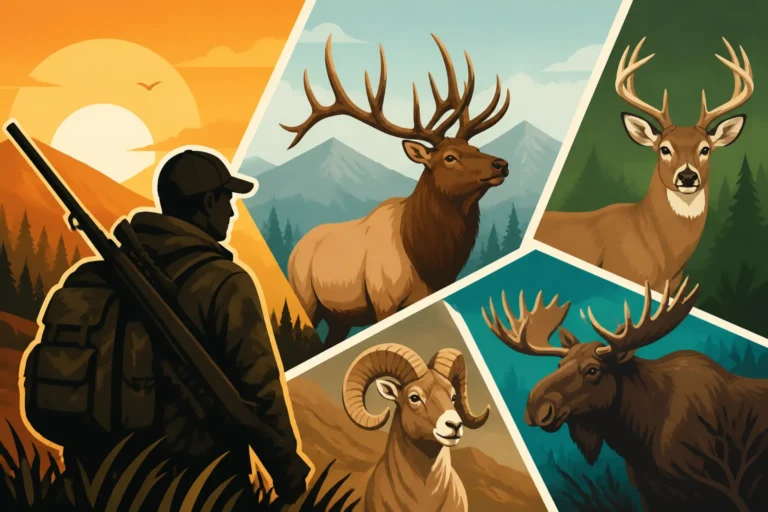
Alberta offers a fantastic diversity of big game. Whitetail deer and black bears are often available on general licenses, meaning you don't typically need to enter a draw to hunt them (though specific WMUs might have draw requirements for antlerless tags, for example). Mule deer are also popular, with general seasons in many areas but strict antler point restrictions in others, such as the three-point rule in many WMUs. Elk and moose are almost exclusively draw-only for non-resident aliens.
Each species comes with its own set of rules regarding season dates, legal weapon types, antler point restrictions (for deer and elk), and bag limits. For instance, Alberta Big Game Season Dates will show you how seasons vary drastically by WMU and species. It's imperative that you and your guide or host are intimately familiar with these rules for your chosen species and WMU. Violating these specific regulations, even unintentionally, can result in severe penalties.
Planning for Draw Odds and Priority Points
Understanding priority points is a game-changer for draw species. The more priority points you have, the better your chances of drawing a tag in competitive WMUs. If you're new to the Alberta system, you'll start with zero points for each species. This means that for highly coveted tags, it might take several years of applying to accumulate enough points to be successful. This is why many non-resident aliens plan multi-year hunting adventures or focus on species and WMUs with more favourable draw odds initially.
Your outfitter can help you strategize around priority points. They might suggest applying for an easier-to-draw WMU in your first year while still building points for a dream hunt in a tougher unit for a future season. Alternatively, they might have access to outfitter allocations that bypass the general draw system for specific hunts, though these are often premium packages. Platforms like GoHunt often provide detailed draw odds and strategy resources for various jurisdictions, and while their primary focus may not be Alberta, the principles of understanding draw mechanics are universal. It's all about playing the long game for those truly special opportunities.
Firearms, Transportation, and Border Crossing
Bringing your hunting firearms into a foreign country like Canada requires meticulous preparation. This isn't an area where you can afford to be casual. Canadian customs and firearms laws are strict, and missteps can lead to confiscated firearms, fines, and even denial of entry.
Transporting Firearms into Canada
First and foremost, you must ensure that your firearm is legally importable into Canada. Handguns are generally prohibited for hunting by non-residents, as are certain types of semi-automatic rifles and shotguns often classified as "restricted" or "prohibited" in Canada. For typical hunting rifles and shotguns, they must be classified as "non-restricted." Check the Canadian Border Services Agency (CBSA) website for the most up-to-date information on prohibited and restricted firearms.
When transporting your firearm, it must be unloaded and stored securely. For non-restricted firearms, this typically means a locked case or container, and it should not be readily accessible. Ammunition must be stored separately from the firearm, also securely. Flying with firearms has additional rules, requiring them to be in a hard-sided, lockable case and declared to the airline at check-in. Refer to Transporting Firearms Into Alberta for more specific guidelines.
The Non-Resident Firearm Declaration Form
This form, officially known as RCMP 5589, is your golden ticket for temporarily importing your firearm into Canada for hunting. You must complete this form in triplicate but do not sign it until you are in front of a Canadian Customs Officer at your port of entry. The customs officer will then verify your information, witness your signature, and process the declaration. There is a fee associated with this declaration.
The declaration serves as a temporary license for your firearm(s) for up to 60 days. Keep the approved, signed copy with you at all times when transporting your firearm in Canada. Losing this document can create significant problems. If you're bringing multiple firearms, list them all on one form. This is a critical step, and failing to declare your firearms properly at the border is a serious offense. More detailed guidance can be found in The Non-Resident Firearm Declaration Form.
Ammunition, Prohibited Firearms, and Customs
Beyond the firearms themselves, pay close attention to ammunition limits and types. You can typically bring up to 200 rounds of ammunition for your declared firearm(s) without needing an import permit, but this amount must be for personal use and stored separately from the firearm in a secure manner. Large quantities of ammunition can trigger additional scrutiny or require special permits.
Be absolutely certain your firearms are not on Canada's list of prohibited weapons. This includes many semi-automatic rifles that are common in the United States but illegal in Canada. This can be a significant point of confusion for international hunters. If you're unsure, err on the side of caution and check with the CBSA or your outfitter. Attempting to bring a prohibited firearm into Canada will result in confiscation, potential legal action, and almost certainly denial of entry. Honesty and thoroughness at the border are your best friends.
Planning Your Trip: Logistics and Ethical Considerations
With all the official hurdles addressed, the final stage is to plan the practical aspects of your trip and ensure you're ready to embrace the hunting culture and ethics of Alberta. This involves everything from where you'll lay your head to how you'll treat the land and its wildlife.
Choosing Your Hunting Area and Species
Alberta is vast and diverse, offering everything from prairie coulees for mule deer and pronghorn to dense boreal forests for moose and black bear, and rugged mountains for bighorn sheep and elk. Your choice of species will largely dictate your hunting area. If you're hunting with an outfitter, they will typically operate in specific WMUs where they hold allocations.
Researching the different WMU groups – Prairie, Parkland, Foothills, Mountain, and Boreal – will give you a better idea of the terrain and the types of hunting experiences available. For example, Mule Deer Hunting Alberta's Prairie and Badlands will be a very different experience than Moose Hunting Alberta's Boreal Forest. Consider the physical demands of the hunt as well; a mountain sheep hunt is a far cry from hunting a whitetail on a farm field edge.
Booking Accommodation and Travel
Whether you're going with an outfitter or a hunter host, you'll need to consider travel to Alberta and accommodation. Most international hunters fly into Calgary International Airport (YYC) or Edmonton International Airport (YEG). From there, you might connect with your outfitter or rent a vehicle to travel to your hunting destination. If you're with an outfitter, they often arrange transportation from a major hub to their camp.
Accommodation varies widely, from rustic spike camps deep in the backcountry to comfortable lodges or local hotels. Discuss these arrangements with your outfitter or host well in advance. Consider travel insurance, especially for hunting trips, as unforeseen circumstances like flight delays, lost luggage, or unexpected cancellations can occur. This foresight can save you a lot of stress and expense down the road.
Respecting Alberta's Hunting Ethics and Regulations
Hunting in Alberta is a privilege, and all hunters, residents and non-residents alike, are expected to uphold high ethical standards. This means understanding and adhering not just to the letter of the law, but also to the spirit of fair chase and responsible stewardship. This includes proper meat care in various temperatures, respecting private land, and ensuring you have permission before accessing any property.
Your guide or host will be instrumental in teaching you the local customs and expectations, whether it's understanding Alberta Landowner Permission Law or the rules on Meat Care in Alberta's Cold and Warm Swings. Always report your harvest as required, and understand the CWD (Chronic Wasting Disease) testing requirements for your specific WMU and species. Being an ambassador for ethical hunting practices ensures that these opportunities remain available for future generations.
Key Requirements for Non-Resident Alien Hunters in Alberta
| Requirement | Description | Applies to Non-Resident Aliens | Notes |
|---|---|---|---|
| WIN Card | Wildlife Identification Number – Permanent ID for all hunters/anglers/trappers. | Yes | Must be obtained before purchasing any licenses. |
| Wildlife Certificate | Annual certificate required to purchase any hunting licenses. | Yes | Purchased annually, often alongside specific game licenses. |
| Specific Game Licences | Licenses for species like deer, moose, bear, elk, etc. | Yes | Non-Resident Alien specific licenses. Some species require draws. |
| Outfitter/Hunter Host | Mandatory accompaniment by a licensed Alberta outfitter/guide OR an eligible Alberta resident hunter host. | Yes | Hunter Host must not charge for services; outfitter is a business arrangement. |
| Firearm Declaration (RCMP 5589) | Temporary permit for importing non-restricted hunting firearms into Canada. | Yes | Must be completed in triplicate and signed in front of a CBSA officer at entry. |
| Hunter Education | Completion of an approved hunter education course. | Often recognized | Generally, hunter education from your home jurisdiction is accepted. Bring proof. |
| CWD Submission | Mandatory submission of deer/elk heads for CWD testing in designated WMUs. | Yes | Specific WMUs require this; your guide/host will advise. |
Disclaimer
This article is for general informational purposes only and does not constitute professional advice. Laws, prices and regulations vary by location and change over time. Consult a qualified professional for guidance on your specific situation.