Alberta Hunting Access Near Calgary
Living in or around a bustling city like Calgary often feels like it puts a massive barrier between you and the wild places where hunting happens. It's a common frustration for many hunters, feeling like you need to drive for hours on end just to find a spot that isn't teeming with other people or totally devoid of game. But the truth is, while it takes some intentional effort and smart planning, there are indeed accessible hunting opportunities not too far from Calgary that can provide a rewarding experience, and this guide is here to walk you through exactly how to find and navigate them.
Understanding Calgary's Proximity to Diverse Hunting Zones
Calgary, while a major urban center, is uniquely situated on the cusp of several distinct geographical regions, each offering different types of hunting experiences. To its west lie the foothills and mountains, to its north and east, the transition zones of parkland and prairie. This geographic diversity means that within a reasonable drive, you can encounter varied habitats supporting different game species.
The City's Edge: White Area vs. Green Area
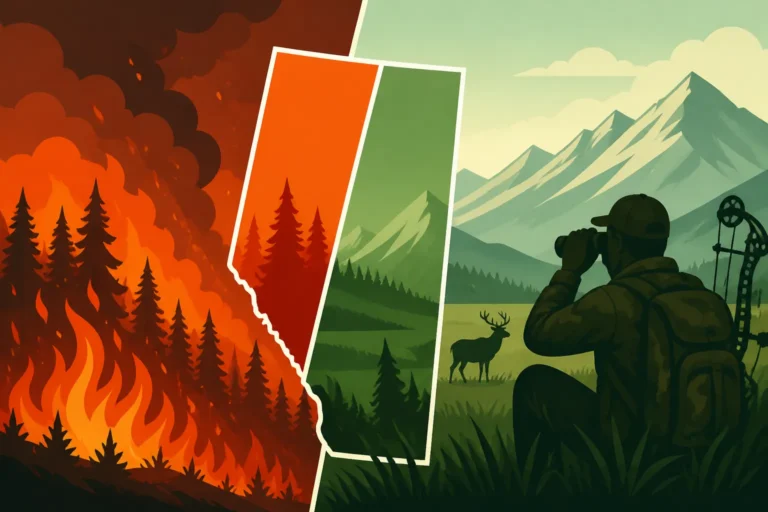
When you look at a map of Alberta, you'll often see it divided into two main land categories: the "White Area" and the "Green Area." The White Area is typically settled, privately owned land, often agricultural, while the Green Area refers to public land, mostly forests and mountains, managed by the province. Calgary sits firmly within the White Area, but its proximity to the Green Area is key for hunters.
For many hunters, understanding this distinction is the first step to finding accessible land. Directly surrounding Calgary, you're primarily in White Area, meaning most land is private. This requires gaining permission, a topic we'll dive into shortly. However, the closer you get to the foothills, generally west and southwest of the city, you begin to transition into the Green Area. This public land, while often rugged and challenging, offers significant hunting opportunities without the need for private landowner permission, though specific regulations and access points still apply. It's crucial to consult a map that clearly delineates these zones, like the layers you can find on mapping tools such as onX Hunt, to understand where you can legally hunt. You can learn more about these distinctions in Alberta's Green Area and White Area.
Major Wildlife Management Units (WMUs) in the Region
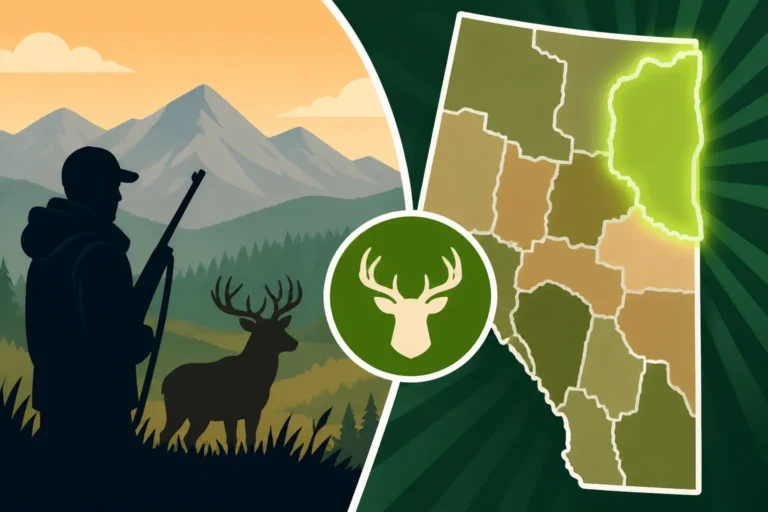
Alberta is divided into numerous Wildlife Management Units (WMUs), each with its own specific regulations, season dates, and species availability. Near Calgary, you'll find a blend of WMUs that cater to different hunting styles and target species. Directly adjacent WMUs (like 212, 216, 218, 220, 222, 224) are largely White Area, offering general season opportunities for whitetail deer and some mule deer, often requiring private land access.
As you head west towards the foothills, WMUs such as 406 (Ghost) and 408 (Kananaskis) become prominent, falling largely within the Green Area. These offer opportunities for elk, moose (often draw-only), bighorn sheep (draws for some licences), and black bear, in addition to deer. Each WMU has unique topography, game populations, and access challenges. For example, WMU 406, known as the Ghost PLUZ, is a popular destination for its diverse big game potential, but it also sees significant recreational pressure. Knowing the specific WMU you're hunting in is paramount, as all regulations, from season dates to antler point restrictions, are tied to these boundaries.
Game Species You Can Expect to Find
The diversity of habitats near Calgary means a good range of species can be targeted. In the agricultural and parkland WMUs to the east and north, whitetail deer are abundant. These areas, with their mix of bush, shelterbelts, and grain fields, provide excellent cover and food sources for deer, particularly during the rut. Mule deer can also be found, though often in more broken, badlands-style terrain or along river valleys.
Moving into the foothills and Green Area to the west, the landscape shifts to coniferous forests, river valleys, and higher elevations. Here, you'll find healthy populations of elk, especially in WMUs like 406 and 408. Moose, while often requiring a special draw licence and being less numerous closer to the city, can still be found in pockets of suitable habitat. Black bears are also prevalent in these forested regions, particularly during the spring and fall seasons. For upland bird enthusiasts, ruffed grouse and spruce grouse can be found along bush trails in the foothills, and Hungarian partridge might pop up in the agricultural fringes. Understanding which species frequent which WMUs will help you narrow down your search for accessible hunting grounds.
| WMU Group Near Calgary | Dominant Land Type | Primary Game Species | Typical Access Challenge |
|---|---|---|---|
| 200 Series (e.g., 212, 222) | White Area (Private) | Whitetail Deer, Mule Deer, Waterfowl, Upland Birds | Private Land Permission |
| 400 Series (e.g., 406, 408) | Green Area (Public) | Elk, Moose, Black Bear, Whitetail Deer, Bighorn Sheep (draw for some licences) | Rugged Terrain, High Pressure, Backcountry Travel |
| 300 Series (further north) | Mixed Green/White | Whitetail Deer, Moose, Black Bear | Mixed access, some remote |
Navigating Public Land Opportunities Near Calgary
For many hunters, public land offers the most straightforward route to access, as it removes the often-daunting task of securing private land permission. Near Calgary, "public land" isn't a single, uniform entity; it comprises several distinct types, each with its own rules and characteristics.
Exploring Public Land Use Zones (PLUZs)
The Public Land Use Zones (PLUZs) are a fantastic resource for hunters near Calgary, particularly those looking for an experience closer to what many imagine as "wilderness hunting." The most prominent example is the Ghost Public Land Use Zone (WMU 406), which is relatively close to Calgary and offers a substantial area of public land. This zone is a mosaic of foothills and mountain country, providing habitat for a wide array of big game.
Hunting in a PLUZ often involves dealing with varied terrain, from river valleys to steep slopes. Access points are generally well-defined, often with staging areas for quads, horses, or hikers. However, "public" doesn't mean "unpressured." PLUZs like the Ghost see significant recreational use, not just from hunters but also hikers, campers, and off-road vehicle enthusiasts, especially on weekends. This means early starts, thorough scouting, and a willingness to get away from easy access points are critical for success. You might be surprised at how quickly deer or elk will move into thicker cover when pressured. Understanding the specific rules for vehicle access within these zones, as well as camping regulations, is essential before you head out. For a deeper dive into one of these popular areas, check out Hunting the Ghost Public Land Use Zone.
Provincial Grazing Reserves and Access
Scattered throughout the White Area, not just immediately west but also to the north and east of Calgary, are Provincial Grazing Reserves. These are tracts of public land primarily leased for cattle grazing but are generally open to foot access for hunting during the hunting season. They often comprise large blocks of native prairie, mixed with coulees, willow draws, and some aspen bluffs, creating excellent habitat, especially for whitetail deer, mule deer, and upland birds like Hungarian partridge and sharp-tailed grouse.
Accessing these reserves typically requires contacting the local grazing leaseholder to inform them of your intentions, though specific permission often isn't legally required for foot access during hunting season unless explicitly restricted. However, it's always best practice and good etiquette to speak with the leaseholder. They can offer invaluable insights into cattle locations, areas of specific interest for game, and potential hazards. Always respect the grazing operations – leave gates as you found them, avoid disturbing cattle, and pack out all your trash. These reserves can be hidden gems for hunters willing to put in the legwork and show courtesy. You can often find contact information through Alberta Environment and Parks, or by asking around locally.
Crown Land Pockets Within the White Area
Even within the predominantly private White Area surrounding Calgary, there are smaller, often overlooked parcels of Crown Land. These can be road allowances, undeveloped municipal land, or quarter sections of public land that haven't been alienated for private use. Finding these can feel like searching for a needle in a haystack, but they can offer quiet, low-pressure hunting, especially for whitetails and upland birds.
The key to finding these pockets is detailed mapping. Tools like onX Hunt, and others that layer public and private land data, are indispensable for Reading Alberta's Crown Land Layers on onX. You might find a small corner of Crown land, perhaps a few hundred acres, surrounded by private fields. These areas are often ignored by other hunters who focus on larger, more obvious public lands or private land with explicit permission. Once you've identified a potential spot, verify access laws, scout it thoroughly, and always be aware of surrounding private boundaries to avoid accidental trespass. This kind of hunting requires patience and meticulous planning but can yield surprisingly good results. For a broader understanding of this resource, read Hunting Alberta's Crown Land.
Unlocking Private Land Access Around Calgary
While public land offers a clear path, private land holds a vast majority of the hunting opportunities, especially for prime whitetail and mule deer hunting, in the fertile agricultural belt around Calgary. Gaining access to these lands, however, requires a different approach: building relationships and earning trust.
The Importance of Landowner Permission
In Alberta, it is a legal requirement to obtain permission from the landowner or occupant before hunting on private land. This isn't just a courtesy; it's the law. Ignoring this can lead to serious fines, loss of hunting privileges, and a black mark on the hunting community's reputation. Beyond the legal aspect, seeking permission is about respect. Farmers and ranchers work hard to manage their land, and showing respect for their property, livelihood, and privacy is paramount.
Many of the best hunting spots for deer, especially the larger, mature bucks, are found on private agricultural land where food sources are plentiful and cover in shelterbelts and riparian zones is ideal. Without a respectful approach to landowners, these opportunities remain out of reach. Think of it not as asking for a favour, but as initiating a potential partnership where both parties benefit: you get to hunt, and the landowner's concerns about wildlife damage or trespass are addressed. It can take time and effort to build these relationships, but the rewards are often well worth it. For more detailed insights, see Getting Private Land Permission in Alberta.
Approaching Farmers and Ranchers Respectfully
This is where the rubber meets the road. Simply knocking on a door and asking "Can I hunt?" is rarely the best strategy. Instead, try to initiate contact well before hunting season, perhaps in late summer or early fall. Introduce yourself, explain you're a responsible hunter looking for a place to hunt respectfully, and ask if they ever have issues with deer or other game on their property. Often, farmers appreciate a hunter who can help manage deer populations that might be impacting their crops or hay.
When you speak with them, be prepared to share your plan: what species you're interested in, what times you plan to hunt, and your commitment to respecting their property (e.g., no driving on fields, closing gates, avoiding livestock, staying away from buildings). Offer to share some of your harvest if successful. If they say no, accept it gracefully. If they say yes, make sure to get clarity on specific boundaries, no-go zones, and any special requests they might have. Leave your contact information and offer to call when you're on your way to their land. A friendly face, a sincere attitude, and a commitment to communication go a long way. This empathetic approach is discussed further in Asking an Alberta Landowner for Permission.
Hunting Leases and Programs
For those who find consistent private land access challenging, hunting leases or landowner access programs can be viable alternatives. A hunting lease involves paying a fee to a landowner for exclusive hunting rights on their property for a specified period, usually a season or year. While this is a financial investment, it guarantees access and eliminates the repeated "door knocking" process. Lease prices vary wildly depending on the size of the land, game potential, and exclusivity.
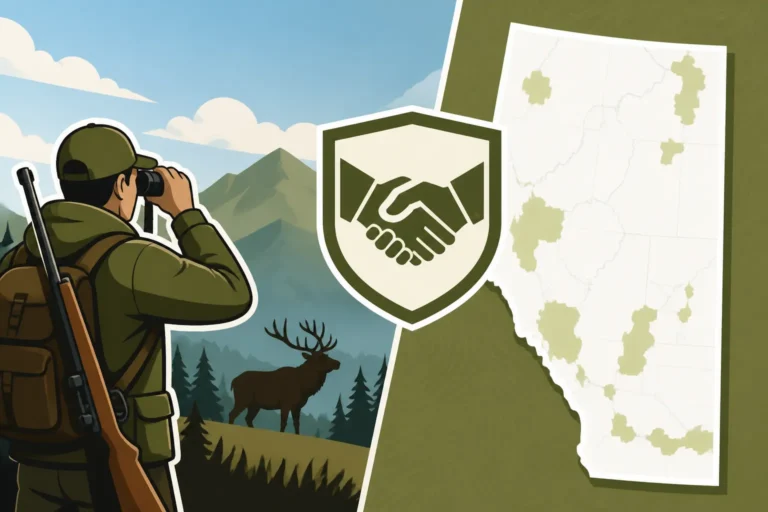
Beyond formal leases, some organizations and conservation groups run landowner access programs. These programs often act as intermediaries, connecting hunters with landowners who are willing to grant access under specific conditions. These programs aim to manage wildlife populations, reduce crop damage, and provide hunting opportunities. It's worth researching if any such programs operate in the WMUs surrounding Calgary. While less common right on the city's fringe, they might be found in the slightly more rural areas within an hour or two's drive. Always investigate the terms and conditions of any lease or program thoroughly before committing.
Specialized Hunting Zones and Considerations
Beyond the general Green and White Areas, certain zones and specific rules apply that require extra attention from hunters operating near a major hub like Calgary. These often involve more limited access or particular regulations designed to manage pressure or sensitive ecosystems.
The Ghost PLUZ and McLean Creek Area
As mentioned, the Ghost PLUZ (WMU 406) is a significant draw for Calgary-area hunters. It's one of the closest large public land areas with diverse big game opportunities, including elk, deer, moose, and bear. However, its popularity means it experiences heavy pressure, especially on weekends and during the early parts of the season. To be successful here, you often need to be willing to hike deep, or use non-motorized access like mountain bikes or horses to get away from the crowds.
Adjacent to this, the McLean Creek area, primarily within WMU 408 (Kananaskis), is another popular recreational zone, but it also offers hunting potential. This area, like the Ghost, is part of the extensive Green Area, characterized by rugged terrain and coniferous forests. Access can be challenging due to steep roads, limited parking, and the sheer number of other users. Similar to the Ghost, thorough scouting and a strategy to reach less-pressured pockets are key. Regulations in these foothill WMUs can be complex, sometimes involving draw-only tags for certain species or antler point restrictions, so always consult the current Alberta hunting regulations carefully. Further details can be found in Hunting the McLean Creek Area.
Limited Access Areas and Draw Hunts
Some of the most coveted hunting opportunities, particularly for certain species like moose and sometimes elk, along with some bighorn sheep licences, are restricted to special license draws. These draws allocate a limited number of tags for specific WMUs or seasons to manage animal populations and provide higher quality hunting experiences. While you might find general season tags for deer and bear in areas near Calgary, draw tags are often required for specific antlered moose or elk in those same WMUs.
The draw system can be highly competitive, especially for popular WMUs or desirable species. Hunters accumulate priority points for unsuccessful draw applications, which increases their chances in subsequent years. If you're hoping to hunt a prime elk or moose in a WMU like 406 or 408, you'll almost certainly need to apply for a draw. This means planning your hunt well in advance, understanding draw deadlines, and being prepared for the possibility of not getting a tag. Information on these draws, including application periods and success rates, is available through the provincial government's wildlife licensing system. This long-term planning is a critical part of serious Alberta hunting.
Conservation Areas and Special Regulations
Alberta has numerous provincial parks, natural areas, and conservation sites, some of which are located relatively close to Calgary. It's absolutely crucial to understand that hunting is not permitted in all these areas. Provincial parks, for instance, are generally closed to hunting. However, some areas managed by the Alberta Conservation Association (ACA) or other land trusts might allow hunting under specific conditions or during certain seasons.
Always verify the exact regulations for any specific piece of land you plan to hunt. A property that looks like "Crown land" on a map might actually be designated as a provincial park or a specific type of natural area with prohibitions on hunting. Ignorance of the law is no excuse, and hunting in a closed area can lead to severe penalties. Cross-referencing your maps with official provincial recreation and land use designations is a must. The government's online recreational access mapping tool can be extremely helpful for this, and you can learn how to use it in Using Alberta's Recreational Access Mapping Tool.
Practical Tools and Best Practices for Access
Finding and successfully hunting near Calgary is as much about having the right mindset and tools as it is about knowing the land. Modern technology has made access mapping incredibly sophisticated, but traditional scouting and respectful conduct remain timeless keys to success.
Mapping Apps: Your Digital Compass
Gone are the days when a paper map and a compass were your only guides. Today, digital mapping applications like onX Hunt and GoHunt are indispensable for hunters. These apps provide detailed topographical maps, satellite imagery, and crucially, property ownership overlays that show public versus private land boundaries, right down to the quarter section. This feature alone is worth its weight in gold when trying to discern legal hunting areas around Calgary.
With an app like onX Hunt, you can zoom in and identify small pockets of Crown land, clearly see the boundaries of PLUZs, and even get contact information for some landowners (though direct verification is always recommended). You can mark waypoints for potential stand locations, game sign, or access points, and track your movements in real-time. For a hunter trying to navigate the complex patchwork of land ownership near a city, these tools take much of the guesswork out of where you can legally step. Using these layers effectively is covered in Reading Alberta's Crown Land Layers on onX. Similarly, GoHunt provides powerful scouting tools, including historical satellite imagery and advanced data overlays, which can help in pre-season planning and identifying potential game habitats from your couch.
Scouting Strategies for Calgary-Adjacent Lands
Even with the best maps, boots-on-the-ground scouting remains critical. Digital maps can show you boundaries and topography, but they won't tell you where the fresh deer rub is, which coulee the elk are using as a bedding area, or if a particular private landowner just put up "No Trespassing" signs.
Pre-season scouting involves walking potential hunting areas, looking for game trails, rubs, scrapes, droppings, and water sources. Pay attention to bedding areas and feeding areas, and try to identify travel corridors that connect them. For private land, scouting after obtaining permission is paramount – it shows respect and ensures you're hunting where the landowner expects you to. For public lands near Calgary, especially PLUZs, scout during the week if possible to avoid weekend crowds, or focus on areas that require a longer hike to reach, as these are typically less pressured. This methodical approach to understanding the landscape and game movement is detailed in Scouting With Satellite Imagery in Alberta. Look for features like old logging roads, natural funnels, and changes in vegetation that might concentrate game.
Respectful Conduct and Ethical Hunting
Hunting near a major urban center inherently brings hunters into closer contact with non-hunters and landowners. Maintaining respectful conduct is not just about personal ethics; it's about preserving the future of hunting access for everyone. This means always knowing and abiding by the law, but also going beyond it in terms of courtesy and consideration.
This includes obvious things like ensuring you know your target and what's beyond it, adhering to legal shooting hours, and proper meat care. But it also extends to how you interact with landowners and other outdoor enthusiasts. Always close gates, respect private property boundaries, pick up all your trash (and maybe a little extra), and be courteous to other hunters, hikers, and off-road vehicle users. Leave the land better than you found it. Responsible actions contribute positively to the perception of hunting, while negative interactions can quickly lead to more restrictive regulations or closed access for everyone. Adhering to the Alberta Trespass Act and Hunting and practicing good ethics ensures a positive hunting experience and helps safeguard future opportunities.
Disclaimer
This article is for general informational purposes only and does not constitute professional advice. Laws, prices and regulations vary by location and change over time. Consult a qualified professional for guidance on your specific situation.