Hunting an Aspen Bluff on Farm Ground
For many Alberta hunters, the vast open fields and dense boreal forests often steal the spotlight, leaving smaller, often isolated pockets of cover feeling like afterthoughts. But if you’ve ever felt the frustration of deer disappearing into thin air on farm ground, or seen a prime field empty until last light, you might be overlooking one of the most productive, yet unassuming, hotspots: the aspen bluff. This guide will walk you through how to effectively locate, scout, and hunt these vital hideaways that whitetails, in particular, cherish in Alberta's agricultural landscapes.
The Irresistible Draw of the Aspen Bluff
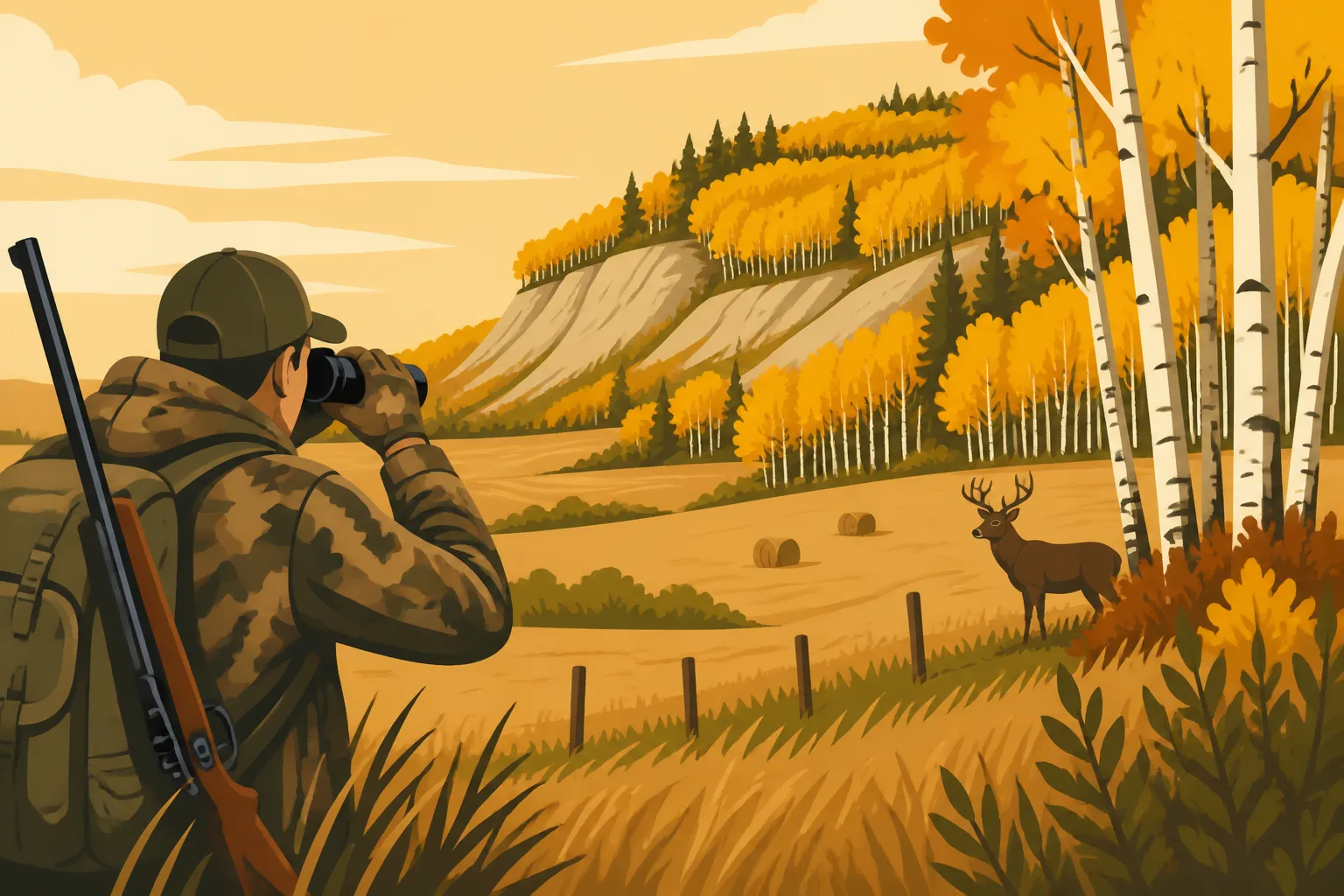
Aspen bluffs, those picturesque clumps of trembling aspens often mixed with balsam poplar and a smattering of spruce, dotted across Alberta’s farm fields, are far more than just pretty scenery. For wildlife, especially deer, they are vital islands of sanctuary in a sea of agriculture, offering everything a cautious animal needs to survive and thrive. Understanding why they are so attractive is the first step to hunting them effectively.
Why Deer Seek Out Aspen Bluffs
Deer, particularly whitetails, are masters of using cover to their advantage, and aspen bluffs provide a near-perfect blend of concealment, food, and security in farm country. Imagine a vast canola field or a swathed barley stubble that offers abundant food but absolutely no place to hide from predators or humans. The nearby aspen bluff becomes an immediate refuge, a thicket where they can bed down, escape the wind, and feel safe during daylight hours. They’ll often stage in these bluffs before moving out into fields to feed at dusk or retreat into them at dawn after a night of grazing. These bluffs also provide crucial thermal cover during harsh Alberta winters, breaking the biting wind and offering some insulation from extreme cold.
Beyond mere concealment, these bluffs offer a diverse menu. The younger aspen shoots are highly palatable browse, especially in the late season when other forage is scarce. Berry bushes, various forbs, and even scattered remnants of agricultural crops that might have drifted into the treeline can all be found within or immediately adjacent to these natural oases. It's a convenient grocery store right next to their bedroom, which is exactly what a deer looks for. During the rut, these bluffs also become natural travel corridors and rub lines, as bucks move between different pockets of cover searching for does. You might find some serious buck sign in there, sometimes year after year.
Different Types of Aspen Bluff Habitat
Not all aspen bluffs are created equal, and recognizing the subtle differences can inform your hunting strategy. Some bluffs are dense, almost impenetrable thickets of young aspens, willow, and even some rose bushes, offering incredibly secure bedding cover. These are often characterized by a strong understory and a maze of game trails within. Other bluffs might be more open, with mature trees and a relatively clean forest floor, perhaps with a few old growth spruce or balsam poplar. These typically serve more as travel corridors or brief resting spots rather than primary bedding areas.
Then you have bluffs that are a mix of both, perhaps dense on one side and more open on another, or with a slough or low-lying, wet area in the middle. These variations often dictate how deer use them throughout the day and the season. A bluff with water, even a frozen slough, is particularly attractive. The key is to evaluate each bluff individually. Is it small and isolated, or part of a larger network of cover? Does it connect to a willow run or a creek bottom that provides a longer travel route? The more diverse the cover and the more connections it offers to other types of habitat, the more valuable it likely is to deer. This is where a little boots-on-the-ground scouting pays off hugely, but it starts with identifying these unique features. For a deeper dive into understanding deer movement in different conditions, check out Reading Whitetail Sign in Alberta Aspen Bluffs.
Scouting Your Aspen Bluff Hotspots
Once you've identified potential aspen bluffs on farm ground, either through aerial reconnaissance or by simply noticing them from the road, the real work begins. Effective scouting is paramount to understanding how deer use these areas and predicting their movements. It's not just about finding tracks; it's about piecing together the story the deer are telling you.
Pre-Season Map and Satellite Reconnaissance
Before you ever set foot on private land, spend significant time studying satellite imagery. Tools like onX Hunt are indispensable for this. Look for aspen bluffs that are:
- Isolated: Standing alone in a large field, providing the only significant cover. These are often primary bedding areas.
- Connected: Linked to other cover, such as a creek bottom, a shelterbelt, or a larger bush line. These act as critical travel corridors.
- Diverse: Showing variations in tree density, elevation changes, or the presence of water features like sloughs or potholes within them.
- Proximate to Food: Situated near prime feeding areas like grain fields, alfalfa, or even unharvested crops.
Pay attention to edges. Are there pinch points where deer are funneled? Are there subtle funnels created by small draws or changes in terrain that lead into or out of the bluff? Mark these points on your map. Also, note any potential access points that minimize disturbance, both for you and for the deer. Remember, deer are incredibly sensitive to pressure, and your approach path can make or break a hunt. Understanding the broader landscape and how these bluffs fit into deer travel patterns is key. For more on this, you might find Scouting With Satellite Imagery in Alberta useful.
Boots-on-the-Ground Intelligence Gathering
Once you have permission (more on that later!), it's time to put boots on the ground. This is where your satellite intel gets validated and expanded. Walk the edges of the bluff first, looking for primary entry and exit trails. These will often be well-worn paths leading directly into adjacent fields or connecting to other cover. Pay close attention to areas where trails converge or narrow.
- Deer Sign: Look for rubs (especially fresh ones from the current season), scrapes, droppings, and fresh tracks. Identify bedding areas within the bluff itself – often thick, sheltered spots where you'll find matted grass or multiple tracks.
- Wind and Thermals: Understand how the wind moves through and around the bluff. In flatter farm country, wind direction can be more predictable, but bluffs can create swirling eddies within. Consider how thermals will affect deer movement, especially at dawn and dusk when temperatures change rapidly.
- Rut Activity: If scouting during the rut, look for heavy rub lines and community scrapes, which indicate areas of high deer activity. Bucks will cruise these bluffs looking for receptive does.
Walk into the bluff as little as possible during the season, especially the thick bedding areas, to avoid contaminating it with human scent. If you must enter, do so with the wind in your face and at midday when deer are less likely to be moving. A quick, efficient scout can tell you a lot without blowing out the deer. You want to confirm your suspicions from the map and refine your hunting locations.
Trail Camera Placement and Strategy
Trail cameras are powerful tools for confirming deer presence and understanding their routines without constant human intrusion. When placing cameras in and around aspen bluffs, consider these strategies:
- Entrance/Exit Trails: Set cameras on the most active trails leading into or out of the bluff, especially those connecting to feeding areas. Position them to capture deer moving with their heads up.
- Pinch Points: If there's a natural funnel or a tight spot within the bluff, place a camera there.
- Scrapes and Rub Lines: If you find an active scrape or a heavy rub line, a camera can tell you which buck is making it and when he's visiting.
- Water Sources: If the bluff contains a slough or a small water source, place a camera nearby, especially during dry periods.
Check cameras sparingly to minimize disturbance, perhaps once a week or every two weeks. Analyze the photos for patterns: what time are deer moving? Which deer are using the bluff (bucks, does, fawns)? Are they primarily nocturnal, or are there daylight movements? This data is gold for planning your actual hunt. Knowing when a mature buck consistently enters a field from a specific corner of a bluff, for example, is the key to setting up a successful ambush.
Hunting Strategies for the Aspen Bluff Hunter
Once you’ve done your homework and identified how deer are using a particular aspen bluff, it’s time to deploy your hunting strategy. This isn't a one-size-fits-all approach; the best tactic will depend on the bluff's characteristics, the time of year, and the specific deer you're pursuing.
Stand Hunting the Bluff Edges
One of the most effective ways to hunt an aspen bluff is from a stand positioned on its edge, overlooking a field or a primary travel corridor.
- Entry/Exit Points: Set your stand where deer enter or exit the bluff to feed in an adjacent field. You want to intercept them as they transition. Consider both morning and evening hunts; for mornings, position your stand to catch them returning to the bluff from the field. For evenings, set up to catch them leaving the bluff for the field.
- Wind Direction: Always prioritize wind direction. Deer will almost always approach a feeding area or bedding cover with the wind in their favour, using their nose to detect danger. Set your stand so your scent cone blows away from their anticipated approach path.
- Cover for Your Stand: Use natural cover to break up your silhouette. Don't just pick the tallest tree; pick one that offers good background cover. A great spot might be where the bluff forms a point into a field, or where a slight depression creates a natural funnel along the edge.
- Access: Plan your access route to and from the stand carefully to avoid disturbing the area. Walk in quietly, preferably under the cover of darkness, and use a route that doesn't cross major game trails. For tips on setting up, refer to Hanging a Stand on an Alberta Bush Edge.
Still Hunting Through the Bluff
Still hunting, or slowly creeping through the bluff, can be incredibly productive, especially in larger, more open bluffs or during the rut when bucks are actively cruising.
- Slow and Steady: This is not a hike. Take one to two steps, then pause for several minutes, scanning every shadow and brush pile. Use your binoculars to pick apart dense cover. Move with the wind in your face or quartering into it.
- Read the Sign: As you move, constantly read the sign. Fresh tracks, droppings, and rubs will tell you if deer are currently using the area. If you find fresh sign, slow down even more and prepare for a shot.
- Utilize Cover: Use the terrain and vegetation to your advantage. Move from tree to tree, staying hidden as much as possible. Blend in, move like a predator, not a trespasser.
- Expect Close Encounters: Still hunting often leads to close-range shots. Be ready to react quickly. This method is particularly exciting and challenging, putting your hunting skills to the ultimate test.
Driving Aspen Bluffs
Driving bluffs, typically with a small group of hunters, can be an effective way to push deer out of dense cover, especially later in the season when deer are less likely to move during daylight.
- The Plan: This requires careful planning and communication. Designate drivers (who walk through the bluff) and standers (who post on exit routes). Everyone needs to know their role, their boundaries, and the direction of the drive.
- Safety First: Communication and safety are paramount. Know where every hunter is at all times. Blaze orange is a must, and clear lines of sight are essential before taking any shot. Never shoot in the direction of another hunter.
- Bluff Size: This tactic works best on smaller to medium-sized bluffs. Larger, more sprawling bluffs can be difficult to drive effectively without deer slipping out unnoticed.
- Strategic Posting: Standers should be positioned downwind of the bluff, covering the most likely escape routes into adjacent cover or fields. Drivers should move slowly and deliberately, pausing occasionally to listen or rattle antlers to encourage deer movement. Remember, often deer will try to slip out the sides rather than bolt directly away from drivers.
| Hunting Method | Best Use Case | Pros | Cons | Key Considerations |
|---|---|---|---|---|
| Stand Hunting | Edge of bluff, overlooking fields, pinch points | Low impact on bluff, covers entry/exit, good for patient hunters | Limited range, wind critical, can be boring | Pre-scout, careful entry/exit, wind direction always #1 |
| Still Hunting | Larger, more open bluffs, during rut, dense cover | Exciting, flexible, active hunting, covers more ground | Requires stealth, high skill, can push deer out too fast | Wind in face, slow movement, keen observation |
| Driving (Group) | Smaller/medium bluffs, late season, moving deer | Effective for stubborn deer, covers thick areas quickly | Requires multiple hunters, safety risks, can be noisy | Clear communication, safety, knowledge of escape routes |
Access and Considerations on Farm Ground
Hunting on farm ground, even isolated aspen bluffs, almost always means navigating private land. This brings with it a whole different set of responsibilities and etiquette compared to hunting on Crown land. Respect for landowners is non-negotiable.
Obtaining Landowner Permission
This is the single most critical step for hunting on farm ground. Without explicit permission, you are trespassing, which can lead to serious legal consequences and gives all hunters a bad name.
- Ask Early: Don't wait until opening day. Approach landowners well before the season starts. This shows respect and planning.
- Be Polite and Prepared: Dress neatly, be courteous, and introduce yourself. Have a map of the area you're interested in, even if it's just a general idea. Explain what you want to hunt and how you plan to do it (e.g., "I'd like to try still hunting that aspen bluff for a whitetail buck").
- Offer Help: A great way to build rapport is to offer a hand with chores. "Can I help you with anything around the farm while I'm here?" can go a long way.
- Be Specific: Ask for permission for specific dates or a specific period. Don't ask for "the whole season."
- Respect "No": If a landowner says no, thank them for their time and move on. Don't argue or try to persuade them.
- Leave a Card: If they grant permission, leave them a card with your name and phone number so they can reach you.
- Follow Up: If you are successful, offer some game meat, or at least a thank you. Even if unsuccessful, a thank you at the end of the season builds goodwill for future years. This is critical for Asking an Alberta Landowner for Permission and understanding Alberta Landowner Permission Law.
Respecting Farm Operations and Property
Once you have permission, your responsibility to the landowner doesn't end. You are a guest on their property, and you need to act accordingly.
- Gate Etiquette: Always leave gates as you found them – if it was closed, close it. If it was open, leave it open (unless instructed otherwise). This is fundamental to farm safety and livestock management.
- Drive Responsibly: Stick to designated tracks or roads. Do not drive across fields, especially if they are wet or have standing crops. Avoid driving on soft ground that could cause ruts.
- No Littering: Pack out everything you pack in, including spent shell casings. Leave no trace.
- Livestock and Fences: Be acutely aware of livestock. Do not disturb them, and report any damaged fences immediately to the landowner. Give livestock a wide berth.
- Know Your Boundaries: Understand the exact boundaries of the land you have permission to hunt. Use your onX Hunt app to clearly delineate these areas so you don't inadvertently trespass onto a neighbour's property.
- Share Your Success: If you harvest an animal, let the landowner know. They often appreciate seeing the success and may even be interested in the meat. This positive interaction strengthens your relationship.
Hunting aspen bluffs on farm ground offers an intimate and often highly rewarding hunting experience. These hidden gems hold some fantastic opportunities for whitetails, and sometimes mule deer, who appreciate the blend of cover and food. With diligent scouting, respectful landowner relations, and strategic hunting, these unassuming bluffs can quickly become your favourite spots in Alberta's diverse hunting landscape.
Disclaimer
This article is for general informational purposes only and does not constitute professional advice. Laws, prices and regulations vary by location and change over time. Consult a qualified professional for guidance on your specific situation.