Hunting Mule Deer in the Badlands Coulees
Hunting mule deer in Alberta's badlands coulees presents a unique set of challenges and incredible rewards. The stark, broken landscape, with its endless cuts and folds, can feel utterly overwhelming, often leaving hunters wondering where to even begin looking for a buck, let alone how to approach one unseen. This guide aims to demystify the art of chasing mule deer in these distinctive and demanding environments, offering practical strategies to increase your odds of success.
Understanding the Badlands Environment and Mule Deer Behavior
The badlands of southern Alberta, particularly along river systems like the Red Deer River, are an ecological marvel and a prime hunting ground for mule deer. However, this isn't your typical bush or timber hunt; it demands a completely different approach.
The Unique Topography of Badlands Coulees
Badlands topography is defined by its intricate network of steep-sided coulees, deep ravines, and eroded hills, often interspersed with pockets of sagebrush, sparse timber, and native grasses. The ground can be a mix of loose shale, clay, and sand, making travel both challenging and noisy. This environment provides mule deer with incredible cover, allowing them to disappear with remarkable ease even in seemingly open country. The constant wind, often whipping through these formations, also plays a critical role in how deer move and how hunters must plan their stalks. Understanding the micro-climates and wind currents within these coulees is paramount, as a swirling wind can betray your presence in an instant.
Mule deer thrive in this habitat because it offers protection from predators and the elements. They use the coulee bottoms for bedding, feeding on the vegetation that grows within, and navigating unseen between different areas. The sheer number of hiding spots means that a buck can be literally twenty yards away and completely invisible. This broken country is precisely why mule deer love it, and it's why hunters need to adapt their strategies to match. Learning to read the subtle changes in elevation, the small clusters of trees, and the shaded pockets becomes an instinct born of experience in these unique landscapes.
Mule Deer Habits and Patterns in Broken Country
Mule deer in the badlands are creatures of habit, but those habits are dictated by the landscape. During the early morning and late evening, they'll often be found feeding on the sparse grasses and browse along coulee edges or in the bottoms where vegetation is more abundant. As the sun climbs, they'll typically seek out shaded benches or small pockets of timber or dense brush within the coulees to bed down for the day. These bedding sites are usually chosen for their vantage points, allowing deer to observe the surrounding area while remaining concealed. You’ll often find them tucked into north-facing slopes, catching the morning sun, or south-facing slopes in the afternoon, seeking shade.
Unlike their whitetail cousins who might bolt for thick cover, mule deer in the badlands tend to utilize the terrain itself for escape. When spooked, they'll often run a short distance, topping out on a ridge to look back before dropping into another coulee system and vanishing. This behavior is key to understanding how to pursue them. Knowing that they might pause on a skyline allows for quick follow-up attempts if you can move fast and quietly. Keep in mind that a single large coulee might house multiple deer, all using the intricate folds to remain hidden. For more general insights into their preferred habitat, you might find our guide on Why Mule Deer Prefer Broken Country helpful.
Essential Gear and Preparation for Badlands Hunting
Success in the badlands hinges significantly on having the right gear and being physically prepared for the demanding terrain. This isn't a casual stroll; it's a grind that requires forethought.
Optics and Mapping for Remote Terrain
Your optics are arguably the most critical tools for badlands mule deer hunting. A good quality pair of binoculars (10×42 or 12×50 are popular choices) is essential for picking apart distant coulee faces and spotting the subtle flick of an ear or the horizontal line of a deer's back against vertical terrain. A spotting scope (20-60x or higher) is equally important for confirming antler size and sex at extreme distances, saving you countless miles of wasted walking. Don't skimp on a solid tripod for your spotting scope and even for your binoculars – still images are far easier to analyze than handheld wobbles, especially in windy conditions. Many experienced badlands hunters mount their binoculars on a tripod for hours of comfortable glassing.
For navigation and scouting, a reliable GPS unit or a smartphone with robust hunting apps like those offered by GoHunt is indispensable. These mapping tools allow you to study the terrain beforehand, identifying potential bedding areas, travel corridors, and access points. They are also crucial for marking waypoints, tracking your movements, and finding your way back to your vehicle after a long day of traversing complicated coulee systems. Knowing how to use these tools to interpret elevation changes and identify hidden draws before you ever step foot in the field will give you a significant advantage. Tools like GoHunt can help you analyze terrain features, elevation, and even historical satellite imagery to predict where deer might be holding. You can also use them to read Alberta's Crown Land layers on onX or similar platforms to ensure you're on public land.
Footwear, Clothing, and Backpack Essentials
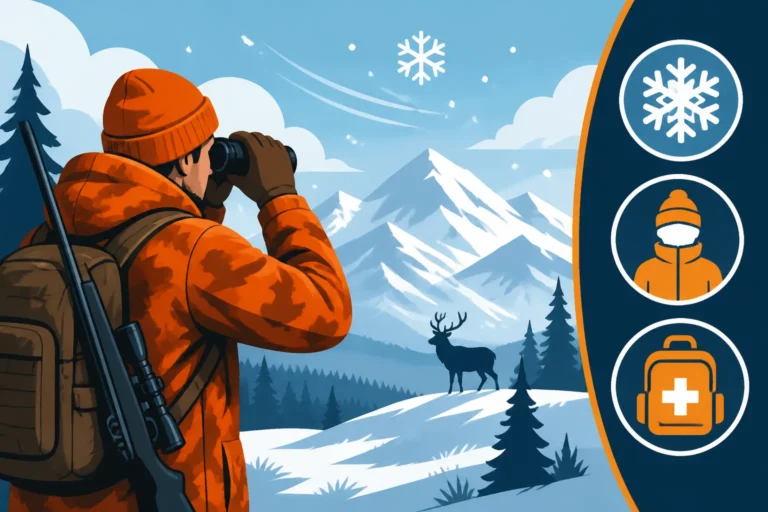
Your feet will take a beating in the badlands, so proper footwear is non-negotiable. Look for sturdy, waterproof hiking boots with excellent ankle support and stiff soles to handle the uneven, often slippery terrain. Breaking them in well before your hunt is absolutely vital to prevent blisters. Layered clothing is key, as temperatures can swing wildly from chilly mornings to hot afternoons, and the persistent wind can amplify the cold. Moisture-wicking base layers, insulating mid-layers, and a windproof, waterproof outer shell are ideal. Blaze orange, as per Alberta regulations, is a must during general seasons.
Your backpack should be large enough to carry all your daily essentials, plus any game meat you might harvest. Essentials include plenty of water (more than you think you'll need, as badlands water sources are scarce and often unsuitable for drinking), high-energy snacks, a first-aid kit, a headlamp, a knife, game bags, and a way to start a fire. A trekking pole or two can be a lifesaver for navigating steep descents and maintaining balance on loose ground. Consider carrying a satellite messenger for emergencies, as cell service is often non-existent in these remote areas. For more details on safe hunting practices, especially in challenging conditions, consider our guide on Hunting Alberta Winter Weather Safely.
Strategic Scouting and Glassing Techniques
Hunting badlands mule deer is overwhelmingly a glassing game. You won't still-hunt through these areas effectively; you'll spend hours, even days, behind glass, picking apart every detail of the landscape.
Pre-Season E-Scouting and Physical Reconnaissance
Before you ever set foot in the field, modern technology allows for incredible pre-season scouting. Utilizing satellite imagery and topographic maps on platforms like GoHunt, you can identify promising coulee systems, benches, and isolated pockets of cover. Look for areas with consistent north-facing slopes for daytime bedding, or areas where multiple coulees converge, creating natural travel funnels. Pay attention to any signs of water, even temporary puddles, as these can be magnets for deer in dry conditions. Mark potential glassing points – high vantage points that offer expansive views of the surrounding country – and plan your access routes.
Once you have a few target areas identified through e-scouting, physical reconnaissance, if possible, is invaluable. Even if it's just a weekend trip before the season opens, walking the terrain allows you to confirm what you saw on the map, identify fresh sign, and get a feel for the scale and complexity of the landscape. Look for tracks, scat, rub lines, and historical bedding areas. Understanding the lay of the land firsthand will make your in-season decision-making much faster and more confident. This is also a good time to practice using your mapping tools in the field, ensuring you're comfortable with them when the pressure is on.
Effective Glassing Strategies for Badlands Coulees
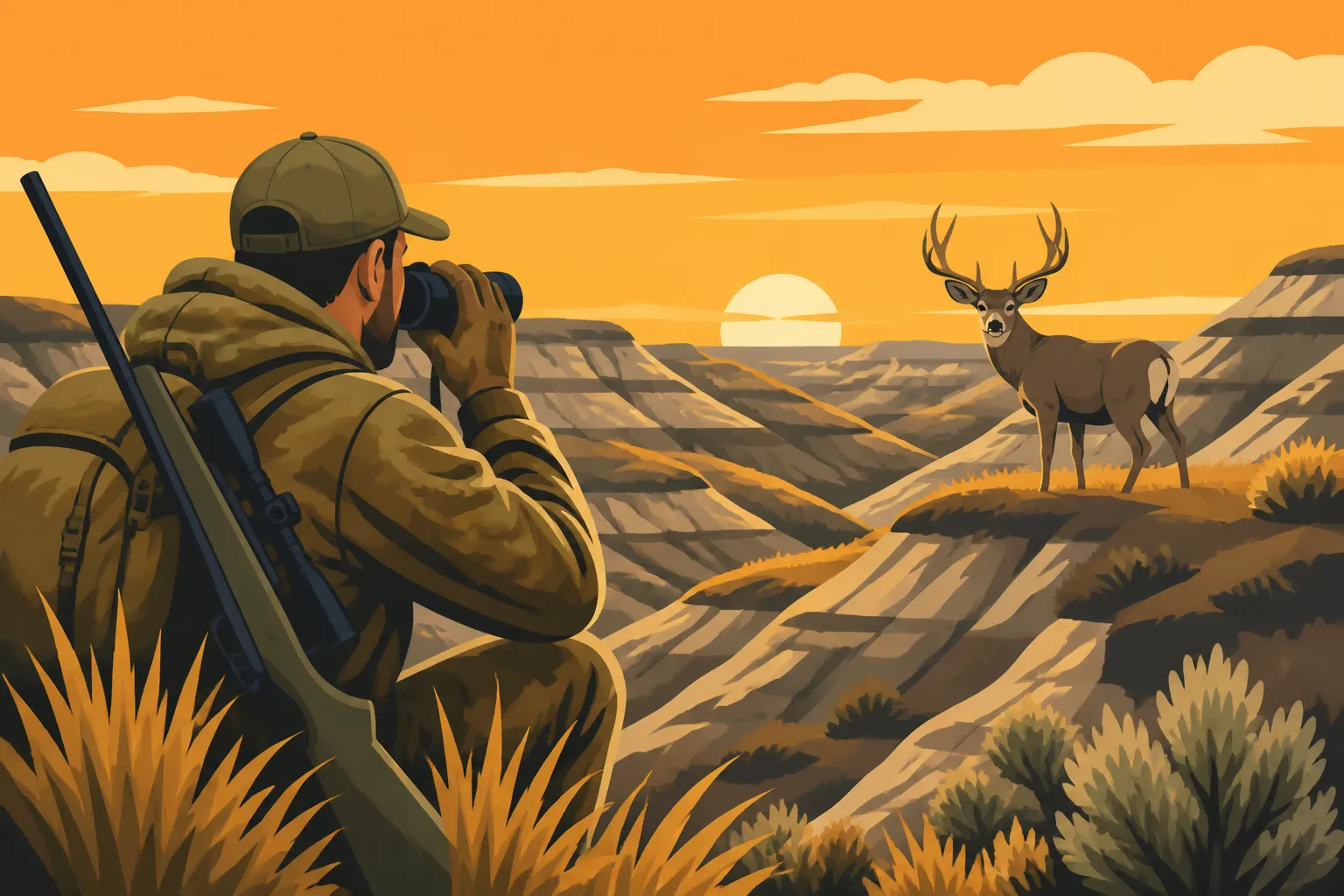
When you're actually hunting, glassing from a high vantage point is your primary method. Find a spot that offers a panoramic view of several coulees and set up comfortably with your binoculars on a tripod and your spotting scope ready. The key is to be patient and methodical. Divide the landscape into grids and systematically scan each section, moving slowly and deliberately. Don't just look for an entire deer; look for parts of a deer – an antler tine, the shine of an eye, a horizontal line, or a dark patch that doesn't quite fit the natural contours of the land. Mule deer blend in incredibly well, so you need to train your eyes to spot anomalies.
Pay particular attention to shaded areas, brush lines, and the tops of benches where deer often bed. The first and last hours of daylight are prime feeding times, so focus on areas with palatable vegetation. During the mid-day, shift your focus to bedding areas. Wind direction is critical for glassing; try to position yourself so the wind is in your face or quartering, carrying your scent away from the deer. If you spot a deer, don't immediately rush in. Spend more time observing its behavior, identifying its escape routes, and planning your approach. For a deeper dive into this specific technique, check out our guide on Glassing an Alberta Coulee for Mule Deer.
Stalking and Approaching Mule Deer in Coulee Systems
Once you've spotted a buck, the real challenge begins: closing the distance for a shot in a terrain designed for concealment. This is where patience, precision, and an intimate understanding of the wind are paramount.
Reading the Wind and Terrain for a Covert Approach
The badlands wind is notorious for being unpredictable and swirling, especially within the complex coulee systems. Before you make any move, analyze the wind direction from your glassing point. Use a wind indicator (like a small squeeze bottle of powder) constantly. Your approach must always keep the wind in your favor, blowing your scent away from the deer. This often means taking a longer, more circuitous route, but it's far better than blowing a stalk. Wind can change quickly, so be prepared to pause, re-evaluate, and adjust your route if necessary. If the wind is consistently swirling, it might be better to wait for more stable conditions or relocate. Our article on Wind in Open Prairie Country offers broader insights into this critical factor.
The terrain itself is your ally and your enemy. Use the folds, dips, and rises of the coulees to stay out of sight. Plan your route from cover to cover, moving slowly and deliberately. Avoid skylining yourself on ridges, as a mule deer's keen eyesight will pick you out instantly. When you must cross an open area, do so quickly and quietly, ideally when the deer's head is down feeding or looking in another direction. Imagine yourself as part of the landscape, flowing with its contours rather than fighting against them. Every step needs to be calculated to avoid dislodging loose shale or making unnecessary noise. This methodical approach is at the heart of Stalking Mule Deer in Badlands Breaks.
Executing a Successful Stalk and Shot Opportunity
A successful stalk demands extreme patience and quiet movement. Once you begin your approach, constantly re-evaluate the deer's position and behavior. If the deer moves, be prepared to adapt or even abort the stalk if the odds turn against you. Move slowly, placing each foot carefully to avoid crunching loose rock or snapping twigs. When you come to a point where you might be exposed, peek over carefully, perhaps using a small mirror or a long-handled camera to check the immediate area before exposing yourself. Remember that mule deer have excellent hearing and vision.
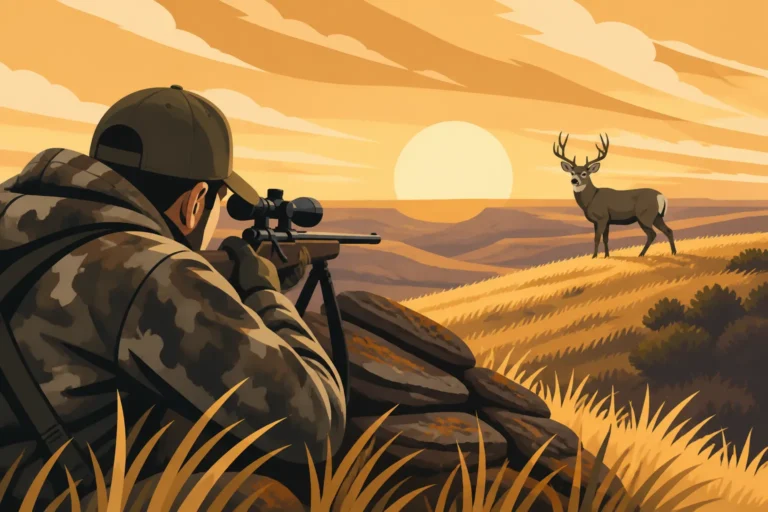
As you get closer, identify potential shooting lanes and ranges. Practice estimating distances with your rangefinder before the hunt, so you can make quick, accurate calls under pressure. When you reach your desired shooting position, take your time to settle in, control your breathing, and make a clean, ethical shot. The badlands terrain often provides natural rests, but be prepared to shoot from various positions – prone, kneeling, or standing with support. If you're a bowhunter, closing the distance further will be crucial, often requiring an even more meticulous approach and capitalizing on the deer's movement or a moment of distraction. Being able to judge a buck at distance is a skill that will also serve you well, covered in detail in our related post Judging a Mule Deer Buck at Distance.
Dealing with Weather and Terrain Challenges
The badlands are beautiful, but they are also unforgiving. The weather can change in an instant, and the terrain itself presents physical hurdles that need to be respected.
Navigating Steep Grades and Loose Rock
The defining characteristic of badlands coulees is their steep, often crumbling sides. Ascending and descending these grades can be incredibly strenuous and dangerous. Always test your footing before putting your full weight down, especially on loose shale or clay slopes. Using trekking poles will greatly enhance your stability and reduce strain on your knees, particularly on descents. When going downhill, keep your center of gravity low and take short, controlled steps. If the ground is very steep and loose, consider traversing across the slope rather than going straight down, or even backtracking to find a safer route.
Be acutely aware of erosion. Rain and snowmelt can create treacherous conditions, turning firm paths into muddy, slippery chutes. After a rainfall, clay soils can become like grease, making travel almost impossible. Always look for game trails, which often provide the most stable and logical paths through difficult terrain. These trails are there for a reason – deer know the path of least resistance. Be prepared for slow travel, especially when packing out a harvested animal. Fatigue can lead to mistakes, so conserve your energy and know your limits.
Adapting to Temperature Swings and Precipitation
Alberta's weather is notoriously unpredictable, and the badlands are no exception. Temperatures can swing wildly from below freezing in the morning to above 20°C in the afternoon, especially during early and late season hunts. During the general rifle season, you could face anything from warm, sunny days to sudden snowfalls. Dressing in layers, as mentioned earlier, is absolutely vital. You need to be able to add or shed clothing quickly to regulate your body temperature, preventing both overheating and hypothermia. Always carry extra layers, including a warm hat and gloves, even if the forecast looks mild.
Precipitation, whether rain or snow, adds another layer of complexity. Rain can make already loose slopes incredibly slick and muddy. Snow can conceal uneven ground and make tracking difficult, but also reveals fresh deer sign and makes quiet movement easier. However, a significant snowfall can transform the badlands, making roads impassable and coulees difficult to navigate. Always check the forecast before you head out and have a plan for inclement weather, including emergency shelter and extra food/water. Consider our article on Hunting Mule Deer After a Snowfall for specific strategies when the white stuff hits the ground.
Post-Harvest Logistics and Meat Care in Remote Areas
Taking a mule deer in the badlands is a triumph, but the work isn't over. Getting your animal out cleanly and efficiently, especially from a deep coulee, is a significant part of the hunt.
Field Dressing and Quartering in Challenging Locations
The moment you harvest a mule deer in a badlands coulee, start thinking about extraction. The first priority is to field dress the animal as quickly as possible to begin the cooling process. This is especially crucial if temperatures are mild. Position the deer so gravity assists in draining blood. Once field dressed, you'll likely need to quarter the animal to make it manageable for packing out. This involves carefully skinning and butchering the deer into four main quarters, backstraps, tenderloins, and possibly the neck and ribs.
Carrying quality game bags is essential. These breathable bags protect the meat from dirt, flies, and allow it to cool properly. If you're deep in a coulee and alone, quartering is often the only feasible way to get the animal out. Plan your cuts to maximize meat yield while making the pieces manageable for your pack. For detailed instructions on this vital step, our guide on Field Dressing in Alberta's Deep Cold (even if it's not cold, the principles apply) can provide valuable insights. If the weather is warm, getting the meat off the bone and into shade, then cooled, is critical to prevent spoilage.
Packing Out and Preserving the Harvest
Packing a mule deer out of a badlands coulee is a physically demanding task. A sturdy backpack with a good frame is indispensable. Distribute the weight evenly, putting the heaviest parts closest to your back. Make multiple trips if necessary; attempting to carry too much at once can lead to injury or further damage to the meat. Even if you're not planning to pack out the hide, consider taking the cape for a mount if you've taken a trophy buck, carefully preserving it in a game bag.
Upon returning to your vehicle, get the meat into a cooler with ice as quickly as possible, ensuring the ice is not directly touching the meat but is contained in separate bags to avoid waterlogging. If you're on a multi-day trip, having a reliable cooler system or access to a meat locker is crucial. The goal is to get the internal temperature of the meat down to around 2-4°C (35-40°F) as quickly as possible. This cooling process prevents bacterial growth and improves the quality and flavour of the meat. Remember to check local regulations regarding the transport of game meat, especially if you're traveling a significant distance. For logistical tips on getting your animal out of difficult terrain, you might find our article Getting a Deer Out on a Frozen Trail relevant, as the challenges of frozen trails can often mirror those of steep, loose badlands.
Badlands Mule Deer Hunting: Techniques and Considerations
Beyond the physical challenges and gear, there are nuanced techniques and considerations that define a successful badlands mule deer hunt.
The Art of Patience and Observation
One of the most profound lessons the badlands teaches a hunter is patience. Rushing through this terrain is a recipe for failure. Many hunters make the mistake of trying to cover too much ground too quickly, inadvertently spooking deer that they never even knew were there. Instead, embrace the slow game. Spend more time glassing than walking. Find a comfortable, strategic vantage point and commit to thoroughly picking apart the landscape, hour after hour.
Observation isn't just about spotting deer; it's about understanding their world. Watch how they move, where they feed, and where they bed relative to the sun, wind, and cover. Notice how other animals, like coyotes or birds, react to your presence, as their alarm calls can alert deer. The badlands environment is a constant puzzle, and the more patiently you observe, the more pieces you'll gather. This approach will not only lead to more successful stalks but will also deepen your appreciation for the resilience of these animals in such a rugged landscape.
Ethical Considerations and Conservation
Hunting in the badlands, like all hunting, carries a significant ethical responsibility. Always prioritize a clean, humane harvest. This means knowing your rifle's capabilities, practicing your shooting at various distances and positions, and understanding mule deer anatomy for shot placement. If you're not confident in a shot, don't take it. Wounded game in this broken country can be incredibly difficult to track and recover, leading to unnecessary suffering and wasted meat.
Beyond the shot, ethical hunting extends to respecting the land and wildlife. Pack out everything you pack in, and perhaps even a little extra trash you find. Be mindful of fragile ecosystems and avoid unnecessary damage to vegetation or geological formations. Consider participating in Chronic Wasting Disease (CWD) testing if you harvest a deer in a designated CWD zone. Your actions as a hunter reflect on the entire hunting community, and upholding a strong ethical standard ensures the future of hunting in these unique and wild places.
| Aspect of Badlands Mule Deer Hunting | Key Consideration | Essential Strategy |
|---|---|---|
| Terrain | Steep, loose, broken | Sturdy boots, trekking poles, slow movement, use game trails |
| Visibility | Excellent long-range, poor close-range | High-quality binoculars/spotting scope, tripod, systematic glassing |
| Wind | Unpredictable, swirling | Constant use of wind indicator, always play the wind, adjust routes |
| Deer Behavior | Use terrain for cover, often bed in shade | Focus glassing on shaded benches, observe patterns, anticipate escape routes |
| Stalking | Cover and concealment are paramount | Slow, quiet movement, use terrain features, avoid skylining |
| Hydration | Limited water sources | Carry ample water, consider water filtration for emergencies |
| Weather | Rapid temperature swings, sudden precipitation | Layered clothing, waterproof outerwear, check forecasts, emergency kit |
| Extraction | Physically demanding, remote locations | Field dress/quarter immediately, sturdy pack, game bags, multiple trips |
Disclaimer
Please remember that hunting regulations, seasons, and access rules in Alberta can change. Always consult the most current Alberta Hunting Regulations Guide and any relevant land use directives before planning your hunt. Safety is paramount; be prepared for all conditions, inform others of your plans, and hunt responsibly.