Hunting Moose Along Cutlines and Seismic Lines
For many of us who hunt Alberta, the sheer vastness of the bush can feel overwhelming. You know the moose are out there, but finding them in dense timber or endless muskeg can be like searching for a needle in a haystack. That's where cutlines and seismic lines often become a hunter's best friend, offering accessible corridors into prime moose country and providing distinct advantages for locating these elusive giants. This guide is all about maximizing your chances along these linear features.
Understanding Moose Behavior on Cutlines and Seismic Lines
Moose are creatures of habit, and while they thrive in thick cover, they also readily utilize features that offer easier travel, browse access, or simply a clearer view. Understanding why and how they use cutlines and seismic lines is fundamental to your hunting strategy.
Why Moose Use Linear Features
Think of cutlines and seismic lines as natural highways and grocery aisles for moose. These clearings, often 8-10 meters wide for older seismic lines or wider for some cutlines, offer a path of least resistance through otherwise impenetrable forest. For a large animal like a moose, moving through dense underbrush burns a lot of energy, so they'll take the easier route whenever possible. Furthermore, these disturbed areas often see a flush of new growth – tender young aspen, willow, and various shrubs that are high in nutrition and a favorite browse for moose. It’s not uncommon to find a browse line where moose have systematically stripped leaves and twigs along the edges of these lines. The increased light penetration also promotes berry bushes and other food sources, making them attractive feeding grounds. They're also vital for scent dispersal and thermal regulation, providing sun-drenched spots for warming up on a crisp morning or catching a breeze on a warmer afternoon.
Seasonal Movement Patterns
Moose use cutlines and seismic lines differently throughout the year. In early season, say during Alberta's September Archery Opener, you might find them browsing along these lines in the cooler parts of the day, particularly near water sources or dense bedding areas they can quickly retreat to. As the rut approaches in late September and October, these lines become crucial travel corridors for bulls seeking cows, and vice versa. It’s a prime time for a bull to walk a line, leaving sign and scent, hoping to intercept a cow. You'll often see fresh tracks and rubs on saplings along the edges. Later in the season, as snow deepens, these packed-down lines can become even more important, offering easier travel when breaking a trail through deep snow is exhausting. This makes them critical winter range corridors. However, deep cold late in the season can also push them into denser thermal cover off the lines, though they'll still use the lines for quick commutes between feeding and bedding areas.
Impact of Human Activity
It's a common frustration to find prime hunting spots overrun with quads or other vehicles. While cutlines and seismic lines offer access, they also come with a caveat: human disturbance. Moose, being wary animals, will often adapt their patterns to avoid heavy human presence. This means they might use these lines primarily during low-light hours – dawn, dusk, and even overnight – or during the week when traffic is typically lighter. On weekends, especially in easily accessible areas, they may retreat into the deeper bush during the day. However, this isn't always a deterrent. If a line leads to a prime feeding or bedding area, moose might tolerate some human presence, especially if that presence is predictable and non-threatening (like a slow-moving trapper or seismic worker, not necessarily a loud ATV). Hunters need to factor this in, often pushing deeper than casual users, or hunting during less popular times.
Scouting and Pre-Hunt Preparation for Linear Features
Success on cutlines and seismic lines often boils down to how thoroughly you prepare before you ever step foot in the bush. This isn't just about showing up; it's about intelligence gathering and strategic planning.
Using Maps and Satellite Imagery
Before you even think about putting boots on the ground, your best friend will be a good mapping application. Tools like GoHunt, along with provincial recreational access mapping tools, allow you to visualize the vast network of cutlines, seismic lines, and old logging roads that crisscross Alberta's forested regions. Look for areas where these lines intersect, where they transition from dense timber to an open clearcut or a beaver pond, or where they parallel natural features like creek bottoms or ridges. These pinch points and transition zones are often high-traffic areas for moose.
I always recommend spending hours studying these maps. Identify potential bedding areas (dense, dark timber patches nearby), feeding zones (young aspen stands, willow thickets, or recent burns), and water sources. Trace multiple lines, noting where they might offer an advantage for wind direction or escape routes. Pay close attention to the age of the lines too; older, grown-in lines can provide more cover and browse, while newer, well-maintained lines might be easier travel but offer less cover. Use the historical imagery feature on mapping apps to see how vegetation has changed over time along these lines. It’s a game-changer for understanding long-term moose movement.
Ground Scouting and Sign Reading
Once you've narrowed down your areas on the map, it's time for some boots-on-the-ground reconnaissance. This is where you confirm your hypotheses and discover the subtle nuances that satellite imagery can’t reveal. Walk sections of the cutlines and seismic lines you've identified, paying close attention to moose sign.
- Tracks: Fresh tracks are your most obvious clue. Note the size and direction. Is it a lone track or multiple? Is it a cow with a calf? Tracks cutting across the line from one dense patch of timber to another are gold, indicating a travel corridor.
- Droppings: The amount and freshness of droppings can tell you about moose activity. Large piles of fresh pellets mean moose have been actively feeding or bedding nearby.
- Rub/Scrapes: During the rut, look for rubbed trees along the edges of the lines. Bulls will rub their antlers on small trees, leaving distinct marks, communicating their presence. These are often on smaller saplings, 1-3 inches in diameter.
- Browsing: Look for stripped leaves and broken branches on young aspen, willow, and other deciduous shrubs, particularly at moose height. The taller the browse line, the bigger the moose.
When scouting, don't just walk on the line. Step off periodically into the timber edges. Moose will often parallel a line, staying just inside the cover, feeling safer but still benefiting from the easier travel. Look for subtle trails entering and exiting the line. This deep understanding of how moose use the area will inform your hunting strategy.
Planning Your Approach and Escape Routes
This is where many hunts go wrong. You find great sign, but you stumble into the area with a poor approach and spook everything. When hunting a cutline, you need to consider how you will get in undetected, how you will hunt it effectively, and crucially, how you will get out, especially if you harvest an animal.
- Approach: Always try to approach with the wind in your face or crosswind, never at your back. Moose have an incredible sense of smell. Plan to arrive well before daylight if hunting dawn, or in mid-day if you plan an afternoon hunt, giving yourself time to get into position quietly. Utilize natural cover like depressions, taller bush, or even the subtle contours of the line itself to shield your movement. For example, if the line has a slight rise, you might walk just below the crest on the downwind side.
- Escape: Think about what happens if you jump a moose. Which way will it likely run? Where will you go to try and intercept it or get a better shot? More importantly, if you successfully harvest an animal, how will you get it out? This is particularly relevant for moose, given their massive size. Is there a truck trail nearby? Can you get a quad close enough? Planning for getting a moose out with a quad or even a wheeled game cart is crucial. Trying to drag a full-grown bull moose a mile through thick bush without a plan is a recipe for exhaustion and potential meat spoilage. This foresight helps avoid major headaches after the shot.
Effective Hunting Techniques for Cutlines and Seismic Lines
Once you've done your homework and understand the lay of the land, it's time to put those plans into action. Hunting these linear features requires a combination of patience, strategic movement, and sometimes, a little calling magic.
Still-Hunting and Glassing Strategy
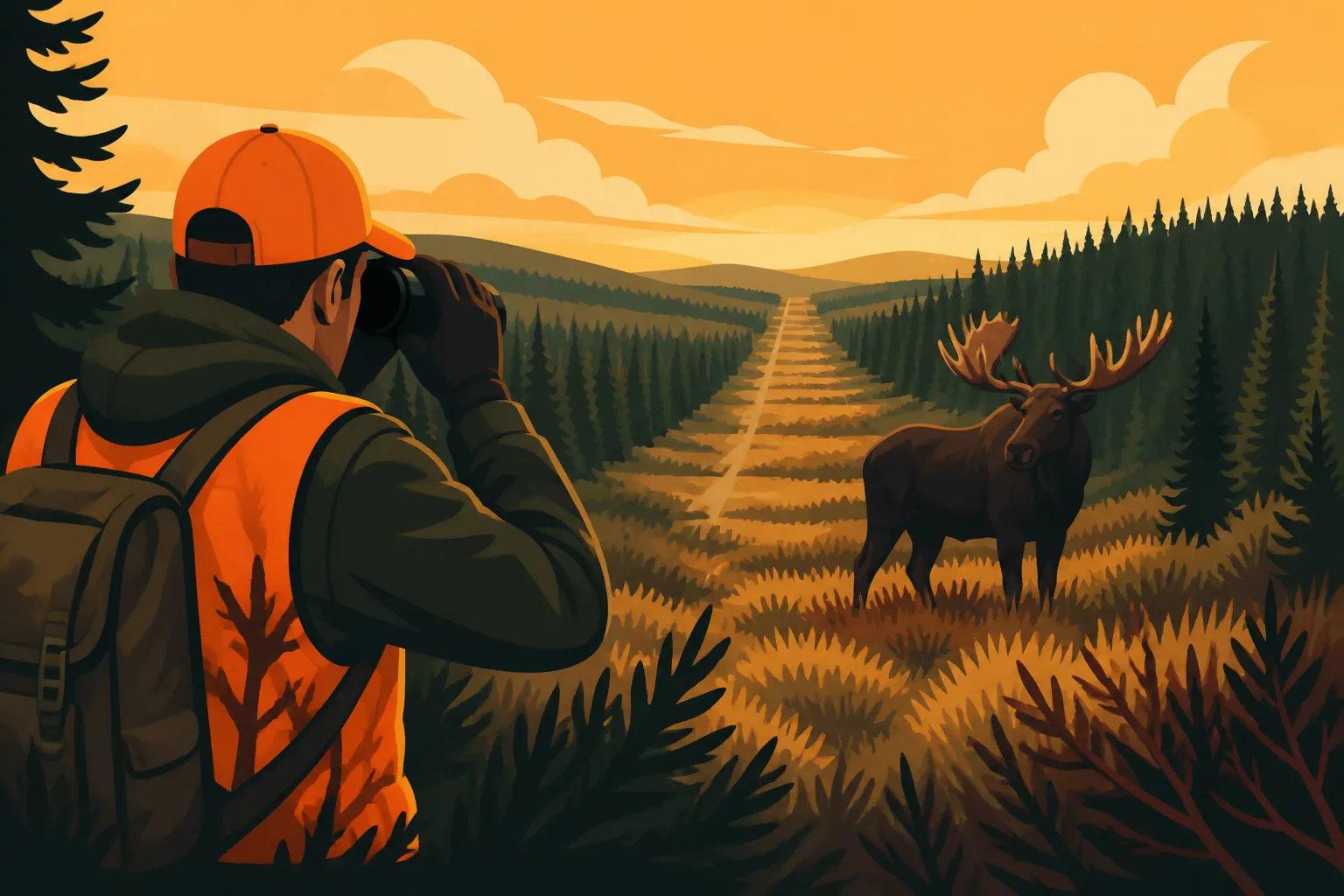
Still-hunting along cutlines is a highly effective tactic, but it requires patience and a slow, deliberate pace. Instead of busting through the bush, you're essentially walking a slow, silent patrol. Move 20-30 yards, then stop for several minutes, scanning the line itself and, critically, both edges and the timber just beyond. Moose often stand perfectly still in the shadows, or bedded just off the line, making them incredibly difficult to spot. Use binoculars or a spotting scope to pick apart the shadows and look for horizontal lines (a moose's back) in a vertical world (trees).
Focus your efforts during low-light conditions when moose are most active. As the sun rises, they often move from feeding on the lines to bedding in nearby cover. Similarly, in the late afternoon, they'll often start to emerge from their beds to feed again. Pay attention to wind direction, always moving into it or with a crosswind. When you approach an intersection of two lines, always pause and glass all directions carefully before proceeding; these intersections are major travel hubs. When Hunting Moose Along a Cutline for Moose at First Light, their silhouettes can be hard to discern against the trees, so be extra vigilant.
Calling Moose Along Lines
The rut is a magical time for moose hunting, and cutlines provide excellent acoustic channels for calling. Moose calls, especially cow calls and grunts, carry incredibly well along these open corridors, potentially reaching moose that are hundreds of yards away. If you've been doing your scouting and identified a promising area with fresh sign, set up in a strategic location with good visibility and cover, and start calling.
- Cow Calls: A soft, drawn-out "moan" can pique the curiosity of bulls. Start subtle, then increase intensity if you don't get a response.
- Bull Grunts: If you're confident there's a bull in the area, or you've heard distant grunts, mimicking a bull grunt can provoke a challenge.
- Raking: Using a shoulder blade or a stick to scrape against small trees and bushes, mimicking a bull raking its antlers, can be incredibly effective. This, combined with grunts, sounds like a rival bull staking its territory, which can often bring a bull in looking for a fight. For more in-depth advice on this, check out our guide on Calling Moose in Alberta's Boreal Forest.
Always be prepared for a quick shot when calling. Moose can come in silently and quickly. Have your rifle or bow ready, and be aware of your surroundings. A bull might not come directly down the line; he might circle downwind to try and scent-check you before committing.
Ambush Points and Stand Placement
While still-hunting is productive, setting up an ambush can also be highly effective, especially if you've identified a very active stretch of line or a key intersection. This is where strategic stand placement comes in.
- Ground Blinds: Natural ground blinds, made from fallen timber, dense shrubs, or even a subtle depression, can work wonders. They offer concealment and allow you to stay hidden while scanning. Ensure your blind breaks up your silhouette and offers a clear shooting lane down the line and into the edges.
- Treestands: If the trees along the cutline are suitable, a portable treestand can give you an elevated vantage point, increasing your visibility and helping to get your scent above a moose's nose. Place stands where two lines intersect, where a line crosses a creek, or where it bottlenecks between two thickets. Remember, even though moose are huge, they can disappear in the thick timber surprisingly quickly.
- Pinch Points: Look for natural pinch points along the line – areas where dense cover forces animals to travel a narrower path, or where a line skirts the edge of a swamp or steep bank. These are ideal ambush locations. Setting up at dawn or dusk when moose are most likely to be moving can greatly increase your odds. Remember the rules on Baiting Big Game in Alberta; while scent lures are usually fine, actual baiting is generally prohibited.
| Technique | Description | Pros | Cons |
|---|---|---|---|
| Still-Hunting | Slow, deliberate movement along the line, stopping frequently to glass and listen. | Covers more ground; allows you to adapt to fresh sign; highly engaging. | Requires extreme patience and stealth; easy to spook game if rushed; visibility can be limited to immediate surroundings. |
| Calling | Using cow moans, bull grunts, and raking to attract moose, especially during the rut. | Can bring moose to you; effective in dense cover where visibility is limited; exciting and active. | Requires knowledge of moose vocalizations; not always effective outside the rut; a bull might circle downwind, potentially busting you. |
| Ambush/Stand | Setting up in a concealed position (ground blind or treestand) at a high-traffic area like an intersection, pinch point, or feeding area. | Minimal movement, maximizing stealth; elevated vantage point (treestand) enhances visibility and scent control; effective during peak movement times (dawn/dusk). | Static hunting can get cold or boring; relies on moose using that specific spot; limited range of observation compared to still-hunting. |
| Spot & Stalk | (Less common on cutlines, but possible in sparse areas) Locating a moose from a distance and carefully planning an approach for a shot. | Exciting and challenging; can be highly rewarding. | Requires open sightlines, which are rare on most cutlines; high risk of being spotted or winded due to limited cover; difficult to execute with such large, wary animals. |
Gear and Safety Considerations
Hunting moose along cutlines and seismic lines means you're often deep in Alberta's rugged and unforgiving backcountry. Having the right gear and prioritizing safety isn't just a recommendation; it's a necessity.
Essential Equipment for Linear Feature Hunting
Beyond your rifle or bow and appropriate ammunition (making sure it's among the Legal Firearms and Bows for Big Game in Alberta), there's a suite of gear that will make your hunt safer and more comfortable:
- Navigation: Even if you've studied maps, always carry a reliable GPS device or a smartphone with offline mapping capabilities (like GoHunt's offline maps) and a compass. It's shockingly easy to get disoriented once you step off a familiar line into dense bush, especially if tracking an animal. A physical map and compass serve as crucial backups.
- Optics: Good binoculars (10×42 or 10×50) are non-negotiable for glassing the line edges and peering into shadows. A spotting scope can be useful if you're covering vast, open cutlines or looking across wider valleys from a vantage point.
- Warmth & Rain Gear: Alberta weather can be famously unpredictable. Layered clothing is key, including a good base layer, insulating mid-layers, and a waterproof/windproof outer shell. Pack an extra pair of gloves, a toque, and dry socks. A compact emergency blanket is also a smart addition. For more about preparing for the climate, read our article on Hunting Alberta Winter Weather Safely.
- Field Dressing Kit: Knives, a bone saw (or a compact reciprocating saw if you're deep in), game bags, and rubber gloves are vital for field dressing a moose, which is a massive animal.
- Communication: Cell service is often non-existent in the bush. Carry a satellite messenger (like a Garmin inReach or Zoleo) for emergency communication and to let loved ones know your whereabouts.
- First Aid: A well-stocked first aid kit for minor injuries and emergencies.
- Water & Food: Sufficient water and high-energy snacks for the duration of your hunt. A water filter can be invaluable if you plan to be out for extended periods.
Navigating Alberta's Bush and Weather
Hunting along linear features often means you're operating in varied terrain, from relatively flat muskeg to rolling hills and even steeper foothill country. Footing can be tricky, with hidden stumps, boggy sections, and uneven ground.
- Footwear: Invest in sturdy, waterproof, and comfortable hiking boots with good ankle support.
- Weather Watch: Always check the weather forecast before heading out, but be prepared for sudden changes. Wind can pick up quickly, rain can turn to snow, and temperatures can drop dramatically.
- Visibility: In heavy fog or snow, visibility can drop to mere yards, making navigation even more challenging. Consider carrying bright flagging tape (to mark a trail you're following) or using the track-back function on your GPS.
- Wildlife Awareness: You are in prime moose habitat, but also bear country. Carry bear spray, know how to use it, and be aware of your surroundings, especially in dense sections where visibility is limited.
Firearm and Archery Considerations
Whether you're carrying a rifle or a bow, specific considerations apply when hunting along cutlines.
- Rifle Hunters: Shots can range from very close to quite long, especially if you're glassing a long, straight cutline. Practice shooting from various positions, including standing and kneeling, to be ready for any scenario. Understand your rifle's capabilities and your own limitations. Always be aware of your backdrop, as a clear line of sight can sometimes extend for hundreds of yards. The sheer size of What a Big Bull Moose Weighs means you need sufficient caliber and bullet construction for a clean, ethical kill.
- Archery Hunters: You'll likely be looking for closer shots, often in the 20-40 yard range as a moose steps onto the line or browses along its edge. Stealth is paramount. Practice drawing your bow quietly and smoothly from kneeling or standing positions. Consider wearing clothing that helps you blend into the natural surroundings, not just camouflage but also quiet fabrics that don't rustle.
Both rifle and archery hunters should carry extra ammunition/arrows and practice regularly. An ethical hunter aims for a clean kill, and that comes from practice and preparedness.
Environmental Factors and Ethical Hunting
Hunting in Alberta's backcountry comes with a responsibility to respect the environment, other users, and the animals we pursue. Linear features are often shared spaces, making these considerations even more critical.
Wind Direction and Scent Control
Moose, like all cervids, have an incredible sense of smell. Ignoring wind direction is one of the quickest ways to ruin a hunt.
- Always Hunt Upwind or Crosswind: This means the wind is blowing towards you or across your path, carrying your scent away from where the moose are likely to be. Never hunt with the wind at your back, as your scent will travel ahead of you, alerting any animals in your path.
- Scent Control Regimen: While no amount of scent control will completely eliminate human odor, minimizing it helps. Wash hunting clothes in scent-free detergent, store them in airtight bags, and consider using scent-eliminating sprays on your outer layers. Avoid strong-smelling foods, colognes, or deodorants on hunt days.
- Reading the Wind: Carry a small squeeze bottle with scent-free powder or milkweed seeds to quickly check subtle wind currents, especially when the main wind seems calm. Swirling winds in valleys or dense timber can be tricky, making it even more important to monitor.
Understanding the prevailing wind patterns in your chosen WMU, perhaps by looking at historical data on a service like GoHunt, can also help you plan your approaches for certain times of day.
Respecting Other Users and Wildlife
Cutlines and seismic lines are not exclusively for hunters. They are used by trappers, seismic crews, oil and gas workers, hikers, photographers, and other recreational users.
- Share the Space: Be courteous and respectful. If you encounter other users, a friendly greeting goes a long way. Don't assume you have exclusive rights to a line, especially on public land.
- Leave No Trace: Pack out everything you pack in, including spent shell casings, food wrappers, and any other garbage. Avoid damaging vegetation unnecessarily. Our goal is to leave the land as we found it, or better.
- Be Mindful of Wildlife Beyond Your Target: You'll undoubtedly see other animals. Enjoy the experience, but be respectful and avoid disturbing them. This includes not approaching animals too closely or attempting to haze them. Remember that certain species, like grizzly bears and Woodland Caribou, are protected in Alberta. Understanding Grizzly Bears in Alberta Today and Woodland Caribou and Why They Are Protected is part of being an ethical hunter.
Minimizing Impact on the Landscape
The very nature of cutlines and seismic lines means they are human-made disturbances. Our actions as hunters can either exacerbate or mitigate their environmental impact.
- Stay on Designated Trails: Where marked trails exist, stick to them. Avoid creating new trails or driving off-road unnecessarily, particularly in wet conditions where you can cause significant rutting and erosion. Know the Quad and Side-by-Side Rules on Crown Land.
- Carcass Disposal: After harvesting a moose, process the animal efficiently and dispose of gut piles away from major trails, roads, and water sources. Spread the remains to allow for quicker decomposition and minimize potential attraction for scavengers in areas where they might become habituated to human presence.
- Fire Safety: Especially in dry conditions, be extremely careful with campfires or any source of flame. Wildfires can devastate vast tracts of habitat and pose serious risks to human life. Always carry a shovel and water for extinguishing fires properly. Always be aware of Alberta Wildfire Closures and Hunting before you head out.
Post-Harvest Logistics
Harvesting a moose is often only half the battle. Getting a massive animal like this out of the bush and processed correctly presents its own set of challenges, especially when operating deep off a main road.
Field Dressing and Quartering on the Line
A bull moose can weigh upwards of 1,200 pounds, with some of The Biggest Moose Ever Taken in Alberta reaching even more impressive weights. This means you will almost certainly be field dressing and quartering it where it lies, often directly on the cutline or just off its edge.
- Speed is Key: Especially in warmer early-season temperatures, quick and efficient field dressing is critical to prevent meat spoilage. Get the guts out, open the chest cavity, and cool the carcass as quickly as possible.
- Elevate if Possible: If you can, elevate the quarters or hang them to allow air circulation. This helps with cooling and keeps the meat cleaner.
- Game Bags: Bring plenty of heavy-duty, breathable game bags to protect the meat from flies, dirt, and debris. This is non-negotiable for moose. You'll need separate bags for each quarter, the backstraps, and other prime cuts.
- Boneless vs. Bone-in: Consider whether you'll bone out the meat or take it out bone-in. Boning out saves significant weight but takes more time and skill. If you're far from a vehicle, boning might be the only practical option. However, if you're taking the head for a trophy, remember that proof of sex and the attached tag are required on one bone-in portion of the carcass during transport.
Extraction Challenges and Solutions
Getting a moose out of the bush is one of the most physically demanding parts of the hunt. Cutlines and seismic lines can simplify this, but don't underestimate the effort.
- Quads and Side-by-Sides: If the cutline or seismic line is open to motorized access, a quad or side-by-side with a trailer is often the most efficient way to extract a moose. Ensure your vehicle is capable of handling the load and the terrain. Remember that rules for Quad and Side-by-Side Rules on Crown Land vary. Always check the regulations for the specific WMU you're hunting.
- Game Carts: For shorter distances or if motorized access is restricted, a heavy-duty game cart can be a lifesaver. You'll still need some strong helpers, but it's significantly easier than dragging quarters by hand.
- Human Power: In some remote locations, or if you're alone, you might be looking at packing out the meat on your back, perhaps using specialized frame packs. This is incredibly strenuous and requires good physical conditioning. Consider a multi-trip approach, taking out one or two quarters at a time.
- Plan for the Worst: Expect mud, snow, fallen trees, and challenging terrain. A winch, tow rope, and a good shovel are essential if you're relying on a vehicle for extraction. If you're going deep, even a small chainsaw can be invaluable for clearing downed timber blocking your path. For a broader overview of how to manage a successful extract, read Getting a Moose Out With a Quad.
Meat Care in Alberta's Cold and Warm Swings
Alberta's climate can be notoriously variable, swinging from warm, sunny days to freezing temperatures in a matter of hours. Proper meat care is paramount to ensure your hard-earned moose meat doesn't spoil.
- Cooling Quickly: The primary goal is to cool the meat rapidly. After field dressing, prop the carcass open, especially in the chest cavity, to allow air circulation. In warmer weather, consider hanging the quarters in the shade or submerging them (in game bags) in a cold stream for a short period to draw out heat.
- Protection from Contaminants: Keep the meat in game bags to protect it from flies, dust, and hungry scavengers. Once at camp or your vehicle, transfer it to a cooler with ice, or ideally, hang it in a cool, dry, well-ventilated area if temperatures are consistently low (below 4°C or 40°F).
- Transport and Processing: Transport the meat as quickly as possible to a butcher or your home for processing. If driving long distances, keep the meat cool and out of direct sunlight. A proper butcher will have facilities to hang and age the meat, further improving its quality. We have a detailed article on Meat Care in Alberta's Cold and Warm Swings that goes into much more depth on this critical topic. Don't let all your hard work go to waste by neglecting proper meat handling!
Hunting moose along cutlines and seismic lines in Alberta offers a unique blend of accessibility and challenge. With thorough preparation, a keen eye for sign, smart hunting techniques, and a steadfast commitment to safety and ethics, these linear features can lead to some of the most memorable and successful moose hunts in the province.
Disclaimer
Hunting is an inherently risky activity. This guide provides general information and recommendations. It is crucial to always consult the most current Alberta hunting regulations, acquire the necessary licenses (including your Alberta's WIN Card and Wildlife Certificate), and follow all local laws. Safety should be your top priority. The author and publisher are not responsible for any accidents, injuries, or legal infractions that may occur. Hunt responsibly and ethically.