Stalking Mule Deer in Badlands Breaks
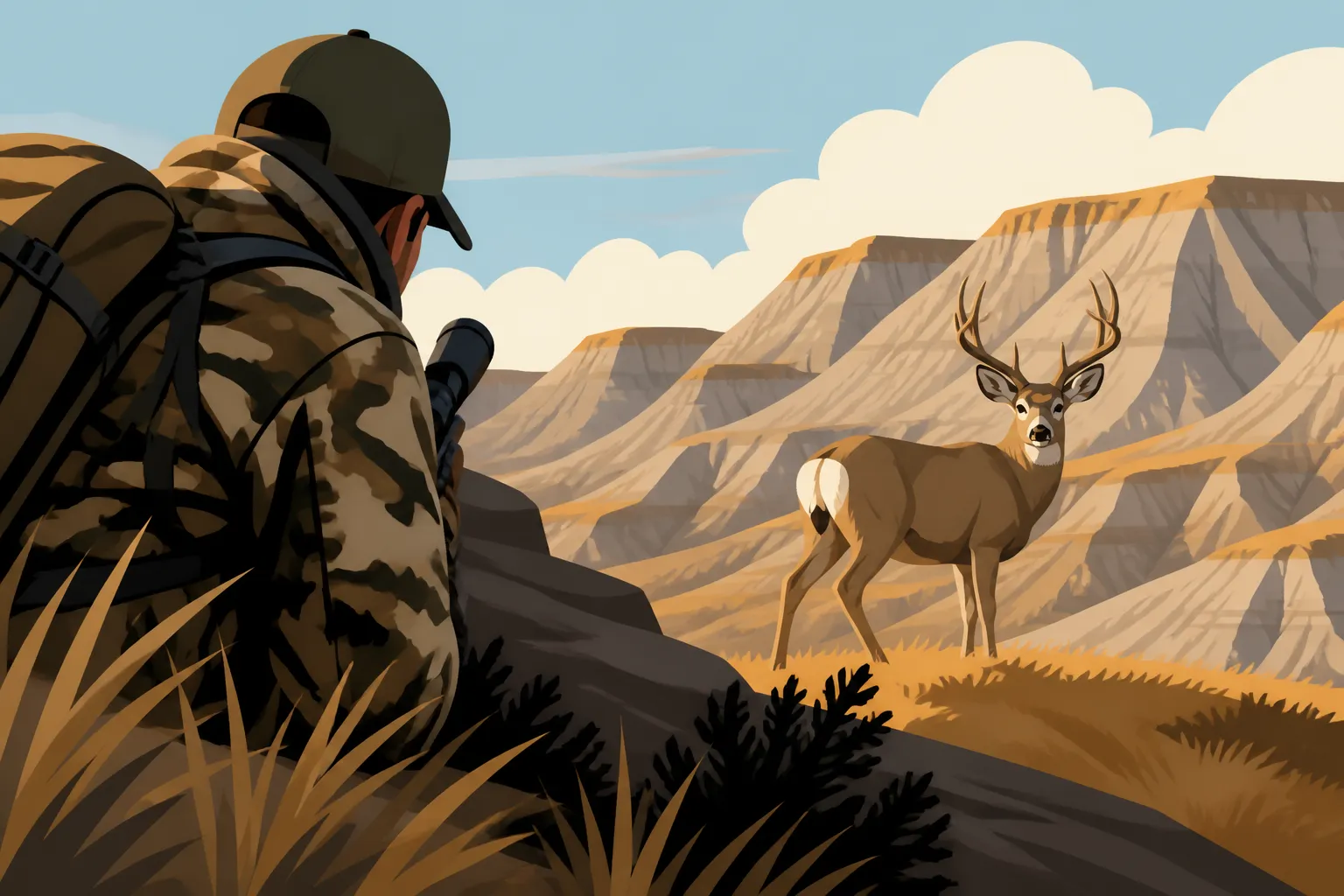
Trying to stalk a mule deer buck in Alberta's badlands breaks can feel like an impossible puzzle. The terrain, with its endless cuts, coulees, and deceptive contours, seems designed to thwart your every move, and those long-eared deer have an uncanny ability to vanish before you even know they were there. This guide is all about equipping you with the strategies and mindset needed to confidently navigate these challenging landscapes and bring home a badlands monarch.
Understanding the Badlands Landscape and Mule Deer Behavior
The badlands of Alberta are a truly unique and formidable hunting ground. They aren't like the dense bush where you can sneak through timber or the vast prairies where you spot a deer from miles away. Here, it’s a constant game of hide and seek, dictated by the intricate landscape itself and the cunning adaptations of the mule deer that call it home.
The Unique Challenges of Badlands Breaks
Picture yourself standing on a high point, looking out over a sea of deeply eroded ravines, steep cut banks, and sparse, brittle vegetation. That's the Alberta badlands. The terrain is a visual maze, offering countless places for a buck to disappear, often just a few yards from where you last saw him. Every ridge seems to lead to another hidden draw, and what looks like a clear path from above can quickly turn into an impassable scramble of loose rock and thorny bushes. This broken landscape, while offering fantastic cover for deer, presents a serious challenge for hunters trying to close the distance.
One of the biggest frustrations in this environment is the wind. It rarely blows in a consistent direction for long, especially once it dips down into the coulees and bounces off the steep walls. You might have a perfect crosswind on the ridge top, only for it to swirl and gust directly at your target once you drop into a draw. The dust and dry earth can also make silent movement incredibly difficult. Every crunch of a dry leaf or slide of a small rock feels amplified in the quiet, open air, and a deer's keen hearing will pick up on it long before you even realize you've made a sound.
Beyond the wind, visibility is a constant paradox. From a high vantage point, you might see for miles, but once you start moving, your field of view can shrink to just a few feet as you navigate deep cuts and hidden bends. This means deer often have the advantage of spotting you first, especially if you're not meticulous about staying low and using every bit of natural cover. It's a land of deceptive distances and sudden disappearances, where patience and calculated movements are far more effective than brute force.
How Mule Deer Utilize Badlands Breaks
Mule deer are masters of adapting to their environment, and the badlands are no exception. They thrive in this rugged country precisely because it offers everything they need: food, water, and most importantly, security. Understanding how they use these breaks is the first step to successfully stalking them. During the day, especially when the sun is high or the wind is biting, mule deer will often bed down on shaded, north-facing slopes or deep within the protection of a steep coulee. They love to find a spot just below the rim of a ridge, where they can look out over the country below, catching any movement while remaining completely hidden from anyone on the adjacent ridge.
Their feeding patterns are also dictated by the badlands. While they will venture out into adjacent cultivated fields or flatter prairie areas at dawn and dusk, much of their browsing happens within the breaks themselves. They’ll nibble on sagebrush, various prairie grasses, and forbs that grow along the coulee bottoms and slopes. These areas offer both food and immediate cover, allowing them to quickly duck out of sight if threatened. Water sources, often scattered and hidden, also play a key role, drawing deer to specific areas within the breaks.
When it comes to travel, mule deer are incredibly efficient at using the terrain to their advantage. They follow the bottoms of draws, utilizing the natural corridors to move between bedding and feeding areas undetected. You'll often find faint trails worn into the earth along these routes, indicating consistent travel. They also use small benches or terraced areas on hillsides as hidden pathways, always staying out of sight as much as possible. If you can learn to think like a mule deer, identifying these natural travel routes and hidden havens, you'll be much better equipped to predict their movements and plan your approach. For a deeper dive into their habitat preferences, you might want to read our article on "Why Mule Deer Prefer Broken Country".
Essential Scouting and Planning for Badlands Stalks
Success in the badlands isn't just about what you do in the moment; it's heavily reliant on the work you put in beforehand. Good scouting and meticulous planning are your greatest allies, allowing you to anticipate deer movements and navigate the challenging terrain with confidence.
Pre-Season Digital and On-the-Ground Scouting
Before you even set foot in the badlands, leverage the power of technology. Tools like GoHunt or onX Hunt are absolute game-changers for digital scouting. Spend hours poring over satellite imagery and topographical maps. Look for the deepest, most intricate coulees – these are prime bedding areas. Identify areas where coulees converge, as these often serve as natural travel corridors. Pay close attention to north-facing slopes, especially those with some sparse timber or heavier brush, as these provide crucial shade and wind protection. Use the topographical overlays to find "dead ground" – areas where you can move unseen below the line of sight of potential bedding areas. Mark these waypoints diligently, creating a roadmap for your hunt. You can also explore "Reading Alberta's Crown Land Layers on onX" for more specific guidance.
Digital scouting, while powerful, is only half the battle. Nothing beats putting boots on the ground during the off-season, or at least before the season opens. This allows you to verify what you've seen on the maps. Walk some of those identified coulees, explore potential bedding sites, and feel the lay of the land. Look for actual deer sign: tracks, rubs on small bushes, and most importantly, fresh droppings. This tells you where deer are actively spending their time. Identify vantage points that offer expansive views for glassing, as well as hidden approaches that will allow you to slip in undetected. This intimate knowledge of the terrain will pay dividends when it comes time to execute a stalk.
Even if you can't scout extensively, a quick trip a few days before the season can be invaluable. Drive the perimeter roads, if they exist, and observe field edges at dawn and dusk. This can give you an idea of where deer are moving from the badlands to feed. Understanding the local patterns can help you narrow down your initial search areas.
Reading the Wind and Thermals in Badlands
In the badlands, wind is your master. It's not enough to simply know the general wind direction; you need to understand how it behaves within the broken terrain. Wind swirls, eddies, and shifts constantly in coulees. What might be a consistent breeze on the plateau can become a chaotic vortex a hundred feet down. This unpredictability means you must be hyper-vigilant with a wind checker. Use it constantly – every few steps, every time you change elevation, and definitely before you commit to an approach. A small squeeze bottle of powder or even milkweed seeds can be your best friend. For more on wind patterns, check out "Wind in Open Prairie Country".
Beyond the general wind, thermals play a crucial role, especially during the early and late hours of the day. As the sun rises and warms the earth, air begins to move uphill (updrafts). In the evenings, as the sun sets and the air cools, it will flow downhill (downdrafts). Mule deer instinctively know this and use it to their advantage, often bedding in places where their scent will be carried away from potential threats.
Your stalking strategy must meticulously account for these air currents. In the morning, if you're trying to get to a buck bedded high up on a ridge, you'll need to approach from above or parallel, using an updraft to carry your scent away. In the evening, when thermals are dropping, an uphill approach might be feasible. The key is never to put the wind or thermals in the deer's favor. If you arrive at your chosen stalking route and the wind isn't right, you need to have the discipline to back out and find another approach, or wait until the conditions change. Blowing a stalk due to carelessness with the wind is one of the quickest ways to educate a badlands buck.
Executing a Successful Stalk in Badlands Breaks
Once you've done your scouting and understand the lay of the land, it's time to put your plan into action. Stalking mule deer in the badlands is a test of patience, discipline, and adaptability. It's a game of inches, where every movement is deliberate and every decision counts.
The Art of Glassing and Locating Deer
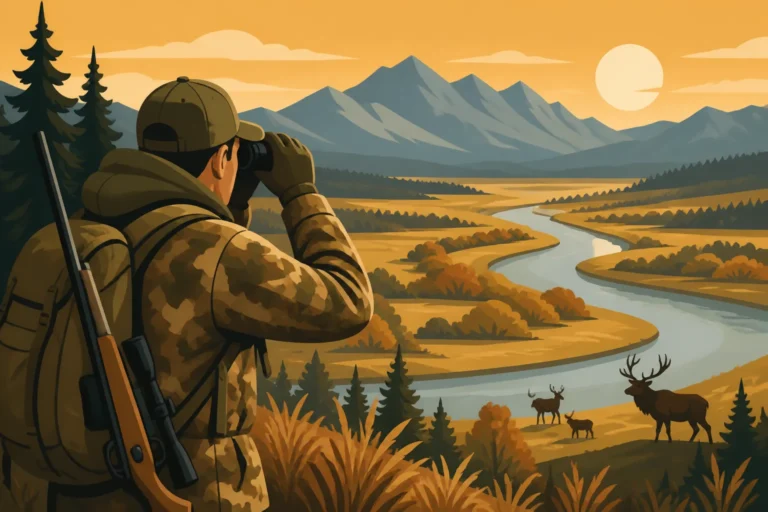
This is where the hunt truly begins in the badlands. You can't just wander around hoping to stumble upon a buck; you'll likely spook every deer in the county. Instead, find a high vantage point that offers a commanding view of the coulees, benches, and slopes below. This is your observation post. Equip yourself with high-quality optics – good binoculars (10x or 12x) are essential, and a spotting scope (20-60x or higher) on a tripod is invaluable for picking apart distant shadows and identifying antlers. From this vantage point, you'll want to "Glassing an Alberta Coulee for Mule Deer" systematically.
Start by slowly scanning the most likely bedding areas: shaded slopes, areas just below ridge lines, and thick patches of brush. Don't just look for an entire deer; look for parts of a deer. An ear twitch, the flick of a tail, a patch of hide, a horizontal line that breaks the vertical pattern of vegetation, or the tell-tale glint of an antler. Mule deer blend in incredibly well, and often, only a small part of their body will be visible. Once you spot something, keep watching. Wait for confirmation of movement, or use your spotting scope to confirm it's a buck and assess his size. Patience here is paramount; you might spend hours glassing before you spot anything, but those hours are far more productive than hours spent blindly walking.
Once you’ve located a buck, don't immediately start planning your approach. Spend more time observing. Watch his behavior, his head movements, and if he’s bedded, try to determine his exact orientation. This helps you understand which way he’s looking and listening. Knowing these details will be critical when you start to move. Take note of any other deer in the vicinity, especially does, as they are often the first to spot danger and can blow your stalk for the buck you're targeting.
Mastering the Approach: Using Cover and Terrain
With your target buck located and his habits observed, it's time for the actual stalk. This is often the most challenging and exhilarating part. The goal is to move from your vantage point to a shooting position without being seen, heard, or smelled. This means using every available piece of cover to your advantage. Look for deep draws, hidden benches, or even dense clumps of sagebrush that can conceal your movement. Your digital scouting maps should already have given you some ideas for a route.
Start by working your way to the edge of the nearest cover, always staying low and out of sight. When you need to cross an open area, move slowly and deliberately, taking advantage of any small rises or depressions in the ground. If you need to expose yourself, do it quickly and then immediately drop back into cover. A common mistake is to "skyline" yourself by walking along the top of a ridge, presenting a clear silhouette against the horizon. Always stay just below the crest, peering over cautiously to confirm the deer's position. This is a classic component of "Spot-and-Stalk Mule Deer in Alberta".
Sometimes, especially in the more open parts of the badlands, a full crawl might be necessary. This is where your physical fitness and mental grit will be tested. Move slowly, testing the ground in front of you for crunchy vegetation or loose rocks. Keep your rifle or bow close to your body to avoid snagging it on brush or making noise. When you get close, slow down even further. Every step should be a calculated risk. As you get closer, continually re-evaluate the wind and the deer's position, ready to adapt if needed.
Dealing with Unexpected Situations and Adjusting Your Stalk
No matter how well you plan, badlands stalks rarely go perfectly. You might encounter another deer you didn't see during your initial glassing, the wind might shift unexpectedly, or your target buck might decide to get up and move. The key is to react calmly and decisively. If you spot another deer, freeze immediately. If it sees you, chances are it hasn't pinpointed what you are yet. Drop to the ground, blend into the background, and wait for it to calm down or move away. Sometimes a small dip in the terrain or a bush can be enough to break its line of sight.
If your target buck stands up or begins to move, don't panic. Quickly assess his direction of travel and if he seems agitated. If he's just stretching or shifting his bedding spot, you might have a window of opportunity to gain a few more yards or adjust your angle. If he's clearly spooked and moving quickly, it's often best to stop, watch where he goes, and try to re-evaluate for a later stalk, or even for another day. Pushing a running deer in the badlands is usually a recipe for disaster, as they know this terrain intimately and can disappear quickly into a labyrinth of coulees. For more specific tactics, consider the advice in "Hunting Mule Deer in the Badlands Coulees".
A sudden wind shift can also ruin a perfectly executed stalk. If your wind checker shows the wind blowing towards the deer, you have two options: either immediately find new cover and adjust your approach, or back out. It's incredibly frustrating to get close only to have the wind betray you, but pushing it will almost always result in a blown opportunity. Sometimes, the best tactical decision is to abort the stalk and try again when conditions are more favorable. Remaining flexible and willing to adjust your plan is a hallmark of successful badlands hunters.
Gear Considerations for Badlands Mule Deer Hunting
The badlands environment demands specific gear that can stand up to its harshness and aid in your success. Investing in quality equipment is not a luxury; it's a necessity that can make or break your hunt.
Optics and Rangefinders
As mentioned, optics are your most important tools for hunting mule deer in the badlands. A good pair of binoculars, ideally 10×42 or 12×50, should be strapped to your chest or easily accessible. Look for models with excellent light transmission, robust construction, and waterproofing, as dust and unexpected rain are common. Brands like Zeiss, Swarovski, or Vortex offer high-quality options that will hold up to the rigors of the field and provide the clarity needed to pick apart distant coulees. Don't skimp here; your ability to spot deer from a distance is crucial.
A spotting scope, preferably a straight model for ease of use from a prone position, is also highly recommended, especially for those long-range glassing sessions from a vantage point. Paired with a lightweight, stable tripod, it allows you to identify antler size and confirm whether that distant speck is indeed a legal buck without having to move. Combine these with a reliable rangefinder. In the broken terrain of the badlands, distances can be incredibly deceptive. A good rangefinder will give you precise yardage, even on steeply angled shots, ensuring ethical and accurate shooting. Having one with angle compensation is a huge bonus here.
Footwear and Clothing
Your feet will take a beating in the badlands, so proper footwear is non-negotiable. You need sturdy, high-ankle boots that provide excellent support and traction on loose rock, steep inclines, and uneven ground. Look for models with stiff soles that protect your feet from sharp rocks and aggressive tread patterns. Waterproofing is also important, not just for rain, but for unexpected encounters with dew-covered grass or shallow water crossings. Break your boots in well before the hunt to avoid blisters, which can quickly end a trip.
For clothing, layering is key. Badlands weather can be highly variable, with cold mornings, scorching afternoons, and strong, chilling winds. Start with a moisture-wicking base layer, add insulating layers like fleece or merino wool, and top it with a windproof and water-resistant outer shell. Choose quiet fabrics that won't rustle or make noise as you move through brush. Natural earth tones, browns, and grays that mimic the badlands landscape are ideal for camouflage. Avoid bright colors that will stand out against the sparse vegetation. A wide-brimmed hat or cap is also essential for sun protection.
Essential Carry Items
Beyond your rifle or bow, there are several other critical items you should always carry when stalking mule deer in the badlands. Hydration is paramount; the dry air and physical exertion can lead to dehydration quickly. Carry at least 2-3 liters of water, more if you plan a long day away from your vehicle. A small, well-stocked first-aid kit is essential for dealing with cuts, scrapes, and blisters that are common in this rugged terrain. Navigation tools, whether a GPS device, a loaded phone app like GoHunt, or a traditional map and compass, are non-negotiable. It's incredibly easy to get turned around in the labyrinthine coulees.
Other important items include a headlamp (even if you plan to be back before dark, things happen), a fire starter, an emergency whistle, and a multi-tool. A small, lightweight pack capable of carrying these essentials, plus your optics and perhaps a celebratory snack, is also needed. Finally, don't forget your hunting license, tags, and proof of your WIN card. Being prepared for any eventuality will not only increase your safety but also allow you to focus on the hunt itself.
Badlands Stalking Strategies Compared
Here's a quick look at how different stalking approaches might play out in the badlands environment.
| Stalking Approach | Key Considerations | Cover Availability | Wind Impact | Noise Level | Best Use Case |
|---|---|---|---|---|---|
| Ridge Line Sneak | Stay below crest to avoid skylining, move slowly | Moderate (using dips) | Highly variable, often swirling | Low to Moderate | Approaching a buck bedded on an opposite slope, requires careful peeking. |
| Coulee Bottom Follow | Excellent cover, but can be noisy with loose rock | Excellent | Less direct wind, but can still swirl/eddy | Moderate to High | Moving long distances undetected, then ascending for a shot. Risks blind corners. |
| Side-Hill Traverse | Steady, often requires crawling to stay out of sight | Moderate | Can be consistent if wind is perpendicular | Low | Ideal for closing distance on deer bedded on a parallel slope, using terrain features. |
| Prone Crawl | Maximum concealment, very slow, physically demanding | Excellent | Minimal impact on hunter, but scent can linger | Very Low | Final yards on an alert animal in sparse cover, or covering short open stretches. |
Remember, often a successful stalk will involve a combination of these techniques, adapting as the terrain and the deer dictate.
Disclaimer
Please remember that hunting regulations and safety guidelines can change. Always consult the most current Alberta hunting regulations and provincial wildlife department resources before heading out. Safety should always be your top priority.