Glassing Alpine Basins for Bighorn Sheep
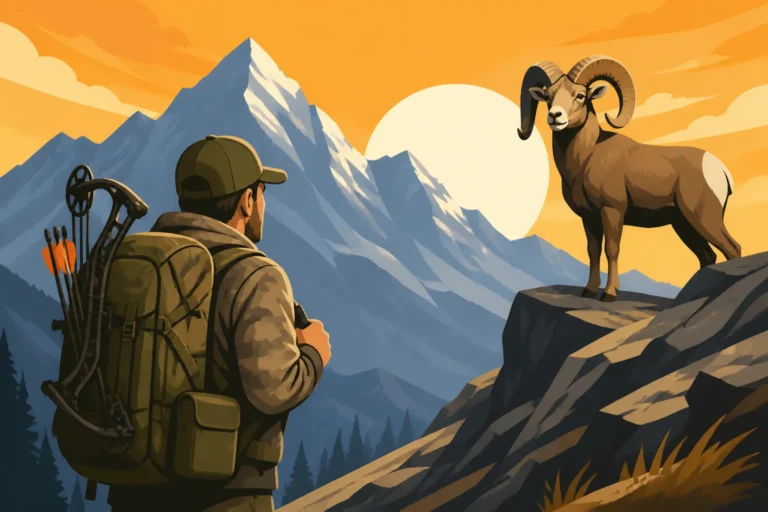
The sheer scale of Alberta's mountain landscapes can be overwhelming when you're pursuing bighorn sheep. It’s easy to feel like you're searching for a needle in a haystack, especially when these magnificent animals blend so seamlessly into their rocky domain. But don't despair; this guide is all about honing your most critical skill for success in the high country: glassing alpine basins effectively to locate those elusive rams.
Understanding Bighorn Sheep Habitat in Alberta's Alpine
Before you even pull out your optics, truly understanding where bighorn sheep prefer to hang out in Alberta’s rugged mountains is absolutely essential. You can have the best glassing technique in the world, but if you're looking in the wrong place, you're just looking at rocks. These animals are creatures of habit and terrain, and knowing their preferences can drastically narrow down your search area.
Identifying Key Terrain Features
Bighorn sheep aren't just randomly spread across the mountains. They have specific needs that dictate their movements and bedding preferences. When you're glassing, you're not just looking for a sheep; you're looking for sheep country. Think about the mosaic of elements that make up their ideal home. They love those steep, broken cliffs and scree slopes that offer incredible visibility and quick escape routes from predators like wolves and cougars. These are their safe havens. Look for areas with a mix of open, grassy benches where they can feed, but always with immediate access to vertical escape terrain.
Sun exposure is another big one. In the early morning, they often gravitate to sun-drenched slopes to warm up after a cold night, especially later in the season. Conversely, as the day heats up, they'll seek out shaded ledges or timber pockets to bed down and escape the intense alpine sun. Pay close attention to north-facing slopes, which tend to hold snow longer and can offer cooler bedding in summer, while south-facing slopes melt out earlier and provide crucial early season forage. Water sources are also non-negotiable, even if they're just small seeps or lingering snowfields. These can act as natural magnets, especially during dry periods. You’ll often find them utilizing high ridges and saddles for travel, as these areas provide both vantage points and relatively easier passage through the rugged landscape. Always ask yourself: if I were a bighorn ram, where would I feel safest, find food, and have good visibility? That’s where you should be focusing your glass.
Seasonal Movements and Preferred Zones
Bighorn sheep aren't static; their movements are deeply tied to the seasons, influencing where you'll find them in the vastness of the alpine. During the prime hunting seasons, which often coincide with late summer and fall, you’ll largely find rams in their summer range, typically at higher elevations in expansive basins well above the tree line. This is where they spend their time feeding, growing, and building up reserves for the harsh winter. As the rut approaches in November, you might see them starting to drift towards lower, more accessible ranges, often joining ewe bands for breeding. However, for most of the early archery and general rifle seasons, the big rams will be nestled high up.
It's critical to understand that even within the alpine, there are preferred zones. While ewes and lambs might stick to slightly gentler slopes, big rams often push into the most rugged, inaccessible terrain. They're looking for solitude, security, and prime forage. Think about areas that require significant effort to reach – the kind of places most casual hikers or hunters might avoid. These could be remote cirques, a series of interconnected high-elevation basins, or even just particularly steep, gnarly sections of a mountain face that seem impossible to navigate. When you're scouting with satellite imagery beforehand, using tools like GoHunt Maps can help identify these potential sheep sanctuaries by highlighting topography and potential access routes. Don't be afraid to study historical data on Alberta's Bighorn Sheep Herds and Their Range to get an idea of traditional haunts for these majestic animals.
What Sheep Eat Up High
Understanding what bighorn sheep eat might seem like a minor detail, but it’s a huge clue when you're trying to locate them. These are grazers, not browsers, meaning they primarily feed on grasses and forbs (broad-leaved herbaceous plants) found in the alpine. As you ascend into the high country, you'll notice distinct changes in vegetation. Above the treeline, forests give way to vast expanses of alpine meadows, tundras, and rocky slopes. It's in these areas that specific, hardy plant species thrive, providing the nutritional backbone for sheep.
Look for patches of lush alpine grasses, often interspersed with colorful wildflowers and low-lying shrubs. They particularly favor tender new growth. After a spring melt, these areas green up quickly, offering a bounty of food. As the season progresses, they might shift to areas where different plant species are still succulent. You’ll also find them seeking out natural mineral licks, which are crucial for their health and horn growth. These licks are often specific rock outcrops or seeps that provide essential minerals. While not always obvious, knowing that sheep need these minerals can lead you to a spot where they might congregate. A patient hunter will also notice how these feeding preferences influence where sheep bed. They’ll often feed in a bowl or on a bench and then bed down on an adjacent, higher, more secure ledge, always keeping an eye on their feeding grounds.
The Art and Science of Effective Glassing
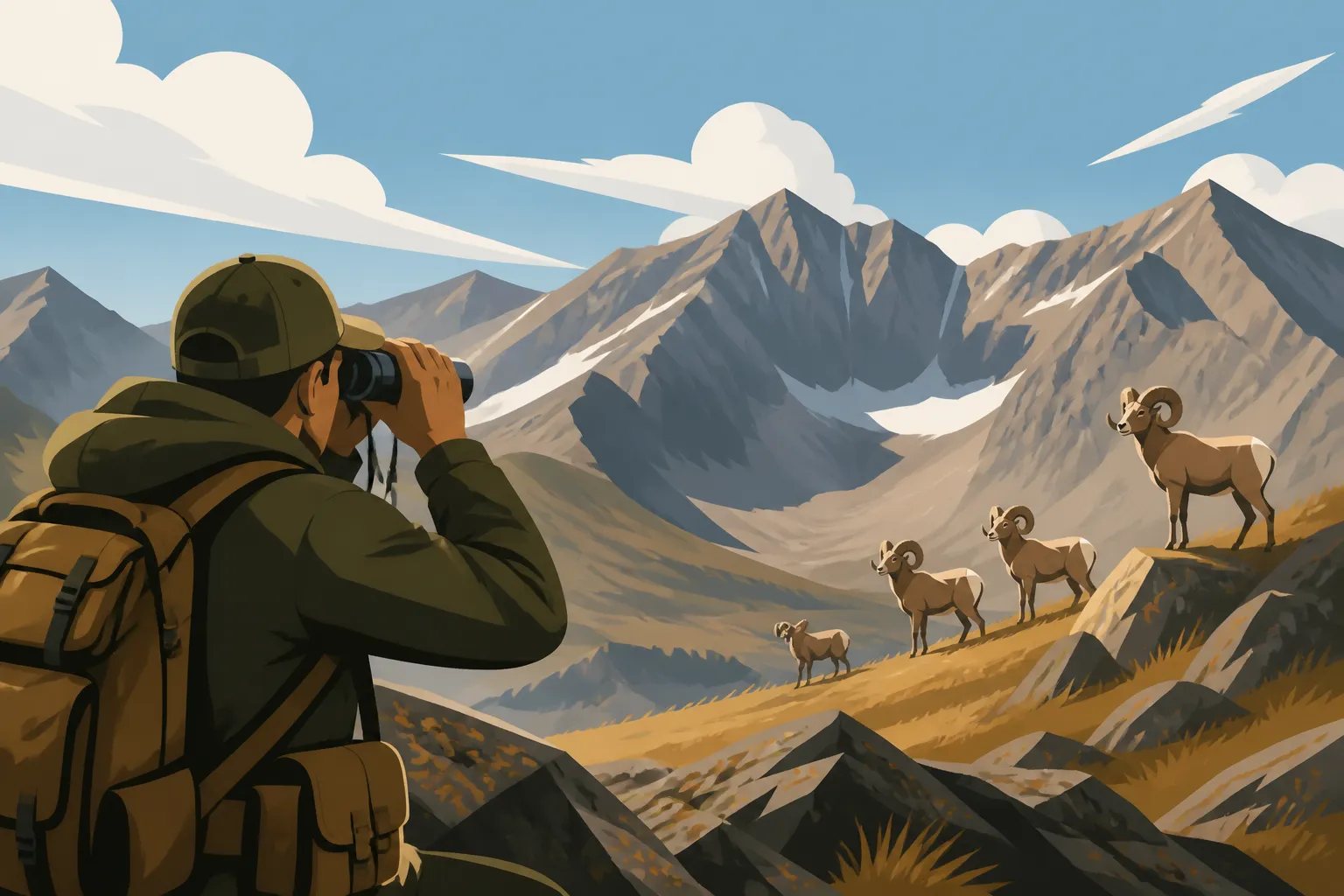
Glassing for bighorn sheep in Alberta’s expansive alpine environments isn't just about pointing your binoculars at a mountain; it's a methodical, disciplined process that combines the right gear with practiced technique. It’s often touted as 90% of sheep hunting, and for good reason—if you can’t find them, you can’t hunt them. This is where your patience and persistence truly pay off.
Essential Gear for Alpine Glassing
You can't effectively glass these vast mountains without the right tools, and for sheep hunting, "good enough" simply isn't good enough. Your optics are your most critical piece of equipment. Start with a high-quality pair of binoculars, typically 10x or 12x magnification. Brands like Swarovski, Zeiss, and Leica are industry leaders for a reason; their clarity, light transmission, and edge-to-edge sharpness are unparalleled, which makes a huge difference when you're picking apart distant terrain. A good binocular harness is also non-negotiable; it keeps your binos secure, accessible, and comfortable for hours of wear.
Next, and arguably even more important, is a top-tier spotting scope. This is where you'll do the detailed work of confirming a "spec" is a sheep and, more critically, judging if it's a legal ram. A 20-60x or even 27-80x power scope, paired with a rock-solid tripod, is essential. Don't skimp on the tripod! A flimsy tripod will lead to frustration and missed details due to wobble. I've seen countless hunters get a great scope only to hobble it with a cheap tripod, rendering the whole setup useless. A rangefinder is also vital for measuring distance, not just for shooting, but for understanding the scale of the landscape and how far those tiny specks really are. Lastly, consider a satellite messenger device for communication in the backcountry, as cell service is non-existent in most prime sheep country. This gear is an investment, but for Backpacking Into Alberta Sheep Country, it's an investment in your success.
Developing a Systematic Glassing Strategy
Once you have your gear, it’s all about the strategy. Randomly scanning the mountain will likely lead to eye strain and frustration, not sheep. You need a systematic approach. The "grid search" method is highly effective. Start by dividing the basin or mountainside into manageable sections, like a grid on a map. Pick a starting point, say the bottom left of a section, and slowly work your way horizontally across, then drop down slightly and go back the other way. Move your optics in slow, deliberate passes, examining every nook, cranny, and shadow. Don't rush! It's not about how fast you can scan, but how thoroughly you can dissect the landscape.
Focus heavily on areas where sheep are likely to bed or feed. This means paying extra attention to transitions—where rock meets grass, where steep cliffs soften to benches, or where small pockets of timber offer cover. Shadows are your friend and foe; they can conceal a sheep, or if a sheep is bedded in the sun, the shadow cast by its body can be the first thing you pick up. Glass against the skyline or contrasting terrain features, as the outline of a sheep often stands out best there. Patience is your most important virtue here. It’s not uncommon to spend hours, sometimes even an entire day, glassing a single basin. Take breaks, let your eyes rest, and then get back to it. Sometimes, just changing your angle or waiting for the light to shift can reveal an animal that was previously hidden. Think of it as a detailed, slow-motion scavenger hunt.
Overcoming Environmental Challenges
The alpine environment is beautiful, but it's also incredibly challenging, and these challenges directly impact your ability to glass effectively. Wind, for example, can make holding a spotting scope steady a nightmare. A heavy, stable tripod helps, but sometimes you just have to brace yourself as best you can or wait for a lull. Heat shimmer, especially on warm, sunny days, creates a wavy distortion that makes it almost impossible to discern details at long distances. Early morning and late evening are often the best times for glassing because the air is cooler and more stable. If the shimmer is bad, try glassing higher up the mountain or waiting for cloud cover.
Glare from snow or wet rock can also be blinding and make it hard to spot animals. Polarized sunglasses can help reduce glare, but sometimes you just need to adjust your position to get a better angle relative to the sun. Fog, rain, and snow are even tougher. While you can't glass through a whiteout, these conditions often cause sheep to move to lower, more sheltered areas, or simply hunker down. If you're caught in adverse weather, use it as an opportunity to change basins or wait it out. Remember, the weather affects the sheep too, and understanding their likely reactions can guide your next move. For instance, sometimes a clearing storm reveals sheep moving and feeding aggressively. Always be prepared for What Happens If Weather Ruins the Hunt and have backup plans.
Interpreting What You See: From Spec to Ram
Spotting a tiny "spec" in a vast mountain range is just the beginning. The real challenge, and the true reward of effective glassing, lies in being able to interpret that distant blob, confirm it's a sheep, and then make the critical judgment about its legality and size. This takes practice, a keen eye, and an understanding of bighorn characteristics.
Differentiating Sheep from Other Wildlife
In the distant, shimmering world of the alpine, it’s remarkably easy to mistake other animals for bighorn sheep. Mule deer, mountain goats, and even elk can sometimes appear as "sheepy" shapes, especially if they're moving or partially obscured. This is where your high-power spotting scope becomes invaluable. The key is to look for distinct characteristics.
Mule deer, for instance, often have larger, floppier ears and a more slender body profile. Their coloration is usually a bit darker brown with a distinct white rump patch and a rope-like tail, whereas bighorn sheep are generally a uniform brownish-grey with a clean white rump. Mountain goats are unmistakable once you get a good look: pure white coats, shaggy beards, and short, sharp black horns that curve backward, as opposed to the massive, coiled horns of a bighorn ram. While both inhabit steep country, mountain goats often prefer even more precipitous, cliff-dominated terrain. Elk, though generally lower in elevation, can sometimes wander into the lower fringes of alpine basins. Their large bodies, long legs, and distinct color patterns (darker neck, lighter body) will usually give them away. When you spot something, pause, breathe, and systematically run through a mental checklist of these distinguishing features. Don't let excitement cloud your judgment. Sometimes, a tiny detail like a flick of an ear or the way an animal moves its head will give it away. You might also encounter Hunting Mountain Goat in Steep Rock which shares some similarities in glassing approach, but the target animal is very different.
Judging Rams for Legalities and Size
This is the moment of truth for any bighorn hunter in Alberta. Once you've confirmed it's a sheep, you need to determine if it’s a legal ram. Alberta regulations typically require a ram to be "full curl" or "four-fifths curl" depending on the specific Wildlife Management Unit (WMU) and the current regulations. A full curl ram means the tip of the horn extends past the bridge of the nose when viewed from the side. Four-fifths is slightly less, but still a substantial curl. This can be incredibly difficult to judge at long distances, especially if the ram is angled away from you or has a broomed-off tip.
Look for horn mass – older, mature rams will have significantly thicker bases and more bulk to their horns. The depth of the curl and how tightly it coils are also crucial. Pay attention to the age rings; a truly mature ram will have several distinct annual growth rings. Use your spotting scope to trace the curve of the horn as if it were a string. Does it complete the full circle? Does the tip reach or pass the eye? Practice makes perfect, and before your hunt, spend time studying photos and videos of legal rams versus younger ones. Even small differences can mean the difference between a legal harvest and an ethical infraction. When you're in the field, use every bit of magnification and good lighting available to make an absolutely positive identification. When you've spotted one, take your time to thoroughly apply the principles of Judging a Full-Curl Bighorn Ram before making any moves.
| Optic Type | Magnification Range | Primary Use | Key Advantages | Considerations |
|---|---|---|---|---|
| Binoculars | 8x – 15x | Initial scanning, wider field of view | Lightweight, comfortable for long use | Lower magnification for detailed ID |
| Spotting Scope | 20x – 80x | Detailed identification, ram judging, long-range | High magnification, crucial for legality ID | Requires tripod, heavier, narrower field of view |
| Rangefinder | N/A | Distance measurement, shot placement | Essential for ethical shots, gauging terrain | Can be affected by adverse weather, battery life |
When to Pack Up and Stalk
After hours, or even days, of meticulous glassing, the moment arrives: you’ve found your ram, and he’s legal. Now what? Resist the urge to immediately jump up and run towards him. The decision to pack up and initiate a stalk is just as critical as finding the animal itself. First, you need absolute confidence in your identification. Is it 100% legal? Are you sure it's not a ewe, a young ram, or a mountain goat? Double-check, triple-check.
Once confirmed, analyze the situation. Where is the ram feeding or bedded? What is the wind doing, and what will it likely do over the next few hours? How will thermals affect your approach as the sun moves? What are the escape routes for the sheep, and are there any features (ridges, draws, timber pockets) that can conceal your approach? This is where your knowledge of the terrain really comes into play. You need to map out a precise route to get within shooting distance without being seen, smelled, or heard. Sometimes this means taking a much longer, more circuitous route that keeps you out of sight, even if it adds hours to your hike. It's also important to consider the time of day. If it’s late in the afternoon, do you have enough daylight to complete the stalk, make the shot, and begin Packing Out of Alberta's Mountain WMUs before dark? Sometimes the best decision is to wait until morning, even if it means watching the ram disappear over a ridge. Patient glassing gives you the intel; patient stalking ensures you can use it. Remember, these mountains are unforgiving, and a rash decision can quickly turn a potential success into a dangerous situation. Being physically prepared with good Fitness for an Alberta Sheep Hunt is also paramount for a successful stalk in such arduous terrain.
Disclaimer
Please note that hunting regulations, seasons, and licensing requirements in Alberta can change. Always consult the most current Alberta Hunting Regulations published by Alberta Environment and Protected Areas before planning any hunting trip. This guide is for informational purposes only and does not supersede official regulations. It is the hunter's responsibility to know and follow all applicable laws.