Hunting Blue Grouse on a Foothills Ridge
The thrill of chasing blue grouse (often called dusky grouse these days) along the winding, timbered ridges of Alberta's foothills is an experience unlike any other. However, these birds can be incredibly elusive, disappearing into the dense conifer stands or simply melting away into the rugged terrain, leaving many hunters frustrated. This guide is here to unravel the mysteries of hunting blue grouse on those specific foothills ridges, providing you with practical strategies and a deeper understanding of their habitat to help you fill your vest.
Understanding Blue Grouse Habitat on Foothills Ridges
Successfully hunting blue grouse in Alberta's foothills starts with a deep understanding of where these birds live and why. It's not just about walking through the bush; it's about knowing which bush, which ridge, and which elevation to focus your efforts.
Identifying Prime Ridge Habitat
Blue grouse are creatures of elevation and specific timber types. On Alberta's foothills ridges, you'll find them gravitating towards areas that offer a crucial combination of dense cover, varying terrain, and access to certain food sources. These birds thrive where mature coniferous forests, particularly spruce, fir, and pine, dominate the landscape. They aren't typically found in wide-open prairie or solely deciduous forests. Instead, they prefer the transition zones where the timber begins to thin slightly, offering patches of sunlight and undergrowth, but always with dense canopy nearby for escape and roosting.
Think about the steep slopes and broken terrain of areas like the Hunting the Livingstone-Porcupine Hills or general regions within Alberta's Foothills Country. These aren't flat, easy walks; they are challenging environments that blue grouse have adapted to perfectly. Look for areas with diverse forest ages, including mature stands that provide thermal cover and old growth for drumming logs, interspersed with younger regrowth that offers tender shoots and berries. The "ridge" aspect is key here – they love the thermal advantages and vantage points that higher ground offers, often using the leeward side of a ridge for shelter from prevailing winds.
Food Sources and Seasonal Movements
The blue grouse's diet is diverse and changes with the seasons, which in turn dictates their movements along the foothills ridges. In the warmer months, especially early in the hunting season (which often aligns with the Alberta Game Bird Seasons and Limits), they'll feast on a variety of berries, insects, and succulent green vegetation found in sunnier clearings or along forest edges. As the season progresses into fall and cooler temperatures set in, their diet shifts dramatically towards conifer needles and buds, becoming almost entirely arboreal.
This seasonal shift is critical for hunters. Early in the season, you might find them closer to ground level, foraging in berry patches or dusting in sunny spots. They'll hold tighter, relying on camouflage. However, as winter approaches and snow begins to fall, they'll move higher into the trees, often perching on larger branches, almost appearing like bumps on a log. This makes them incredibly difficult to spot but can be advantageous if you know where to look and can pick them out against the sky. Understanding this movement is paramount; don't expect to find them in the same spots in September as you would in October or November.
Essential Gear and Scouting for Ridge Grouse
Hunting blue grouse on foothills ridges isn't like a leisurely stroll in the park. It's often physically demanding, requiring specific gear and diligent scouting to maximize your chances of success. Being prepared for the challenging terrain and variable weather is non-negotiable.
Recommended Gear for Foothills Grouse Hunting
When you're tackling Alberta's rugged foothills, your gear selection directly impacts your comfort, safety, and success. First and foremost, sturdy, waterproof hiking boots are a must. You'll be traversing steep, uneven ground, often littered with loose rocks, fallen timber, and wet undergrowth. Blisters or wet feet can quickly ruin a hunt. For specific advice, you might want to read up on Boots for a Foothills Hunt. Layers of clothing are equally important; the foothills weather can swing wildly from chilly mornings to warm afternoons, and a sudden change in elevation can bring a significant temperature drop. Blaze orange is not just a recommendation; it's a legal requirement and a critical safety measure, especially in areas shared with big game hunters.
Your firearm choice is typically a lightweight shotgun, often a 20-gauge or 12-gauge, with loads of 6 or 7.5 shot. Given the close-quarter flushes you might encounter, an open choke (like improved cylinder or skeet) is often preferred. Beyond the basics, reliable navigation tools are absolutely essential. A GPS device or a robust mapping app on your phone (like GoHunt, which many hunters swear by for its detailed topo maps and land ownership layers) can be a lifesaver. Carry a whistle for communication, plenty of water, high-energy snacks, a basic first-aid kit, and a small game vest or pack to carry your birds. Remember, you're often far from any easy access.
Scouting Strategies for Success
Effective scouting is the secret weapon of many successful grouse hunters. It begins long before you set foot on the ridge, utilizing technology and maps. Digital mapping platforms, including many features found on apps like GoHunt, allow you to analyze topography, identify promising coniferous stands, locate old logging roads or trails, and even pinpoint potential feeding areas without leaving your couch. Look for drainages that lead up to ridges, south-facing slopes that warm up faster, and areas where different timber types converge. Understanding the local Reading an Alberta WMU Map Before You Go is also crucial for identifying accessible public lands.
Once you're on the ground, your scouting becomes more tactile. Look for physical signs: grouse droppings (small, pellet-like, and typically found under roost trees or near feeding areas), dusting bowls (small depressions where birds have "bathed" in loose soil), and discarded feathers. Listen for drumming sounds, especially in the mornings and evenings during the breeding season, though you're less likely to hear this during the fall hunting season itself. Pay attention to game trails that might hint at regular movement patterns. Remember, scouting for blue grouse in the foothills differs significantly from scouting for waterfowl in a stubble field; it requires vertical effort and a keen eye for subtle signs in dense cover.
Hunting Tactics for Blue Grouse on Foothills Ridges
Once you've done your homework and geared up, it's time to put boots on the ground. Hunting blue grouse on these ridges demands a patient, methodical approach, whether you're working with a canine partner or going solo.
Stalking and Flushing Techniques
Blue grouse are notorious for holding incredibly tight, often letting you walk right past them before erupting into a thunderous, heart-stopping flush. This means your approach needs to be slow and deliberate. When traversing a ridge, don't just walk the easiest path. Instead, try to crisscross the contours, always moving against the wind if possible, to allow your scent to blow away from the birds and to help carry the sounds of their wingbeats towards you if they flush. Focus on walking the edges of cover – where dense timber meets a more open slope, or where an old road cuts through a forested area. These transition zones are often where grouse feel safe but still have access to light and food.
When you enter an area that looks particularly "grousey" – perhaps a dense stand of young spruce on a steep slope – slow your pace to a crawl. Pause frequently, listen intently, and scan the ground and lower branches ahead. Blue grouse camouflage is excellent, and they often blend seamlessly with their surroundings. If you suspect a bird is nearby, try a "stop and go" method: walk a few paces, stop for 10-15 seconds, then continue. This often makes a nervous bird flush, believing it's been spotted. If you jump a bird and miss, mark its general direction. Blue grouse will often fly a short distance and re-roost, sometimes allowing for a second attempt if you move in quickly and quietly.
Utilizing Hunting Dogs for Grouse
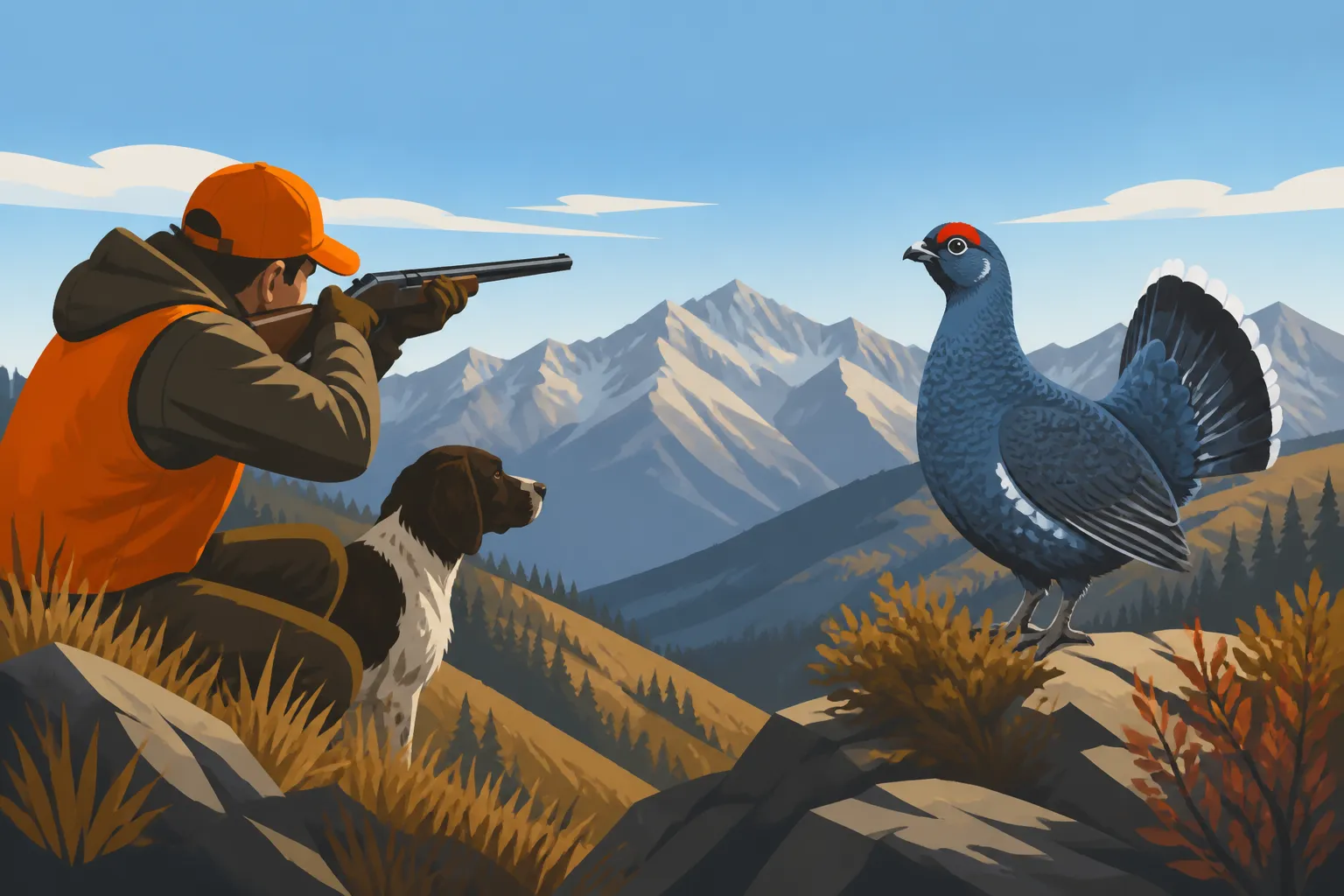
For many upland hunters, the experience isn't complete without a canine companion. Hunting blue grouse with a dog can be incredibly effective, but it requires a dog suited to the strenuous terrain and the specific behavior of these birds. Flushing breeds like Springer Spaniels or pointing breeds such as Brittanys or English Setters are popular choices. A dog's keen nose can pinpoint birds that you would undoubtedly walk past, making the hunt significantly more efficient.
However, hunting with a dog in the foothills comes with its own set of challenges. The steep slopes and dense cover can be physically demanding for both dog and handler. Dogs need to be well-conditioned and trained to stay within an appropriate range. A dog that ranges too far will often flush birds out of shooting range or into impossible terrain. For specific training and handling tips, especially in challenging environments, you might find insight in Using a Flushing Dog in Thick Cover. Always ensure your dog is wearing a bell or GPS collar for safety, as losing a dog in the vastness of the foothills can be a nightmare. Be mindful of their paw pads on rocky ground and keep them hydrated.
Shot Placement and Recovery
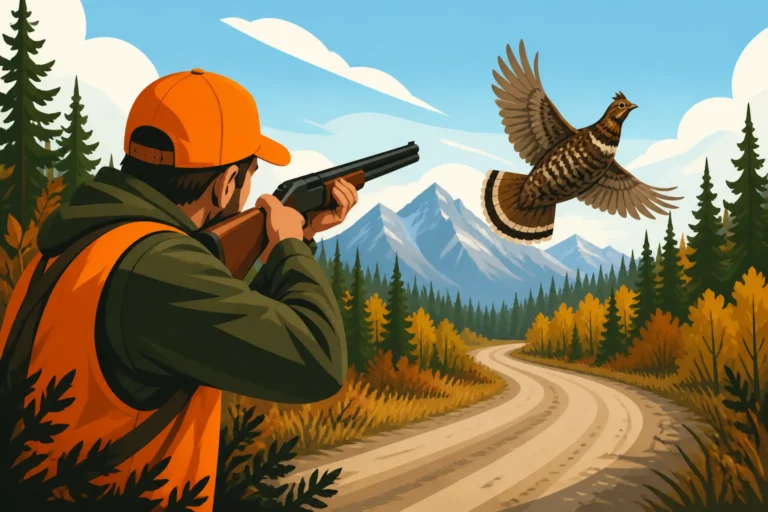
When a blue grouse flushes, it's often a sudden, chaotic event. They burst from cover with surprising speed, sometimes straight up, sometimes across a narrow opening. The key to an ethical shot is to remain calm, get your gun mounted smoothly, and swing through the bird. Aim for the vitals, typically the front half of the bird. Given the dense cover, shot opportunities are often fleeting, requiring quick reflexes.
After the shot, swift recovery is absolutely critical. Blue grouse are hardy birds and can sometimes run or flutter a surprising distance, even when mortally wounded, disappearing into the undergrowth. Mark where the bird fell, and if possible, mark where you last saw it. If hunting with a dog, send them immediately to retrieve. If hunting solo, drop a hat or some other marker at your shooting position to help you maintain your bearings in the thick timber. A lost bird is a wasted bird and goes against the principles of ethical hunting. Take the time to thoroughly search the area.
Post-Harvest and Conservation Considerations
Bringing a blue grouse to hand is a rewarding experience, a testament to your effort and skill in a challenging environment. But the hunt doesn't end there; proper care for your harvest and an ongoing commitment to conservation are essential aspects of responsible hunting.
Field Dressing and Meat Care
Once you've retrieved your bird, quick field dressing is paramount, especially if the weather is mild or warm. Remove the entrails as soon as possible to allow the carcass to cool down quickly. This prevents bacterial growth and ensures the highest quality meat. Many hunters simply "breast out" their grouse, taking only the breast meat, but the legs and thighs are also excellent table fare and worth the effort.
To transport your birds, a breathable game bag is ideal, allowing air circulation. Avoid plastic bags, which can trap heat and moisture, leading to spoilage. On longer hunts or warmer days, consider bringing a small cooler with ice, though this might not always be practical in rugged foothills terrain. Once home, clean the birds thoroughly, pat them dry, and refrigerate or freeze them promptly. Blue grouse meat is lean and dark, with a delicious, wild flavor that's fantastic roasted, grilled, or pan-fried.
Responsible Hunting and Conservation
Hunting blue grouse, like all forms of hunting, comes with a responsibility to uphold ethical standards and contribute to conservation efforts. Always know and adhere strictly to the daily bag limits and possession limits specified in the current Alberta hunting regulations. Over-harvesting not only impacts future populations but also diminishes the quality of the hunting experience for everyone.
Respect for the land is also crucial. Pack out everything you pack in – leave no trace behind. If you're hunting on private land, ensure you have explicit permission from the landowner. Even on Crown Land, practice courtesy and safety, being aware of other hunters, hikers, and wildlife. Your hunting license fees and contributions to organizations like the Alberta Conservation Association directly support habitat protection, research, and wildlife management efforts that benefit blue grouse and countless other species. By being a responsible hunter, you're not just enjoying the outdoors; you're actively ensuring its future. For further information on these broader responsibilities, consider learning more about Alberta Hunter Education Requirements and even Taking the Conservation Course Online.
Seasonal Blue Grouse Movement on Foothills Ridges
Early Season (Sept. – Early Oct.) Location: Often lower to mid-elevations on ridges, near berry patches (saskatoon, huckleberry), edges of clearings, and areas with lush green undergrowth. Dusting areas in sunny spots.
Behavior: Foraging on ground, may hold tight.
Mid-Season (Mid-Oct. – Early Nov.) Location: Gradually moving to higher elevations on ridges as ground food sources diminish. Focus shifts to areas with denser mature coniferous timber (spruce, fir, pine) providing thermal cover.
Behavior: Diet shifting to conifer needles/buds. More likely to be found in trees but may still flush from ground.
Late Season (Late Nov. – Dec.) Location: Predominantly at higher elevations, deep within mature coniferous stands. Often found perched high in trees, especially on large branches where they feed on needles and buds.
Behavior: Almost entirely arboreal, relying on tree cover. Very difficult to spot, may flush vertically from trees.
Disclaimer
Hunting is an inherently dangerous activity. This guide provides general information and recommendations; however, conditions can change rapidly, and individual circumstances vary. Always prioritize safety, adhere to all local, provincial, and federal regulations, and use good judgment in the field. The author and publisher assume no responsibility for accidents, injuries, or legal infractions incurred while hunting. It is your responsibility to verify all regulations and ensure your own safety.