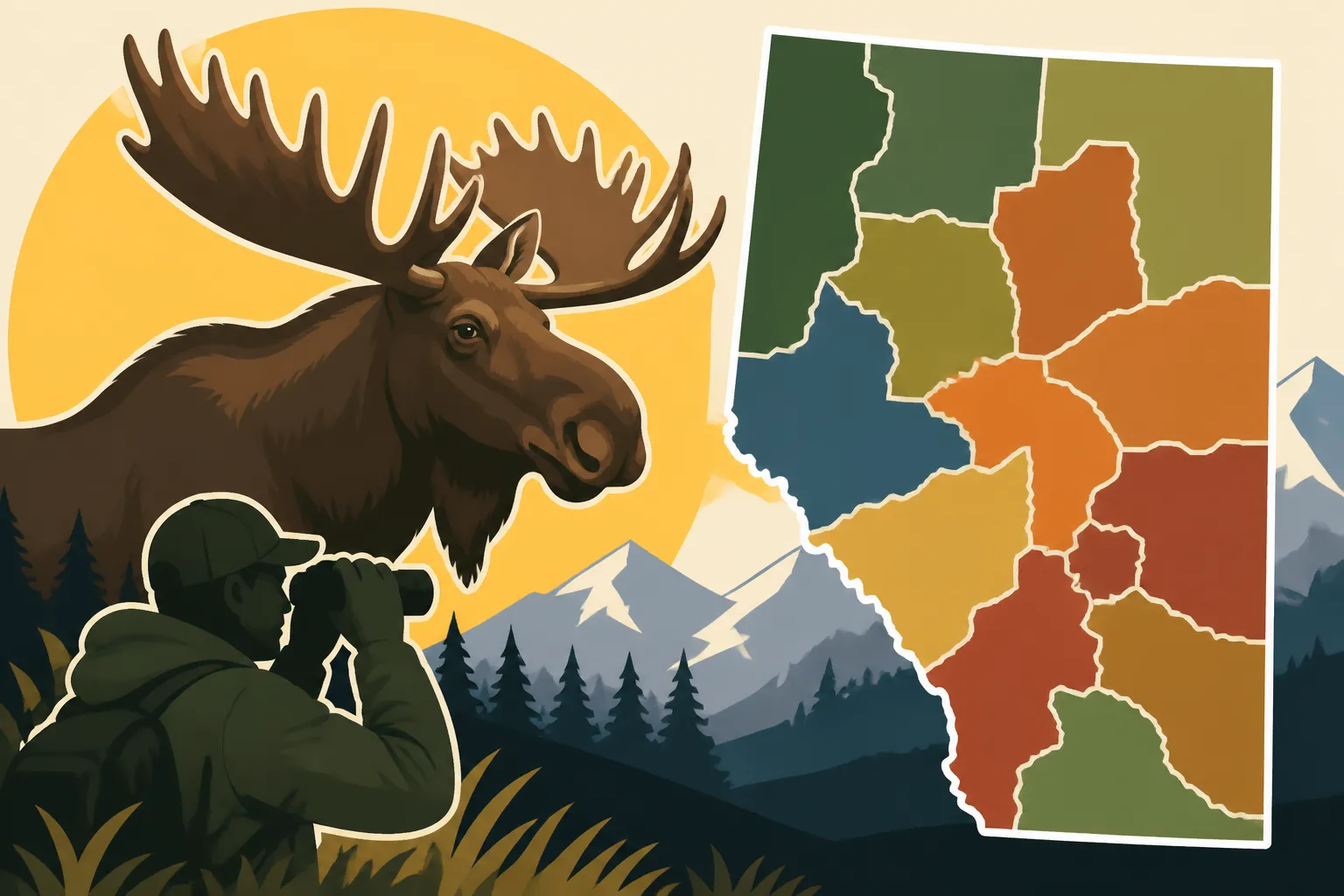
Alberta Moose Draw Odds by WMU
One of the most frustrating parts of being an Alberta hunter, especially when you're dreaming of a moose hunt, is the annual special license draw. You spend hours poring over maps, debating WMUs, and then cross your fingers, only to often be met with disappointment. It can feel like throwing your application into a black hole, with no real understanding of why some folks get drawn year after year and others don't. This guide is here to shed some light on the mystery of Alberta moose draw odds by WMU, helping you understand how the system works and how to strategically improve your chances of finally getting that coveted moose tag.
Understanding the Alberta Moose Draw System
Applying for a moose tag in Alberta isn't as simple as walking into a sporting goods store and picking one up. Moose, along with other prized species like elk and goat, are managed through a special license draw system, while sheep draws apply only to certain licences, such as resident class 2 sheep and a handful of WMU-special class 1 draws. This ensures sustainable populations and fair allocation of hunting opportunities.
The Basics of Alberta's Special Licence Draws
For many big game species in Alberta, including moose, the province employs a special licence draw system. This means that instead of buying a tag over the counter, hunters must apply for a specific wildlife management unit (WMU) and a specific type of tag (e.g., antlered moose, antlerless moose) during a designated application period. It's a system designed to manage hunter numbers, maintain healthy game populations, and distribute hunting pressure. The application process itself is handled through the My Wild Alberta system, where hopeful hunters submit their choices online. Once the application period closes, it’s a nervous wait until the results are posted. For an in-depth look at this process, you can explore "Alberta's Special Licence Draws". This system can feel a bit like a lottery, especially when you're just starting out, but understanding the underlying mechanics can greatly enhance your strategy. The draw helps ensure that moose populations aren't overhunted in specific areas, contributing to the long-term health of the herds across the province.
How Priority Points Affect Your Moose Draw Chances
The cornerstone of Alberta's special license draw system is the priority point system. This system rewards hunters who have been unsuccessful in previous draws, giving them a higher chance of success in subsequent years. Every time you apply for a draw and are unsuccessful, you gain a priority point for that species. So, if you apply for an antlered moose draw in WMU X and don't get drawn, you'll have one priority point for antlered moose in the next draw cycle. The more priority points you accumulate, the better your odds become. This is crucial for moose, as many desirable WMUs require a significant number of points to draw. It essentially puts you higher up on the list compared to someone with fewer points.
However, there's a catch (isn't there always?). When you are successfully drawn for a special license for a specific species, your priority points for that species reset to zero. This "reset" is designed to give everyone a chance over time, preventing a select few from monopolizing the best tags. So, if you finally draw that moose tag you've been dreaming of, be prepared to start building those points all over again for your next moose adventure. Understanding this dynamic is key to long-term hunting strategy in Alberta. For more detailed information on how these points accrue and reset, you can check out "Alberta's Draw Priority Point System". It's a system that truly tests a hunter's patience and commitment!
Factors Influencing Moose Draw Odds
It’s not just about luck; many elements play into the draw odds for moose in specific WMUs. Knowing these factors can help you make more informed decisions about where and when to apply.
Population Density and WMU Popularity
The health and density of the moose population within a particular WMU are primary drivers of its draw odds. Areas known for robust moose numbers, often within Alberta's vast boreal forest regions, naturally attract more applicants. Hunters gravitate towards WMUs where the chances of encountering a moose are perceived to be higher. For instance, northern WMUs found in the Boreal Forest, which boast significant moose populations, tend to be highly sought after. If you're looking for a general overview of where moose are found in Alberta, "Moose Across Alberta's Boreal and Foothills" provides excellent context.
Beyond just sheer numbers, the reputation of a WMU for producing large, mature bulls also significantly impacts its popularity. Hunters aspiring for a trophy moose will often target WMUs like those in the Peace River Breaks or the Swan Hills, regions that have historically yielded impressive antlers. These areas, though potentially challenging to access, see intense competition due to their reputation, driving the required priority points much higher. Furthermore, accessibility plays a role; WMUs that are easier to reach by truck or ATV, even if they have slightly lower moose densities, can sometimes be more popular than remote, walk-in only areas, simply because of convenience. It's a constant balancing act between opportunity, trophy potential, and ease of access that shapes demand.
License Allocations and Antlered vs. Antlerless Opportunities
Each year, Alberta Environment and Parks carefully determines the number of special licenses allocated for moose in each WMU. This allocation is not arbitrary; it's based on comprehensive population surveys, habitat assessments, and historical harvest data, all aimed at ensuring the long-term sustainability of the moose resource. These numbers can fluctuate year to year based on factors like winter severity, calf recruitment rates, and habitat changes. This dynamic allocation directly impacts your odds. If a WMU's moose population is thriving, more tags might be issued, potentially improving your chances, but if numbers are declining, allocations will be reduced, making tags harder to come by. For a closer look at regional populations, "Alberta's Moose Population by Region" offers valuable insight.
Another critical distinction is between antlered and antlerless moose draws. Antlered (bull) moose tags are almost always more competitive, as most hunters prefer to harvest a bull. Antlerless (cow/calf) tags, on the other hand, are often used as a population management tool in WMUs where moose numbers need to be controlled or specific herd demographics are desired. Consequently, antlerless draws generally have significantly better odds, often requiring fewer priority points. While perhaps not every hunter's first choice, an antlerless tag can be an excellent way to gain hunting experience and put moose meat in the freezer, especially if your priority points are low. For a deeper dive into these tag types, check out "The Difference Between Antlered and Antlerless Draws". Sometimes, supplemental antlerless licenses might become available later in the season for specific WMUs, offering another avenue for those who didn't succeed in the initial draw.
Navigating WMU-Specific Moose Draw Odds
Once you understand the factors at play, the next step is to actually dig into the data for specific WMUs. This is where the rubber meets the road, and you start to piece together a real strategy.
Where to Find Official Draw Statistics
When it comes to understanding the real odds for moose draws in specific WMUs, your primary source should always be the official Alberta government resources. The My Wild Alberta website, particularly the "Alberta RELM" portal, is where the province publishes detailed draw statistics from previous years. This data typically includes the number of applicants at various priority point levels, the number of successful applicants, and the lowest priority point drawn for each WMU and species. It's not always the most user-friendly interface, but it's the most accurate and up-to-date information directly from the source. You'll need to learn how to navigate these tables and reports to extract the insights you need.
Beyond the government portal, several third-party platforms and online communities provide compiled and analyzed draw data. Services like GoHunt, for example, specialize in aggregating this kind of information and presenting it in a more digestible format, often with predictive tools or comparisons across multiple WMUs. These tools can be incredibly helpful for hunters who want to quickly compare hundreds of options without manually sifting through raw government reports. However, it's always a good practice to cross-reference any third-party information with the official Alberta RELM data to ensure accuracy and account for any potential lag in updates. Using a combination of these resources will give you the most comprehensive picture of your potential success.
Interpreting the Data for Different WMUs
Understanding what the numbers actually mean is more important than just seeing them. When you look at draw statistics, remember that "odds" are a probability, not a guarantee. If a WMU shows that hunters with 6 priority points had a 20% success rate last year, it means one out of every five applicants at that point level got a tag. It doesn't mean you will draw if you have 6 points, but it certainly increases your probability compared to someone with fewer points.
Let's consider a hypothetical example using a few WMUs. Imagine WMU 350, a popular foothills unit, historically requires 8-10 priority points for an antlered moose tag, with only a handful of tags issued. This indicates very stiff competition, making it a long-term goal for most hunters. In contrast, WMU 530, deep in the northern boreal, might show successful draws for antlered moose at 2-3 priority points, but perhaps it sees fewer applicants due to its remoteness and limited access. This tells you that your immediate chances are much better in the less-pressured WMU.
| WMU (Hypothetical) | Species/Tag Type | Lowest Priority Drawn (Avg. Last 3 Yrs) | Total Tags Issued (Avg. Last 3 Yrs) | Total Applicants (Avg. Last 3 Yrs) | Approximate Odds (at Avg. Priority) |
|---|---|---|---|---|---|
| WMU 350 (Foothills) | Antlered Moose | 9 | 5 | 150 | ~3% (at 9 pts) |
| WMU 350 (Foothills) | Antlerless Moose | 3 | 10 | 80 | ~12% (at 3 pts) |
| WMU 530 (Boreal) | Antlered Moose | 3 | 20 | 200 | ~10% (at 3 pts) |
| WMU 530 (Boreal) | Antlerless Moose | 0 | 30 | 120 | ~25% (at 0 pts) |
| WMU 446 (Parkland) | Antlered Moose | 6 | 8 | 120 | ~7% (at 6 pts) |
This table clearly illustrates how odds vary wildly. The Foothills WMU, while desirable, has very tough odds for bulls. The Boreal WMU offers significantly better chances, especially for antlerless tags, while a Parkland WMU sits somewhere in the middle. Remember that "Alberta's 219 Wildlife Management Units" each have unique characteristics impacting these numbers. It's also vital to look at trends over several years, not just one. An anomaly in a single year (e.g., a sudden increase in tags) might skew the perception of long-term odds. Consistent data over a three-to-five-year period will give you a much more reliable picture of a WMU's true draw difficulty.
Strategizing Your Moose Draw Application
Armed with knowledge of the draw system and how to interpret the odds, you can now approach your application with a much more deliberate and strategic mindset.
Building Priority Points Wisely
For many Alberta hunters, particularly those dreaming of a bull moose in a highly sought-after WMU, building priority points is a long-term game. You have a choice: do you apply for those long-shot, high-point WMUs year after year, patiently accumulating points for a potentially epic hunt down the line? Or do you apply for WMUs with slightly better odds to try and get a tag sooner, knowing it will reset your points? There's no single right answer, as it depends on your personal hunting goals and patience.
If your heart is set on a specific "bucket list" moose hunt in a region known for producing massive bulls, like "Where Alberta Grows the Biggest Bulls" in the Peace Country, then consistently applying for those high-demand WMUs, even if you're unsuccessful for many years, is the only way to eventually draw a tag. It's an investment in future opportunity. Imagine your friend, Mark, who has been applying for a specific WMU in the Peace for 12 years. He consistently puts in for that unit, knowing he's building points, and eventually, with 10+ points, he gets drawn for the moose hunt of a lifetime.
Conversely, some hunters choose to apply for "priority-only" species or WMUs. This means you apply for a specific draw but intentionally select an option that you know you won't get drawn for, simply to acquire another priority point without the risk of drawing a tag you might not want or be able to use that year. This tactic can be useful if you're busy with other hunts but still want to increase your points for a future moose hunt. It’s all about playing the long game and understanding how "Alberta's Draw Priority Point System" truly works to your advantage over time.
Optimizing Your WMU Choices for Success
When the draw application window opens, it's tempting to just pick your favorite WMU, but a more strategic approach can significantly boost your chances. Instead of putting all your hopes on one long-shot unit, consider diversifying your choices. Many hunters will apply for a dream WMU as their first choice (the high-priority shot), a more realistic WMU with decent odds as their second choice (the medium-priority option), and a WMU with almost guaranteed success (often antlerless or in a less-pressured area) as their third choice. This tiered approach increases your likelihood of drawing some tag, even if it's not your absolute top pick. GoHunt, with its robust data analysis, can be a great tool for identifying these different tiers of WMUs based on historical draw success.
Beyond historical odds, smart hunters also research current conditions. Pay attention to Alberta Environment and Parks reports on population surveys, winter kill assessments, and even the impact of recent wildfires. For example, a severe winter can reduce moose numbers in certain areas, leading to fewer tags the following year, while a recent wildfire might create new forage and improve moose habitat over a few years, potentially increasing future opportunities. Learning about "How Wildfire Changes Game Range" can give you an edge in predicting these shifts.
Finally, if you have a hunting partner or group, consider applying as a party. While party hunting can be beneficial for logistical reasons during the actual hunt, it's important to understand how it affects draw odds. Generally, when applying as a party, the lowest priority points among the group determine the group's overall chance of success. So, if you have 8 points and your friend has 2, your party will be considered at the 2-point priority level. This means you need to be strategic about who you apply with if you're serious about drawing a high-priority tag. Make sure you understand the rules for party applications before submitting your choices.
Alternative Opportunities and General Season Options
If the draw system feels too daunting, or you consistently find yourself out of luck, remember that the special license draw isn't the only way to hunt moose in Alberta, especially for residents. While the most coveted tags often come through the draw, some WMUs, particularly in the vast northern regions, have general moose seasons. These are typically restricted to residents and are often for antlered moose, offering opportunities without the need to navigate the draw. Always consult the current Alberta hunting regulations for specific WMUs and season dates to see if a general tag is an option in your desired area. For those focusing on other species, "Rifle Hunting Alberta's General Seasons" might be a good alternative if moose is not successful.
Even if you don't draw a moose tag, don't let your season go to waste. You can still pursue other general season species like white-tailed deer, mule deer, or black bear, which offer fantastic hunting experiences across Alberta. It's a great way to stay active in the field, learn the landscape, and fill your freezer. Consider practicing your "Calling Moose in Alberta's Boreal Forest" or your strategy for "Hunting Moose Along Cutlines and Seismic Lines" even without a tag, simply to hone your skills for when you do get drawn.
Ultimately, your priority points are a valuable asset. If your moose draw chances are consistently low for your preferred WMUs, or if you simply need a break from the waiting game, you might consider using your accumulated priority points for a different species where your odds are better. Perhaps you’ve been building elk points inadvertently, or a draw for a different species, such as a special class 1 sheep draw, suddenly seems more appealing. It's all about making informed decisions to maximize your hunting opportunities in Alberta. And when you do finally get that tag, don't forget the practicalities, like how to manage your harvest with tips from "Quartering a Moose Alone in the Bush".
Disclaimer
The information provided in this guide is for general informational purposes only and is subject to change. Hunting regulations, draw odds, and license requirements in Alberta can vary from year to year. Always consult the official Alberta Hunting Regulations and the My Wild Alberta website (albertarelm.com) for the most current and accurate information before planning any hunting activity.