Alberta Shooting Hours for Big Game
There's nothing quite as frustrating, or as potentially problematic, as being unsure about legal shooting hours when you're out hunting big game in Alberta. That pre-dawn anticipation or the last moments of twilight can be thrilling, but also filled with doubt and the very real concern of breaking regulations. This guide is here to clear up all the confusion, helping you understand precisely when you can, and cannot, legally take your shot, ensuring a safe, ethical, and compliant hunt every time.
Deciphering Alberta's Legal Shooting Hour Rules
One of the most fundamental rules for any hunter in Alberta involves knowing the precise window during which you can legally discharge a firearm or bow at big game. It's not just a guideline; it's a strict regulation designed for safety, fair chase, and proper game management. Disregarding it can lead to serious fines, licence suspension, or worse.
The "Half-Hour" Standard for Big Game
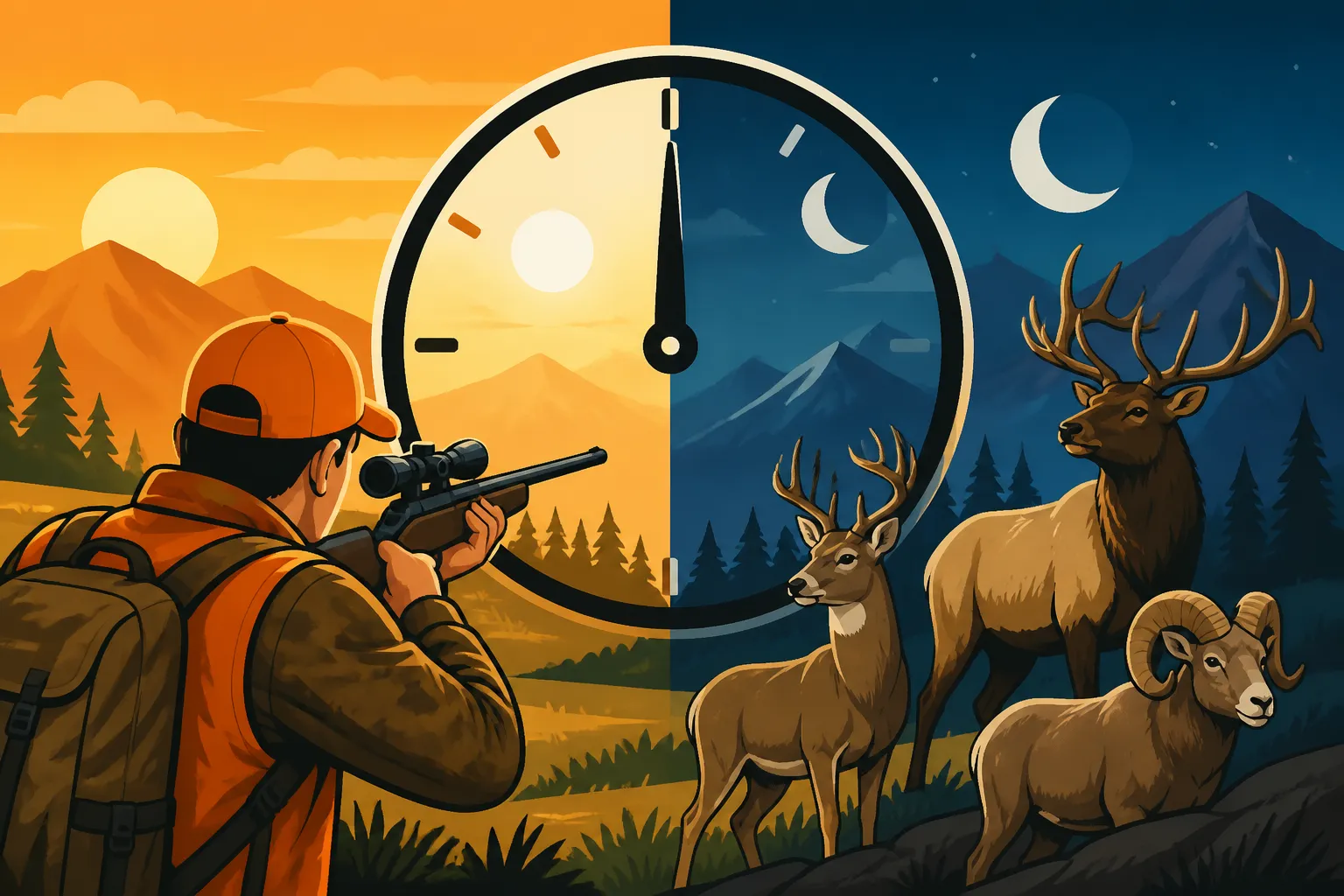
In Alberta, for all big game species, the legal shooting hours are defined as half an hour before sunrise to half an hour after sunset. This isn't a suggestion; it's a hard and fast rule that applies universally across all Wildlife Management Units (WMUs) and for every animal classified as big game, including deer, moose, elk, bear, and sheep. This specific half-hour window is critical because it acknowledges that while light might be low, there's generally enough ambient light to clearly identify your target and ensure a responsible shot. Anything outside this window is considered illegal, even if you personally feel there's enough light.
This regulation ensures a standardized approach across the province, removing ambiguity that might arise from subjective interpretations of "daylight." It's also a significant distinction from predator hunting, where rules for species like coyotes or wolves might allow for night hunting, often with specific equipment stipulations. But for big game, the half-hour rule is paramount. Being set up in your stand or blind before the legal start time, or staying in position past the legal end time, is perfectly acceptable; what matters is when the shot is actually taken.
The Rationale Behind Restricted Hours
Why do we have these specific shooting hours? It boils down to a few key principles that underpin ethical and responsible hunting. First and foremost is safety. Low light conditions significantly increase the risk of misidentification, both of your target animal and anything beyond it. You might mistake a branch for an antler, or worse, another hunter for an animal. The regulations aim to provide a window where visibility is generally adequate to make a clean, humane shot and confirm your target's species and sex, which is especially important in WMUs with antler point restrictions or draw-only tags.
Secondly, it's about fair chase. Hunting at night, or in extremely low light, often gives the hunter an undue advantage, particularly with the aid of night vision optics or thermal imaging (which are illegal for big game hunting in Alberta anyway). The "half-hour" rule maintains a balance, ensuring that the animal has a reasonable chance while the hunter still has sufficient light to perform their duty responsibly. Finally, it helps with conservation and management. Clear identification reduces the chances of mistakenly taking an illegal animal, which could impact herd populations and management efforts. Understanding these underlying reasons helps hunters appreciate the importance of adhering to the rules, rather than seeing them as an arbitrary restriction.
Precision in Practice: Calculating Your Legal Light Window
Knowing the "half-hour" rule is one thing, but accurately applying it in the field can sometimes feel like a moving target. Sunrise and sunset times vary significantly throughout the hunting season, and even across different regions of Alberta. Getting this right is crucial for avoiding violations and making the most of your hunting opportunities.
Sourcing Accurate Sunrise and Sunset Times
The official source for sunrise and sunset times typically comes from Environment and Climate Change Canada or other reputable meteorological agencies. These times are usually provided for major cities or specific geographic coordinates. However, relying solely on a generic newspaper listing for Edmonton when you're hunting in the Cypress Hills, or even 100 kilometers outside a major centre, isn't always precise enough. The difference might seem minor, but a few minutes can be the difference between a legal shot and a costly mistake.
Many local weather apps will provide sunrise/sunset data for your current location, which is a significant improvement. It's always a good practice to cross-reference with a couple of different sources if you're unsure. The key is to find a source that is specific to your actual hunting location, not just the nearest major urban center. Remember, these times are calculated based on astronomical data, meaning they account for the sun's position relative to the horizon, not necessarily how bright it "feels" to you. Thick cloud cover, fog, or heavy timber can make it feel much darker, but the legal times remain fixed by the astronomical calculations.
Leveraging Technology for Field Accuracy
In today's hunting world, technology is your best friend for nailing down precise shooting hours. Many hunters swear by specialized hunting apps, like GoHunt, which often integrate real-time sunrise and sunset data specific to your location. These apps use GPS to pinpoint your exact coordinates and then calculate the legal shooting window, sometimes even factoring in elevation for a truly accurate reading. You can download these apps and pre-check times for your planned hunting spot days in advance, allowing you to plan your approach and exit routes effectively.
Beyond apps, some advanced GPS units and hunting watches now come with built-in sunrise/sunset calculators. These can be particularly handy if you're in an area with no cell service, ensuring you always have access to crucial time data. The convenience of having this information literally on your wrist or in your pocket cannot be overstated. While generic weather apps are a good starting point, for truly pinpoint accuracy, especially when you're deep in a specific WMU, a tool like GoHunt can be invaluable for your Scouting an Alberta WMU Before Season efforts.
The Impact of Geographic Location and Terrain
It's a common misconception that sunrise and sunset happen at the same time across an entire province. Alberta is a large province, spanning several degrees of longitude, and even variations in latitude can shift these times. For example, sunset in Grande Prairie in northern Alberta will be significantly different than in Lethbridge in the south on the same day. Even within a specific WMU, local terrain can play a role in how light feels. Hunting in a deep river valley or a heavily timbered area will present much darker conditions than hunting on an open prairie ridge, even if the legal times are the same.
Therefore, it's not enough to simply know the provincial rule; you need to know the exact times for your specific location. Planning your morning and evening sits becomes much easier when you can precisely check legal shooting hours through a reliable platform, like the one offered by GoHunt, tailoring your strategy to the specific light conditions you'll encounter. Remember, the legal window is about the position of the sun, not how much light actually reaches your eyes due to local topography or weather.
Here's a simplified example of how legal shooting hours might be calculated based on a representative Alberta location:
| Date Example | Location (Edmonton, AB) | Official Sunrise | Official Sunset | Legal Shooting Starts | Legal Shooting Ends |
|---|---|---|---|---|---|
| Oct 15 | Edmonton, AB | 7:55 AM | 6:30 PM | 7:25 AM | 7:00 PM |
| Dec 1 | Edmonton, AB | 8:25 AM | 4:35 PM | 7:55 AM | 5:05 PM |
Note: These are approximate times for illustrative purposes and can vary slightly year to year. Always consult official, real-time sources for your specific location.
Navigating Real-World Scenarios and Ethical Considerations
Beyond the black and white of the regulations, practical hunting situations often bring up nuanced questions about legal shooting hours. An ethical hunter understands that adherence to the law is just the baseline; responsible decision-making in the field extends beyond mere compliance.
Pre-Dawn Setup and Post-Dusk Retrieval
It’s perfectly legal and often necessary to be in your stand or blind, or walking to your chosen hunting spot, before the legal shooting time begins. Many successful hunters rely on being in position well before first light to let the woods settle down and to catch animals moving at the earliest legal opportunity. Similarly, after legal shooting time ends, you are absolutely allowed to track a wounded animal, recover game that was shot legally, or simply pack up your gear and walk out. The critical point is that no shot can be taken outside the half-hour window.
This distinction is important. If you've made a shot within legal hours, and the animal runs a short distance, starting a retrieve immediately is not only permissible but often recommended to secure your game quickly, especially during Meat Care in Alberta's Cold and Warm Swings. However, if you are unsure whether your shot was legal due to light conditions, it's always best to err on the side of caution. An ethical hunter prioritizes making a clean kill and would never risk a marginal shot in questionable light. This commitment is part of the broader Alberta Hunter Education and Conservation Course.
Weather's Influence Versus Legal Definitions
One of the trickiest aspects of shooting hours is the psychological effect of weather. A heavily overcast morning or a dense fog can make it feel much darker than the astronomical calculations suggest. Conversely, a clear, crisp winter day might provide excellent visibility even when the sun is barely over the horizon. The law, however, doesn't operate on "how it feels." It operates on the official sunrise and sunset times. Your Winter Truck Kit for an Alberta Hunt might include powerful headlamps, but these are for navigating, not for extending your shooting window.
This means you must be disciplined. Even if you can clearly see a deer silhouetted against a snowy field five minutes before legal light, taking that shot is a violation. Similarly, even if it feels quite dark due to heavy clouds thirty minutes after sunset, if the official time allows for it, the shot is legal. The responsibility falls on the hunter to know the precise times and to exercise good judgment. You'll want to consistently refer to these sources throughout your hunt, perhaps checking your GoHunt app daily, especially as daylight hours shift.
The Ethical Hunter's Mindset and Decision Making
Beyond the letter of the law, the ethical hunter operates with a higher standard. Even if a shot is technically legal within the half-hour window, is it truly responsible? If the light is so low that positive identification of the animal's sex, size, or species is difficult, or if you're not absolutely confident in your shot placement, then the ethical choice is to wait. This is particularly relevant when hunting species with specific regulations, such as antlered versus antlerless deer, or managing quotas for specific big game species found in the Alberta Big Game Season Dates.
A good rule of thumb is this: if you have to question whether there's enough light, there probably isn't. Waiting for clearer light increases the chance of a humane harvest and reduces the likelihood of wounding an animal or making an illegal take. This respect for the animal, the regulations, and the hunting tradition is what truly defines a responsible outdoorsman. When you’re dealing with something as important as Legal Firearms and Bows for Big Game, ethical considerations should always be at the forefront.
Tools and Resources for Staying Compliant
Staying compliant with Alberta's shooting hours doesn't have to be a guessing game. There's a wealth of tools and resources available to ensure you're always within the legal window, allowing you to focus on the hunt itself.
Essential Apps and Devices for Timekeeping
As mentioned, dedicated hunting apps are invaluable. Beyond just showing sunrise/sunset, many, like GoHunt, integrate moon phase data, weather forecasts, and even optimal game movement predictions, which can further refine your hunting strategy. Make sure to download and test these apps before you head into the field, particularly in areas with spotty cell service. Ensure they are set to your correct time zone and can pull location-specific data.
Other useful devices include GPS units that display astronomical data, specialized hunting watches (Garmin and Suunto offer models with this feature), or even a basic alarm clock set to remind you when the legal shooting window is opening or closing. The goal is to remove any doubt and prevent those "just five more minutes" decisions that can lead to problems. Always double-check your devices against an official source before heading out, as software updates or settings changes can sometimes cause discrepancies. This helps you to remain fully focused on Hunting Alberta Winter Weather Safely.
Consulting Official Alberta Regulations
While apps and devices are convenient, the ultimate authority on legal shooting hours, and all other hunting regulations, is the official Alberta Hunting Regulations Guide. This document is updated annually and published by the provincial government. You can find it online through the Alberta Environment and Parks website or pick up a hard copy at most licence vendors or Fish and Wildlife offices.
Always carry a copy of the current regulations, either digitally on your phone or tablet, or a physical booklet. This allows you to reference the specific wording of the law if any questions arise. Even seasoned hunters refer to it, as rules can sometimes change or be interpreted differently. Knowing where to find "Alberta Shooting Hours for Big Game" within this document is as important as knowing your Alberta Blaze Orange and Safety Rules.
Incorporating Shooting Hours into Hunt Planning
Understanding and adhering to shooting hours is a cornerstone of effective hunt planning. It dictates when you need to be in your stand or blind, and when you need to start thinking about packing up or initiating a retrieve. For morning hunts, this means waking up early enough to hike to your spot, get set up quietly, and have everything ready by the time legal light breaks. For evening hunts, it means identifying your shooting lanes, knowing your exit route, and being prepared to call it a day promptly when the legal window closes.
Consider using a tool like GoHunt to plan your entry and exit routes, especially if you're Reading an Alberta WMU Map Before You Go. Knowing when you absolutely need to be out of the woods can impact how far you choose to venture in, particularly in challenging terrain or during late season when darkness falls quickly. This proactive approach not only ensures compliance but also enhances safety and overall hunting enjoyment. Ultimately, being prepared and informed about all aspects of Alberta Hunting Licences and What They Cost and regulations makes for a more successful and ethical experience.
Disclaimer
The information provided in this guide is for general informational purposes only and does not constitute legal advice. While we strive to be accurate, hunting regulations can change, and it is the hunter's sole responsibility to consult and comply with the most current official Alberta hunting regulations before engaging in any hunting activities.