Alberta’s Bighorn Sheep Herds and Their Range
Alberta's rugged mountain terrain is home to some of the most iconic big game animals, and none capture the imagination quite like the bighorn sheep. For many, just spotting these magnificent animals is a lifelong dream, let alone drawing a tag for a hunt. Understanding where these incredible creatures live, what shapes their herds, and how to respectfully access their remote ranges is crucial for anyone hoping to experience Alberta's true high-country wilderness.
Understanding Alberta's Bighorn Sheep: A Mountain Icon
Bighorn sheep (Ovis canadensis) are the undisputed kings of the steep, rocky slopes and high alpine meadows of Alberta's Rocky Mountains. Their presence is a testament to the wildness and raw beauty of these landscapes, and their survival against the elements is truly awe-inspiring. These animals are more than just a hunting quarry; they are a symbol of the untamed wilderness, drawing admiration from hunters, hikers, and wildlife enthusiasts alike.
The Unique Allure of the Bighorn Ram
There's something profoundly captivating about a bighorn ram, particularly a mature, full-curl specimen. Their massive, spiraling horns are a record of their life story, etched with battles won, harsh winters endured, and treacherous climbs mastered. The sheer challenge of pursuing them in their natural habitat – often above the treeline, where the air is thin and the footing precarious – adds to their legendary status. It's not just about the trophy; it's about the adventure, the mental and physical test, and the immersion in an unforgiving yet breathtaking environment. This pursuit often requires considerable physical preparation and deep wilderness skills, making it one of the most demanding hunts in North America.
Conservation Efforts and Population Trends
Alberta's bighorn sheep populations are carefully managed, reflecting their value as both a keystone species and a highly sought-after game animal. Conservation efforts are paramount, focusing on habitat preservation, disease monitoring, and responsible harvest limits. While overall populations are generally stable, local fluctuations can occur due to harsh winters, disease outbreaks, or habitat encroachment. Organizations like the Alberta Conservation Association play a vital role in monitoring herd health and undertaking projects that benefit bighorn sheep, often through habitat enhancement or scientific research. Hunters contribute significantly to these efforts through licence fees and conservation stamps, funding the very programs that help these magnificent animals thrive.
Prime Bighorn Habitat: Where They Roam Free
Bighorn sheep are perfectly adapted to extreme mountain environments, relying on specific features of the landscape for survival. Their agility on treacherous terrain is unmatched, a critical advantage against predators and a necessity for accessing forage. Their preferred habitats are distinct, offering a unique blend of food sources, escape routes, and protective cover.
Rocky Mountain Zones and Alpine Basins
The core of Alberta's bighorn sheep range lies within the steep, rugged slopes of the Rocky Mountains. They thrive in areas characterized by open alpine meadows, rocky outcroppings, and broken cliffs that provide both sustenance and security. These zones, typically found at elevations above 6,000 feet, offer a diverse array of grasses, forbs, and low-growing shrubs that make up their diet during the warmer months. You'll often find them grazing in high-country basins surrounded by towering peaks, utilizing the vertical escape terrain to evade predators like cougars and wolves. The ability to quickly ascend near-vertical rock faces is their primary defense mechanism, making these landscapes indispensable to their survival.
Their summer range often extends into the subalpine forest edges, where they might find shelter from harsh sun or sudden storms. However, they rarely venture far from the safety of the open, rocky slopes where their keen eyesight and climbing prowess give them the upper hand. The unique microclimates of these high-altitude environments also dictate where vegetation grows, influencing the movements and concentration of the sheep. Planning a hunt in these zones means understanding the vertical world these animals inhabit and preparing for the arduous climbs and unpredictable weather. For those interested in Backpacking Into Alberta Sheep Country, familiarity with these specific zones is essential for success and safety.
Crucial Winter Range and Migration Patterns
As the snow deepens in the high country, bighorn sheep undertake localized migrations to lower elevations where forage is more accessible and snow depths are manageable. Their winter ranges are typically south-facing slopes, wind-swept ridges, and river valleys that receive more sunlight and shed snow more quickly. These areas provide critical winter forage such as dried grasses, sedges, and browse from shrubs. Without these vital winter ranges, bighorn survival rates would plummet, especially during severe winters.
Understanding these seasonal movements is key for anyone looking to find bighorns. While they don't migrate hundreds of miles like some elk herds, their shift from alpine basins to lower mountain valleys can be significant. These transition zones become crucial bottlenecks, concentrating sheep during certain times of the year. This makes scouting specific winter ranges in late summer or fall particularly effective for identifying potential hunting areas come season. You might find them in areas like the Oldman River Valley or sections of the Bow Valley, seeking out the milder conditions and exposed vegetation.
Key Bighorn Sheep Regions in Alberta
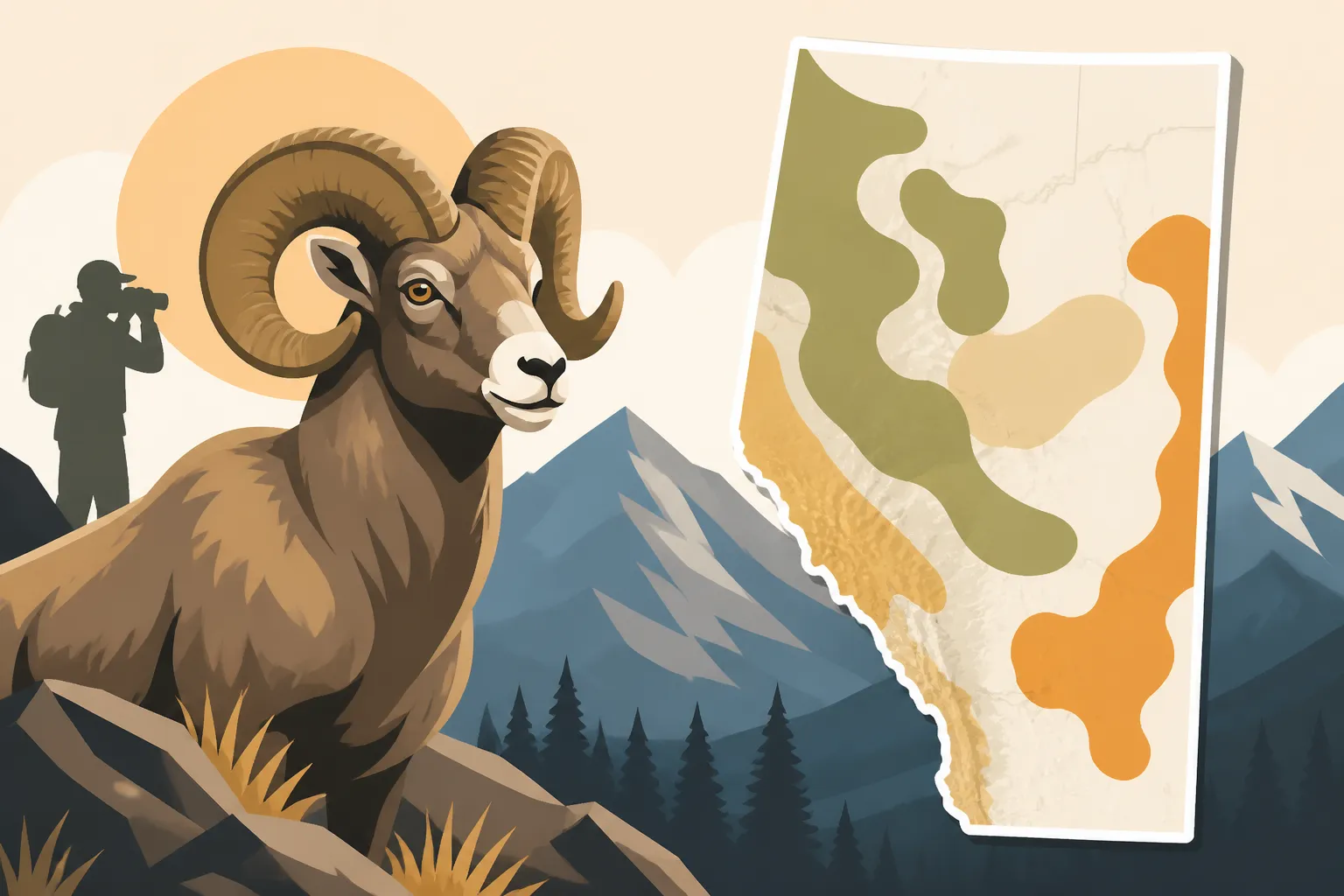
Alberta's vast mountain wilderness offers several distinct areas where bighorn sheep can be found, each with its own character and challenges for access. These regions are primarily concentrated along the eastern slopes of the Rocky Mountains, forming a continuous, albeit sometimes patchy, band of habitat.
The Ghost and Bow Valley WMUs
The Ghost Public Land Use Zone and the adjacent Bow Valley Wildlife Management Units (WMUs), such as WMU 410, are perhaps some of the most accessible and well-known bighorn strongholds in Alberta. Located relatively close to major population centers like Calgary, these areas experience significant recreational pressure from hikers, climbers, and off-road enthusiasts. Despite this, the ruggedness of the terrain ensures that vast pockets remain wild and challenging to hunt. The Ghost area, particularly its deeper valleys and higher ridges, holds a solid population of bighorns. Access often involves navigating forestry roads, river crossings, and then embarking on challenging foot or horseback excursions.
The Bow Valley, while visually stunning, presents a mix of protected parkland and open hunting zones. Hunters looking to pursue bighorns here need to be meticulous about understanding boundary lines, especially those bordering Banff National Park, where hunting is prohibited. The sheep in these areas are accustomed to human presence to some degree, but still rely on the steep, broken terrain for refuge. This region is a prime example of where diligent scouting and the use of tools like GoHunt for overlaying land status maps become indispensable for identifying legal and productive hunting grounds. For those considering Hunting the Ghost Public Land Use Zone, understanding the nuances of access and boundaries is paramount.
Willmore Wilderness Park and the Northern Ranges
Further north, the remote and expansive Willmore Wilderness Park represents a truly wild frontier for bighorn sheep. This vast, roadless area borders Jasper National Park and is renowned for its untouched beauty and significant big game populations. Hunting here is a true backcountry experience, typically requiring pack horses or extensive backpack trips to reach prime sheep habitat. The sheep populations in Willmore and other northern WMUs, like 442 and 444, tend to be less pressured due to the extreme difficulty of access. This translates to an opportunity for a truly remote and challenging hunt, away from the crowds found in more accessible areas.
The northern ranges extend into WMUs around Grande Cache and Hinton, where the mountains begin to blend with the boreal forest. Here, bighorn habitat can be more fragmented, with sheep utilizing isolated mountain ranges and high plateaus. While populations might be smaller in some of these more northern pockets compared to the core ranges, the reward for a successful hunt in such wild country is immense. Those contemplating What Hunting Willmore Wilderness Park Requires should prepare for a multi-day expedition with significant logistical planning.
Here's a quick look at some key bighorn regions and their characteristics:
| Region/WMU Group | Typical Habitat | Access Level | Hunter Pressure | Notable Features |
|---|---|---|---|---|
| Ghost/Bow Valley | Steep rock, alpine meadows, subalpine forest | Moderate-High | High | Close to cities, mix of public/private land |
| Kananaskis Range | Rugged peaks, open slopes, river valleys | Moderate | Moderate | High elevation, challenging climbs |
| Livingstone-Porcupine Hills | Lower mountains, grassy slopes, deep draws | Moderate | Moderate-High | Mix of Crown & private, often horseback access |
| Willmore Wilderness | Remote alpine, untouched valleys, dense forest | Very Difficult | Low | Backcountry only, pack horses often required |
| Northern Foothills | Fragmented peaks, bush interface | Difficult | Low-Moderate | Mix of timber and rock, very wild |
Factors Influencing Bighorn Populations and Distribution
Like all wildlife populations, bighorn sheep are subject to a complex interplay of environmental factors, human impacts, and natural challenges. Understanding these influences helps us appreciate the delicate balance of their existence and the ongoing efforts to ensure their future.
Impact of Habitat Loss and Human Activity
One of the most persistent threats to bighorn sheep populations is habitat loss and fragmentation, often driven by human development. As towns expand, roads are built, and industrial activities increase, the pristine mountain environments that bighorns rely on can shrink or become broken up. This can disrupt critical migration corridors, separate herds, and reduce access to essential winter or summer ranges. For example, increased traffic on the Forestry Trunk Road or heightened recreational use in areas like McLean Creek can push sheep into less ideal habitats, increasing their stress and exposure to predators.
While direct habitat destruction is a concern, indirect impacts are also significant. Increased human presence can lead to more frequent encounters with domestic animals, particularly domestic sheep, which can carry diseases devastating to bighorns. Furthermore, the sheer volume of human activity in certain accessible areas can displace sheep from optimal feeding grounds or disrupt their natural movement patterns. Striking a balance between human use and wildlife conservation is a continuous challenge in Alberta's mountain regions, demanding careful land-use planning and respectful recreational practices.
Disease and Predation Challenges
Bighorn sheep are particularly susceptible to certain diseases, with pneumonia often being the most devastating. Outbreaks can sweep through a herd, especially in dense populations, causing significant mortality. These diseases are often introduced through contact with domestic sheep or goats, which carry pathogens that bighorns have no natural immunity against. This highlights the critical importance of maintaining separation between wild and domestic sheep populations, a major focus of bighorn conservation efforts across North America.
Predation also plays a natural, though sometimes significant, role in bighorn population dynamics. Wolves, cougars, and sometimes bears are all predators of bighorn sheep, particularly targeting lambs or weakened adults. While healthy bighorn herds can withstand natural predation levels, when combined with other stressors like harsh winters or disease, predation can exacerbate population declines. In areas where predator populations are high and bighorn habitat is constrained, the impact can be more pronounced. Wildlife managers constantly monitor these factors to ensure that bighorn populations remain robust and resilient.
Accessing Bighorn Country: The Hunter's Challenge
Hunting bighorn sheep in Alberta is not for the faint of heart. It demands exceptional physical fitness, meticulous planning, and a deep understanding of backcountry navigation and survival. The sheer difficulty of accessing their remote haunts is often the greatest challenge.
Navigating Rugged Terrain and Public Lands
The vast majority of Alberta's bighorn sheep habitat is found on Crown Land within the "Green Area," which comprises the province's forested and mountainous regions. However, this doesn't mean easy access. Much of this land is characterized by steep mountainsides, deep river valleys, dense timber, and unpredictable weather. Hunters must be prepared to navigate this rugged terrain, often far from established trails or roads. This means relying on topographical maps, GPS devices, and satellite imagery (tools like GoHunt are excellent for this) to plan routes, identify potential sheep holding areas, and understand escape routes.
Public Land Use Zones (PLUZs), such as the Ghost or Livingstone-Porcupine Hills, offer designated areas for recreational use, but even within these, the terrain can be extreme. Vehicular access is often limited to main forestry roads, requiring extensive foot travel, or for the truly committed, packhorse expeditions. Understanding the rules and regulations for these specific PLUZs, including any restrictions on OHV use or camping, is crucial. For information on Alberta's Mountain WMUs and Their Access, it's essential to consult the provincial regulations well in advance.
Scouting and Planning Your Mountain Hunt
Successful bighorn hunting hinges on thorough scouting and meticulous planning, often months in advance. Whether a hunter buys a class 1 licence or is successful in a draw such as the resident class 2 draw or one of the special WMU draws (see Alberta's Special Licence Draws), the preparation intensifies. Scouting involves not just finding sheep, but understanding their daily movements, preferred bedding areas, and escape routes. This often means multiple scouting trips to the chosen WMU, hiking extensively, and glassing with high-quality optics from vantage points for hours on end.
Modern technology has revolutionized scouting, with tools like GoHunt offering satellite imagery, topographical maps, and public land overlays that can be studied from home. However, there's no substitute for boots on the ground. Familiarizing yourself with the specific challenges of your WMU – whether it's the loose shale of the Crowsnest Pass or the dense timber transitions of the Bighorn Backcountry – is critical. Planning also involves packing lightweight, durable gear, a robust first-aid kit, emergency communication devices like satellite messengers, and enough food and water for self-sufficiency in the wilderness. Learning to Glassing Alpine Basins for Bighorn Sheep effectively is a skill that takes practice and patience, but it's invaluable for locating these elusive animals.
Hunting Bighorns in Alberta: What You Need to Know
For those who secure an Alberta bighorn sheep licence, the real work begins. This is not a hunt to be taken lightly; it requires dedication, patience, and a deep respect for the animal and its environment.
Draw Odds and Tag Requirements
Alberta residents do not have to enter a draw for a class 1 (trophy) sheep licence; they buy it. Draws exist for resident class 2 (non-trophy) sheep (draw 29), for five resident WMU-special class 1 draws (410, 437, 444/446, 408 and 438), and for non-resident Canadians seeking class 1 sheep (draw 31, once in a lifetime). Within Alberta's Special Licence Draws system, success depends on the number of available tags in a given WMU and sheer luck, and a priority only option exists in the 410, 437, 444/446 and 408 draws, while the 438 draw and the non-resident Canadian draw do not apply the draw priority system.
Once a special licence is issued, it is for a specific WMU and season. It is imperative to understand the specific regulations for that WMU, including season dates, legal ram definitions (e.g., full-curl), and any access restrictions. Non-residents must hunt with a licensed Alberta outfitter, adding another layer of planning and cost to the experience. For residents, the process is still demanding, but they have the flexibility to plan their own unguided hunt. Understanding the Alberta's Draw Priority Point System is key for anyone aspiring to a bighorn tag.
Ethical Hunting and Trophy Management
Ethical hunting is paramount when pursuing bighorn sheep. This means adhering strictly to fair chase principles, ensuring clean kills, and making every effort to recover game in challenging terrain. Due to the high value and limited availability of bighorn tags, responsible trophy management is also a significant consideration. Hunters are generally encouraged to target mature rams, often defined by a "full-curl" horn measurement, which helps ensure younger rams have a chance to breed and contribute to the herd's genetics. Judging a Full-Curl Bighorn Ram accurately in the field, often at long distances, is a critical skill that requires practice and good optics.
Beyond the hunt itself, respecting the animals and their habitat extends to leaving no trace in the backcountry. This means packing out all trash, minimizing impact on vegetation, and following proper wilderness ethics. The bighorn's habitat is a fragile ecosystem, and every hunter has a responsibility to preserve it for future generations. The experience of hunting a bighorn in Alberta's mountains is about more than just harvesting an animal; it's about the journey, the challenge, and the profound connection to the wild.
Disclaimer
Please remember that hunting regulations, seasons, and access rules can change. Always consult the most current Alberta Hunting Regulations Guide and Alberta Environment and Parks resources before planning any hunting trip. This content is for informational purposes only and does not constitute legal advice.