Which Ducks Nest in Alberta’s Pothole Country
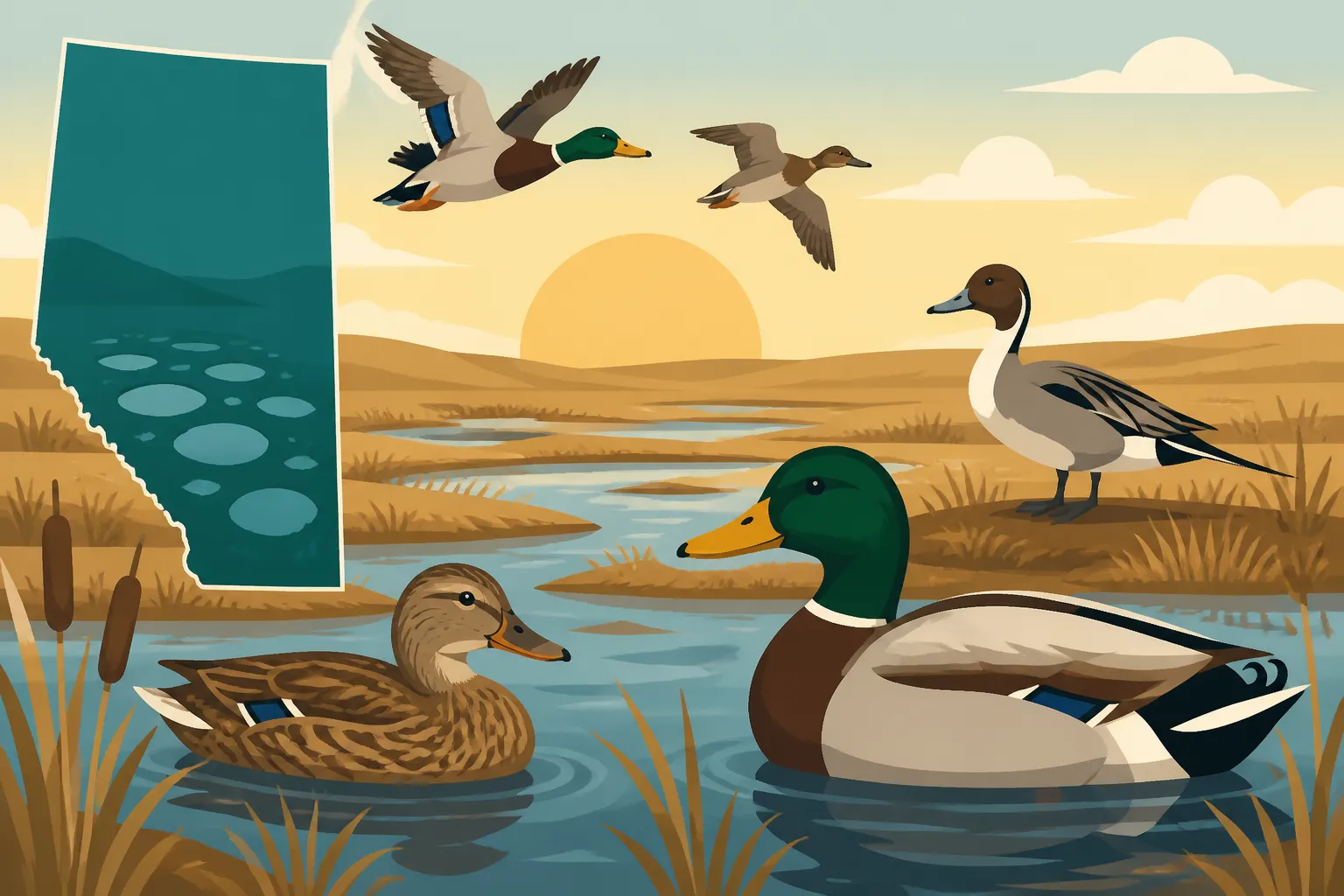
If you've ever wondered why Alberta is often heralded as a "duck factory," especially its vast pothole country, you're tapping into one of North America's most vital waterfowl breeding grounds. This guide is here to shed light on the incredible diversity of ducks that choose Alberta's unique wetland landscape to nest and raise their young, helping you understand the biology behind the birds you pursue.
The Phenomenon of Alberta's Pothole Country
Alberta's pothole country isn't just a picturesque landscape; it's a dynamic, life-sustaining ecosystem that plays an unparalleled role in the health of North American waterfowl populations. When you drive through certain areas, particularly in the central and southern parts of the province, you can't help but notice the sheer abundance of small, often temporary, wetlands that dot the landscape like scattered pearls. These aren't just puddles; they're the engine room of duck production.
What Makes Pothole Country So Special for Ducks?
The unique character of Alberta's pothole country is rooted in its glacial history. Thousands of years ago, retreating glaciers left behind a landscape riddled with depressions and hollows, which, over time, filled with meltwater and precipitation. These are the "potholes"—a mosaic of wetlands ranging from ephemeral ponds that dry up by mid-summer to semi-permanent marshes that hold water year-round. What makes them so special for ducks isn't just the water itself, but the incredible richness of the surrounding environment.
These wetlands are teeming with invertebrate life – insects, larvae, crustaceans – which provide an indispensable protein source for breeding hens and growing ducklings. Think of it as a nursery and a five-star restaurant rolled into one. The shallow edges of these potholes are often rich with emergent vegetation, offering ideal cover for nesting, hiding from predators, and foraging. The close proximity of numerous small wetlands also allows breeding pairs to spread out, reducing competition and the spread of disease. It’s a perfect storm of habitat, food, and security that ducks can’t resist. This vital area contributes immensely to Why Alberta Is Called a Duck Factory.
Why Alberta is a Duck Factory
Alberta's place within the larger "Prairie Pothole Region" (PPR) is what earns it the moniker of a "duck factory." This region, which stretches across parts of Alberta, Saskatchewan, Manitoba, and into the northern United States, is globally recognized as the most important breeding area for many species of North American waterfowl. Alberta, in particular, consistently hosts a significant portion of the continent's breeding duck population when conditions are right.
During wet cycles, when the potholes are full and the surrounding uplands are lush, the landscape explodes with breeding activity. Hens find abundant food to fuel egg production and raise their broods, and there’s ample cover to protect their nests from predators. The sheer number of breeding pairs that return to Alberta each spring is staggering, producing millions of ducks that then migrate across the continent in the fall. This annual cycle is crucial for hunters and conservationists alike, highlighting the importance of conserving these critical habitats. The health of these wetlands directly impacts Alberta Duck Season Dates and the overall abundance of birds.
Key Duck Species Nesting in Alberta's Pothole Country
Alberta's pothole country is a haven for a wide variety of duck species, each with its own preferences for nesting sites, diet, and habitat within this rich tapestry of wetlands and grasslands. Understanding these preferences can give you a real edge when you're out scouting or planning a hunt. You can gain valuable insights into these species and their habits by checking resources like GoHunt, which often compile habitat data and distribution maps.
Dabbling Ducks: The Surface Feeders
Dabbling ducks, also known as surface feeders, are perhaps the most iconic residents of Alberta's pothole country. They feed by tipping their bodies head-down in shallow water, sifting food from the surface or just beneath it. They rarely dive for food and typically nest on dry land, often a good distance from water.
-
Mallards: The king of dabblers, mallards are incredibly adaptable and are arguably the most common duck in Alberta's pothole country. They're robust birds that nest in dense upland grasses, hayfields, or even sometimes in gardens or shelterbelts, often quite a distance from the water's edge. A hen will meticulously choose a spot where residual cover from the previous year is thick enough to hide her nest and clutch of 8-12 eggs. Mallards are generalists, feeding on seeds, grains, aquatic invertebrates, and vegetation, making them highly successful across diverse landscapes. Their prevalence means they're often a primary target when Pothole Hunting Ducks on Small Water.
-
Pintails: With their elegant, long necks and distinctive pointed tail feathers (on drakes), pintails are another common sight. They prefer more open, shallow wetlands and often nest earlier than other species, sometimes even before all the snow has melted. Their nests are typically in short, sparse cover, often closer to the water than a mallard's. Pintails are known for their long migration routes, making Alberta's fertile potholes crucial staging grounds and breeding areas before their journey south. They primarily eat seeds and waste grain, readily found in agricultural areas adjacent to wetlands.
-
Blue-winged Teal: These smaller, fast-flying ducks arrive later in the spring and nest a bit later than mallards or pintails. Blue-winged teal prefer to nest in dense, grassy cover, often right next to the water of small, temporary potholes. Their nests are well-concealed, and the hens are notoriously secretive. They thrive in the high-water conditions that allow for an abundance of small wetlands. These birds are quick to mature, and broods often become flight-ready relatively early in the summer. They primarily feed on small aquatic invertebrates and seeds.
-
Green-winged Teal: While sharing the "teal" name, green-winged teal are distinct from their blue-winged cousins. They are even smaller and often arrive and nest a bit earlier. They also prefer dense cover near small wetlands, but you might find them in slightly more varied habitats, including edges of wooded wetlands, though they are still very much a part of the pothole landscape. Their diet is similar, focusing on small seeds and invertebrates. These quick little birds offer a challenging shot for hunters.
-
Gadwalls: Often overlooked for their somewhat understated plumage, gadwalls are incredibly successful prairie nesters. They prefer emergent vegetation, like bulrushes and cattails, right in the water or along the edges of larger potholes, often creating unique "bowl-shaped" nests. They're one of the more vegetarian dabblers, feeding heavily on aquatic plants, leaves, and stems, as well as some seeds. Their nesting strategy often sees them placing nests in areas less disturbed by agricultural practices, especially if there's good marshy cover available.
-
American Wigeon: American wigeons are identifiable by the bright white patch on the drake's wing and their unique whistling call. They tend to prefer more open water than other dabblers and are often found in larger, more permanent potholes or small lakes. Wigeons are primarily grazers, feeding heavily on submerged aquatic vegetation, often "stealing" food from diving ducks or geese. Their nests are typically in dense grass, often some distance from the water, similar to mallards, and they are common throughout the pothole region.
Diving Ducks: The Deeper Water Specialists
Diving ducks generally prefer larger, deeper bodies of water where they can dive for food. Their legs are set further back on their bodies, making them agile underwater but a bit clumsier on land. While some dabblers will use the edges of larger lakes, divers are truly at home in the expansive, deeper potholes.
-
Canvasbacks: Often called the "king of ducks" by many hunters, the canvasback is a magnificent bird. They are true specialists, primarily seeking out large, deep potholes and marshes that contain abundant sago pondweed, their preferred food source. Canvasbacks are unique for building their nests over water, often in dense stands of emergent vegetation like bulrushes or cattails. The hen will construct a floating nest, meticulously woven into the vegetation, sometimes creating quite a substantial structure. Their reliance on specific aquatic plants makes their populations vulnerable to changes in water quality and habitat, so seeing a healthy "can" population is always a good sign.
-
Redheads: Redheads are another prominent diving duck of the prairie potholes. They are well-known for their unique nesting strategy, often described as "brood parasitism." While they do build their own nests, usually over water in dense emergent vegetation, redhead hens are also notorious for laying eggs in the nests of other ducks, particularly canvasbacks, but also other redheads, ruddy ducks, or even coots. This behavior can be a survival strategy, especially if prime nesting sites are scarce. They feed on submerged aquatic vegetation and some invertebrates.
-
Lesser Scaup: Also known as "bluebills," lesser scaup are abundant diving ducks that prefer larger, deeper potholes and small lakes. They are excellent divers, feeding primarily on aquatic invertebrates, snails, and some plant matter. Scaup often nest in dense cover near the water, sometimes in semi-colonial groups. While common, their populations have faced challenges in recent decades, making conservation efforts in the pothole region even more critical for this species.
-
Ring-necked Ducks: While often associated with more wooded wetlands, especially further east, ring-necked ducks can also be found nesting in Alberta's larger, deeper potholes, particularly those with a good mix of emergent vegetation and timbered edges. They build their nests in dense vegetation, often over water or very close to the water's edge. Their diet is a mix of aquatic insects, mollusks, and plant material, showcasing their adaptability across different wetland types.
Factors Influencing Duck Nesting Success in Pothole Country
The success of ducks nesting in Alberta's pothole country isn't a guaranteed annual event. It's heavily influenced by a delicate balance of environmental factors, primarily water levels and the quality of surrounding upland habitat. Hunters and conservationists spend a lot of time monitoring these conditions, as they directly impact fall flight forecasts. You can often track these changes through provincial government wildlife reports or through organizations like GoHunt that analyze habitat health.
Water Levels and Their Impact
Water is the lifeblood of the pothole region. The amount and distribution of water largely dictate nesting success.
-
Boom and Bust Cycles: The prairies are famous for their boom-and-bust cycles. In wet years, when winter snowpack is heavy and spring rains are plentiful, potholes fill up, creating a vast array of breeding habitats. More wetlands mean more available territories for breeding pairs, leading to higher nesting success and larger broods. Hens have ample space and food, and ducklings thrive. This is when the "duck factory" truly shines, producing millions of new birds. Conversely, dry years can be devastating. Potholes shrink or disappear entirely, concentrating ducks on fewer, larger wetlands, which increases competition, predation, and disease risk. Many ducks will "overfly" the dry prairies and seek breeding grounds further north in the boreal forest.
-
Importance of Temporary and Semi-Permanent Wetlands: It's not just about permanent water. The temporary and semi-permanent wetlands, which fill and dry out periodically, are incredibly important. They often provide the first, richest burst of invertebrate life in the spring, crucial for pre-laying hens. These smaller wetlands also allow breeding pairs to disperse, reducing stress and increasing the likelihood of successful nesting. Without a healthy mix of these different wetland types, the overall productivity of the region suffers. This dynamic landscape directly impacts the experience when Hunting Alberta Winter Weather Safely as water bodies freeze and birds move on.
Upland Nesting Cover and Habitat Quality
Beyond the water, the surrounding upland habitat is equally critical for nesting ducks, especially dabblers. Without secure nesting cover, even a pothole full of water won't produce many ducks.
-
Critical Role of Dense Cover: Hens need dense, undisturbed grass, sedges, and residual cover (leftover vegetation from the previous year) to build their nests. This cover provides camouflage from aerial predators like hawks and owls, and ground predators such as coyotes and skunks. Farmers and landowners who practice delayed haying, leaving strips of unharvested cover, or participate in conservation programs that protect grassland habitats, are invaluable partners in duck production. The success often hinges on securing sufficient, undisturbed areas adjacent to wetlands.
-
Predation Risks and Secure Nesting Sites: Predators are a natural part of the ecosystem, but in areas where nesting cover is sparse or fragmented, predation rates on nests and hens can become unsustainably high. Providing large blocks of dense cover, especially near water, creates a "predator-proof" environment where ducks can nest with a higher degree of success. Conservation groups often focus on habitat restoration and enhancement projects to create these safe havens. It's a constant balancing act between natural predation and habitat quality.
Agricultural Practices and Their Effects
Agriculture is intrinsically linked to Alberta's pothole country. While it provides immense value to our economy, certain agricultural practices can inadvertently impact duck nesting success.
-
Impact of Farming: Practices like early haying, intensive tillage, and draining wetlands for crop expansion can destroy nests, disturb nesting hens, and reduce the overall availability of critical habitat. A field might look like great nesting cover, but if it's cut or tilled during the prime nesting season, it becomes a "death trap" for duck nests. Balancing the needs of agriculture with the needs of wildlife is a constant challenge.
-
Conservation Initiatives and Solutions: Many farmers are incredibly conservation-minded, understanding the value of healthy ecosystems. Initiatives like conservation easements, financial incentives for maintaining wetlands and nesting cover, and promoting practices like delayed haying or no-till farming are vital. These efforts seek to integrate wildlife habitat into the agricultural landscape, allowing both to thrive. Organizations, often supported by hunters buying The Canadian Wildlife Habitat Conservation Stamp, work directly with landowners to implement these beneficial practices.
Scouting and Understanding Pothole Country for Hunters
For waterfowl hunters, understanding the nesting dynamics of Alberta's pothole country is more than just academic interest; it's a key to successful hunting. Knowing where ducks prefer to nest and why can help you anticipate their movements and concentrations later in the season. Utilizing tools like GoHunt can significantly aid in this preparation, providing maps and aerial imagery to identify potential hotspots.
Reading the Landscape for Duck Activity
Successful waterfowl hunting begins long before opening day. It starts with reading the landscape and understanding what drew ducks to an area in the first place.
-
Identifying Prime Areas: Look for the classic "pothole chain" – a series of small wetlands connected, or at least in close proximity, indicating a rich aquatic environment. Identify areas with a good mix of open water and emergent vegetation. Dense, undisturbed grassy uplands adjacent to these wetlands are prime candidates for high nesting success. These are the areas that will likely hold birds during the season, especially in the early days. Observing these patterns can help you locate prime areas for Hunting a Slough Edge for Whitetails or other game as well, as water sources attract all kinds of wildlife.
-
Signs of Use: While you won't see nests in plain sight, you can look for signs of historical use. Consider water quality – clear, healthy water often supports more invertebrate life. Study satellite imagery to identify areas of diverse vegetation. During the season, look for loafing birds, feeding activity, and flight patterns. Remember, ducks will concentrate in areas that met their breeding needs, and these same areas often continue to provide food and safety for migrating birds. Always ensure you have appropriate Alberta Migratory Bird Permits before scouting or hunting.
The Importance of Timing and Conditions
The timing of your hunt and the prevailing environmental conditions are paramount, especially when hunting pothole country.
-
From Nesting to Hunting: A strong nesting season in the spring and summer directly translates to more birds in the fall. If the pothole region experienced a wet, productive spring, you can generally expect a higher local population, at least until migration truly kicks in. This knowledge influences your expectations for Duck Daily Bag Limit by Species and overall opportunities. However, even in good nesting years, local conditions during the hunting season (like early freezes or prolonged droughts) can dramatically shift bird distribution.
-
Local Conditions and Their Effects: An early cold snap and freeze-up in October can push birds south much faster than anticipated. Conversely, a mild fall can keep birds around longer. Drought conditions can dry up smaller potholes, forcing ducks to larger, more permanent water bodies. Always check local weather forecasts and water conditions. Use online mapping tools like GoHunt to observe recent satellite imagery for water levels. Understanding these dynamic changes is crucial for successful Scouting Fields for Alberta Waterfowl and for making on-the-fly hunting decisions. You need to be ready to adapt to the birds' movements. If all the small potholes are frozen, you'll need to shift your focus to larger bodies of water or Field Hunting Geese in Alberta Stubble.
Here's a quick summary of some key duck species and their preferences in Alberta's pothole country:
| Species | Type | Preferred Habitat | Nesting Location | Primary Diet | Notes |
|---|---|---|---|---|---|
| Mallard | Dabbler | Varied wetlands, esp. small-to-medium potholes | Dense upland grass, hayfields, often far from water | Seeds, grains, aquatic invertebrates, vegetation | Most common & adaptable; widespread distribution |
| Northern Pintail | Dabbler | Open, shallow wetlands, cultivated fields | Short, sparse cover, closer to water than Mallards | Seeds, waste grain, aquatic invertebrates | Early nester; long migration routes |
| Blue-winged Teal | Dabbler | Small, temporary potholes with dense cover | Dense grass near water; secretive | Small aquatic invertebrates, seeds | Late arrival; fast flyers; early maturity |
| Gadwall | Dabbler | Emergent vegetation in marshes & larger potholes | Over water in bulrushes/cattails; in dense vegetation | Aquatic plants, leaves, stems, some seeds | Less flashy; often uses marshy edges not impacted by agriculture |
| American Wigeon | Dabbler | Open water on larger potholes, small lakes | Dense grass, often some distance from water | Submerged aquatic vegetation | Known for "whistling" call; grazers |
| Canvasback | Diver | Large, deep potholes & marshes with sago pondweed | Over water in dense emergent vegetation; floating nests | Sago pondweed, tubers, seeds, some invertebrates | "King of Ducks"; specific habitat requirements |
| Redhead | Diver | Larger potholes with emergent vegetation | Over water in dense emergent vegetation | Submerged aquatic vegetation, invertebrates | Known for brood parasitism; common diver |
| Lesser Scaup | Diver | Larger, deeper potholes, small lakes | Dense cover near water, sometimes semi-colonial | Aquatic invertebrates (snails), some plant matter | Good divers; populations have seen some declines |
Remember, successful duck hunting in Alberta's pothole country is a blend of understanding the biology, reading the landscape, and adapting to ever-changing conditions. Keep an eye on local reports and enjoy the incredible waterfowl resource we have in this province. Always ensure you are using Non-Toxic Shot Requirements for Migratory Birds when hunting waterfowl.
Disclaimer
This article is for general informational purposes only and does not constitute professional advice. Laws, prices and regulations vary by location and change over time. Consult a qualified professional for guidance on your specific situation.