Reading Antler Growth in a Wet Year
Many of us spend hours scouting, watching trail camera photos, and just generally obsessing over antler growth, trying to predict what kind of season it'll be. But when Alberta gets hit with a significantly wet year, it can throw all our expectations for a loop, leaving us wondering how all that extra moisture actually impacts the racks we're dreaming of. This guide will help you understand the intricate relationship between rainfall, forage quality, and the resulting antler development you might see in Alberta's deer and other antlered game, helping you refine your scouting and hunting strategies.
The Biological Blueprint: How Antlers Grow and Why Nutrition Matters
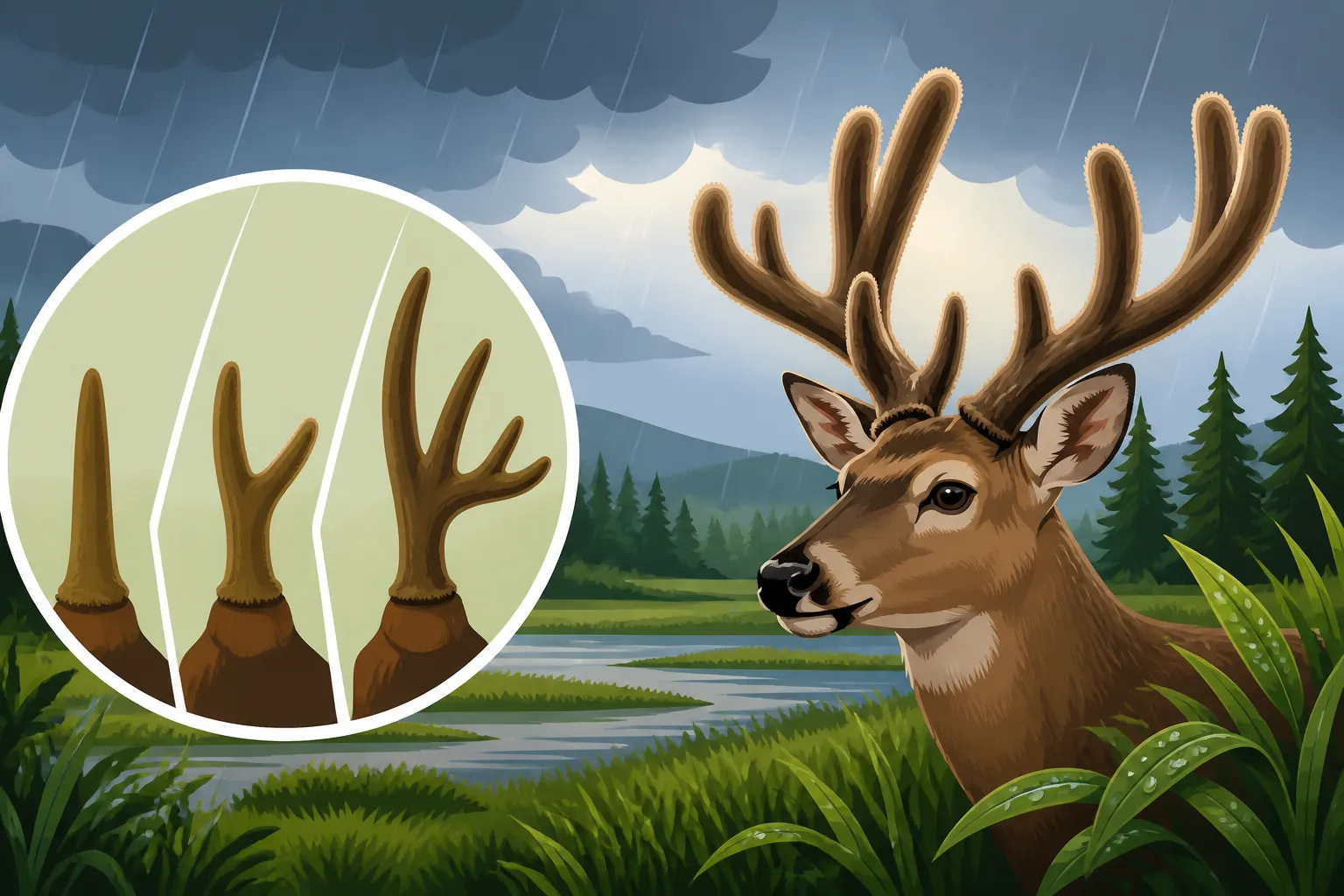
Before we dive into the specifics of a wet year, it's crucial to understand the fundamental process of antler growth. Antlers are not horns; they are living bone structures shed and regrown annually by male cervids like white-tailed deer, mule deer, moose, and elk. This incredible growth cycle is one of the fastest forms of tissue regeneration in the animal kingdom, and it demands an enormous amount of energy and specific nutrients from the animal's body.
The growth process typically begins in early spring, often shortly after the old antlers are cast. A soft, vascular tissue known as velvet covers the growing antlers, providing the necessary blood supply, minerals, and proteins. During this phase, the deer's body is effectively a nutrient factory, funneling resources into building bone. Calcium, phosphorus, and other trace minerals are critical, but so are proteins for the structural matrix and carbohydrates for the energy required to facilitate such rapid development. Any deficiency in these key nutritional components during the velvet stage can directly impact the size, mass, and overall quality of the rack.
As summer progresses, hormonal changes signal the end of the growth period. The blood supply to the velvet ceases, and the velvet dries and is rubbed off, revealing the hard, calcified antlers beneath. The size and shape of these hardened antlers are a direct reflection of the deer's age, genetics, and, most importantly, its nutritional intake during the entire growth cycle. A buck that is stressed, sick, or simply doesn't have access to high-quality forage will almost inevitably produce a smaller, less impressive rack, regardless of its genetic potential. This is why a keen understanding of the local food sources and environmental conditions is so vital for any serious hunter.
When the Rains Come: How Wet Years Fuel Forage and Rack Potential
A wet year in Alberta can be a double-edged sword for many things, but for antler growth, it generally tips towards the positive, offering a bounty of high-quality forage that deer and other antlered game need. When the spring rains are abundant and persistent, coupled with warm temperatures, the plant life explodes. This isn't just about more plants; it's often about better plants – more succulent, more nutritious, and available for longer.
Think about the difference between a dry, dusty field in August and a lush, green one. In a wet year, alfalfa, clover, various forbs, and even the natural browse in the bush stay green and palatable well into the summer, often longer than usual. This extended period of high-quality forage allows deer to pack on vital body weight and direct more energy and minerals towards antler development. Bucks that enter the spring already in good condition from the previous winter benefit even more, as they have a head start on funneling nutrients to their racks. The increased moisture can also lead to more widespread growth of mushrooms and other fungi, which, while not a primary food source, contribute to the overall biodiversity and nutrient cycling in the ecosystem.
However, it's not always a perfect picture. Extremely wet conditions can sometimes lead to localized flooding, washing out feed in certain low-lying areas or making it inaccessible. It can also, in some cases, delay the maturity of certain crops, or even cause some plant diseases due to high humidity. But by and large, a consistently wet spring and summer means a healthier, more robust forage base. This is particularly noticeable in regions that often suffer from drought, such as parts of the southern prairie or the badlands, where even a slight increase in moisture can dramatically boost plant growth and subsequently, antler development. For those scouting with tools like GoHunt, paying attention to areas with historical water retention or newly greened-up patches after heavy rains can reveal prime feeding zones.
Decoding the Rack: What to Expect from Antlers in a Productive Year
When you're out scouting or looking at trail camera photos after a wet spring and summer, you'll want to adjust your expectations for what a "good" buck might look like. In a truly productive, wet year, the most noticeable difference in antlers often comes down to mass and overall density, rather than just raw spread or tine length. More moisture means more nutrients, and those nutrients contribute to a thicker, heavier bone structure.
You might see bucks with bases that appear significantly larger than in previous years, carrying that mass further out along the main beams. Tine length might also see an increase, but it's the sheer bulk of the antlers that often stands out. You might observe more intricate non-typical points or abnormal growth on some deer, as an excess of available nutrients can sometimes manifest in these unique ways. Younger bucks, especially two-and-a-half and three-and-a-half-year-olds, can show dramatic jumps in antler quality in a wet year, sometimes appearing a year older than their actual age based on rack size alone. This can be a challenge for hunters managing specific age classes or looking for older deer, so Aging a Deer by Its Teeth can become an even more crucial skill.
It's also worth paying attention to the overall health and body condition of the deer. Bucks in wet years tend to be heavier, with well-defined muscle mass. Their coats will often appear shinier and healthier. This robust body condition is a telltale sign that they've been on a fantastic nutritional plane, and it directly correlates with the quality of their antlers. If you're comparing photos from year to year, consider how the deer's body looks in conjunction with its antlers; a big-bodied buck often carries a big rack. For hunters relying on visual cues and historical data, using resources like GoHunt to cross-reference past observations with current conditions can help in forming a clearer picture of herd health and antler potential.
Here’s a simplified comparison of what you might observe in antler growth characteristics:
| Antler Characteristic | Normal Year | Wet Year (High Nutrient Availability) |
|---|---|---|
| Main Beam Length | Average | Slightly above average, can be longer |
| Mass (Circumference) | Good | Significantly increased, thick bases |
| Tine Length | Average | Often longer, stronger tines |
| Number of Points | Standard typical score | Sometimes more typical or non-typical points |
| Overall Symmetry | Good | Can be more symmetrical due to even growth |
| Color/Texture | Typical | Richer color, denser appearance |
| Body Condition | Healthy | Excellent, heavier body weight |
Beyond the Green: Regional Differences and Hunter Strategies in Wet Years
Alberta is a vast province, and a "wet year" doesn't mean the same thing across all its diverse landscapes. While the general principle of increased forage leading to better antlers holds true, how and where that manifests can vary greatly depending on the specific Wildlife Management Unit (WMU) and its ecosystem.
In the southern prairie and badlands regions, where moisture is often the limiting factor for plant growth, a wet year can be transformative. Areas that usually struggle to produce lush forage might burst with growth, drawing deer out of traditional cover and into newly productive fields or coulee bottoms. This can make Hunting a Prairie Coulee Bottom or Hunting a Milk River Ridge Coulee particularly fruitful. On the other hand, in the boreal forest or foothills, where moisture is generally more abundant, an excessively wet year could lead to different challenges, such as saturated soils, increased insect pressure, or dense undergrowth that makes glassing harder. However, even here, a longer growing season means more sustained high-quality browse, which still benefits antler growth. Understanding these micro-climates and how they respond to varying moisture levels is key to effective scouting.
From a hunting strategy perspective, a wet year often means deer don't have to travel as far for food, potentially making them more patterned around core bedding and feeding areas. This could make stand hunting on travel corridors or food plot edges incredibly effective. However, it can also mean that traditional pinch points become less productive if deer have ample forage widely available. Paying attention to areas of abundant natural forage – lush alfalfa fields, thriving clover patches, or healthy aspen regeneration in clearcuts – becomes paramount. Tools like GoHunt can help you identify these areas by analyzing vegetation indices (if available) or simply by providing detailed topographical maps to locate diverse habitat. Consider scouting with satellite imagery to identify these "hot spots" of new or enhanced vegetation growth. Don't forget to revisit past productive zones; if they received ample moisture, they might be even better. Scouting With Satellite Imagery in Alberta can be a huge asset in these conditions.
Ultimately, a wet year provides an opportunity for hunters to witness exceptional antler growth and target healthier, more robust animals. However, it requires an adaptive approach, moving beyond assumptions and truly "reading" the landscape and the deer's response to the changed environment.
Disclaimer
This article is for general informational purposes only and does not constitute professional advice. Laws, prices and regulations vary by location and change over time. Consult a qualified professional for guidance on your specific situation.