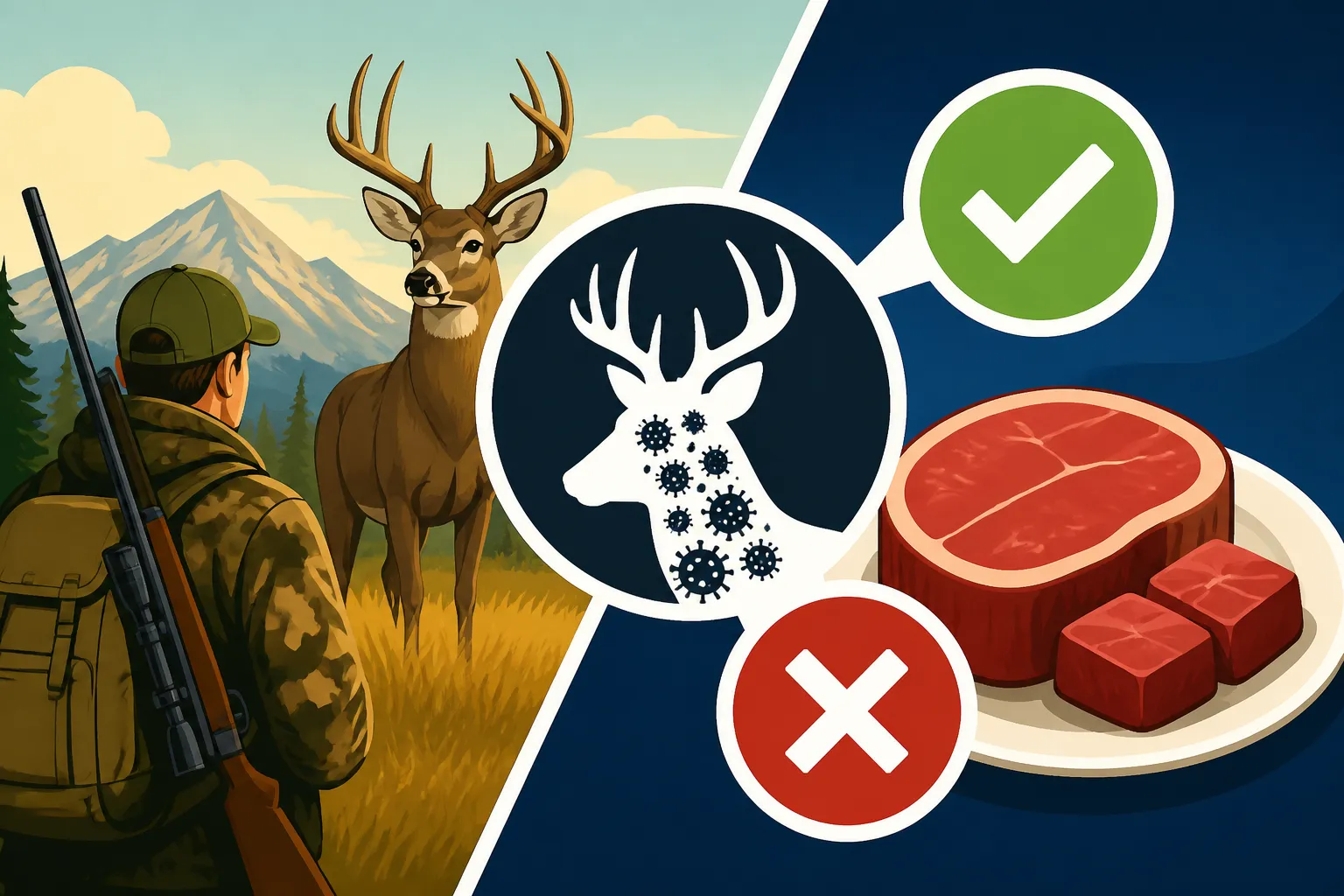
Whether CWD Meat Is Safe to Eat
The question of whether venison from a CWD-positive animal is safe to eat is one that weighs heavily on the minds of many Alberta hunters. It's a deeply personal dilemma that goes beyond just regulations, touching on our responsibility to ourselves, our families, and the integrity of the wild game we cherish. This guide aims to lay out the current understanding of Chronic Wasting Disease (CWD) and provide you with the information you need to make an informed decision when faced with such a harvest.
Understanding Chronic Wasting Disease and How It Works
CWD is a tricky, insidious disease, and it's completely understandable why it causes so much concern. It's not a bacterial infection or a virus that your immune system can fight off; it's something far more unusual and persistent.
What is CWD? A Prion Disease Explained
Chronic Wasting Disease is a fatal neurological disease that affects cervids – that’s deer, elk, moose, and caribou. What makes it so unique and alarming is that it's caused by abnormal proteins called prions. These prions aren't alive in the traditional sense, but they have the terrifying ability to induce normal proteins in the brain to misfold, leading to spongiform degeneration. Think of it like a zombie apocalypse for brain cells. Over time, these misfolded proteins accumulate, causing progressive damage to the brain and nervous system. Unfortunately, once an animal contracts CWD, there is no known cure, and it will inevitably die.
How CWD Spreads Among Wildlife
The spread of CWD is one of the biggest challenges for wildlife management. It can transmit directly from animal to animal through contact with saliva, urine, and feces. Imagine deer rubbing antlers on a tree or sharing a mineral lick – these are all potential pathways. The prions are also incredibly persistent in the environment. They can contaminate soil, plants, and water sources for years, even after an infected animal is long gone. This means that an area where a CWD-positive animal has been can remain a source of infection for other cervids for a very long time. It’s not just about avoiding direct contact with sick animals; the environment itself can become a reservoir for the disease.
Recognizing Symptoms in Deer and Other Cervids
Catching CWD in the early stages is incredibly difficult because infected animals often show no outward signs for an extended period, sometimes up to two years. This asymptomatic period is why testing is so crucial, as a seemingly healthy animal could still be carrying and spreading the disease. As the disease progresses, however, symptoms become more apparent and quite heartbreaking to witness. Infected animals will often exhibit a "wasting" appearance, becoming emaciated and lethargic despite continued eating. They might show behavioral changes, such as reduced fear of humans, excessive salivation, difficulty walking, a lowered head, and a general lack of coordination. You might see them stumbling, standing apart from the herd, or displaying an exaggerated thirst. If you ever encounter an animal displaying these signs in the wild, it’s vital to report it to Alberta Fish and Wildlife, and under no circumstances should you approach or handle it.
The Official Stance on Consuming CWD-Positive Meat
Given the nature of CWD and the unknowns surrounding it, public health and wildlife agencies have taken a very cautious approach to the consumption of CWD-positive meat. It's an issue where the stakes are incredibly high, and erring on the side of caution is the prevailing advice.
Health Agency Recommendations and Current Research
Leading public health organizations, including Health Canada, the Centers for Disease Control and Prevention (CDC) in the United States, and the World Health Organization (WHO), consistently advise against consuming meat from animals known to be infected with CWD. While extensive research is ongoing, and no direct evidence of CWD jumping to humans has been definitively proven, the potential for such a "species barrier jump" is a serious concern. The fact that CWD is a prion disease, similar to Bovine Spongiform Encephalopathy (BSE) or "Mad Cow Disease," which did jump to humans, underpins this strong recommendation. Researchers are actively studying the potential for CWD prions to affect non-cervid species, including primates, to better understand this risk. It's a developing area of science, and until there's absolute certainty, the advice remains clear: avoid consumption.
The Uncertainty About Human Transmission
This is often the most frustrating part for hunters: the lack of a definitive "yes" or "no" regarding human transmission. As mentioned, there has been no confirmed case of CWD directly causing illness in humans. However, the scientific community emphasizes that this doesn't mean it's impossible. Prion diseases are notoriously difficult to study, and their incubation periods can be incredibly long – decades even. This makes it challenging to draw a direct link between consumption and potential future illness. The concern isn't that you'd get sick tomorrow, but rather the long-term, unknown risks. Because of these unknowns and the severity of prion diseases, the precautionary principle is firmly applied. It's a case of "better safe than sorry," especially when the potential consequences are so grave.
Alberta's Approach to CWD Testing and Management
Alberta has been proactive in its CWD surveillance and management efforts, recognizing the threat the disease poses to our wildlife populations and our hunting heritage. The province has specific Wildlife Management Units (WMUs) where hunters are required to submit the heads of all harvested deer (mule deer and white-tailed deer) for CWD testing. This mandatory submission program is crucial for monitoring the spread and prevalence of the disease. In other WMUs, voluntary submission of heads is strongly encouraged. Alberta Environment and Parks provides freezers across the province where hunters can drop off heads for testing. When you receive a positive test result for your harvested animal, the recommendation from Alberta Fish and Wildlife is to dispose of the meat. This isn't just about personal safety; it's also about preventing the further spread of CWD prions into the environment. You can find detailed information on these WMUs and freezer locations on the Alberta government website, or by checking resources available through platforms like GoHunt which often integrates such provincial data into their mapping layers.
Minimizing Your Risk: What Hunters Can Do
As hunters, we have a vital role to play in managing CWD and protecting both ourselves and the health of our deer herds. While the decision to consume meat from a CWD-positive animal is ultimately personal, there are concrete steps we can all take to minimize risks.
Mandatory Testing and Where to Submit Samples
Knowing your WMU and its CWD status is your first line of defense. Alberta has designated specific Wildlife Management Units as mandatory CWD submission zones. If you harvest a deer in one of these WMUs, you are legally required to submit the head for testing. Beyond that, even if you're hunting in a voluntary submission area, it's highly advisable to submit your animal for testing. The process is straightforward: once you've harvested and field-dressed your animal, you detach the head and drop it off at a designated CWD freezer location. These freezers are strategically placed across the province, making it relatively convenient for hunters. You'll need to fill out some basic information, including your WIN card number and the location of your harvest, to ensure the sample can be tracked. Waiting for the test results is part of the process, and it usually takes several weeks. It's a small inconvenience for crucial peace of mind and data collection. You can learn more about specific WMU requirements and freezer locations by looking up Alberta's Mandatory CWD Submission WMUs.
Safe Field Dressing Practices to Reduce Exposure
Even before you get a test result, practicing safe field dressing techniques is paramount. CWD prions are most concentrated in the brain, spinal cord, lymph nodes, and spleen. While it's unlikely you'll come into direct contact with these parts if you're careful, it's wise to take precautions. Always wear latex or nitrile gloves when field dressing any cervid. Avoid cutting through the brain or spinal cord, and if possible, use separate knives for boning out meat versus handling the head or spine. When removing the gut pile, try to leave the head and spine intact in the field if you intend to bring the meat home and submit the head later. After field dressing, thoroughly clean and disinfect your tools and hands. Consider bringing a small spray bottle of diluted bleach or another disinfectant for your knives, although good old soap and water go a long way. Proper meat care in the field also extends to handling other situations, like Meat Care in Alberta's Cold and Warm Swings.
Processing and Handling Your Harvest Safely
Once you get your animal out of the field, the care continues. If you process your own meat, dedicate specific tools (knives, cutting boards) to game animals, and ensure they are thoroughly cleaned and disinfected after each use. Avoid cross-contamination with other foods. The CWD prions are incredibly resistant to heat, freezing, and common disinfectants, so simply cooking the meat to a certain temperature will not destroy them. This is why the advice is to not consume positive meat. If you use a professional butcher, ensure they are aware of CWD and have protocols in place to prevent cross-contamination between carcasses, especially if you haven't received test results yet. Many reputable processors will either hold your meat until results are in or segregate it carefully. It's a good practice to quarter your animal and bone out the meat, removing as much nervous system tissue as possible. This also makes Getting a Deer Out on a Frozen Trail or other difficult terrain much easier.
Knowing Your Hunting Area and CWD Prevalence
One of the most valuable resources you have as a hunter is information. Before you even head out, take the time to research the CWD prevalence rates in the specific WMU you plan to hunt. Alberta Fish and Wildlife publishes CWD surveillance data, which can help you understand the risk profile of your hunting area. Some areas, particularly in southeastern Alberta, have higher documented prevalence rates, while others have very low or no detected cases. Tools like GoHunt or the official Alberta hunting regulations online can provide up-to-date information on WMU boundaries and CWD testing zones. Understanding these patterns can influence your hunting choices, such as whether you opt to hunt in a specific area known for higher CWD rates or choose a different WMU with lower risk. This proactive approach allows you to make more informed decisions about your hunt and your potential harvest.
Making an Informed Decision for Your Table
Ultimately, the choice of whether or not to eat meat from an animal that has tested positive for CWD rests with you. It’s a heavy decision, and one that many hunters grapple with, especially when faced with the hard work and cost that goes into a successful hunt.
Risk Assessment for Your Family
Each family has its own level of comfort with risk, and this extends to food safety. When considering CWD, it’s about weighing the scientific uncertainties against your personal values and health considerations. While the current consensus is that there's no direct evidence of human transmission, the concern from health agencies is real and based on the unique, persistent nature of prions. Think about who will be consuming the meat: Are there young children, elderly family members, or individuals with compromised immune systems? These groups might be considered more vulnerable. Having an open discussion with your family about the knowns and unknowns of CWD, and the official health recommendations, is a crucial step in reaching a decision that everyone is comfortable with.
Embracing the Precautionary Principle
In the face of scientific uncertainty and potentially severe consequences, the precautionary principle suggests taking preventive action even if full scientific certainty is lacking. When it comes to CWD-positive meat, this means that if there's any doubt about its safety, the safest course of action is to avoid consumption. For many hunters, this means adhering strictly to the advice of health authorities and choosing to discard meat from any animal that tests positive for CWD. It's a difficult pill to swallow, especially when you've invested time, effort, and resources into a hunt. However, the long-term health of your family and the integrity of the food you consume are often seen as priorities that outweigh the immediate loss of a single harvest. This principle also extends to other safety measures, like understanding Alberta Blaze Orange and Safety Rules.
Community and Ethical Considerations
Beyond personal risk, there are broader community and ethical considerations that come into play with CWD. By not consuming CWD-positive meat, and by properly disposing of it, you contribute to efforts to limit the potential spread of prions in the environment. Disposing of infected carcasses properly, often through designated landfills or rendering facilities, prevents these highly resilient prions from re-entering the ecosystem where they could infect other healthy animals. This is a critical aspect of being a responsible hunter and conservationist. Our actions can collectively impact the health of the wild cervid populations we cherish for future generations. Engaging in responsible practices, like being informed about Alberta's CWD Testing Requirements and adhering to them, strengthens the hunting community's reputation and commitment to wildlife health. It’s about being part of the solution, not inadvertently contributing to the problem.
Key CWD Risk Reduction Summary
Here's a quick rundown of what hunters can do to minimize CWD risks:
| Action Category | Best Practice | What to Avoid |
|---|---|---|
| Pre-Hunt Prep | Research CWD prevalence in your WMU. | Hunting in high-prevalence WMUs without understanding the risks. |
| Know mandatory testing WMUs and submission sites. | Assuming all WMUs are low risk or that testing is optional everywhere. | |
| Field Dressing | Wear gloves. Avoid cutting brain, spinal cord, spleen, lymph nodes. | Using bare hands. Being careless with internal organs/nervous tissue. |
| Leave head and spine in the field if meat is destined for testing. | Bringing entire carcass home without intent to test. | |
| Meat Handling/Processing | Submit head for CWD testing promptly. Wait for negative results before consumption. | Consuming meat before test results are known, especially in high-risk areas. |
| Bone out meat, discard all nervous system tissue. Disinfect tools thoroughly. | Using the same tools for CWD-positive parts and meat. | |
| If Positive Result | Do not consume the meat. Dispose of carcass and offal properly (landfill). | Feeding CWD-positive meat to pets or other animals. Discarding improperly. |
This table provides a concise overview, but remember, the depth of your personal research and adherence to provincial guidelines are your strongest tools against CWD.
Disclaimer
This article is for general informational purposes only and does not constitute professional advice. Laws, prices and regulations vary by location and change over time. Consult a qualified professional for guidance on your specific situation.