Hunting the Livingstone-Porcupine Hills
The Livingstone-Porcupine Hills, often just called "The Hills" by those who know them, represent a truly special slice of Alberta for hunters. They're not the towering peaks of the Rockies, nor the flat expanses of the prairies, but a rugged, often overlooked transition zone that can be incredibly rewarding—if you know how to approach it. Many hunters feel overwhelmed by the mix of terrain, the patchwork of land access, and the sheer challenge of this often-steep country. This guide will walk you through what makes these hills tick, from the unique geography to the diverse wildlife, and give you the real-world insights you need to plan a successful hunt in this distinctive region.
Understanding the Unique Landscape of the Livingstone-Porcupine Hills
The Livingstone-Porcupine Hills are unlike any other hunting grounds in Alberta. Situated just east of the main Rocky Mountain front, they act as a vital ecological bridge, blending elements of the montane, foothills, and prairie environments. This creates a remarkably diverse landscape that supports a wide array of game, but also presents unique challenges for the hunter. You're dealing with elevations that range from rolling prairie benches to steep, timbered ridges, all within a relatively compact area.
Defining the Landscape
The physical makeup of the Livingstone-Porcupine Hills is a direct result of their geological history. Here, you'll find layers of sedimentary rock – sandstone, shale, and coal – that have been pushed, folded, and eroded over millennia, creating a complex series of ridges, valleys, and river breaks. Unlike the abrupt, jagged peaks of the true Rockies, these hills are more rounded, yet still offer significant elevation changes and plenty of steep, lung-busting climbs. The vegetation is a mosaic: open fescue grasslands on south-facing slopes, dense aspen and balsam poplar groves in sheltered draws, and pockets of lodgepole pine, spruce, and fir on cooler, north-facing aspects and higher elevations. This mix provides an incredible variety of cover and forage, making game movement often unpredictable.
Picture yourself glassing a vast, open hillside, dotted with scattered timber pockets, only to realize that the deep coulees dissecting it hide dense, dark timber that deer and elk use for bedding. The sudden transitions from short-grass prairie to thick bush can be disorienting if you’re not prepared, and understanding these micro-habitats is crucial for predicting where game will be found throughout the day and in different weather conditions. This isn't flat-land hunting where you can see for miles, nor is it dense boreal forest where visibility is often measured in feet. It's a constant ebb and flow of open and closed country, demanding versatility in your hunting approach.
Climate and Terrain Challenges
Hunting in the Livingstone-Porcupine Hills means being ready for anything the weather can throw at you. Due to their transitional location, these hills experience a dynamic climate, with warm chinooks in winter capable of melting snow rapidly, followed by bitter cold snaps. Summers can be hot and dry, while fall brings unpredictable storms, often dropping snow at higher elevations that can quickly melt lower down. These rapid changes not only affect hunter comfort but also significantly influence game movement, pushing animals to different elevations or into specific cover types.
The terrain itself presents significant physical demands. While not as high as the Rockies, the consistent up and down, combined with often loose or rocky footing, means you need to be in good physical condition. Hauling out a deer or an elk from a steep drainage can be a monumental task, often requiring multiple trips or a carefully planned extraction. Water sources can be scarce in drier periods, especially on ridge tops, making hydration a key consideration. Moreover, navigation can be tricky. Even with modern tools like onX Hunt, the sheer number of ridges, drainages, and timber pockets can make it easy to get disoriented, especially in low light or fog. Always have a backup compass and map, and know how to use them.
Understanding Game Species and Habitat in the Hills
The ecological diversity of the Livingstone-Porcupine Hills translates directly into a rich variety of big game and bird species. This region is renowned for its mixed bag potential, offering opportunities for several coveted animals within the same general area, though their specific habitats and movements will vary dramatically. Understanding these patterns is key to focusing your efforts.
Primary Big Game Species
The Livingstone-Porcupine Hills are a hotspot for several prominent big game species, each with its own preferred haunts and behaviours. You’ll find a healthy population of both white-tailed deer and mule deer, often overlapping in range, but typically favouring different micro-habitats. Whitetails tend to stick to the aspen and willow thickets in river bottoms and draws, especially where there's some agricultural interface or dense cover. They thrive in the broken country of the lower hills, using the varied vegetation for escape and thermal cover. Whitetail Hunting in Alberta in this region often means still-hunting through aspen bluffs or setting up on pinch points between feeding and bedding areas.
Mule deer, on the other hand, are often found higher up on the more open, grassy slopes and ridges, making excellent use of the coulees and badlands-like breaks for bedding and escape. They love to feed on the exposed benches, especially at dawn and dusk. Spot-and-stalk tactics are particularly effective for Spot-and-Stalk Mule Deer in Alberta in this terrain, as their behaviour often allows for long-range glassing. Elk herds are also well-established, especially in the more timbered portions of the hills and where there's access to both open foraging grounds and dense timber for security. They utilize the steeper, rougher terrain for bedding during the day and often move onto the more open meadows or agricultural fields at night. During the rut, the sound of bugling bulls can echo through these valleys, making it an exhilarating place for Bugling Elk in Alberta's Foothills. Black bears are abundant throughout the timbered areas, particularly in spring when they emerge seeking green-up and winter-killed carcasses, and in fall, when they forage on berries and other mast crops.
Upland Birds and Predators
Beyond the big game, the Livingstone-Porcupine Hills offer fantastic opportunities for upland bird hunting. You'll find sharp-tailed grouse primarily in the more open, grassy areas and brushy margins, especially near old fields or native prairie. Walking Up Sharp-Tailed Grouse in Alberta can be a great way to explore the gentler slopes. Ruffed grouse, conversely, prefer the denser aspen and willow stands, particularly along creek bottoms and old logging trails. They can provide fast-paced action for those willing to walk the bush. Hungarian partridge often inhabit the agricultural fringes and shelterbelts at the base of the hills, offering quick, challenging flushes.
Predators are also a significant presence in the Hills, shaping the behaviour of other game animals. Coyotes are common across all habitats, constantly on the prowl for small game and deer fawns. Wolves, while more elusive, are present in the deeper timber and can be heard on quiet evenings. Calling Wolves Along a Frozen Cutline can be a thrilling, albeit challenging, endeavour here. Cougar populations have also grown, making this region one of Alberta's prime areas for these apex predators. While rarely seen, their presence influences how deer and elk move through the landscape, often creating a heightened sense of alertness in their prey. Always be aware of your surroundings, especially when moving quietly through thick cover.
Navigating Access and Regulations in the Livingstone-Porcupine Hills
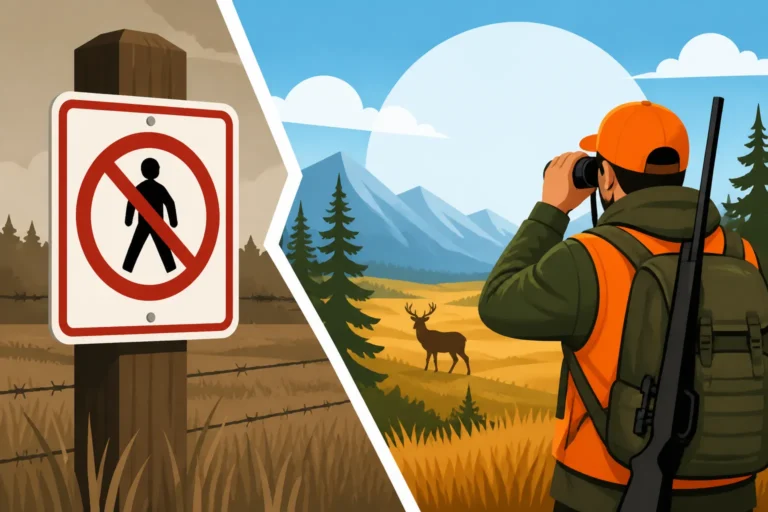
One of the most complex aspects of hunting the Livingstone-Porcupine Hills for many is understanding the intricate mosaic of land ownership and access regulations. This isn't a simple stretch of solid Crown land; it's a mix of Public Land Use Zones (PLUZs), grazing leases, private agricultural land, and forestry roads, all governed by specific rules. Successful hunting here often starts with successful homework before you even step foot in the field.
Public Land Use Zones and Grazing Leases
A significant portion of the Livingstone-Porcupine Hills falls within Public Land Use Zones (PLUZs), specifically the Livingstone-Porcupine Hills PLUZ. These areas are crucial for public recreation, including hunting, and understanding their boundaries and specific regulations is paramount. PLUZs typically allow for activities like hunting, random camping, and the use of off-highway vehicles (OHVs), but with designated trails and restrictions. It's not a free-for-all; there are rules about where you can drive, camp, and even establish spike camps. Mapping tools like onX Hunt are absolutely invaluable here for identifying PLUZ boundaries, understanding the allowable OHV trails, and differentiating them from restricted or private lands.
Beyond the designated PLUZs, you'll encounter a significant amount of Crown land under grazing lease. While these are still public lands, they are leased to ranchers for cattle grazing, and as such, require respectful interaction. You still have a right to access these lands for recreational purposes like hunting, but it's always best practice—and often legally required for vehicle access—to contact the leaseholder for permission. This simple courtesy can go a long way in fostering positive landowner-hunter relations. Often, leaseholders can provide valuable insights into current cattle locations, recent game activity, and preferred access routes. Knowing Asking a Grazing Leaseholder for Access can prevent misunderstandings and ensure a smoother hunt.
Rules and Regulations Specific to the Hills
Hunting in the Livingstone-Porcupine Hills means adhering to the general provincial hunting regulations, but also being aware of WMU-specific rules. The Hills encompass several Wildlife Management Units (WMUs), such as WMUs 302, 304, 306, 308, and 309, each of which can have unique season dates, bag limits, and special licence draw requirements. For example, some WMUs might be general tag areas for certain species, while others are draw-only, particularly for antlerless tags or specific trophy opportunities. Regularly checking the latest Alberta hunting regulations, which can be found through resources like GoHunt for cross-referencing, is non-negotiable before heading out.
Furthermore, access rules can vary. Some forestry roads within the Hills might be permanently closed, seasonally closed, or restricted to non-motorized access. Others might require a permit for certain vehicle types or be subject to sudden closures due to fire hazard or logging operations. Always check the Alberta Environment and Parks website for current land closures, fire bans, and OHV restrictions. Being caught unknowingly on a closed road can lead to fines and can quickly sour your hunting experience. Also, remember the general Alberta Landowner Permission Law: any private land, even if unposted, requires explicit permission from the landowner to hunt or even retrieve game.
| Land Type | Description | Access Rules for Hunters | Key Considerations |
|---|---|---|---|
| PLUZ | Public Land Use Zones (e.g., Livingstone-Porcupine Hills PLUZ) | General public access for hunting, random camping, OHV use on designated trails. | Always check designated trail maps. Respect random camping regulations. OHV restrictions apply to protect sensitive ecosystems. Be aware of group size limits and noise. Hunting the Ghost Public Land Use Zone has similar considerations. |
| Grazing Lease | Crown land leased to ranchers for cattle. | Public access for hunting, but contact leaseholder for vehicle access and courtesy. | Respect livestock and infrastructure. Close gates. Avoid disturbing cattle. Leaseholders often provide valuable intel. |
| Private Land | Deed-owned land (farms, ranches, residences). | Explicit permission required from landowner to enter for any reason, including hunting or game retrieval. | Always ask, even if unposted. Be polite and respectful. Offer to help. A positive interaction can open doors for future seasons. |
| Forestry Roads | Roads maintained by forestry companies or government. | Access can vary from open to seasonally/permanently closed, or restricted. | Check for current closures due to logging, fire hazard, or seasonal restrictions before you go. |
Effective Hunting Strategies for Success in the Hills
Hunting the Livingstone-Porcupine Hills demands a flexible and adaptable strategy. The varied terrain and diverse game species mean that a one-size-fits-all approach simply won't cut it. You'll need to blend different tactics, adapting to the specific conditions, the habits of your target species, and the time of year. Patience and keen observation are your greatest allies here.
Spot-and-Stalk and Still Hunting
Given the mixed landscape of open ridges, scattered timber, and deep coulees, both spot-and-stalk and still-hunting are incredibly effective methods in the Hills. Spot-and-stalk is particularly productive for mule deer and elk, especially in the early mornings and late evenings when they are often out feeding on exposed slopes. Find a good vantage point, preferably before first light, and spend ample time glassing with good binoculars and a spotting scope. Pay close attention to subtle movements, antler tips, or the glint of sunlight off an animal's hide. Once you spot game, the real work begins: planning a silent approach that uses the terrain and wind to your advantage, keeping cover between you and your target. This is where a detailed mapping application like onX Hunt becomes essential, allowing you to plot a stalk route that maximizes concealment and minimizes potential for detection. Remember, mule deer often prefer to bed on elevated benches or in the sun, always with an eye on their surroundings, making their approaches challenging.
Still-hunting is more suited for whitetails and often black bears, especially in the denser aspen and spruce thickets that line the draws and river bottoms. This involves moving incredibly slowly, taking one or two steps, then pausing for several minutes to scan, listen, and let your eyes adjust. You're looking for horizontal lines that break the vertical patterns of trees, the flick of an ear, or the dark patch of a bedded animal. Focus on areas that offer good cover transitions, such as the edge of an old clearcut or where a dense patch of timber meets a more open feeding area. Hunting a bush edge can be incredibly productive, as game often moves along these natural boundaries. The key is to be as quiet as possible, use the wind to your advantage, and blend into your surroundings. These hills are full of small, hidden pockets of cover where deer can vanish, and still-hunting is often the best way to uncover them.
Calling and Decoying Tactics
Adding calling and decoying to your repertoire can significantly increase your success rates, especially during specific seasons. For elk, the September archery and early rifle seasons can be electrifying with calling. Mimicking cow calls, spike bugles, or even aggressive challenge bugles can often draw a curious bull right into your shooting lane. You need to understand the cadence and volume appropriate for the time of year and the specific herd you're targeting. Using tactics like Bugling to a Foothills Bull Elk requires practice and an understanding of elk behaviour, but the rewards can be unforgettable. Setting up with a shooter forward and a caller behind, or using a decoy to draw attention away from the shooter, are common strategies.
For whitetail deer, especially during the peak of the rut in November, rattling antlers and grunt calls can be highly effective. The broken country of the Hills, with its numerous small pockets of cover, provides excellent opportunities for aggressive rattling sequences. Bucks are often cruising, looking for does, and a sharp rattling sequence can pique their interest. Combine rattling with grunt calls to simulate a small skirmish. Just like with elk, understanding when to call, how loudly, and for how long is crucial. Rattling Volume in Open Parkland will differ from rattling in a dense aspen draw. Decoying, while less common for deer in heavily timbered areas, can be effective in more open sections, especially with a doe decoy during the pre-rut or a buck decoy to challenge an incoming male.
Planning Your Hunt and Essential Gear
A successful hunt in the Livingstone-Porcupine Hills isn't just about strategy in the field; it's heavily dependent on thorough preparation beforehand. From understanding the legal requirements to packing the right gear, every detail contributes to a safer, more enjoyable, and ultimately more successful experience. The unpredictable nature of the Hills demands a level of preparedness that accounts for a wide range of scenarios.
Permits, Licences, and Season Dates
Before you even start thinking about what rifle to bring, the very first step is ensuring you have all the necessary permits and licences. This includes your Alberta Wildlife Identification Number (WIN) card, a current Wildlife Certificate, and the appropriate licences for the species you intend to hunt (e.g., General Deer, Antlered Moose Draw, General Elk, etc.). Many of these can be purchased online through the AlbertaRELM system. For some species or specific WMUs within the Hills, you may need to apply for a Special Licence draw well in advance. Alberta's Special Licence Draws have specific application periods and deadlines, and missing them means missing your opportunity for the season. Keep a close eye on the Alberta Big Game Season Dates for your chosen WMU, as they can vary significantly even between adjacent units or change year-to-year.
It's also crucial to double-check any specific regulations regarding antler point restrictions (APRs) for species like mule deer or elk in certain WMUs. Some areas might have 3-point or 6-point restrictions, which require careful field judgment. Always carry a physical copy of the current Alberta Hunting Regulations, or have a digital version easily accessible on your phone, even if you’ve extensively reviewed them beforehand. While applications like GoHunt can help track season dates and draw odds, the official regulations are your ultimate source of truth.
Recommended Gear and Safety
The diverse and often rugged terrain of the Livingstone-Porcupine Hills calls for robust and versatile gear. Good quality, broken-in hiking boots with excellent ankle support are non-negotiable. You'll be traversing steep slopes, potentially loose rock, and uneven ground, so comfort and stability are paramount. Layered clothing is essential, allowing you to adapt to the rapid temperature swings that are common in this region, from frosty mornings to warm midday sun, and sudden cold fronts. Think moisture-wicking base layers, insulating mid-layers, and a waterproof/windproof outer shell. Hunting Alberta Winter Weather Safely or adapting to unexpected rain can make or break a trip.
For navigation, a GPS device or a robust mapping app like onX Hunt on your phone is highly recommended, coupled with a portable charger. Always have a physical map and compass as a backup. Optics are critical for spot-and-stalk hunting: good quality binoculars (10x or 12x) and a spotting scope with a sturdy tripod will save your legs countless miles. Don't forget a sharp knife, game bags, a first-aid kit, fire-starting materials, headlamp, and sufficient food and water. If you plan on venturing deep into the backcountry, consider a satellite messenger for emergency communication, as cell service can be spotty to non-existent. A sturdy backpack capable of hauling meat is also a must, as animal retrieval from steep terrain is a major consideration. Finally, always inform someone of your hunting plans, including your route and expected return time.
Disclaimer
This article is for general informational purposes only and does not constitute professional advice. Laws, prices and regulations vary by location and change over time. Consult a qualified professional for guidance on your specific situation.