Hunting Alberta’s Swan Hills
The Swan Hills in Alberta can feel like a vast, intimidating wilderness, a dense mosaic of timber, muskeg, and old logging roads that can quickly swallow up an unprepared hunter. Many folks hear "Swan Hills" and immediately think "moose," but the sheer scale of the landscape, the challenging access, and the unique behaviours of game in this boreal environment can leave even seasoned hunters scratching their heads. This guide aims to demystify hunting the Swan Hills, offering practical insights and strategies to help you navigate its wild beauty and increase your chances of a successful hunt.
Understanding the Swan Hills: A Hunter's Overview
The Swan Hills region isn't just a patch of trees; it's a significant landmass in north-central Alberta, distinct in its geography and the hunting opportunities it presents. For many, it represents the heart of Alberta's boreal hunting experience, offering a different challenge than the open prairies or the rugged mountains. This isn't country where you can just drive around spotting game; it demands effort, patience, and a deep understanding of the land itself.
Geography and Landscape Features
Imagine mile after mile of rolling hills, carpeted in dense mixedwood forest. Spruce, pine, and aspen dominate the landscape, often creating thick canopies that limit visibility and make travel on foot challenging. Interspersed within these forests are countless muskegs – boggy, wet areas that can range from merely damp to outright impassable bogs, especially during wet falls or early seasons. These wet areas are crucial to understanding game movement, as they often dictate where animals travel and feed. Old burn areas and clearcuts, remnants of logging or wildfires, scatter the landscape, creating pockets of regenerating browse that are magnets for certain species. The elevation isn't dramatic like the Rockies, but the constant undulations and dense cover make every step a workout. The sheer vastness of the area, often lacking significant human development, means you can truly get away from it all, but it also amplifies the need for thorough preparation and self-reliance.
The drainage patterns here are also critical; numerous small creeks and rivers meander through the hills, often creating natural travel corridors or barriers for wildlife. These waterways are often lined with willow and alder thickets, providing ideal browse and cover. Understanding these micro-features, whether it's a dry ridge or a particularly wet low point, is key to predicting where game might be. The changing seasons dramatically alter the landscape; what's a passable trail in late summer can become a knee-deep mud bog after a few days of rain, or a frozen highway in the deep cold of winter. This dynamic environment is part of what makes Hunting Alberta's Boreal Forest Country such a unique and rewarding challenge.
Primary Game Species and Their Habitat
While the Swan Hills are perhaps most renowned for their moose population, they offer a diverse array of big game. Black bears are abundant, thriving in the dense forests and taking advantage of early spring greens and fall berry crops. Whitetail deer are common, particularly in the peripheral areas and along the edges of agricultural clearings, while mule deer can also be found, though generally in lower densities and often on higher, drier ridges within the mixed forest. Beyond the big game, hunters also encounter wolves and coyotes, adding another layer to the wilderness experience. Understanding each species' habitat preferences is paramount to planning a successful hunt.
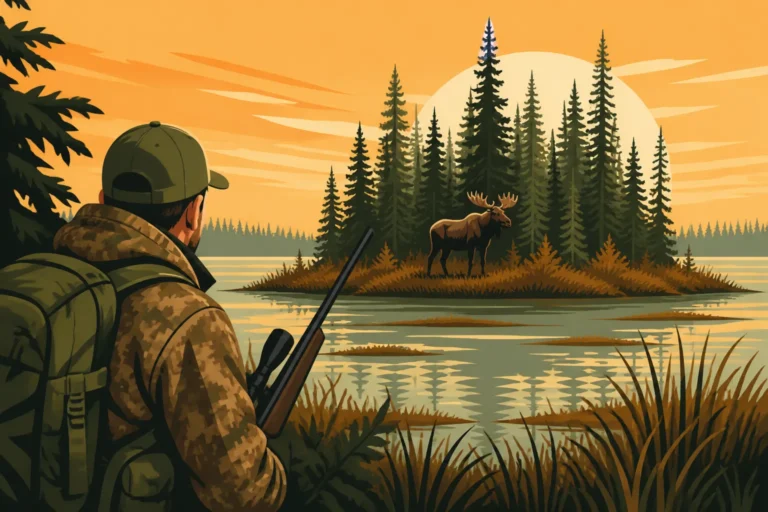
Moose, naturally, are drawn to the wetlands, willow thickets, and regenerating clearcuts that provide ample browse. They are often found near beaver ponds or in the wet, swampy areas of muskeg. Black bears are more opportunistic, found throughout the forest, often concentrating in areas with berry patches in late summer and fall, or around bait sites in the spring season. Deer, especially whitetails, will often stick to the transition zones where the denser forest meets more open areas or younger regeneration, providing both cover and forage. Recognizing these patterns and knowing where to focus your efforts based on the specific animal you're after is vital. A quick glance at a topographic map or using a mapping app like onX Hunt can reveal these key habitat features, guiding your boots on the ground.
Here's a quick look at the main big game species and their typical Swan Hills haunts:
| Species | Primary Habitat in Swan Hills | Key Times to Target |
|---|---|---|
| Moose | Muskeg edges, willow swamps, beaver ponds, regenerating clearcuts. | Rut (late Sept/early Oct), early season browse. |
| Black Bear | Dense forests, berry patches, clearcuts, spring green-ups. | Spring (May-June), Fall (Sept-Oct, pre-denning). |
| Whitetail Deer | Mixedwood edges, aspen bluffs, cutlines, areas near clearings. | Rut (early Nov), early season browse, late season cover. |
| Mule Deer | Drier ridges, older clearcuts, higher elevations within forest. | General seasons, often spot-and-stalk if terrain allows. |
| Wolf/Coyote | Throughout the forest, often following game trails or cutlines. | Winter (calling), any season as opportunistic encounters. |
Accessing the Swan Hills: Navigating the Remote Terrain
One of the biggest hurdles, and simultaneously one of the greatest appeals, of hunting the Swan Hills is its challenging access. This isn't prime agricultural land with neatly gridded roads; it's a vast expanse of Hunting Alberta's Crown Land where infrastructure is minimal, and Mother Nature holds the upper hand. Hunters often underestimate the time and effort required to penetrate this country, leading to frustration or even dangerous situations. Planning your ingress and egress is just as important as your hunting strategy.
Main Roads and Forestry Trunk Roads
The Swan Hills are crisscrossed by a network of logging roads and a few main arterial routes, often gravel or dirt. Roads like the Swan Hills Lookout Road or portions of the Forestry Trunk Road provide the primary arteries into the region. These roads can be in various states of repair, from well-maintained gravel highways to rutted, overgrown tracks that demand high-clearance 4×4 vehicles. Weather plays a massive role; a heavy rain can turn seemingly solid roads into greasy, bottomless mud pits. It's not uncommon to encounter washouts, fallen trees, or active logging operations that might close sections of road. Always check local conditions and forestry road reports before heading out.
These main roads are often the starting points for deeper penetration into a WMU. You'll find numerous turn-offs leading to smaller, less-maintained trails or cutlines. Parking and walking from these main roads is a common strategy, as is utilizing ATVs or side-by-sides to cover more ground. However, remember that even these "main" roads can be far from major services, so self-sufficiency is key. Having reliable maps, both paper and digital, such as those found on onX Hunt, is essential, as cell service is spotty at best. Many hunters have found themselves lost or stranded simply by taking a wrong turn onto an obscure logging trail.
Off-Highway Vehicle (OHV) and Foot Access
Once you leave the main arteries, OHVs become almost indispensable for reaching many prime hunting areas in the Swan Hills. Miles of cutlines, seismic lines, and old skid trails weave through the forest, providing access that would be impossible on foot alone. However, proper OHV use is critical, not only for safety but also for respecting the land and existing regulations. Always stick to established trails and know the rules regarding OHV use in specific Public Land Use Zones (PLUZs) or other designated areas. Getting stuck deep in a muskeg with a quad can quickly turn a hunting trip into a survival situation.
Many prime spots are far from any road, even OHV trails, requiring significant foot travel. This is where the true grit of a Swan Hills hunter is tested. Navigating dense timber, crossing muskeg, and pushing through thick brush demands good physical conditioning and excellent navigational skills. Carrying a GPS unit, alongside your mapping app, is non-negotiable. Plan your routes carefully, mark your entry points, and be prepared for slower travel than you might expect. This kind of deep penetration on foot often leads to areas that see less hunting pressure, which can be highly rewarding, especially for species like moose or large bears. Remember, what you pack in, you must pack out, and a successful harvest often means an even tougher pack out. Consider how you'll manage Getting a Moose Out With a Quad if you connect miles from a main road.
Key Hunting Strategies for the Swan Hills
Hunting in the Swan Hills is a different beast than glassing coulees on the prairie or calling elk in the foothills. The dense cover and often wet terrain dictate specific approaches. Patience, stealth, and an understanding of animal behaviour in a boreal environment are your most valuable assets. It's about working with the landscape, not against it.
Still-Hunting and Tracking in Dense Timber
Given the limited visibility, still-hunting and tracking become primary tactics in the Swan Hills. Still-hunting involves moving slowly and deliberately through the forest, pausing frequently to observe, listen, and scan for any sign of game. You're not rushing; you're easing your way through, taking 10 steps, then standing motionless for a few minutes, repeating the process. This slow pace allows you to pick up subtle movements, the flick of an ear, or the glint of an antler that you'd otherwise miss. Focus on areas with good cover and fresh sign, such as recent tracks, rub lines, or feeding areas.
Tracking, while challenging in the soft forest duff or wet muskeg, can be highly effective after a fresh snowfall. Snow reveals travel patterns, indicating where animals are feeding, bedding, and moving between areas. When tracking, pay attention not just to the prints, but to the stride, the depth of the track, and any accompanying signs like disturbed snow or dropped browse. The goal is to get close enough for a shot without alerting the animal. This often means moving even slower, paying attention to wind direction, and being prepared for a quick shot opportunity. It's a deep dive into the woods, relying on your senses, much like Reading Whitetail Sign in Alberta Aspen Bluffs but in a more dense, coniferous setting.
Hunting Cutlines, Seismic Lines, and Burns
These linear features and disturbed areas are the lifelines of Swan Hills hunting. Cutlines (narrow paths cleared for logging access) and seismic lines (older, often overgrown lines used for oil and gas exploration) act as natural travel corridors for game. They provide easier walking than the dense timber and often lead to feeding or bedding areas. Hunting these lines involves patiently sitting or slowly still-hunting them, especially at dawn and dusk when animals are most active. Look for intersections, crossings over drainages, or where they lead into thicker cover, as these are common ambush points. Hunting a Cutline Intersection for Whitetails is a classic tactic, but applies equally well to moose and bears.
Old burn areas or clearcuts, particularly those a few years old that are regenerating with new growth, are magnets for moose and bears seeking browse. These areas can be thick with saplings and shrubs, offering abundant food. Hunting them often involves glassing edges from a distance if the terrain allows, or carefully still-hunting through the regenerating growth. Early season hunters often focus on green-ups in these areas for bears, while moose will frequent them throughout the open season. Using a mapping application like GoHunt can help you identify these features and plan your approach, as they may not be visible on older maps.
Calling Strategies for Moose and Bears
Calling can be a highly effective tactic in the Swan Hills, especially for moose during the rut and for bears, although with bears, it's often an opportunity call rather than a primary strategy. For moose, cow calls, grunts, and even antler rattling can draw in an inquisitive bull. The dense timber means you often need to call aggressively to get their attention, but also that they can appear silently and quickly, so be ready. Setting up near water, in regenerating cuts, or along travel corridors where you expect moose to be moving is ideal. Calling a Bull Moose in the Rut requires understanding the different sounds a cow or bull makes and knowing when to use each.
For bears, calling typically involves using distress calls (rabbit or fawn distress) to pique their curiosity. This isn't a guaranteed method like baiting, but it can sometimes bring in a bear looking for an easy meal, especially if they are already in the vicinity. It requires patience and a good understanding of wind direction to prevent them from circling downwind and smelling you. Always be prepared for a close encounter when calling predators, and ensure you have a clear shooting lane. Whether you're calling a moose or hoping to draw a bear, the key is to sound natural and be ready for a quick response in this dense environment.
Species-Specific Tactics in the Swan Hills
While the general strategies apply across species, each animal in the Swan Hills demands a nuanced approach. Knowing their habits, preferred foods, and movement patterns within this specific habitat will dramatically improve your success rate.
Moose Hunting in Muskeg and Timber
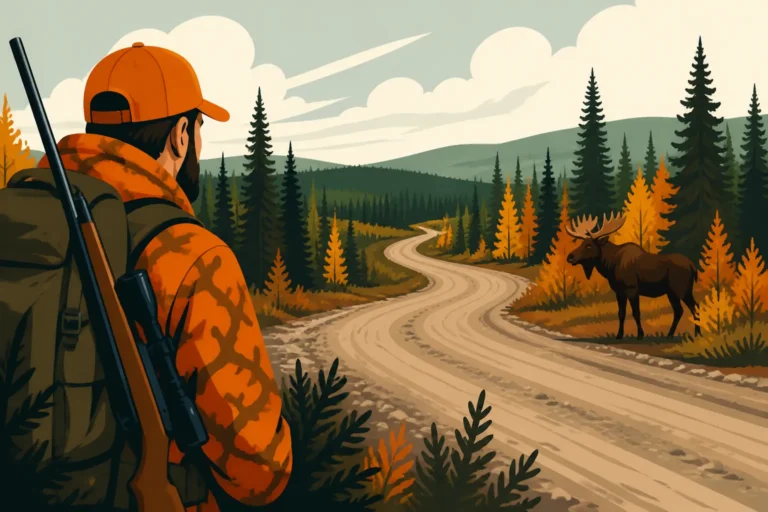
Moose are the undeniable royalty of the Swan Hills, and hunting them here is often a quintessential boreal experience. They are found throughout the region, but particularly in areas with a mix of water, willow, and regenerating forest. During the early season, focus on areas around beaver ponds, slow-moving creeks, and the edges of large muskegs where browse is abundant. Moose will often bed in the thicker timber adjacent to these feeding areas, moving out to feed in the early morning and late evening. Spot-and-stalk can be challenging due to the thick cover, making still-hunting or calling more productive.
As the rut approaches in late September and early October, calling becomes the most exciting and effective method. Position yourself in an area with good visibility (for the Swan Hills, this might mean a 50-yard clearing!) and start with cow calls, escalating to bull grunts or even raking brush if you don't get a response. Be patient; a bull might take a long time to respond and approach, often circling downwind. Persistence is key. In the late season, after the rut, moose will often be found conserving energy in thicker cover, browsing less aggressively, and still favoring wetland edges. Hunting Moose Around Alberta Beaver Ponds is a classic Swan Hills tactic that often pays off.
Black Bear Hunting in Spring and Fall
Black bears are plentiful in the Swan Hills, offering excellent hunting opportunities in both spring and fall. Spring bear hunting often focuses on green-up areas – south-facing slopes, pipeline rights-of-way, and regenerating clearcuts where fresh vegetation emerges first. Bears are coming out of hibernation and are eager to feed on these early greens. This is a great time for spot-and-stalk, using binoculars to scan these open areas, or Setting a Bear Bait Site in Alberta strategically to draw them in. Ensure your bait site is well-placed and properly managed according to regulations.
Fall bear hunting, often coinciding with deer and moose seasons, can be incredibly rewarding. Bears are in full "feed mode," gorging on berries (saskatoons, blueberries, cranberries) and other mast crops to put on weight for winter. Look for areas with abundant berry bushes, often found in old burns or clearcuts. Still-hunting through these areas or setting up near a known food source can be effective. Bears are notoriously cautious, so scent control and quiet movement are paramount. Remember that in the Swan Hills, you're likely to encounter colour phase bears – brown, blonde, or cinnamon – adding another layer of excitement to the hunt.
Whitetail and Mule Deer in the Fringes
While not as famous for deer as the parkland or prairie zones, the Swan Hills does hold healthy populations of both whitetail and, to a lesser extent, mule deer. These deer tend to utilize the fringes of the deep boreal forest, particularly where it transitions into more open aspen bluffs, older clearcuts, or areas with some agricultural influence on the periphery. Whitetails will stick to the thicker pockets of cover, using cutlines and natural corridors to move between bedding and feeding areas. During the rut in early November, these whitetails become more active, and tactics like rattling or grunting can be effective. Hunting the Rut in Early November is always an exciting time.
Mule deer in the Swan Hills are generally found in lower numbers and often prefer the drier, higher ridges within the mixed forest, or older, more established clearcuts with better visibility. Spot-and-stalk can be challenging due to the timber, but glassing the edges of clearings or long cutlines at dawn and dusk can reveal their presence. Both species benefit from careful scouting and understanding their specific bedding and feeding habits within this unique environment. Don't expect to see hundreds of deer; instead, focus on finding good sign and patiently hunting promising pockets of habitat.
Preparation and Safety for a Swan Hills Hunt
The Swan Hills are wild, beautiful, and unforgiving. Underestimating the terrain, weather, or sheer remoteness can turn a dream hunt into a nightmare. Proper preparation isn't just about comfort; it's about safety and ensuring you return home with your memories and, hopefully, some meat.
Essential Gear and Equipment
When planning a Swan Hills hunt, your gear list needs to reflect the challenging conditions. First and foremost, a reliable 4×4 vehicle is often a must, equipped with a winch, tire chains (especially in late season), a full-size spare, and recovery gear. For off-road travel, a robust ATV or side-by-side with appropriate tires and a small recovery kit is essential. Navigation is paramount: paper maps, a GPS unit with extra batteries, and a reliable mapping app like onX Hunt downloaded with offline maps are non-negotiable. Cell service will be spotty to non-existent, so a satellite messenger (like a Garmin inReach or a Zoleo) is a critical safety item for emergency communication.
Beyond navigation, consider the dense brush and wet conditions. Waterproof, durable hunting clothes are a must, including good quality rubber boots or waterproof hiking boots with gaiters. Layering is key, as temperatures can fluctuate wildly, especially in spring and fall. A comprehensive first-aid kit, emergency fire-starting supplies, a headlamp with extra batteries, and enough food and water for at least an extra 24-48 hours (in case of a breakdown or getting lost) should always be in your pack. For meat care, bring game bags, a sharp knife, a saw, and a plan for cooling and transporting your harvest, especially if you're deep in the bush. Meat Care in Alberta's Cold and Warm Swings can be a major challenge without proper planning.
Navigating Remote Country and Emergency Preparedness
Getting lost or encountering a serious mechanical breakdown far from any human habitation is a real possibility in the Swan Hills. Before you even leave home, share your detailed hunt plan with someone responsible, including your intended route, where you'll be camping, and when you expect to return. Stick to that plan as closely as possible, and check in when you can. When navigating, always double-check your position against your maps and GPS. If you start to feel disoriented, stop, take a breath, and re-evaluate before moving further. Trust your navigation tools, not just your instincts.
Emergency preparedness extends beyond gear; it's a mindset. Be self-reliant. Know how to make a fire in wet conditions, signal for help, and administer basic first aid. Understand the risks of hypothermia and dehydration, even in seemingly mild weather. If you're traveling solo, be extra cautious and consider bringing a bear spray and knowing how to use it, as you're definitely in bear country. For those looking to brave the late season, Hunting Alberta Winter Weather Safely means bringing even more specialized gear, like extreme cold weather clothing, an insulated shelter, and reliable heat sources. The Swan Hills offers incredible hunting, but it demands respect and thorough preparation.
Disclaimer
This article is for general informational purposes only and does not constitute professional advice. Laws, prices and regulations vary by location and change over time. Consult a qualified professional for guidance on your specific situation.