Hunting the Peace Country’s Farm and Bush
Hunting the vast, often impenetrable landscape of Alberta's Peace Country can feel like a daunting task, especially when you're trying to navigate the intricate mosaic of prime agricultural land bumping right up against dense boreal forest. Many hunters arrive here with visions of untouched wilderness, only to be met with a patchwork of private farms and confusing public land access. This guide is here to help you unravel the mysteries of hunting in the Peace Country, giving you the insights and strategies you need to find success in this truly unique and rewarding region.
Understanding the Peace Country Landscape and Its Hunting Zones
The Peace Country, stretching across the northwestern part of Alberta, is unlike any other hunting zone in the province. It's a land of striking contrasts, where golden fields of wheat and canola suddenly give way to thick aspen bluffs, vast stretches of spruce, and winding river systems. This unique blend creates incredible habitat, but it also presents a very specific set of challenges for the hunter trying to decipher where to focus their efforts.
The Mosaic of Agriculture and Forest
Imagine driving down a gravel road, passing mile after mile of active farmland, then suddenly hitting a section where the forest crowds in, dark and deep. That's the Peace Country in a nutshell. This "edge habitat" is precisely what makes it so productive for game. Whitetails, especially, thrive where they can feed in agricultural fields at night and slip into the dense cover of the bush for bedding and security during the day. This constant intermingling of food sources and bedding areas means game animals don't have to travel far, making them predictable if you can identify their preferred travel corridors.
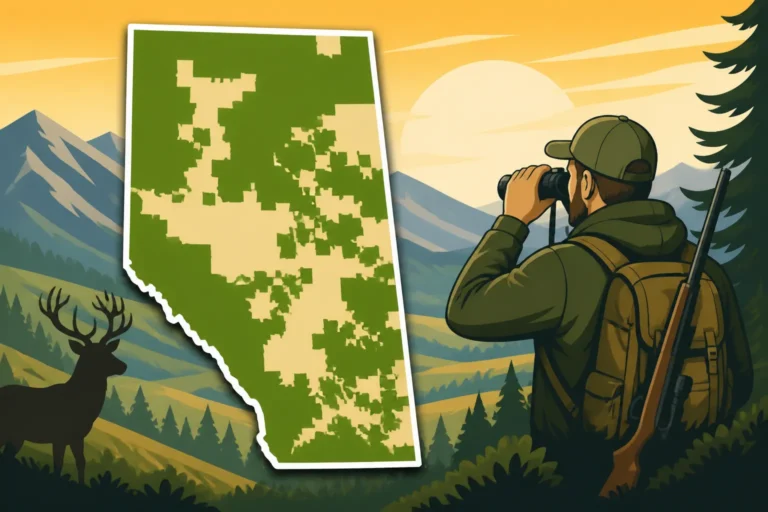
However, this mosaic also means you'll be dealing with a lot of private land. Respecting property lines and understanding where the Crown land begins and ends is paramount. It’s not always obvious, and what looks like endless wilderness from a distance can quickly turn into posted property. This dynamic requires a different approach than the vast, uninterrupted blocks of Crown land you might find further north or in the mountains.
Key WMUs in the Peace Country
The Peace Country encompasses a significant number of Wildlife Management Units (WMUs), each with its own characteristics, but generally they share this farm-and-bush blend. WMUs like 521, 523, 525, 526, 527, and 528 are prime examples of this transitional zone. These units often hold strong populations of whitetails, moose, and black bears. The further north you go, particularly into WMUs like 534, 536, and 539, the landscape shifts more heavily towards continuous boreal forest, still with some agricultural pockets, especially along river valleys.
Each WMU will have its own specific regulations and season dates, so it's critical to check the current Alberta hunting regulations booklet every single year. Don't assume anything. What was open last year might be draw-only this year, or a season length could have changed. Pay close attention to these details, as an honest mistake can still lead to serious penalties.
Key Game Species and Their Habitat in the Peace
The Peace Country is a fantastic destination for several big game species, each utilizing the unique landscape in their own way. Understanding their habits and preferred habitats is your first step toward a successful hunt.
Whitetails Thriving on the Edges
White-tailed deer are perhaps the most prevalent and sought-after big game animal in the Peace Country. They absolutely flourish in the combination of agricultural fields and dense forest cover. The rich soils produce abundant crops like peas, canola, and various grains, providing a high-energy food source, especially critical as winter approaches. The dense aspen and spruce bluffs, river breaks, and thick willow bottoms offer perfect bedding, security, and thermal cover.
You'll often find whitetails using the fringes of these environments. Look for rubs and scrapes along the bush edges bordering fields, or where a deep coulee cuts through farmland and spills into heavier timber. River valleys, particularly the Peace River itself and its numerous tributaries, act as natural travel corridors, funnels, and wintering areas. Bucks will cruise these corridors during the rut, scent-checking for does. Understanding Reading Whitetail Sign in Alberta Aspen Bluffs can give you a significant advantage when scouting these transition zones.
Moose in the Wet and Woody Pockets
While not as dense as some of the more pure boreal regions, the Peace Country definitely holds a healthy population of moose, especially in the northern WMUs and along major river systems and their associated wetlands. Moose are creatures of the thick stuff, preferring boggy areas, willow swamps, and timbered river bottoms. They thrive where there's abundant browse like willow, aspen, and aquatic vegetation.
In the Peace, focus your moose scouting efforts on areas with standing water, beaver ponds, and dense, regenerating forests, particularly after a cutblock or wildfire. Old seismic lines and logging roads that are no longer actively used, especially those that have grown in with willows and alders, can be excellent travel routes and feeding areas for moose. The dense cover here often makes for more still hunting or calling opportunities than wide-open glassing. Learning about Moose Across Alberta's Boreal and Foothills will give you a broader understanding of their habits in these northern climates.
Black Bear Opportunities
The extensive forests and mixed wood areas of the Peace Country provide ideal habitat for black bears, making it a popular destination for both spring and fall bear hunts. These bears take advantage of the diverse food sources, from early spring greens in natural clearings and cutlines, to berries and agricultural crops later in the season. Colour phase bears, including cinnamon, chocolate, and blonde, are also quite common in this region, adding an exciting dimension to the hunt.
When targeting black bears in the Peace, look for areas with rich berry crops in late summer and fall, or newly greening areas in spring. Cutlines, old logging roads, and creek bottoms are often high-traffic areas for bears. If you’re considering a spring hunt, focus on south-facing slopes and areas where the snow melts earliest, exposing fresh forage. For hunters using bait, securing private land permission in a suitable timbered area can be highly effective. Understanding Black Bears in Alberta's Forests and Foothills will inform your approach to finding and hunting these animals.
Navigating Land Access Challenges
Access is arguably the biggest hurdle for hunters in the Peace Country. The land ownership is a complex quilt of private agricultural fields, grazing leases, and various types of Crown land. Figuring out where you can legally hunt takes careful research and, often, a good deal of interpersonal skill.
Gaining Private Land Permission
Given the prevalence of agriculture, a significant portion of the prime hunting ground for whitetails, and even some moose and bear, is on private land. This means you need to knock on doors, be polite, and establish a good relationship with landowners. This isn't just about asking; it's about building trust. Offer to help with chores, respect their rules (even if they seem odd to you), and always follow up with a thank you, perhaps even offering some game meat.
When you're trying to gain access, be specific about what you're hunting, how many people will be with you, and the dates you plan to be there. Be prepared for rejection; many landowners have had bad experiences or simply don't want hunters on their property. But persistence and courtesy can pay off. Mapping tools like onX Hunt can be invaluable here, showing property boundaries and landowner names, which saves a lot of guesswork and ensures you're asking the right person. This is especially useful in figuring out Asking a Grazing Leaseholder for Access which is a common scenario in the Peace.
Finding and Accessing Crown Land
Alberta's Recreational Access Regulation means that much of the undeveloped Crown land is open for public recreation, including hunting, unless explicitly restricted. However, "open" doesn't always mean "easy to access." Many blocks of Crown land are landlocked by private property, making them difficult or impossible to reach without landowner permission. This is where your mapping apps become critical again. Using tools like onX Hunt or GoHunt allows you to identify public land parcels and, crucially, to see if there's legal access via a road allowance, lease road, or other public access point.
Look for large blocks of Green Area (forestry land) or areas designated as Public Land Use Zones (PLUZs), though the Peace Country has fewer large, contiguous PLUZs compared to the foothills or mountains. You'll often find smaller, isolated blocks of Crown land, sometimes a quarter section here or there, surrounded by private. These overlooked parcels can be goldmines, as many hunters won't bother with the effort to find them. Remember that rules for vehicles, camping, and treestands on Crown land still apply. Understanding Hunting Alberta's Crown Land is fundamental before you head out.
| Land Type | Typical Use | Access Challenge | Strategy for Access |
|---|---|---|---|
| Private Farm | Agriculture, livestock | Requires direct permission from landowner | Knock on doors, build relationships, offer help, be respectful. |
| Grazing Lease | Cattle grazing | Technically private land, permission from leaseholder | Find leaseholder contact info, request permission, respect their operations. |
| Isolated Crown | Forest, wetlands | Often landlocked by private property | Use mapping apps (e.g., onX Hunt) to find legal access points; ask adjacent landowners. |
| Large Crown Blocks | Boreal forest, rivers | Remote, road conditions, active industrial operations | Research forestry roads, seismic lines, river access. Be prepared for self-sufficiency. |
Effective Hunting Strategies for the Peace Country
Hunting in the Peace Country requires a flexible approach, blending tactics suitable for open fields with those for dense bush. Your strategies will need to adapt constantly to the changing terrain.
Adapting to the Farm-to-Bush Transition
The edge where agricultural fields meet the bush is a high-percentage area for whitetails. During the early morning and late evening, deer will be moving between their bedding areas in the bush and feeding in the fields. Setting up a stand or ground blind along a Hunting a Shelterbelt Between Two Fields or a bush edge can be incredibly effective. Pay attention to wind direction, as deer will often scent-check open areas before committing.
During midday, when deer are typically bedded, focus on still hunting or slow-stalking through the dense timber adjacent to these feeding areas. Look for heavy cover, especially pockets of spruce or thick willow, where deer feel secure. Knowing how to interpret fresh tracks, droppings, and browsed vegetation will guide you through the maze of the bush. This transition zone also provides unique cover for stalking mule deer, if you're in the right WMU, where coulees and river breaks offer cover and vantage points.
Utilizing Natural Funnels and Travel Corridors
The Peace Country is crisscrossed with natural funnels that deer, moose, and bear frequently use. River valleys, creek bottoms, old seismic lines, cutlines, and even fence lines can act as highways for game animals moving between different parts of their home range. Identifying these natural corridors is key to intercepting animals.
For whitetails, look for where a small finger of bush extends into a field, or where a narrow strip of timber connects two larger blocks of cover. These are prime ambush points. For moose, focus on low-lying areas, beaver dam complexes, and wet, willow-choked creek beds. Bears will often follow these same routes, especially if they lead to food sources. A good topographic map, satellite imagery, or mapping software like onX Hunt can help you pinpoint these choke points from the comfort of your home before you even set foot in the woods. Scouting With Satellite Imagery in Alberta is a powerful tool for this type of hunt.
The Art of Still Hunting and Calling
Given the dense cover in many parts of the Peace Country, still hunting (moving slowly and deliberately, observing more than walking) can be incredibly productive. This tactic requires patience and keen observation skills. Move into the wind, taking only a few steps at a time, then stopping to scan ahead for any movement or unnatural shape. This is particularly effective in the thick aspen and spruce stands where visibility is limited.
Calling can also be very effective, especially for whitetails during the rut and for moose during their breeding season. For whitetails, rattling antlers and grunt calls can bring bucks in close, particularly in the open parkland or along the bush edges. For moose, cow calls, bull grunts, and raking brush can simulate competition and draw a curious bull out of the timber. Be prepared for a close encounter, as animals might respond quickly and aggressively, especially during the peak of the rut. Calling a Bull Moose in the Rut or Rattling and Calling Whitetails in Farm Country are excellent skills to develop for this region.
Essential Gear and Preparation for a Peace Country Hunt
The Peace Country's blend of terrain and its northern latitude mean that preparedness is key. You'll encounter a mix of weather conditions, dense bush, and potentially challenging access. Having the right gear and mindset can make all the difference.
Navigational Tools and Off-Road Preparedness
A reliable GPS unit or a smartphone with a robust hunting app (like onX Hunt or GoHunt) loaded with offline maps is non-negotiable. Cell service can be spotty to non-existent in many of the forested and remote areas. Ensure your devices are fully charged and consider carrying a portable power bank. A traditional compass and paper map are also wise backups, especially for those venturing deep into unfamiliar territory. Knowing Reading an Alberta WMU Map Before You Go will help you orient yourself.
Vehicle preparedness is also crucial. Many access roads, especially logging trails or seismic lines, can become incredibly muddy and impassable with rain. A reliable 4×4 truck or ATV/side-by-side with appropriate recovery gear (winch, tow strap, shovel, traction boards) is highly recommended. Always let someone know your travel plans and expected return time, especially if you're heading off the main roads. A satellite messenger device can literally be a lifesaver if you find yourself stuck or in an emergency in an area without cell service.
Weather Readiness and Survival Gear
The Peace Country experiences significant temperature swings, from warm, mild fall days to bitterly cold late-season conditions, often within the same week. Be prepared for anything. Layering is essential: a good base layer to wick moisture, insulating mid-layers, and a waterproof/windproof outer shell. Bring more warm clothes than you think you'll need, especially extra socks and gloves. Hunting Alberta Winter Weather Safely emphasizes the importance of proper attire and emergency planning.
Beyond clothing, a basic survival kit should always be with you. This includes fire-starting materials, a first-aid kit, a headlamp with extra batteries, a knife, a space blanket, and enough food and water for at least 24-48 hours longer than you anticipate being out. Getting lost or stuck is a real possibility, and being able to stay warm and hydrated until help arrives is paramount.
Seasonal Timing and Optimizing Your Hunt
Timing your hunt correctly can greatly increase your chances of success in the Peace Country. Each season offers unique opportunities and presents different challenges.
Early Season Opportunities
The early archery and general seasons (September and October) in the Peace Country can be fantastic, especially for black bears and early-season whitetails. Bears are actively feeding, often hitting berry patches or the edges of agricultural fields as they bulk up for winter. Whitetails are in their pre-rut patterns, still somewhat predictable as they move between food and bedding, and often less wary than later in the season.
However, early season also means warmer temperatures, which can present challenges for meat care. You'll need a plan for quick field dressing and cooling your animal. Insects, particularly mosquitoes and blackflies, can still be a nuisance, so bug repellent or a head net is a good idea. Access roads are generally in better condition, making it easier to get into more remote areas. Bowhunting Alberta's Early Archery Seasons offers specific advice relevant to this period.
Peak Rut and Late Season Challenges
November is prime time for whitetail hunting in the Peace, as the rut kicks into high gear. Bucks are actively chasing does, covering more ground, and often letting their guard down. This is when rattling and grunt calls can be most effective. The weather is typically colder, which aids in meat preservation, but can also bring snow and freezing rain, making travel more difficult. Hunting Alberta's November Whitetail Rut is a must-read if you plan to target this timeframe.
Late season, extending into December, can be brutal but incredibly rewarding. Deep snow often concentrates deer into wintering areas, making them easier to locate. However, this also means extreme cold and difficult travel conditions. Moose hunts can also extend into late fall and early winter, often when they are focused on specific browse areas. Always be prepared for the worst weather-wise, and ensure your vehicle and gear can handle the frigid temperatures and snow. Hunting Deep Cold Late in the Season will help you prepare for these challenging but potentially highly successful hunts.
Disclaimer
This article is for general informational purposes only and does not constitute professional advice. Laws, prices and regulations vary by location and change over time. Consult a qualified professional for guidance on your specific situation.