Hunting the Livingstone Range
The Livingstone Range, a magnificent stretch of Alberta's Southern Foothills, calls to many hunters with its dramatic peaks, deep river valleys, and sweeping forested slopes. But don't let its rugged beauty fool you – hunting this country presents a unique set of challenges that can quickly overwhelm the unprepared. This guide is here to walk you through what it really means to pursue game in this iconic landscape, from understanding its terrain and regulations to developing effective strategies and ensuring your safety.
The Unique Allure of Hunting Alberta's Livingstone Range
There's something truly special about the Livingstone Range. It’s not the highest or most remote mountain range in Alberta, but it perfectly captures that wild, untamed spirit of the Rockies while still being relatively accessible from many of Alberta's southern communities. This means you can find genuine backcountry experiences without having to plan an expedition into the deepest wilderness, which is a massive draw for many of us. You’ll be hunting in terrain that demands respect, offering a diverse array of big game species that thrive in this mix of open alpine, dense timber, and willow-choked creek bottoms.
The landscape itself is a character in your hunt. Imagine traversing steep, timbered slopes that give way to open, windswept ridges, all carved by countless creeks and rivers. This varied terrain means you'll need to be versatile in your approach, ready to spot-and-stalk across a shale slide one moment and still-hunt a dark timber patch the next. The views are incredible, of course, but they also serve as a constant reminder of the physical demands of hunting this country. You're not just looking for an animal; you're immersing yourself in an ecosystem where every step, every gust of wind, and every change in elevation tells a story. It's a place where you earn your harvest, not just through skill, but through sheer effort and perseverance.
Key Species and Their Habits
The Livingstone Range is a hotspot for several coveted big game species, each presenting its own unique hunting challenge. When you decide to hunt here, you're often targeting elk, mule deer, and for those who secure a licence, bighorn sheep. These animals are not simply "here"; they are adapted to this specific environment, and understanding their habits within this terrain is your first step to success.
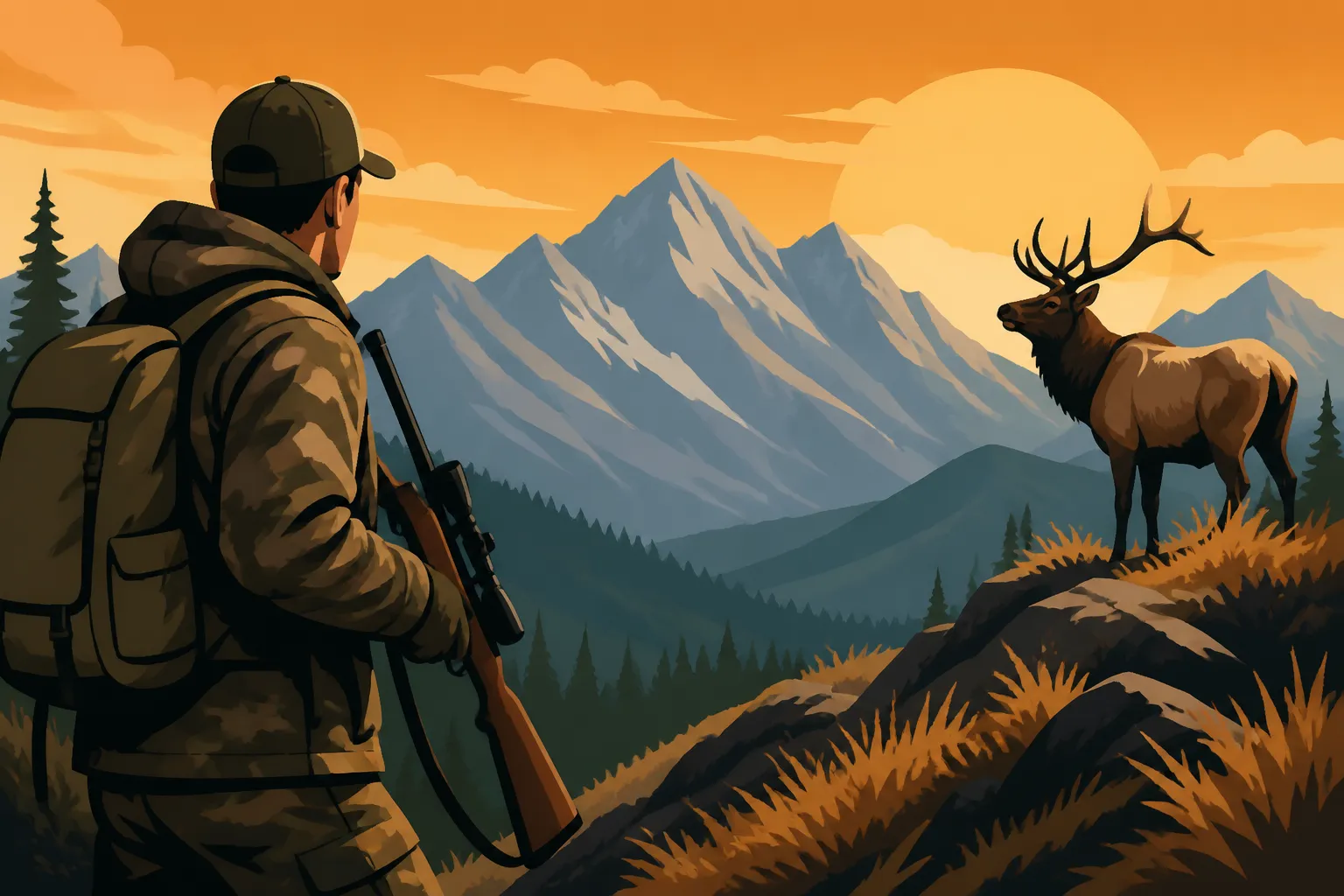
Elk in the Livingstone tend to follow predictable patterns, especially during the rut. They utilize the timbered slopes for bedding and cover, moving into more open meadows and clearcuts to feed, often near water sources. During archery season, the bugles echo through the valleys, creating an exhilarating hunting experience. Later in the rifle seasons, they become more wary, retreating into thicker cover, making still-hunting and careful glassing of timber edges crucial. You'll often find them transitioning between the higher, more remote sections of the range and the lower, more accessible foothills, especially as hunting pressure mounts or snow pushes them down.
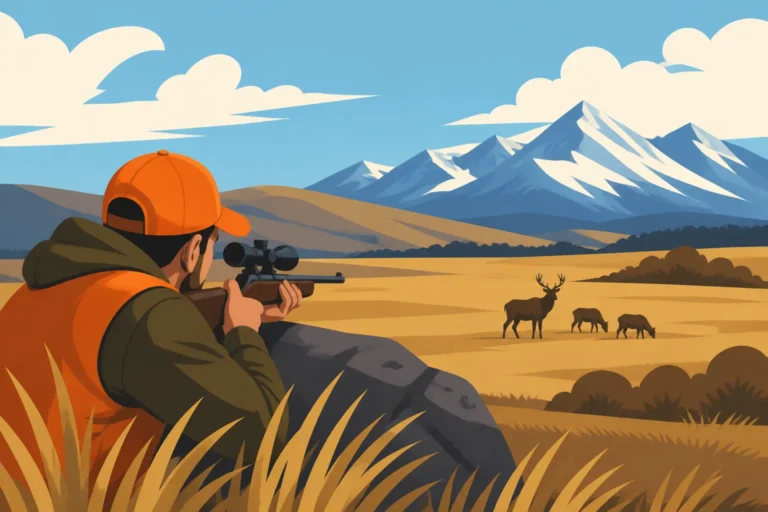
Mule deer, with their keen eyesight and ability to navigate steep, broken country, are also a primary target. They favor the more rugged, broken slopes, coulees, and ridge tops where they can use the topography for concealment. Spot-and-stalk is a classic approach here. Glassing extensively from high vantage points, picking apart the shadows and terrain features, is paramount. You're looking for that telltale horizontal line of a deer's back against a vertical backdrop, or the flick of an ear. Unlike whitetails that prefer dense cover, mule deer will often hold tight in open, broken terrain, relying on camouflage and stillness to avoid detection. They are masters of their environment, and you'll need patience and excellent optics to find them.
Bighorn sheep, for those who manage to secure one of Alberta's highly coveted sheep licences, are the true kings of the high country. They inhabit the most exposed, rugged alpine basins and rocky cliffs, often above the timberline. Hunting them is an intense physical challenge, requiring extreme fitness, specialized gear for mountain travel, and a relentless pursuit of vertical ground. These hunts are truly once-in-a-lifetime for many, demanding both mental and physical fortitude to navigate their challenging domain. The rewards, however, are unparalleled, not just in the trophy, but in the profound experience of hunting such an incredible animal in its natural, unforgiving habitat. For more on this, you might find Backpacking Into Alberta Sheep Country interesting.
Navigating Access and Regulations in the Livingstone
Accessing the Livingstone Range for hunting isn't as simple as driving up a gravel road and walking into the woods. This area falls predominantly within what Alberta designates as Public Land Use Zones, or PLUZs, which have specific rules governing everything from vehicle use to camping. Understanding these regulations is critical to avoid fines and ensure a safe, legal hunt.
The Livingstone Range is primarily covered by the Livingstone-Porcupine Hills Public Land Use Zone. This PLUZ is a massive tract of public land managed for a variety of recreational activities, including hunting. Within these zones, certain restrictions are in place to manage human impact and protect wildlife habitat. For instance, there are often limitations on where you can operate Off-Highway Vehicles (OHVs) and where you can randomly camp. Roads and trails are frequently gated or signed for seasonal closures, or permanently restricted to foot traffic only. Knowing these boundaries and rules before you go is non-negotiable. Using a reliable mapping app like onX Hunt can be a game-changer here, as it clearly delineates PLUZ boundaries, restricted areas, and designated trails, allowing you to confidently navigate legal access points and avoid trespassing.
Understanding WMUs and Their Specifics
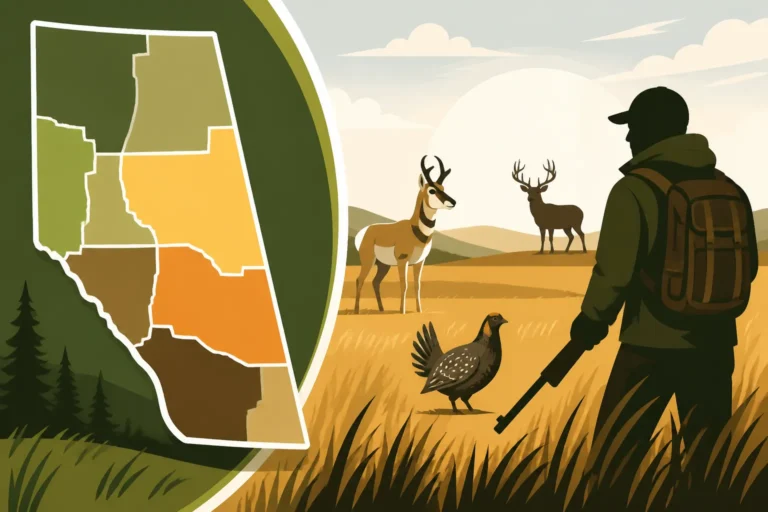
The Livingstone Range spans several Wildlife Management Units (WMUs), and each WMU can have slightly different season dates, bag limits, and specific regulations for certain species. It’s absolutely essential to consult the current Alberta Hunting Regulations for the specific WMU you plan to hunt. For instance, general season tags for antlered mule deer might be available in one WMU, while an adjacent one might be draw-only or have a more restricted season. Elk regulations can also vary significantly, with specific dates for archery, general rifle, and often supplemental antlerless tags available in certain WMUs.
| Species | Typical WMUs (Livingstone Area) | General Season Notes | Draw Status for Residents |
|---|---|---|---|
| Elk | 300-Series Foothills | Archery & Rifle seasons, often with antlerless supplemental licences. | General & Draw (Antlerless) |
| Mule Deer | 300-Series Foothills | General antlered buck seasons, but regulations can vary. | General & Draw (Antlerless) |
| Bighorn Sheep | 300-Series Foothills | Very limited tags, highly specific WMUs, often requiring high priority points. | Draw-Only |
| Whitetail Deer | Lower Elevation Foothills | General antlered buck seasons, often abundant. | General & Draw (Antlerless) |
| Black Bear | 300-Series Foothills | Spring and Fall seasons, generally abundant. | General |
Remember that this table is a generalization. The specific WMU numbers will be in the 300-series (e.g., WMU 304, 306, 308, etc.), and their boundaries meander through the Livingstone. Always double-check the current year's regulations on the official Alberta government website or a platform like GoHunt for specific WMU details and season dates. Paying attention to details like antler point restrictions for certain species or mandatory CWD submission zones is paramount for a legal hunt. You can also explore Alberta's Wildlife Management Units for a broader context.
Respecting Landowner Rights and PLUZ Rules
While much of the Livingstone Range is Crown land, there are often pockets of private land, grazing leases, and agricultural areas interspersed, especially as you get into the lower foothills. Always be aware of property boundaries, whether it's posted land, a fence line, or simply a change in vegetation that signals the edge of a different land type. Trespassing, even accidentally, is a serious offense and can quickly sour relations between hunters and landowners. This is another area where a mapping tool like onX Hunt becomes invaluable, showing precise property lines and land ownership.
Within the PLUZs, there are also rules around specific activities. Vehicle access is often restricted to designated trails or roads, and venturing off these can lead to fines and environmental damage. Random camping may be permitted in some areas but restricted in others, often requiring you to be a certain distance from roads, water bodies, or developed recreation sites. Be sure to check the specific PLUZ regulations, which are usually available online. The key takeaway is to approach hunting the Livingstone with a mindset of respect – respect for the land, respect for wildlife, and respect for other users. Understanding Alberta's Public Land Use Zones will greatly assist in planning your trip.
Effective Hunting Strategies for Livingstone Game
Hunting the Livingstone Range isn't about one-size-fits-all tactics. The varied terrain and diverse game require a dynamic approach, blending traditional hunting methods with a deep understanding of animal behavior in this specific environment. You'll need to be physically prepared, mentally resilient, and adaptable to rapidly changing conditions.
Elk Hunting in the Foothills
Elk hunting in the Livingstone is often about covering ground and playing the wind. During the early archery seasons, particularly in September, focusing on their vocalizations can be incredibly effective. Setting up in areas with good cover and calling to challenge a bull, or working a cow call to draw in a curious satellite bull, can yield results. For detailed strategies on this, check out Bugling Elk in Alberta's Foothills. As the season progresses and elk become quieter, locating them often involves diligent glassing of open slopes at dawn and dusk, then still-hunting through thick timber where they bed during the day. Elk are masters of using topography to their advantage, often bedding on benches or saddles that offer escape routes in multiple directions. Learning to read these movements is crucial. Remember to use the wind to your advantage, as elk have an incredible sense of smell.
A common tactic is to hike into higher, more remote areas before first light and then slowly work your way down, or across, the slopes, using thermals to carry your scent upwards in the morning and downwards in the evening. Look for fresh tracks, rub lines, and droppings. Water sources and mineral licks can also be magnets for elk, especially in drier periods. Sometimes, simply finding an old logging road or seismic line that hasn't seen much vehicle traffic can provide a quiet access point into prime elk habitat. The physical demands are high; be prepared for steep climbs and long days in rough country.
Mule Deer Tactics in Broken Country
Mule deer hunting in the Livingstone is largely a game of optics and patience. This isn't flat prairie hunting; it's about picking apart the broken terrain, the coulees, the timber fringes, and the rocky outcrops. Find a high vantage point, settle in, and meticulously glass every shadow, every cluster of trees, every patch of scrub brush. Good quality binoculars and a spotting scope are indispensable. Spend more time glassing than walking. Mule deer are notorious for blending seamlessly into their environment, and they will often stand perfectly still, letting you walk right by.
When you spot a buck, the real work begins: planning your stalk. This means carefully considering the wind, the terrain, and potential escape routes for the deer. Often, a stalk might involve a long, circuitous route to get above or behind the animal, using every fold in the land for cover. Be prepared for multiple attempts. If the deer is bedded, pay close attention to the wind shifts throughout the day, as thermals can change direction, giving you away. Mule deer in the Livingstone will often use benches above creek bottoms or a series of interconnected coulees to move and bed. A detailed article like Hunting a Foothills Bench Above a Creek can give you even more insights into specific tactics.
Bighorn Sheep: The Ultimate Mountain Challenge
Hunting bighorn sheep in the Livingstone Range is a physically and mentally demanding endeavor, reserved for those who have secured one of the highly coveted sheep licences. These hunts take place in the highest, most rugged parts of the range, often requiring multi-day backpack trips deep into the mountains. The primary strategy for sheep is intensive glassing. You'll spend hours, sometimes days, perched on a high ridge, systematically scanning every rock band, alpine meadow, and cliff face. Quality optics are, once again, your best friend. Look for the distinctive white rump patch or the curve of a ram's horns against the grey rock.
Once sheep are located, the stalk can be incredibly challenging due to the steep, exposed terrain and the sheep's keen eyesight. You'll need to use every contour and rock outcropping for cover, moving slowly and deliberately. Fitness is not just a recommendation; it's a requirement. You'll be climbing thousands of feet in elevation, often carrying heavy packs, at high altitudes. Being prepared for sudden weather changes, from sunshine to blizzards, is also critical. For those fortunate enough to secure a licence, articles like Glassing Alpine Basins for Bighorn Sheep and Bighorn Sheep in Alberta's Mountains offer invaluable advice for preparing for such an epic hunt.
Essential Gear, Preparedness, and Safety for Foothills Hunting
Hunting in the Livingstone Range is an immersion into wild country. This isn't a casual stroll; it's an adventure that requires meticulous preparation, the right gear, and a strong emphasis on safety. The dynamic environment, with its unpredictable weather and resident wildlife, demands a high level of self-sufficiency.
Gear for the Backcountry
Your gear list for a Livingstone hunt needs to be robust and reliable. Given the variable weather and rugged terrain, layers are crucial. Think moisture-wicking base layers, insulating mid-layers (fleece, down, or synthetic puffies), and a waterproof, windproof outer shell. Good quality, broken-in hiking boots with excellent ankle support are non-negotiable – you'll be covering miles on uneven ground. A comfortable, properly fitted backpack is essential, whether for a day hunt or a multi-day spike camp. For longer trips, consider a pack that can handle hauling meat.
Optics, as mentioned earlier, are king. High-quality binoculars (10×42 or 10×50) and a spotting scope (15-45x or 20-60x) are worth the investment. Navigation tools like a GPS device or a smartphone with a reliable hunting app (like onX Hunt) loaded with offline maps are critical. Don't forget a headlamp, a first-aid kit, fire-starting materials, a water filter or purification tablets, and enough food for your planned duration plus an extra day or two. Even if you're only out for a day, the potential for an unexpected overnight makes these items mandatory.
| Category | Essential Items | Why It's Critical in the Livingstone |
|---|---|---|
| Clothing | Layered system (base, mid, outer), waterproof rain gear, warm hat, gloves | Rapid weather changes (sun to snow), steep exertion demands breathability, then insulation. Staying dry is paramount for warmth and safety. |
| Footwear | Sturdy, waterproof hiking boots, gaiters, multiple pairs of wool socks | Uneven, rocky, wet terrain; ankle support prevents injury. Gaiters keep debris and moisture out of boots. |
| Navigation | GPS device / Smartphone with mapping app (e.g., onX Hunt), compass, paper map (waterproof) | Easy to get disoriented in dense timber, complex drainages, and shifting weather. Multiple navigation methods ensure redundancy. |
| Optics | High-quality binoculars (10x), spotting scope (15-60x), tripod | Crucial for identifying game at long distances in open country, evaluating trophy quality, and spotting animals blending into the terrain. |
| Safety & Survival | First-aid kit, bear spray (and holster), fire starter, headlamp, water filter, emergency shelter, whistle | Grizzlies are common. Injuries can happen. Self-sufficiency is key in remote areas where help is hours away. Hypothermia is a real risk. |
| Food & Water | High-energy snacks, dehydrated meals (for multi-day), electrolyte mixes, extra water storage | Sustaining energy for strenuous climbs. Water sources may be scarce or require filtration. Always carry more than you think you need. |
Weather Preparedness
The weather in the Livingstone Range, like much of the Alberta foothills, is notoriously fickle. You can start your day under clear blue skies, only to be caught in a driving snowstorm or heavy rain by afternoon, even in September. Always check the forecast before you go, but be prepared for anything. This means packing rain gear even on a sunny day and having extra warm layers readily accessible. A sudden drop in temperature combined with precipitation can quickly lead to hypothermia, even in early fall. Understanding Hunting Alberta Winter Weather Safely will help you prepare for colder conditions that can surprise you.
Wildlife Safety and Bear Awareness
The Livingstone Range is prime habitat for grizzly bears, as well as black bears. Encounters are a real possibility, so being bear aware is not just a suggestion – it’s a critical component of hunting safely here. Carry bear spray and know how to use it; have it readily accessible, not buried in your pack. Make noise when moving through thick cover, especially near water or areas with dense berry bushes. Keep a clean camp, store food properly, and consider hanging your food if staying overnight. Know the difference between aggressive and defensive bear behavior, and how to react appropriately. For comprehensive advice on this, make sure to read Wildlife Safety in Alberta Bear Country. Being prepared for grizzlies gives you peace of mind and significantly increases your safety in their territory.
Navigation and Emergency Planning
In a landscape as intricate as the Livingstone, getting lost is a serious concern. Beyond your GPS and mapping apps like onX Hunt, always carry a physical map and compass, and know how to use them. Technology can fail, batteries can die, and satellite signals can be blocked by dense canopy or steep terrain. Tell someone exactly where you are going and when you expect to return. This "trip plan" is your best insurance in case of an emergency. Consider carrying a satellite communication device (like a Garmin inReach or Zoleo) for off-grid communication, which can be invaluable for contacting emergency services if something goes wrong. Understand local regulations regarding Quad and Side-by-Side Rules on Crown Land if you plan to use motorized vehicles for access, as these also vary and impact your navigation and legal travel options.
Disclaimer
This article is for general informational purposes only and does not constitute professional advice. Laws, prices and regulations vary by location and change over time. Consult a qualified professional for guidance on your specific situation.