Hunting the Swan Hills Timber
The vast, dense timber of Alberta's Swan Hills can feel like an impenetrable fortress, a labyrinth of thick spruce, tangled willows, and unforgiving muskeg that leaves many hunters scratching their heads about where to even begin. It's easy to get discouraged when you can barely see 50 yards, let alone spot a mature bull moose. This guide is here to unravel the mysteries of hunting the Swan Hills, offering practical strategies and insights to help you navigate this formidable landscape and find success.
Understanding the Swan Hills Landscape for Hunting
The Swan Hills region isn't just another patch of forest; it's a unique ecosystem that demands a specific understanding from hunters. It’s characterized by a rolling landscape, deeply cut by creeks and rivers, blanketed in a mix of old-growth timber, younger cutblocks, and vast stretches of muskeg and bog. This isn't the open country of the prairies or the distinct ridges of the foothills – this is a world where thick cover is the rule, not the exception.
The Unique Ecology of the Swan Hills
Picture this: towering spruce and pine trees reaching for the sky, their lower branches often dead and creating a dense, thorny barrier. Below, you'll find an understory that can range from impenetrable willows and alders in low-lying areas to thick berry bushes on higher ground. And then there's the muskeg – those spongy, waterlogged bogs that can swallow a boot, or worse, a quad, if you're not careful. This challenging terrain is precisely what makes the Swan Hills so productive for certain game species. The dense cover provides excellent thermal protection and escape routes, while the varied vegetation offers a smorgasbord of food sources. Knowing these features helps you anticipate where animals will feed, bed, and travel. For instance, moose thrive in areas with abundant willow and aquatic vegetation, often found bordering muskegs or along creek bottoms, while bears will gravitate towards berry patches in late summer and early fall.
Navigating the Dense Timber and Terrain
One of the biggest frustrations hunters face in the Swan Hills is simply moving through the bush. Forget long-range glassing; here, your world shrinks to mere yards. This means your navigation skills need to be top-notch. Relying solely on GPS is crucial, but also understanding how to "read" the terrain on a map before you even step foot in it. Look for subtle elevation changes, natural funnels formed by creeks or ridgelines, and breaks in the timber that might indicate old logging roads or seismic lines. These features, though small, can be highways for game. Hunting here often means slow, deliberate still-hunting, moving a few steps at a time, and pausing to listen and observe. It’s physically demanding, and you'll quickly learn the value of a good compass alongside your Scouting With Satellite Imagery in Alberta tools like onX Hunt, which can highlight faint trails or logging cuts that are invisible from the ground.
Key Game Species and Their Habits in the Swan Hills
The Swan Hills is renowned for its diverse big game, offering opportunities for moose, black bear, and both whitetail and mule deer, though each demands different tactics in this heavily timbered environment. Understanding their specific preferences for this unique habitat is paramount.
Moose: Masters of the Muskeg and Old Growth
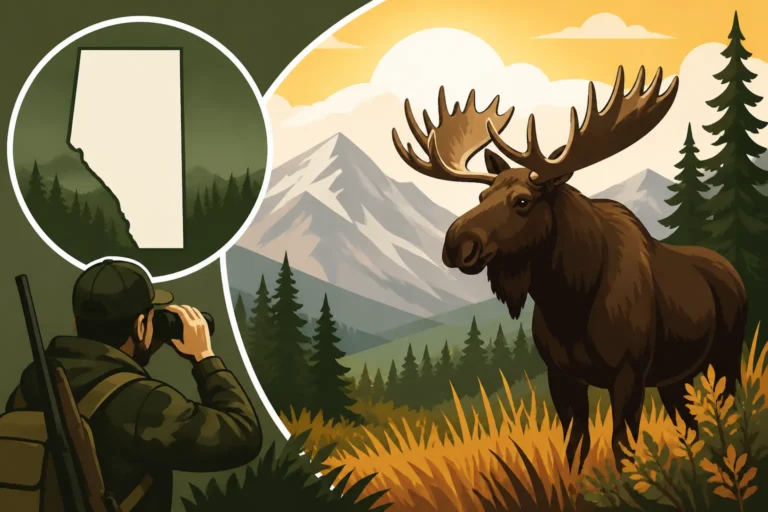
If you're heading into the Swan Hills, chances are you've got a moose tag in your pocket. This region is prime moose country, truly a paradise for these giants. They love the dense cover for security and the abundant food found in wetlands and younger growth. You'll often find them feeding in the thick willows along the edges of muskegs, beaver ponds, or slow-moving creeks. During the rut, they become vocal, and understanding Calling a Bull Moose in the Rut can be incredibly effective here, especially when the calls echo through the dense timber. Look for areas with recent logging activity where new browse is coming up, as well as old-growth pockets that offer thermal cover during colder months. Remember, a moose in dense timber is notoriously hard to spot until you're right on top of it, so listening for them crashing through the brush or grunting is often your first clue. After a successful hunt, consider the logistical challenge of Getting a Moose Out With a Quad in this terrain; it's a serious undertaking.
Black Bear: Abundant Opportunists
The Swan Hills is also fantastic black bear habitat. These opportunistic omnivores thrive in the mix of timber, clearings, and berry patches. In spring, they'll often be found on south-facing slopes, munching on new green shoots along cutlines and seismic lines. As summer progresses, they shift to berry-rich areas, and come fall, they're often gorging on saskatoons, blueberries, and cranberries, packing on fat for hibernation. Knowing where these food sources are can be a game-changer. Baiting can be very effective in this dense cover, but if you're not going that route, look for their sign – tracks, scat, overturned rocks, and claw marks on trees – particularly in areas with a good mix of mature timber and younger, regenerating forest. Keep your eyes peeled along edges of openings, pipelines, and logging roads, especially during dawn and dusk. For more specific tactics, you might want to look into Baiting Black Bear in Alberta.
Whitetails and Mule Deer: Timber Pockets and Edges
While the Swan Hills is dense, it still holds both whitetail and mule deer. Whitetails are incredibly adept at using the thick timber for cover. They'll bed down in dense spruce stands and browse in transition zones where timber meets younger growth or small natural clearings. You'll often find them working the edges of thick stands, where they can quickly disappear into cover. Reading Whitetail Sign in Alberta Aspen Bluffs can give you clues, but here, it's more about knowing their routes through the thick stuff. Mule deer, while typically associated with more open country, will also utilize the broken terrain and timber pockets here, especially those coulees and draws that offer both cover and escape routes. They're masters of finding hidden pockets of browse and will stick to the deep timber if pressured. Hunting these deer requires patience and slow movement, focusing on pinch points and corridors within the timber.
Predator Presence: Wolves and Cougars
It's important to remember that where there's abundant prey, there are usually predators. The Swan Hills is home to healthy populations of wolves and cougars, which are critical components of this ecosystem. While encountering them is rare, seeing their tracks or hearing a distant howl is a powerful reminder of the wildness of this country. If you're Calling Moose in Alberta's Boreal Forest, be aware that you might attract more than just a bull! Wolves often follow traditional travel corridors, like old cutlines or frozen creek beds, and cougars will utilize the same thick cover and broken terrain as the deer and moose. Being aware of their presence reinforces the need for vigilance and proper meat care, especially if you're alone and successful deep in the bush.
Strategies for Success in Heavy Timber
Hunting the Swan Hills isn't about covering vast distances with optics; it's about intimate knowledge of your immediate surroundings and a deliberate, methodical approach. It rewards patience, careful planning, and a readiness to adapt.
Effective Scouting and Access Planning
Before you even think about setting foot in the Swan Hills, serious scouting is non-negotiable. This means pouring over maps, both paper and digital. Services like onX Hunt and GoHunt are invaluable here, allowing you to identify old logging roads, seismic lines, cutblocks of different ages, and those critical transitions between different types of cover. Look for drainages, small clearings, and areas where two different habitat types meet – these are often natural travel corridors. Pay close attention to public land use zones (PLUZs) and ensure you understand the rules for motorized access. Many trails might be marked as non-motorized, requiring you to go in on foot or by quad to reach less pressured areas. Plan your routes carefully, identifying potential escape routes if you get turned around, and always mark your vehicle's location on your GPS. Finding Access on Alberta Crown Land is crucial, and it’s about piecing together the puzzle of roads, trails, and terrain features.
Still-Hunting and Calling Techniques
Given the dense nature of the Swan Hills, still-hunting is often the most productive strategy. This involves moving incredibly slowly, taking a few steps, then stopping for several minutes to scan, listen, and simply soak in the environment. Your eyes should be trained to pick out unnatural shapes, horizontal lines in a vertical world, or subtle movements. Use your binoculars even in close cover – they can help pick out a patch of hide or an antler tine you'd otherwise miss. When it comes to calling, especially for moose, the thick cover works to your advantage. Calls don't travel as far, but they often sound more realistic, making it easier to draw an animal in close. Blend cow calls with raking brush to simulate a bull. For deer, subtle grunts or doe bleats can sometimes work in quiet conditions, but again, patience is key. The name of the game is to be quiet, be slow, and be observant.
Gear and Preparedness for Remote Hunting
The Swan Hills is remote, and you need to be prepared for anything. This means dressing in layers suitable for unpredictable boreal weather – from warm sunny days to sudden snowfalls. Waterproof outer layers are a must, given the likelihood of rain, snow, or simply pushing through wet brush. Navigation tools are paramount: a reliable GPS with extra batteries, a compass, and a paper map are your minimum. A satellite messenger is also a very smart investment for emergencies where cell service is non-existent. For deeper forays, consider a backpack capable of carrying out meat, a good first-aid kit, fire-starting materials, and extra food and water. Having a solid Winter Truck Kit for an Alberta Hunt is also vital, as road conditions can deteriorate rapidly.
| Item Type | Essential Gear for Swan Hills | Rationale |
|---|---|---|
| Navigation | GPS (with extra batteries) | Crucial for dense timber, minimal visibility. |
| Paper Map & Compass | Backup navigation, understanding topography. | |
| onX Hunt/GoHunt App | Detailed satellite imagery, private/public land boundaries, old trails. | |
| Communication | Satellite Messenger | For emergencies where cell service is unreliable or nonexistent. |
| Clothing | Layered System (waterproof) | Adapt to rapidly changing weather; stay dry in wet conditions. |
| Sturdy, Waterproof Boots | Essential for slogging through muskeg and wet terrain. | |
| Safety & Tools | First-Aid Kit | Accidents happen in remote, rugged terrain. |
| Fire Starter | For warmth, cooking, and signaling. | |
| Headlamp/Flashlight | For early mornings, late evenings, or unexpected overnight stays. | |
| Knife (sharp) | Field dressing and general utility. | |
| Game Bags | Protect meat from dirt and flies. | |
| Rope/Game Cart/Quad | Aid in meat extraction (consider Getting a Moose Out With a Quad). | |
| Comfort | Water/Water Filter | Stay hydrated. |
| High-Energy Snacks | Sustenance for physically demanding hunting. |
Access and Regulations Specific to the Swan Hills
Accessing prime hunting grounds in the Swan Hills can be a logistical puzzle, but understanding the system is key to unlocking its potential.
Public Land Use Zones and Road Networks
Much of the Swan Hills falls within Alberta's Green Area, and a significant portion is managed as Public Land Use Zones (PLUZs). These areas are critical for hunters seeking Hunting Alberta's Crown Land. Within PLUZs, specific rules often apply to motorized vehicle use, random camping, and other recreational activities. It's imperative to consult the specific PLUZ regulations before heading out. Roads in the Swan Hills can range from well-maintained gravel forestry roads to barely discernible seismic lines that turn into impassable bogs after a rain. Industrial activity, like logging or oil and gas operations, often creates a network of access roads and cutlines, which can be a boon for hunters but also brings challenges like active heavy equipment. Always pay attention to signage. For comprehensive information on how these areas are managed, check out Alberta's Public Land Use Zones. You'll find that navigating these areas requires careful planning and a good understanding of what roads are open, closed, or restricted.
Respecting Industrial Operations and Private Holdings
While much of the Swan Hills is Crown Land, you will encounter industrial operations (logging, oil and gas) and potentially some private land or grazing leases. It's crucial to always respect these holdings. Never enter private land without permission, and be aware of active industrial sites. This isn't just about courtesy; it's about safety and maintaining access for all hunters. Industrial roads, for instance, might be active haul routes, and you need to be extremely cautious of heavy truck traffic. Some areas might have temporary closures due to logging or active drilling, so staying informed about local conditions is wise. If you're hunting an Old Logging Road in the Foothills (or in this case, the Boreal Swan Hills), understand that these areas can change rapidly. Remember that Rules on Hunting From a Vehicle are very strict in Alberta, even on active industrial roads. A respectful approach to all land users ensures everyone can continue to enjoy this incredible region.
Disclaimer
This article is for general informational purposes only and does not constitute professional advice. Laws, prices and regulations vary by location and change over time. Consult a qualified professional for guidance on your specific situation.