Flying Into Calgary or Edmonton for a Hunt
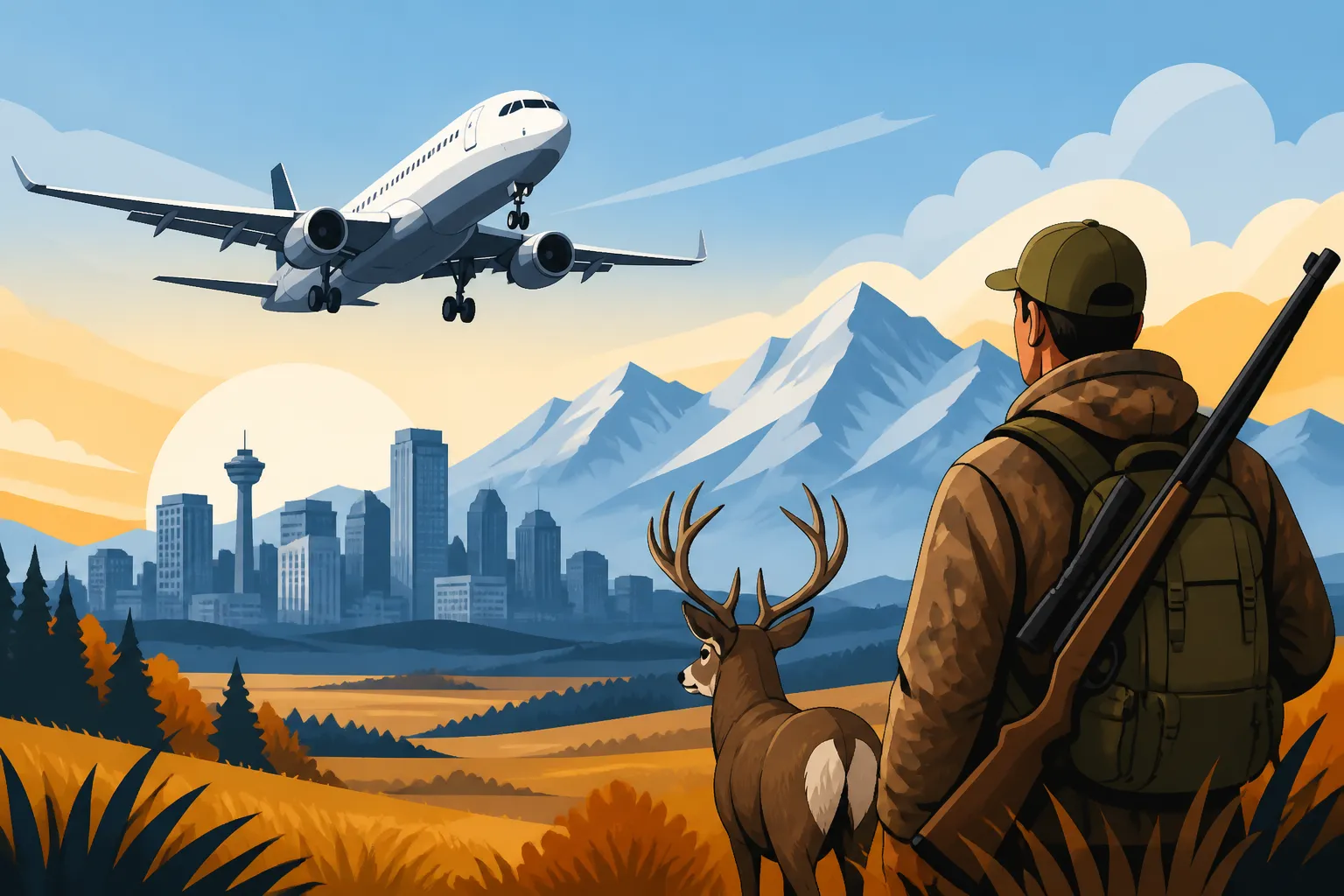
The thought of chasing big game or calling in waterfowl in Alberta is incredibly exciting, but for many hunters, especially those flying in, the logistics of getting here can feel like a daunting challenge. From choosing the right airport to navigating firearms regulations and figuring out how to get your hard-earned trophy home, there are a lot of moving parts. This guide is here to walk you through everything you need to know about flying into Calgary or Edmonton for your next Alberta hunting adventure, helping you streamline your travel plans and focus on the hunt itself.
Planning Your Arrival: Choosing Your Airport and Logistics
Deciding whether to fly into Calgary or Edmonton is often the first big logistical choice for hunters coming to Alberta. While both are major international airports, their geographical locations mean they serve different parts of the province most efficiently. Your ultimate hunting destination will largely dictate which airport makes the most sense for your trip.
Calgary International (YYC) vs. Edmonton International (YEG)
Calgary International Airport (YYC) is situated in the southern half of Alberta, making it the preferred gateway for hunts taking place in the province's southern and central regions. Think about those vast prairie lands, the rolling badlands along the Red Deer River, or the foothills leading into the Rockies. If you're targeting mule deer in the south, perhaps near Medicine Hat or Lethbridge, or bighorn sheep in the southwestern mountains, Calgary is likely your best bet. It also serves as a good access point for popular whitetail hunting areas in the central parkland or elk hunts in the southwestern foothills. The drive from Calgary south or west is generally straightforward, with major highways that are well-maintained.
Edmonton International Airport (YEG), on the other hand, is located centrally in the province, but leans slightly north. This makes it ideal for hunters heading into the vast boreal forest, the Peace River country, or the northern foothills. If your dream hunt involves moose in the remote bush, black bears deep in the timber, or even some of the more northern whitetail and elk zones, Edmonton is often the more convenient choice. From Edmonton, you'll find easier access to areas like Swan Hills, Grande Prairie, or the Athabasca region. While both airports offer excellent amenities, choosing the one that minimizes your drive time once you land can save you precious hours, especially after a long flight.
Considering Your Hunting Region and Outfitter's Location
Before booking your flight, it's absolutely crucial to pinpoint your exact hunting region, often referred to as a Wildlife Management Unit (WMU), and consult with your outfitter if you're using one. A reputable outfitter will already have a strong recommendation for the best airport to fly into, as they are intimately familiar with the most efficient routes to their camps or hunting areas. For instance, if you're doing a Backpack Hunting Alberta's Bighorn Country hunt, an outfitter operating west of Calgary in the Kananaskis or Ghost PLUZ would almost certainly advise flying into YYC. Conversely, a moose outfitter working out of Slave Lake or Fort Vermilion would clearly point you towards YEG.
Beyond just the mileage, consider the type of roads you'll be traveling. While main highways are usually paved, heading into some of Alberta's remote hunting grounds might involve significant stretches of gravel, resource roads, or even dirt tracks that become challenging in adverse weather. Knowing which airport puts you closer to these less-traveled routes can inform your decision, not just for convenience but also for the type of rental vehicle you might need. Don't hesitate to ask your outfitter for specific driving instructions or even coordinate a pick-up if they offer that service, which many do as part of their package. Platforms like BookYourHunt often provide details on airport proximity for listed outfitters, which can be a valuable initial research step.
Navigating Firearms and Ammunition: Canadian Border Regulations
For many hunters, the biggest source of anxiety when flying to Alberta is the process of bringing their firearms and ammunition into Canada. The rules are strict, but they are clear and manageable if you come prepared. Understanding these regulations thoroughly before you even pack your bags is paramount to a smooth border crossing.
Understanding the Non-Resident Firearm Declaration
The cornerstone of legally importing your hunting firearm into Canada as a non-resident is the Non-Resident Firearm Declaration Form (CAFC 909). This isn't just a suggestion; it's a mandatory document that acts as a temporary firearms license and registration certificate. You absolutely must complete this form in triplicate. It's highly recommended to fill it out before you arrive at the airport or border crossing, but do not sign it. You will sign it in front of a Canadian Border Services Agency (CBSA) officer upon arrival, who will then officially confirm and validate it.
The form requires detailed information about yourself and each firearm you are bringing, including make, model, serial number, and caliber. There is a fee associated with processing this declaration. It's important to remember that most common hunting rifles and shotguns fall into the "non-restricted" category, which is what this declaration covers. Prohibited or restricted firearms, such as handguns (with very few exceptions for specific competitions), certain semi-automatic rifles, or short-barreled firearms, are generally not permitted for non-residents and attempting to bring them without proper authorization can lead to severe penalties. Always double-check the current regulations before traveling; a quick search for "Bringing a Rifle Across the Border" will yield official government resources. Make sure your firearms are unloaded and securely cased, preferably in a hard-sided, locked case, meeting both airline and Canadian import requirements.
Ammunition Transport Rules on Commercial Flights
Transporting ammunition on commercial flights requires adherence to strict airline and federal regulations, both in your home country and in Canada. Typically, ammunition must be declared to the airline upon check-in and transported in its original packaging or in a sturdy container designed for ammunition, separate from your firearm. It must be checked as baggage, never carried on. Most airlines have specific weight limits, often around 11 pounds (5 kg) per passenger, though this can vary, so always confirm with your specific airline. The ammunition must be safely packaged to prevent any movement or accidental discharge.
When entering Canada, your declared ammunition should match the calibers for the firearms you've declared. Canadian regulations regarding ammunition quantities for hunting purposes are generally reasonable, but consistency is key. Ensure your ammunition is not easily accessible and is stored securely. For example, if you're flying in with a bolt-action .30-06, you'll declare the rifle and a certain quantity of .30-06 ammunition. Attempting to bring excessive amounts beyond what's reasonable for a hunting trip might raise questions. Consulting the official CBSA website for "Ammunition Rules at the Canadian Border" will provide the most up-to-date and authoritative information.
Border Crossing: What to Expect Upon Arrival
Upon landing at Calgary or Edmonton International Airport, you will first proceed to Canadian Customs. This is where you'll present your passport, your Non-Resident Firearm Declaration Form, and any other required travel documents. Be prepared to answer questions about the purpose of your visit, your hunting destination, and the duration of your stay. Honesty and a clear, polite demeanor are your best assets. The CBSA officer will inspect your firearms declaration, verify your identity, and then direct you to the Oversize Baggage area to retrieve your cased firearms. They will then inspect your firearm(s) to ensure they match the declaration, and once satisfied, they will officially validate your form. This validated form is your temporary license to possess and use your firearm in Canada.
This process might take a little extra time compared to typical international travel, so factor that into your schedule, especially if you have a connecting flight or an outfitter pick-up arranged. Patience is key here. Never try to conceal a firearm or ammunition, and always follow the instructions of the CBSA officers. Remember, firearms are a serious matter, and Canadian authorities take their regulations very seriously to ensure public safety. A smooth crossing begins with thorough preparation and transparency. You can find more comprehensive details on Transporting Firearms Into Alberta and The Non-Resident Firearm Declaration Form in our other resources.
Pre-Trip Essentials: Licenses, Permits, and Documentation
Beyond your travel documents and firearm declarations, there's a specific suite of hunting licenses and permits you'll need to possess to legally hunt in Alberta. Getting these in order well in advance is not just good practice, it's often a requirement before you can even purchase your hunting tags.
Alberta Hunting Licenses and Permits
To legally hunt in Alberta as a non-resident, you'll need to acquire several key documents. The foundational requirement is an Alberta Wildlife Identification Number (WIN) Card. This card is your unique identifier in the Alberta hunting and fishing system and is required before you can purchase any licenses or tags. It's valid for a set number of years and can be obtained online through the AlbertaRELM system. Make sure you apply for your WIN Card well in advance, as it takes a little time to process and receive. You can find detailed instructions on Getting an Alberta WIN Card in our dedicated guide.
Once you have your WIN Card, you'll need a Wildlife Certificate. This is a general license that allows you to hunt specific species in Alberta, and it also contributes to conservation efforts. On top of the Wildlife Certificate, you'll purchase specific tags for the animals you intend to hunt (e.g., a deer tag, a bear tag, a moose tag). For non-residents, most big game species require a Special Licence, which is typically tied to an outfitter allocation or a hunter host. These tags often specify the WMU and season dates. Ensure all your licenses and tags are purchased before your hunt begins, as most are not available for same-day purchase. The AlbertaRELM website is the primary portal for Buying Licences on albertarelm.com.
The Importance of Your WIN Card
Your WIN Card is more than just a number; it's your permanent profile within Alberta's wildlife management system. Every license, draw application, and harvest report is linked to this unique identifier. For non-residents, it's the absolute first step. You cannot purchase a Wildlife Certificate or any hunting tags without a valid WIN Card. If you've hunted in Alberta before, make sure your WIN Card is still active and hasn't expired. If you're a first-timer, allow ample time for the application and processing.
Having your WIN Card number handy is essential when dealing with your outfitter, applying for licenses, or even if you need to contact Fish and Wildlife during your trip. It streamlines all your interactions with the provincial wildlife authorities. Keep a physical copy with you, along with a digital copy on your phone, as part of your essential hunting documentation.
Outfitter Documentation and Itinerary
If you're hunting with an outfitter, they will be your primary guide through the licensing process for non-residents, especially concerning special draw tags and allocations. Your outfitter will provide you with a detailed hunting contract or agreement, an itinerary, and often a list of required gear. This documentation is crucial. It verifies your booked hunt and often specifies the WMU you'll be hunting in, which directly correlates to the tags you'll receive.
Keep all communication with your outfitter organized, including emails about logistics, payment schedules, and any specific requirements they have. Print copies of your contract, itinerary, and any proof of payment. This paperwork serves as a comprehensive record of your hunt and can be helpful should any questions arise at the border or during your trip. Your outfitter should also be able to advise you on What an Alberta Guided Hunt Costs and what is included, ensuring no surprises. Ensure your outfitter provides you with all necessary information to apply for the correct licenses and tags well before you depart, as some tags are tied to their specific allocations.
Getting from the Airport to Your Hunting Destination
Once you've successfully cleared customs and collected your firearms and luggage, the next step is getting to your hunting area. Depending on your destination and whether you're using an outfitter, this leg of the journey can involve a rental car, a shuttle, or a pre-arranged pickup.
Rental Vehicles and Driving Distances
For many self-guided hunters or those meeting a friend, renting a vehicle at Calgary (YYC) or Edmonton (YEG) is the most common option. Both airports have all major rental car agencies on-site or a short shuttle ride away. When choosing a vehicle, consider your hunting area. If you're heading into the prairies or open parkland on paved roads, a standard SUV or truck might suffice. However, if your hunt takes you into remote areas with gravel roads, mud, or potential snow, a 4×4 truck with good ground clearance is highly recommended. Always check the rental agreement for any restrictions on driving on unpaved roads.
Alberta is a vast province, and driving distances can be significant. For instance, a drive from Calgary to the southern badlands or foothills can be anywhere from 2 to 4 hours. Heading north from Edmonton into the boreal forest could easily be a 3 to 6-hour drive, or even more for truly remote areas. Factor in potential road conditions, especially if you're hunting during the late fall or winter when snow and ice are common. Always fill up your gas tank when you have the opportunity, especially in rural areas where services can be sparse. Having a detailed map or a reliable GPS app (with offline capabilities) is essential, as cell service can be spotty in many hunting zones. Plan for stops, breaks, and potential delays, ensuring you arrive at your destination safely and without rushing. Winter Truck Kit for an Alberta Hunt is a great resource if you're planning a late-season trip.
Outfitter Pickup and Transportation Services
Many reputable Alberta outfitters offer pickup services directly from Calgary or Edmonton International Airports as part of their hunting packages. This is often the most convenient and stress-free option, especially for non-resident hunters who are unfamiliar with the local terrain or navigating with firearms. Your outfitter's staff will meet you at a pre-designated spot at the airport, assist with your luggage and firearms, and transport you directly to their lodge or spike camp.
Confirm these arrangements well in advance with your outfitter, including specific meeting points, times, and contact information for the pickup driver. If your outfitter offers this service, it can alleviate a lot of the logistical burden, allowing you to relax after your flight. It also means you won't have to worry about finding suitable rental transportation for your gear or navigating potentially challenging roads. Some outfitters might include this in the overall hunt cost, while others might charge an additional fee, so clarify this when booking. Always remember to discuss Tipping an Alberta Guide and any other camp staff who assist you with transportation.
Local Shuttles and Private Transfers
In some cases, particularly if your hunting destination is near a smaller regional center that has its own airport (but you've flown into Calgary or Edmonton for cheaper/direct flights), you might consider a local shuttle service or a private transfer. For example, if your hunt is near Grand Prairie but you flew into Edmonton, there might be regional shuttles or small charter services that connect these cities. These services can be a middle-ground option, offering more flexibility than an outfitter pickup (if not offered) and less hassle than renting your own vehicle for part of the journey.
Research these options thoroughly online before your trip. Check reviews, confirm their ability to transport firearms (many shuttle services have specific rules or may not be equipped for it), and ensure they can accommodate your luggage, including large gun cases. Cost is also a factor, as private transfers can be expensive. However, for certain itineraries, they might offer the best balance of convenience and practicality. Don't forget to have lodging booked if you need to stay overnight before or after your hunt, especially if you have an early morning flight or a late arrival. Our guide on Lodging Before and After a Hunt can help you explore options.
Packing Smart for Your Alberta Hunting Trip
Packing for a hunting trip, especially when flying, requires careful consideration. You need to ensure all your essential gear makes it to your destination safely, while also adhering to airline baggage policies and avoiding unnecessary complications.
Airline Baggage Policies for Hunting Gear
Every airline has specific rules regarding checked baggage, oversized items, and hunting gear. These policies often cover weight limits, dimensions, and the number of bags allowed. Firearms, as previously discussed, require specific hard-sided, locked cases. Ammunition also has its own rules. Beyond that, consider your other hunting essentials: your bow case (if archery hunting), your rifle soft case (for protection within the hard case), optics, hunting clothing, boots, and camp gear.
It's common for hunters to exceed standard baggage allowances, so be prepared for potential oversized or extra bag fees. Always check your specific airline's website for their current policies well in advance of your travel date. Some airlines are more accommodating to hunters than others. Distribute heavy items strategically across multiple bags if possible to avoid overweight fees. Pack essential items you absolutely cannot hunt without, like your optics, rangefinder, or release aid, in your carry-on luggage (within TSA/CATSA regulations) or a separate, easily accessible checked bag, just in case one of your bags is delayed. Layers of hunting clothing can be surprisingly heavy, so plan your wardrobe efficiently, keeping in mind Alberta's often unpredictable weather. Refer to What to Wear on a Late Season Hunt for specific gear recommendations if you're hunting later in the year.
Preparing Meat and Trophies for Transport
One of the most rewarding parts of a successful hunt is bringing home your meat and trophy. However, transporting these items, especially when flying, requires significant planning and adherence to regulations. First and foremost, ensure your meat is properly processed, wrapped, and frozen solid. Many outfitters will have facilities or work with local butchers who can prepare your meat for travel. It must be packed in approved coolers or insulated boxes that can withstand air travel and keep contents frozen for the duration of transit. Remember that airlines will treat these as checked baggage, subject to weight and size restrictions, and sometimes specific airline policies for perishable goods.
For trophies (antlers, capes, skulls), the requirements are different. Antlers must be clean and free of any tissue. Capes and skulls also need to be properly cleaned, dried, and preserved (salted and dried) to prevent spoilage and pest issues. Many hunters arrange to have their trophies shipped by a taxidermist or specialized shipping agent directly from Alberta to their home, rather than trying to fly with them as checked baggage, which can be cumbersome and costly. If you intend to fly with a small skull or rack, check with your airline about oversized baggage policies. When bringing any game parts back to your home country, you must also be aware of and comply with your country's import regulations, including CITES requirements for certain species if applicable. Our articles on Shipping Meat Home From Alberta and Taking a Cape Across the Border provide more specific guidance.
Essential Gear to Hand Carry vs. Check
To avoid major headaches, strategically decide what goes into your carry-on and what gets checked. Your carry-on should contain items that are either invaluable, fragile, or absolutely critical for your immediate needs upon arrival. This includes:
- Documentation: Passport, hunting licenses (WIN Card, Wildlife Certificate, tags), firearm declaration (unsigned), outfitter contract, itinerary, driver's license, credit cards, and copies of everything.
- Optics: Binoculars, rangefinder, and spotting scope (if small enough) are often best kept with you to prevent damage.
- Medications: Any prescription or essential over-the-counter medications.
- Small personal items: Wallet, phone, chargers, a change of clothes, and basic toiletries in travel-sized containers.
Items that must be checked include:
- Firearms and Ammunition: In approved, locked cases.
- Knives and Tools: Any hunting knives, multi-tools, or other sharp implements.
- Large hunting clothing: Bulky jackets, bibs, waders.
- Camp gear: Sleeping bags, cooking equipment (if self-guided), scent control products.
This division ensures that even if your checked luggage is delayed, you still have your critical documents, optics, and immediate necessities, allowing you to stay organized and minimize disruption to your hunting plans.
| Item Type | Must Carry-On (or keep on person) | Must Check-In | Notes |
|---|---|---|---|
| Documents | Passport, Licenses, Permits, Firearm Decl., Itinerary | N/A | Keep originals, carry copies. |
| Firearms | N/A | Unloaded, locked hard-sided case, declared | Confirm airline/CBSA rules. |
| Ammunition | N/A | Original packaging, separate from firearm, declared | Weight limits apply (check airline). |
| Optics | Binoculars, rangefinder, small spotting scope | Large spotting scopes, tripods | Protect fragile items. |
| Knives/Tools | N/A | All knives, multi-tools, broadheads | Sharp objects must be in checked baggage. |
| Medications | Prescription meds, essential OTCs | Larger quantities, non-essential | Keep in original containers with prescription labels. |
| Personal Items | Wallet, phone, chargers, travel toiletries, change of clothes | Large toiletries, bulky clothing | Travel-sized liquids (under 100ml) in clear bag for carry-on. |
| Hunting Clothing | Essential layers, small items | Bulky jackets, boots, waders | Pack layers efficiently to manage weight. |
| Trophies/Meat | N/A | Properly packed, frozen, declared | Specialized shipping often preferred for larger items. Check import rules for home country. |
Dealing with Unexpected Travel Challenges
Even the most meticulously planned hunting trip can encounter unforeseen bumps in the road. Being prepared for potential travel challenges can make a world of difference in how you handle them, minimizing stress and getting you back on track.
Flight Delays and Missed Connections
Flight delays are an unfortunate reality of air travel, and a missed connection can throw your entire itinerary into disarray, especially if you have a tight schedule or an outfitter waiting. If you experience a delay or cancellation, your first step should be to contact your airline directly to rebook. Having their app on your phone can often streamline this process. If you have an outfitter, immediately inform them of the delay so they can adjust pickup times or make alternative arrangements. Communication is key here.
Consider purchasing travel insurance that covers trip delays and cancellations. This can protect your investment in flights, accommodations, and even non-refundable hunt deposits. When booking connecting flights, try to leave ample layover time, especially when traveling internationally and dealing with firearms. A 2-3 hour layover is often sufficient for domestic connections, but for international arrivals involving customs and firearm declarations, 3-4 hours or more is a safer bet. This buffer can absorb minor delays without costing you your connection.
Lost or Delayed Luggage Strategies
Nothing makes a hunter's heart sink faster than arriving at the baggage carousel only to find their hunting gear isn't there. If your luggage is lost or delayed, immediately report it to your airline's baggage services desk before leaving the airport. Provide them with all relevant details, including your flight number, baggage tags, and a description of your bags. Get a claim number and a contact person.
While the airline tracks your bags, communicate with your outfitter. A good outfitter might have spare gear, or at least be able to help you source essential items locally so your hunt isn't completely derailed. This is where having your critical items in your carry-on pays off. Travel insurance that covers lost or delayed luggage can provide funds to purchase replacement clothing or gear, minimizing the financial impact. Take photos of your luggage and its contents before you leave home to aid in identification and insurance claims. Using GPS trackers in your bags can also provide peace of mind and help locate them faster.
Customs and Border Services Questions
Sometimes, even with all your paperwork in order, you might encounter additional questions from Canadian Border Services Agency (CBSA) officers. This is normal, and it's essential to remain calm, polite, and truthful. They are simply doing their job to ensure security and compliance with Canadian laws. Questions might pertain to the specifics of your hunting trip, your outfitter, the duration of your stay, or details about your firearms.
Have all your documentation readily accessible and organized. If there's a language barrier, most major airports will have officers who can assist. Never make jokes about firearms, security, or illegal activities, as these can be taken very seriously and lead to significant complications. If you feel uncomfortable or unclear about a question, politely ask for clarification. Remember, your goal is a smooth and respectful entry into Canada, and cooperation with CBSA officials is paramount. Being well-informed, perhaps having checked resources like GoHunt for insights into Canadian hunting regulations, can give you confidence in answering any queries.
Disclaimer
This article is for general informational purposes only and does not constitute professional advice. Laws, prices and regulations vary by location and change over time. Consult a qualified professional for guidance on your specific situation.