Spring Bear Hunting Alberta’s Cutblocks
Hunting in Alberta's sprawling wilderness for spring black bears can sometimes feel like an impossible task. You’re scanning vast tracts of forest, hoping to catch a glimpse of a dark shape amidst the timber. But if you shift your focus to the strategic gem that is the cutblock, you’ll find yourself in some of the most productive bear habitat, especially as the spring green-up takes hold. This guide will help you understand the dynamics of hunting black bears specifically in Alberta's cutblocks, giving you the insights needed for a successful and ethical hunt.
Understanding Alberta's Cutblocks for Spring Bear Hunting
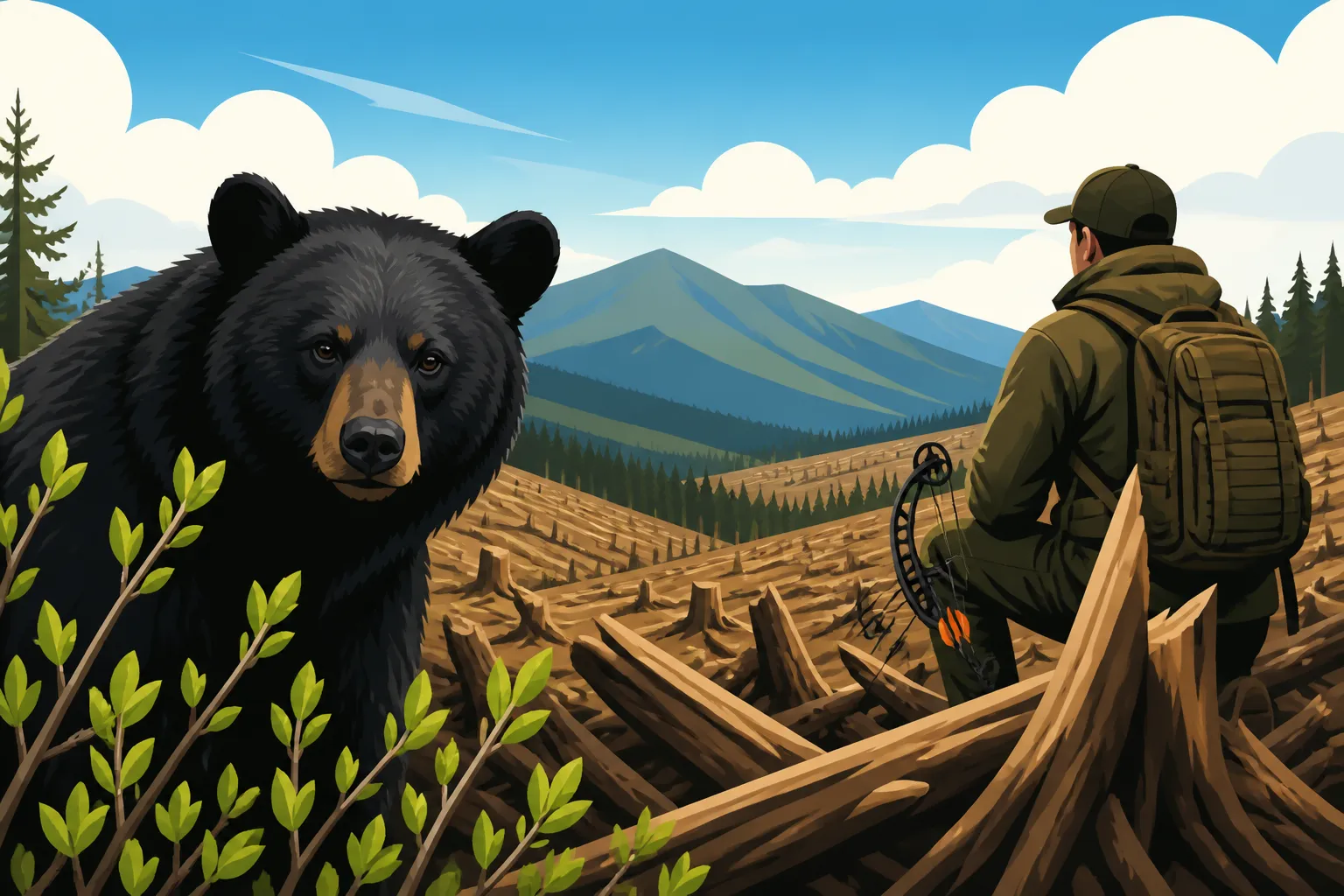
Cutblocks, which are areas where timber has been harvested, might initially appear barren or chaotic. However, for a black bear that's just emerged from a long winter's sleep, these areas are vital. The exposed ground of a cutblock receives more direct sunlight than the surrounding mature forest, leading to an earlier and more robust growth of new vegetation. This makes them prime feeding grounds for bears looking to replenish their depleted fat reserves.
Why Cutblocks Attract Spring Bears
Consider the contrast: deep within the mature forest, the canopy shades the forest floor, keeping it cooler and delaying the spring green-up. In a cutblock, the sun's rays hit directly, coaxing out tender young plants like clover, dandelions, horsetails, and various grasses much earlier. Bears, with their keen sense of smell, are quickly drawn to these verdant patches. It's not just about the early greens; these regenerating areas also become home to a myriad of insects, grubs, and small rodents, all of which are easy and nutritious pickings for a famished bear.
Furthermore, cutblocks often provide a mosaic of habitat types. There might be residual timber patches, thickets of new growth, and open areas, all of which offer excellent visibility for bears to spot predators or competitors, while also providing cover to escape into. The network of old logging roads, skid trails, and seismic lines that crisscross these areas serve as natural travel corridors for bears. Understanding these unique characteristics is a cornerstone for effective Black Bear Hunting in Alberta.
Identifying Productive Cutblock Features
Not every cutblock is created equal in terms of bear productivity. When you're scouting, both virtually and on the ground, look for several key features. South-facing slopes within a cutblock are gold; they get the most sun exposure, leading to the earliest and most lush green-up. Areas with natural seeps, small ponds, or boggy patches are also highly attractive, as bears will visit for water and to dig for roots or insects in moist soil. Old logging roads or pipeline rights-of-way that run through or along the edges of a cutblock can be fantastic places to spot bears either traveling or feeding along the edges.
The age of a cutblock is another significant factor. Very recently cut blocks might still be too disturbed, with limited new growth. Conversely, blocks that are perhaps two to five years post-harvest often present the ideal scenario: enough open ground for early vegetation and good visibility, but also enough new growth to provide cover and a diverse food source. As the vegetation grows taller and thicker, these areas transition, and bears might use them differently. For example, focusing on Hunting a Cutblock in Its Second Year can be very effective as the initial flush of vegetation is at its peak. Look for areas where different tree species or habitat types converge within the cutblock; these "edge" environments are often hotspots for wildlife activity.
Timing Your Alberta Spring Bear Hunt in Cutblocks
Success in spring bear hunting hinges significantly on timing. Venture out too early, and bears might still be tucked away in their dens or moving minimally. Wait too long, and the burgeoning spring vegetation can become so dense that spotting a bear, even in an open cutblock, becomes incredibly difficult. Alberta's spring bear season provides a generous window, but precisely aligning your hunt with peak bear activity in cutblocks is paramount.
When Bears Emerge from Hibernation
In Alberta, black bears typically start to emerge from their winter dens from mid-April into May, with the exact timing influenced by local weather conditions and the region's specific geography. Older, solitary boars often emerge first, driven by the instinct to find food and establish their territories. Sows with new cubs generally emerge later to ensure their offspring have access to sufficient forage and slightly warmer conditions. Early in the season, bears tend to stick close to their dens, which are often strategically located on south-facing slopes or within the sheltered fringes of cutblocks, allowing quick access to the first green shoots.
During these initial post-hibernation days, bears move with a certain languor, prioritizing easily digestible greens to restart their digestive systems. They often resemble cattle, grazing patiently through prime vegetation patches. As the spring progresses and their metabolism accelerates, their movements become more expansive, and they'll diversify their diet. Understanding these early movements, and knowing When Bears Come Out of the Den, is a foundational element in planning your spring hunt.
Peak Activity and Green-up in Cutblocks
The optimal period for spring bear hunting in Alberta's cutblocks generally coincides with the zenith of the green-up, typically spanning late May through early June in most regions. This is when new vegetation is at its most tender and palatable, and bears are highly active, feeding extensively and initiating their breeding season. Always confirm the specific Alberta black bear season dates for your chosen Wildlife Management Unit (WMU) to ensure you are hunting within the legal framework.
During this peak window, bears tend to be most active during the cooler parts of the day: the early morning hours just after sunrise and the late evening leading up to sunset. However, do not discount midday activity, especially on overcast or drizzly days, or in cutblocks that offer patchy shade. Bears will move into the open areas to feed and then often retreat to the cooler, denser timber fringes for a midday rest. Observing these daily patterns and adjusting your hunting schedule to match bear activity can dramatically improve your success rate. This critical window of opportunity is why careful Timing an Alberta Spring Bear Hunt is so often discussed among experienced hunters.
Essential Gear and Scouting for Cutblock Bear Hunting
Successfully hunting Alberta's cutblocks for spring bears demands a thoughtful selection of gear and a rigorous approach to scouting. These expansive and diverse landscapes require preparation for everything from extensive long-range glassing to navigating challenging terrain and managing potential close-range encounters.
Optics and Footwear for Spot-and-Stalk
When hunting cutblocks, high-quality optics are your most valuable asset. A top-tier pair of 10x or 12x binoculars, ideally mounted on a tripod for stability, is indispensable for systematically scanning vast areas for any hint of a bear. A spotting scope can also be incredibly beneficial for resolving distant shapes – is it a bear, a dark stump, or a shadowed rock? – and for making crucial ethical decisions like Judging a Boar From a Sow With Cubs. Since you’ll spend countless hours glassing, investing in clear, bright optics from reputable brands will minimize eye strain and enhance your ability to detect subtle movements or shapes that indicate a bear's presence.
For footwear, prioritize comfort, durability, and support. You will be covering considerable ground, often over uneven surfaces littered with fallen logs, through emerging vegetation, and potentially navigating muddy or wet areas. Waterproof, robust hiking boots with excellent ankle support are non-negotiable. Look for models that offer breathability while being tough enough to withstand abrasive stumps and sharp branches. Footwear from brands like Lowa, Scarpa, or even a solid pair of insulated rubber boots (if the ground is particularly saturated) can profoundly impact your comfort and stealth.
Navigating and Pre-Season Scouting with Technology
Before you even step foot in the wilderness, dedicate significant time to virtual scouting. Modern hunting applications such as GoHunt and onX Hunt have revolutionized this process, providing invaluable tools for identifying cutblocks, analyzing terrain features, and meticulously planning your hunting routes. These apps allow you to pinpoint crucial elements like south-facing slopes, historical logging roads, game trails, and water sources, as well as mark potential bear feeding areas or dens. You can overlay satellite imagery with topographic maps to create a truly comprehensive understanding of the landscape.
Once you are in the field, a reliable GPS device or your trusted hunting app is absolutely essential for navigation. Cutblocks can be disorienting; the continuous regeneration can make familiar landmarks disappear or transform, leading to confusion. Use your navigation tool to mark fresh bear sign, potential den sites, and promising feeding grounds. Be aware that the landscape within a cutblock is dynamic, constantly changing due to new logging activity or natural regeneration. Therefore, always have your navigation handy and be vigilant about your surroundings. For instance, knowing how to identify and find Hunting a Cutblock in Its Second Year or similar stages of regeneration can be particularly advantageous, and your maps can guide you there.
Hunting Strategies for Success in Alberta Cutblocks
With your reconnaissance complete and your gear ready, it’s time to implement a strategic approach in the field. Hunting bears in cutblocks typically involves a blend of unwavering patience, acute observation, and deliberate, calculated movements. The key is not to crash through the bush, but rather to move stealthily and maximize your chances of spotting a bear before it becomes aware of your presence.
Effective Spot-and-Stalk Techniques
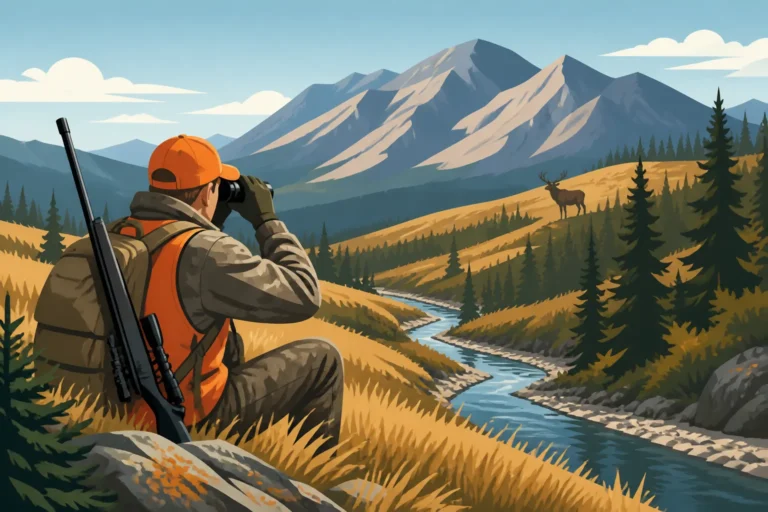
The spot-and-stalk method is often the most productive strategy for hunting bears in cutblocks. This technique begins by finding an elevated vantage point – perhaps along an old logging road, a natural ridge, or the higher edge of a cutblock – and committing a significant amount of time to glassing. Systematically sweep the entire cutblock with your binoculars and spotting scope, searching for any subtle movement, a contrasting dark silhouette against the green foliage, or even just the tell-tale flick of an ear. Bears are masters of camouflage in this environment, so extreme patience and a methodical approach are paramount.
Once a bear is spotted, the intricate dance of the stalk begins. Carefully plan your approach, taking into full account the wind direction, available cover, and the bear's current activity and direction of travel. Utilize the terrain to your advantage: move silently along depressions, behind ridges, or through dense patches of regenerating trees. The ground in cutblocks can be noisy with fallen branches and debris, so every step must be slow and deliberate. If the bear is actively feeding, it might allow for a more direct, yet still cautious, approach. If it’s bedded or casually moving, a much slower and more covert stalk is warranted. Always be prepared to stop your stalk, melt into cover, or even retreat if the wind shifts unfavorably or the bear becomes alert to your presence.
Still Hunting and Ambush Points
While spot-and-stalk is a dominant strategy, still hunting can also yield success, particularly in cutblocks characterized by more undulating terrain or thicker, denser regeneration. Still hunting involves moving through an area at an exceptionally slow and deliberate pace, pausing frequently for extended periods to observe your surroundings with extreme care. Concentrate your efforts on known bear travel corridors, the interface where the cutblock meets the dense, mature timber, or around identified water sources. The objective is to quietly surprise a bear that might be moving or feeding in a less exposed part of the block.
Establishing ambush points is another highly effective tactic. Identify strategic locations within a cutblock where bears are most likely to travel or feed, such as a narrow neck of timber connecting two larger open areas, a well-used game trail leading to a water source, or a particularly lush patch of early-season forage. Set yourself up downwind, concealed by natural cover, and patiently wait. This approach can be particularly effective during periods of lower bear activity when bears are less likely to be visible from a distance. Integrating your knowledge of What Bears Eat in Spring can help you predict these key feeding and travel areas more accurately.
Safety and Considerations in Alberta Bear Country
Hunting black bears in Alberta's cutblocks inherently means you are operating in authentic bear country. This entails not only preparing for black bears but also being acutely aware of the potential for encountering grizzlies. While grizzly bear ranges are typically concentrated further west in the foothills and mountains, sightings in other regions are not unheard of. Your personal safety must always remain your highest priority.
Differentiating Black Bears from Grizzly Bears
The ability to accurately differentiate between a black bear and a grizzly bear is perhaps the most critical safety skill for any hunter in Alberta. While black bears are generally less aggressive, a startled or threatened black bear can still pose a serious threat. More critically, misidentifying a grizzly for a black bear can have dire and potentially fatal consequences. Key characteristics of grizzlies include a prominent shoulder hump (most visible when standing or moving), a distinctive dish-shaped face, relatively smaller and more rounded ears, and notably longer, straighter claws. Black bears typically lack a shoulder hump, possess a straighter facial profile, have larger, more pointed ears, and shorter, more curved claws. It is crucial to remember that bear coloration is highly variable; black bears can be brown, blonde, or cinnamon, and grizzlies can range from light brown to nearly black, often with "grizzled" or frosted tips. Never, ever rely solely on color for identification. If there is any uncertainty, always err on the side of caution and back away slowly. For a more comprehensive guide on this vital distinction, refer to Telling a Black Bear From a Grizzly.
Always carry bear spray, ensure you know how to deploy it effectively, and keep it readily accessible (e.g., in a chest holster, not in your pack). It serves as your last line of defense in an encounter. When hunting in a group, make a reasonable amount of noise as you move through dense vegetation to avoid surprising a bear. Be exceptionally vigilant when approaching thick cover or cresting rises where visibility is limited.
Ethical Hunting and Regulations
Alberta maintains strict regulations for spring bear hunting, and it is every hunter's ethical and legal obligation to know and adhere to them. This includes possessing the appropriate licenses, being aware of the precise season dates for your specific WMU, and understanding legal methods of take. Always carry your Wildlife Identification Number (WIN) card, Wildlife Certificate, and valid black bear licence. Further information on general requirements can be found in Alberta Hunter Education Requirements.
Ethical hunting also demands absolute certainty of your target. Beyond species differentiation, you must be capable of Judging a Boar From a Sow With Cubs. It is strictly illegal and deeply unethical to harvest a sow with cubs. In the early spring, cubs can be tiny and easily obscured by vegetation. Take ample time, utilize your optics, and observe the bear for an extended period to confirm it is a lone bear, and a boar if that is your objective. If you observe any cubs, no matter how distant, pass on that animal. Achieving a clean, humane kill shot is also paramount. Practice extensively with your chosen weapon to ensure you can make a precise shot under realistic hunting conditions, thereby minimizing any potential suffering for the animal.
Post-Harvest and Meat Care in Spring Conditions
Successfully harvesting a bear in an Alberta cutblock is a thrilling accomplishment, but the job is far from over. Spring weather can be notoriously unpredictable, swinging from cool, crisp mornings to surprisingly warm afternoons, making proper meat and hide care crucial for ensuring you bring home high-quality table fare and a well-preserved trophy.
Field Dressing and Cooling the Carcass
The moment your bear is down, a critical timeline begins, especially if temperatures are on the rise. Your immediate priority is to field dress the bear to facilitate rapid cooling of the carcass. This involves promptly removing the entrails, which generate significant internal heat and can lead to swift meat spoilage. If you intend to save the hide for a rug or taxidermy, skinning the bear as quickly as possible is strongly advised. The hide acts as a potent insulator, trapping heat and accelerating spoilage. For detailed guidance on this process, consider reviewing resources like Skinning a Bear for a Rug to ensure proper preservation.
Once field dressed, and ideally skinned, prop the carcass open to maximize air circulation. If you are hunting solo and plan to pack the bear out in quarters, commence butchering without delay. The overarching goal is to reduce the meat's temperature rapidly. In consistently cool conditions, hanging quarters might suffice, but if it's warm, placing the meat into clean game bags and then into a cooler filled with ice (ensuring the meat never sits directly in meltwater) is the superior option.
Transporting Meat and Hide Out of the Backcountry
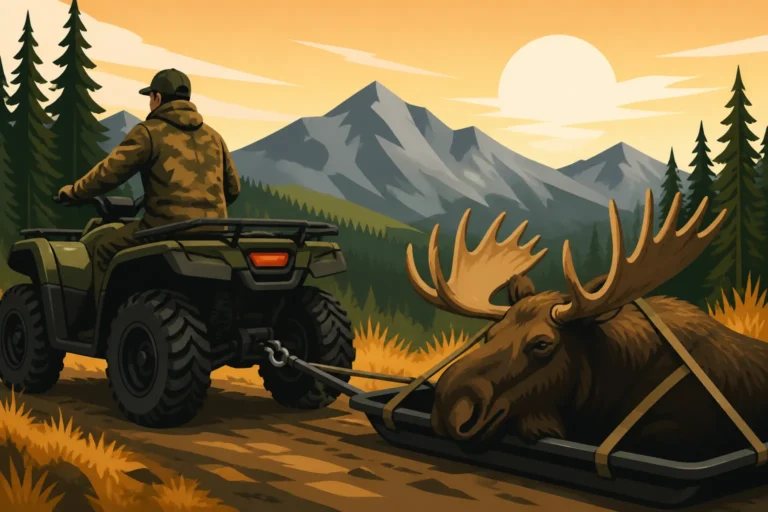
Extracting a harvested bear from a cutblock can present a formidable challenge. The terrain is frequently uneven, often littered with downed timber and dense new growth, making travel arduous. If you are fortunate enough to harvest a bear near an accessible old logging road or seismic line, you might be able to utilize a game cart or an ATV (where permitted). However, many cutblocks will necessitate packing meat out on your back, potentially over considerable distances. High-quality, breathable game bags are indispensable for keeping the meat clean, protected from insects, and allowing it to breathe.
For the hide, once skinned, cool it as rapidly as possible. Lay it flat in the shade or on any remaining snow, fur side down, to allow heat to dissipate. Once thoroughly cooled, you can apply a liberal coating of non-iodized salt to initiate the preservation process, or transport it to a freezer as quickly as feasible. Both meat and hide must be transported in a manner that minimizes contamination and maintains a cool temperature. Having a pre-planned extraction strategy, whether it involves an ATV, horseback, or foot-powered packing, is as vital as the hunting strategy itself. Remember, Alberta regulations stipulate that proof of sex must remain naturally attached to the hide or carcass until it reaches your final destination.
Disclaimer
Always consult the official Alberta hunting regulations and local authorities for the most current rules and safety guidelines before heading into the field. Regulations can change, and it is your responsibility to be informed and compliant. Happy hunting, and stay safe out there!