Boots for a Foothills Hunt
One of the biggest frustrations for any hunter heading into Alberta's foothills is showing up with the wrong footwear. Nothing — absolutely nothing — can ruin a hunt faster than sore, blistered, or wet feet. This guide will walk you through everything you need to know about choosing the perfect boots to keep your feet happy, supported, and ready for whatever the rugged foothills throw at you.
The Unique Demands of Alberta's Foothills Terrain
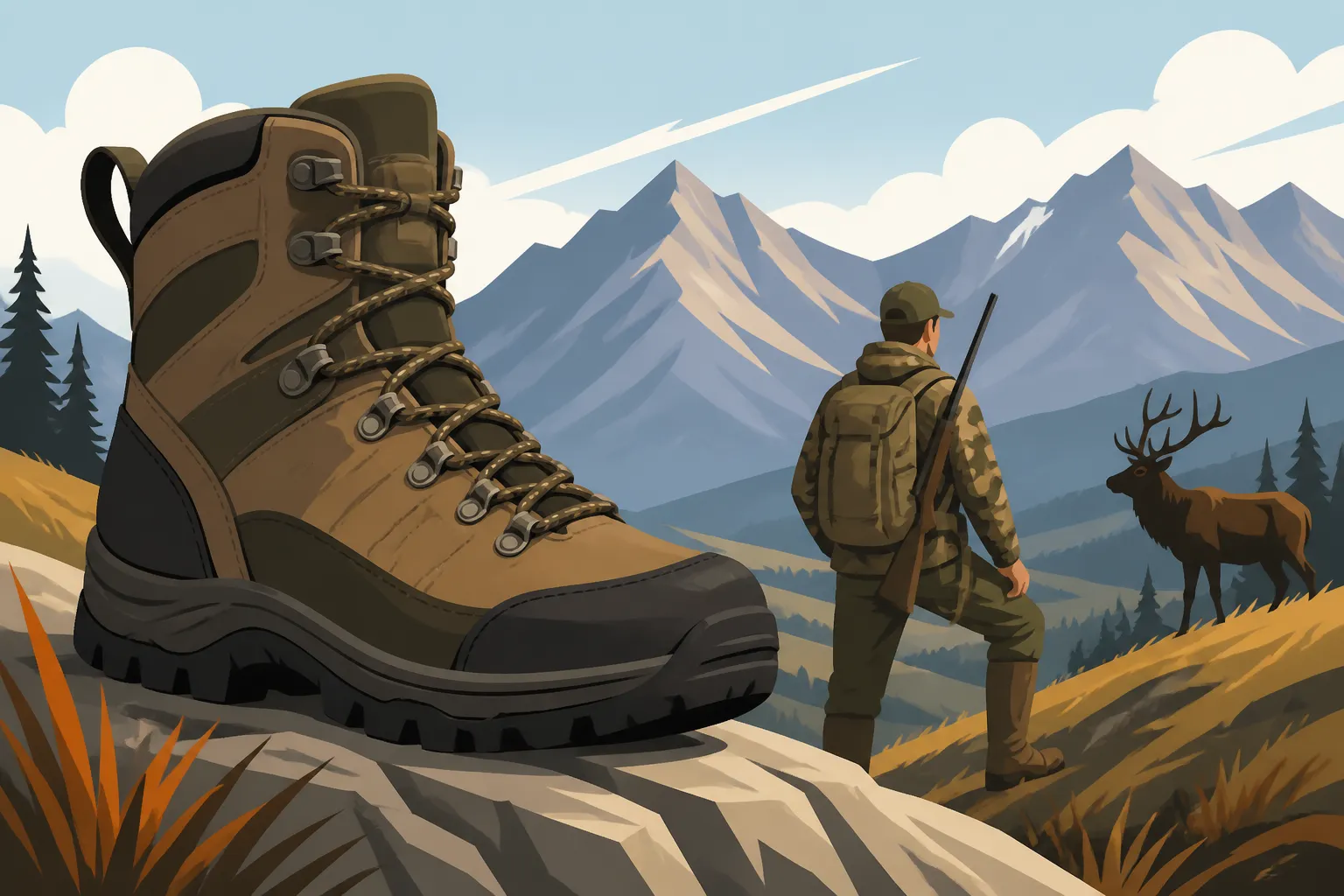
The foothills of Alberta are a truly special place to hunt, offering a fantastic blend of landscapes that hold everything from deer and moose to elk and bears. But with that diversity comes a unique set of challenges for your footwear. These aren't flat prairie fields or perfectly manicured trails; this is wild country that demands a lot from your feet and, by extension, your boots.
Varied Elevation and Underfoot Conditions
Imagine starting your morning in a deep, damp creek bottom, pushing through thick willows, then immediately climbing a steep, shale-covered ridge. That's a pretty typical hour in the Alberta foothills. You'll encounter everything from slick mud and boggy muskeg to loose rock, exposed roots, and heavy deadfall. One minute you might be walking on soft pine needles, the next you're scrambling over jagged rocks. This constant change means your boots need to provide exceptional grip and protect your feet from impacts, twists, and punctures. A flimsy sole simply won't cut it when you're navigating a field of ankle-breaker rocks or post-holing through soft ground.
Consider a scenario where you're Hunting a Foothills Bench Above a Creek. The approach might be through dense undergrowth near the water, requiring boots that can shed moisture and resist snags. Then, as you ascend to the bench, you're traversing steep, grassy slopes that might be slick with morning dew or loose with dry dirt. The terrain demands constant adjustments from your feet, and without proper stability, you're just asking for trouble.
Weather Swings and Temperature Extremes
Alberta weather, especially in the foothills, is famously unpredictable. You can start a crisp September morning with frost on the ground, peel layers by noon as the sun beats down, then find yourself caught in a sudden afternoon rain shower or even a snow squall. This means your boots need to be versatile. They need to handle both the warmth of exertion and the sudden chill of a downpour or an evening glassing session. Being caught with wet feet when the temperature drops is a quick way to hypothermia and a miserable end to your hunt.
During Elk Hunting Alberta's Foothills in the early season, you might experience warm days but freezing nights. Later in the season, when you're Hunting Alberta Winter Weather Safely, deep snow and bitter cold become the primary concerns. Your boots need to act as a reliable barrier against these elements, maintaining a comfortable microclimate for your feet regardless of what the sky throws at you. You can scout suitable WMUs and research common weather patterns for your chosen season on platforms like GoHunt to better prepare.
Long Days and Heavy Packs
Hunting in the foothills often involves covering significant distances, often off-trail, and frequently culminates in packing out heavy game. Whether it's a whitetail, mule deer, or a full-sized elk, that added weight puts tremendous strain on your feet, ankles, and knees. Your boots are the foundation of your entire system. If they lack adequate support, cushioning, or durability, every step under a heavy load will be a painful reminder. You'll feel every rock, every root, and your feet will fatigue much faster, impacting your endurance and concentration.
Think about a multi-day backcountry trip into Alberta's Mountain WMUs and Their Access where you might be several kilometers from your vehicle. You're carrying not just your gear, but hopefully the meat and antlers of an animal. This is where the structural integrity of your boot truly shines. A stiff midsole, excellent ankle support, and a robust outsole are non-negotiable for comfort and safety when packing out hundreds of pounds of meat over uneven ground.
Key Features to Look for in Foothills Hunting Boots
Now that we understand the demands, let's break down the critical features you should prioritize when selecting boots for an Alberta foothills hunt. This isn't just about brand names; it's about understanding the function of each component.
Waterproofing and Breathability
This is perhaps the most critical feature. Your boots must be waterproof. Modern boots achieve this through integrated membranes like Gore-Tex, eVent, or various proprietary systems. These membranes have microscopic pores that are small enough to block water molecules from entering but large enough to allow water vapor (sweat) to escape. This combination is vital.
Without waterproofing, a quick creek crossing or a sudden rain shower will soak your feet, leading to blisters, cold, and discomfort. But waterproofing alone isn't enough; breathability prevents your feet from getting drenched in sweat from the inside out. Even on a cold day, active hiking generates heat and moisture. If that moisture can't escape, your socks get damp, reducing their insulating properties and creating a breeding ground for blisters. Look for boots that boast both excellent waterproofing and breathability to keep your feet dry from external moisture and internal perspiration.
Ankle Support and Stability
The uneven, rocky, and often slippery terrain of the foothills is a prime environment for twisted ankles. A well-designed hunting boot provides crucial ankle support to prevent lateral rolls and provide stability on side hills or when stepping on unstable objects. This typically comes from a high-cut cuff that extends above the ankle bone and is well-padded and stiff enough to offer resistance without restricting natural movement too much.
When you're navigating thick deadfall or traversing a steep slope while Stalking Mule Deer in Badlands Breaks or climbing into an elk basin, a boot that cradles your ankle firmly can save you from a season-ending injury. The lacing system also plays a role here, allowing you to cinch the boot tightly around your ankle for maximum support. Don't compromise on this, especially if you plan on carrying substantial weight.
Sole Stiffness and Traction
The sole of your boot is your direct interface with the ground, and its characteristics are paramount.
- Stiffness (or Rigidity): A stiffer sole provides better support when climbing, especially on rocky terrain, and helps distribute the pressure from uneven ground more effectively. It also reduces foot fatigue when carrying a heavy pack by preventing your foot from having to constantly conform to the terrain. Imagine standing on a sharp rock with a flexible running shoe versus a stiff mountaineering boot – the difference is clear. For the foothills, a moderately stiff to stiff sole is ideal, offering a good balance between support and walkability.
- Traction (Lug Pattern): The outsole should feature an aggressive, multi-directional lug pattern. These deep, widely spaced lugs are designed to bite into soft earth, mud, snow, and loose rock, providing superior grip. Different rubber compounds offer varying levels of stickiness and durability. For the foothills, you'll want a compound that performs well across a range of temperatures and surfaces, ensuring you maintain footing whether you're climbing a slick bank or descending a gravelly slope.
Insulation and Temperature Rating
The amount of insulation you need depends heavily on the season you're hunting.
- Early Season (September/Early October): Many hunters prefer uninsulated or lightly insulated boots (200-400 grams) during the warmer archery or early rifle seasons when temperatures can still be mild. Your activity level will generate a lot of heat, and too much insulation can lead to sweaty feet.
- Late Season (November/December and Beyond): As winter approaches and temperatures plummet, heavy insulation becomes critical. Boots with 800-1200+ grams of insulation are common for deep cold. These keep your feet warm during long periods of sitting or slow stalks in the snow.
It's important to remember that insulation ratings are general guidelines. Factors like your activity level, individual metabolism, and choice of socks will also influence how warm your feet stay. For example, if you're primarily still-hunting or sitting in a blind, you'll need more insulation than if you're actively Rifle Hunting Alberta's General Seasons and covering many kilometers each day.
Fit and Comfort
This might seem obvious, but a proper fit is the foundation of comfort and performance. Boots that are too tight will pinch, restrict circulation, and cause blisters. Boots that are too loose will allow your foot to slide around, leading to friction, blisters, and instability.
- Try Them On: Always try boots on at the end of the day when your feet are slightly swollen. Wear the type of socks you plan to hunt in.
- Walk Around: Don't just stand there. Walk on an incline, walk downstairs, and feel for any pressure points or heel slip.
- Toe Room: You should have about a thumb's width of space between your longest toe and the end of the boot when your heel is firmly seated. This prevents your toes from jamming into the front on downhills.
- Heel Lock: Your heel should feel secure with minimal lift. Excessive heel slip will quickly lead to blisters.
- Break-in Period: Most quality hunting boots will require a break-in period. Don't expect to take them straight from the box to a multi-day hunt.
A well-fitting boot should feel like an extension of your foot, not a clunky impediment. It’s worth investing the time to find the right pair, as it directly impacts your enjoyment and success in the field. Resources like BookYourHunt can also offer guidance on gear lists often recommended by outfitters, which can sometimes include specific boot types suited for their regions.
Types of Boots Best Suited for the Foothills
Given the varied terrain and conditions, several categories of boots can perform well in the Alberta foothills, each with its own strengths and weaknesses.
Mid-Weight Backpacking Boots
These boots strike a fantastic balance for many foothills hunters. They are generally lighter and more flexible than dedicated mountain boots but offer significantly more support and durability than hiking shoes.
Pros:
- Versatility: Excellent for mixed terrain – comfortable on trails but capable off-trail.
- Comfort: Often have more cushioning and a shorter break-in period compared to heavier boots.
- Waterproof: Most come with reliable waterproofing membranes, making them suitable for crossing smaller creeks or dealing with rain and damp conditions.
- Support: Provide adequate ankle support for carrying moderate loads and navigating uneven ground.
Cons:
- Stiffness: May not offer the extreme sole stiffness or ankle support needed for very heavy loads (e.g., quartering out a moose alone) or extended periods on highly technical, rocky terrain.
- Insulation: While some offer light insulation, they might not be warm enough for the deep cold of late-season hunts without a robust sock system.
This category is a solid choice for general Whitetail Hunting in Alberta or early-season Mule Deer Hunting Alberta's Prairie and Badlands where you're covering diverse ground without constantly tackling the steepest, most rugged slopes.
Mountain Hunting Boots (Heavy-Duty)
When you’re truly pushing into the rugged, vertical country, or dealing with consistently harsh conditions, mountain hunting boots are the gold standard. These are built like tanks for a reason.
Pros:
- Superior Support: The highest level of ankle support and torsional rigidity, crucial for steep side-hilling and carrying very heavy loads.
- Extreme Durability: Constructed with robust materials and reinforced designs to withstand abrasive rock, sharp obstacles, and years of abuse.
- Sole Stiffness: Very stiff soles provide excellent platform stability for climbing, kicking steps in snow, and preventing foot fatigue over long, technical approaches.
- Insulation Options: Many models come with substantial insulation for cold weather, while uninsulated versions are available for warmer mountain hunts.
- Protection: Offer maximum protection against impacts, punctures, and the elements.
Cons:
- Weight: Significantly heavier than other options, which can contribute to leg fatigue over long distances.
- Flexibility: Less flexible, which can feel less natural for casual walking and may require a longer break-in period.
- Cost: Generally the most expensive category of hunting boots.
If you’re planning a serious backcountry hunt for Bighorn Sheep in Alberta's Mountains or tackling demanding late-season Elk Hunting Alberta's Foothills where you anticipate deep snow and rough terrain, these boots are worth every penny. Brands popular in this category are often discussed on hunting forums or specialty gear sites that GoHunt aggregates information from.
Rubber Boots (for specific conditions)
While not a primary all-around hunting boot for the foothills, rubber boots have their place in a hunter’s arsenal for very specific wet conditions.
Pros:
- 100% Waterproof: Their seamless construction means truly impenetrable waterproofing, ideal for swampy ground, shallow water crossings, or heavy rain.
- Scent Control: Many rubber boots are excellent for minimizing scent left behind, which can be a factor for wary game.
- Easy to Clean: Simply hose them off after a muddy hunt.
Cons:
- Ankle Support: Generally offer very little ankle support, making them risky on uneven or rocky terrain where ankle rolls are a concern.
- Breathability: Almost zero breathability, which means sweaty feet can be an issue even in cold weather, leading to chill and discomfort.
- Traction: While some have decent lug patterns, they typically don't match the grip of dedicated hiking or mountain hunting boots on varied surfaces like loose rock or steep dirt.
- Durability: Can be punctured by sharp sticks or barbed wire.
Rubber boots are best used for Hunting a Frozen Slough Crossing or when Pothole Hunting Ducks on Small Water in wetland areas where you know the ground will be consistently wet and flat, and you won't be covering long distances over rugged terrain. They're a niche tool, not a go-to for typical foothills trekking.
Here's a quick comparison of these boot types:
| Feature | Mid-Weight Backpacking Boots | Mountain Hunting Boots | Rubber Boots (Insulated) |
|---|---|---|---|
| Ankle Support | Good | Excellent | Poor |
| Sole Stiffness | Medium to Stiff | Very Stiff | Flexible |
| Waterproofing | Excellent (membrane-based) | Excellent (membrane-based) | Absolute (seamless rubber) |
| Breathability | Good | Good | Poor |
| Durability | Very Good | Excellent | Moderate (puncture risk) |
| Weight | Moderate | Heavy | Moderate to Heavy |
| Best Use | General hunting, varied terrain, moderate loads, early-mid season | Rugged terrain, heavy loads, steep climbs, all seasons | Wet, muddy, or marshy flat ground, scent control |
Pre-Hunt Preparation and Boot Care
Even the best boots won't perform if they aren't properly prepared and cared for. These steps are just as important as the initial selection.
Breaking in Your Boots
New boots, especially stiffer mountain hunting boots, are notorious for causing blisters if not properly broken in. Don't make the mistake of wearing them for the first time on opening day of your hunt.
- Start Small: Begin by wearing them around the house for short periods.
- Gradually Increase: Take them on short walks around the neighborhood, then longer hikes on trails that mimic hunting conditions. Build up to full days with a pack.
- Hot Spots: Pay attention to any areas where you feel friction or pressure. Address these immediately with moleskin or duct tape to prevent blisters from forming.
- Time it Right: Ideally, you should have your new boots broken in several weeks, if not months, before a major hunt. This also gives you time to identify if they simply aren't going to work for your feet.
Properly broken-in boots will mold to your feet, and the materials will soften slightly, providing custom comfort and reducing the risk of pain and injury.
Sock Systems and Foot Care
Your socks are an integral part of your footwear system. They work with your boots to manage moisture and provide cushioning.
- Layering: Many hunters use a two-sock system: a thin, synthetic or merino wool liner sock directly against the skin, covered by a thicker merino wool outer sock. The liner wicks moisture away, and the outer sock provides insulation and cushioning. Merino wool is a fantastic choice because it insulates even when damp and resists odor.
- Avoid Cotton: Cotton socks absorb moisture and hold it against your skin, leading to blisters and cold feet. Leave them at home.
- Change Regularly: Carry extra pairs of socks and change them frequently, especially if your feet sweat a lot. Even if your boots are waterproof, your feet can get damp from perspiration. Dry socks can be a game-changer for morale and foot health.
- Blister Prevention: Be proactive. If you feel a hot spot, stop immediately and apply moleskin or athletic tape. Don't wait for a blister to form. Taking care of your feet proactively is key to successful Hunting Alberta's General Seasons.
Maintaining Your Boots for Longevity
Quality hunting boots are an investment, and proper care will extend their lifespan and performance.
- Clean After Each Hunt: Remove mud, dirt, and debris from your boots after every outing. A stiff brush and water are usually sufficient.
- Dry Properly: Never dry your boots by a direct heat source (like a campfire or heater), as this can damage leather and waterproof membranes. Stuff them with newspaper or use a boot dryer on a low setting. Allow them to air dry completely.
- Condition Leather: For leather boots, periodically apply a leather conditioner or waterproofing treatment to keep the leather supple and prevent cracking. This also helps maintain water repellency.
- Re-waterproof: Over time, the DWR (Durable Water Repellent) coating on the outer fabric of your boots will wear off, and even the waterproof membrane can degrade. Use a spray-on or wash-in re-waterproofing product specifically designed for breathable waterproof fabrics to refresh their performance.
Table: Basic Boot Care Schedule
| Action | Frequency | Why |
|---|---|---|
| Clean Mud/Dirt | After every hunt | Prevents material breakdown, maintains breathability and waterproofing |
| Dry Thoroughly | After every hunt | Prevents mold, odor, and material damage |
| Check for Damage | Before/After hunt | Catch small issues (loose stitching, small cuts) before they worsen |
| Condition Leather | Seasonally | Keeps leather supple, prevents cracking, maintains water repellency |
| Re-Waterproof Fabric | As needed | Restores outer water repellency, prolongs membrane life |
Packing a Repair Kit
Even with the best boots and meticulous care, accidents happen in the field. A small boot repair kit can save a hunt.
- Duct Tape: The universal fix-all. Great for patching small holes, reinforcing hot spots, or temporarily holding a sole together.
- Super Glue/Shoe Goo: For reattaching delaminated soles or repairing small tears in rubber.
- Extra Laces: Laces can break at the worst possible time.
- Moleskin/Blister Pads: Essential for immediate blister treatment.
- Small Knife/Multi-tool: Always handy for various field repairs.
A well-prepared hunter understands that their boots are more than just footwear – they are a critical piece of safety and performance gear. Choose wisely, prepare thoroughly, and care for them diligently, and your feet will carry you far in Alberta's incredible foothills. Whether you're planning a trip through outfitters on BookYourHunt or scouting through public land maps on GoHunt, ensuring your boots are up to the challenge is paramount for any successful adventure.
Disclaimer
This article is for general informational purposes only and does not constitute professional advice. Laws, prices and regulations vary by location and change over time. Consult a qualified professional for guidance on your specific situation.