What Shipping Antlers Home Costs
You've just wrapped up an incredible hunt in Alberta, and that magnificent set of antlers is now the ultimate trophy, a tangible memory of your adventure. But then reality sets in: how on earth do you get them home? For many hunters, especially those traveling a significant distance or across international borders, the logistics and cost of shipping antlers can be a real head-scratcher, turning post-hunt euphoria into a bit of a logistical nightmare. Don't worry, you're not alone in facing this challenge. This comprehensive guide is here to walk you through everything you need to know about getting your prized antlers from Alberta to your home, helping you understand the costs involved and navigate the sometimes-confusing process.
The Journey Begins: Initial Considerations for Your Trophy
Before you even think about boxes and shipping labels, there are a few foundational questions you need to ask yourself. These initial decisions will significantly influence the complexity and ultimate cost of getting your antlers home. It's not just about tossing them in a box; it's about preservation, legality, and practicality.
Trophy Care and Preparation Post-Harvest
Right after the harvest, proper field care is paramount, not just for the meat, but for your trophy as well. This isn't just about making it look good on the wall; it's about making sure it's even shippable. If you're going for a shoulder mount, the cape needs to be handled meticulously. If it's just antlers for a euro mount or skull cap, that's a different process.
Firstly, getting the skull plate clean is crucial. Removing as much tissue as possible reduces weight and eliminates any potential biohazard issues or odors during transit. Many hunters will boil or macerate the skull cap to get it truly clean. If you're on a guided hunt, your outfitter will often have facilities or a preferred method for initial skull prep, or they can direct you to local taxidermists. For those Hunting Alberta Winter Weather Safely or in very cold temperatures, freezing the skull plate and cape (if applicable) can buy you time, but it's not a long-term solution for shipping.
Remember, the goal is to make the antlers as light, clean, and stable as possible. Any remaining tissue, especially brain matter, can attract pests, cause odors, and even lead to issues with customs inspections if you're crossing international borders. Take the time to ensure it's as clean as possible before it leaves Alberta.
Rules and Regulations: What You Can and Can't Ship
This is where things can get a little tricky, especially for non-residents. Alberta has specific rules about transporting game parts, and if you're crossing provincial or international lines, other jurisdictions have their own regulations. For example, CITES (Convention on International Trade in Endangered Species of Wild Fauna and Flora) permits might be required for certain species, though typical deer, moose, and elk antlers usually don't fall under this for intra-North American travel. However, regulations around Chronic Wasting Disease (CWD) are critically important.
In some Alberta's Mandatory CWD Submission WMUs, you might be required to submit the head for testing. Even if not mandatory for your WMU, some hunters choose to submit. If your animal tests positive for CWD, there might be restrictions on transporting or importing certain parts, including antlers, into some areas. Always check the most current regulations for Alberta and your home jurisdiction. The last thing you want is to have your trophy confiscated or face fines because you weren't aware of a specific rule.
For non-residents, understanding Rules for Non-Residents Hunting Alberta is essential. There are strict guidelines on proof of ownership, tags, and species identification. You'll need your licence and tag to prove legal harvest. Don't forget that transporting game meat also has its own set of rules, often requiring you to keep proof of sex on the carcass until it reaches its final destination. This is covered in more detail in our article on Transporting Game Meat and Proof of Sex.
Unpacking the Costs: What Actually Makes Up the Bill
The price tag on shipping antlers home can feel like a moving target, and it's certainly not a "one size fits all" situation. There are several key variables that will heavily influence the final amount you pay. Understanding these will help you budget and make informed decisions.
Factors Influencing Shipping Costs
Let's break down the main culprits that drive up or bring down your shipping costs:
- Size and Weight: This is probably the biggest factor. A small whitetail rack is vastly different from a massive moose or elk set. Carriers charge based on either the actual weight or the "dimensional weight," whichever is greater. Dimensional weight accounts for the space the package takes up in transit. A bulky, light package can still be expensive because it fills a lot of cargo space.
- Destination: Shipping across a province is one thing; shipping across the continent to the United States or overseas is another entirely. The further your antlers have to travel, the higher the cost. International shipping also introduces customs fees, duties, and potential brokerage charges.
- Speed of Service: Do you need your antlers tomorrow, or can you wait a few weeks? Expedited shipping services come with a hefty premium. Standard ground shipping is almost always the most economical option, but it takes longer.
- Packaging Materials: While you might source some packaging yourself, professional crating or specialized boxes for large racks can add significantly to the overall expense.
- Insurance: While optional, many hunters choose to insure their valuable trophies against damage or loss during transit. The cost of insurance will depend on the declared value of your antlers.
- Brokerage Fees (for international shipments): When crossing a border, a customs broker might be necessary, especially for complex shipments or if you're unfamiliar with the process. Their services will add to your total.
Let's put this into a quick table to visualize the impact of these factors:
| Cost Factor | Lower Cost Scenario | Higher Cost Scenario |
|---|---|---|
| Size/Weight | Small whitetail rack (skull plate only) | Full moose rack, or large elk with skull |
| Destination | Within Alberta, or neighboring province | Across North America, or international |
| Speed | Standard ground shipping (weeks) | Expedited air freight (days) |
| Packaging | DIY cardboard box, minimal reinforcement | Custom wooden crate, professional packing |
| Insurance | No insurance | High declared value, full coverage |
| Brokerage | Not required (domestic) | Required for international customs clearance |
Understanding Freight vs. Parcel Services
For smaller deer racks, standard parcel carriers like Canada Post, UPS, or FedEx might be viable options. You box them up, slap a label on, and off they go. However, once you get into the realm of larger mule deer, elk, or especially moose antlers, parcel services often become impractical or prohibitively expensive due to size and weight restrictions.
This is where freight services come into play. Freight companies specialize in shipping larger, heavier, or irregularly shaped items. They might use pallets, crates, or even dedicated cargo space. While often more economical for very large items, freight shipping requires more robust packaging (like a wooden crate) and usually involves delivery to and from a freight depot, rather than directly to your doorstep. This could mean you need to arrange for local pickup or delivery on both ends, adding another layer of coordination and potential cost. Many outfitters have established relationships with freight companies, which can simplify the process immensely.
Customs, Duties, and Brokerage Fees for International Shipments
If you're bringing your antlers from Alberta back to the United States or another country, expect to deal with customs. This isn't just a formality; it involves paperwork, potential inspections, and often additional fees.
- Customs Declaration: You'll need to accurately declare the item's nature and value. Misrepresenting anything can lead to delays, fines, or confiscation.
- Duties and Taxes: Depending on the value and origin, your home country might levy import duties or taxes on your trophy. These rates vary, so it's wise to research your country's specific import regulations for hunting trophies before your hunt.
- Customs Brokers: For many international hunters, especially those with large or multiple trophies, using a licensed customs broker is highly recommended. These professionals specialize in navigating the complex world of international shipping regulations, ensuring all paperwork is correct, and helping to clear your shipment through customs efficiently. While they add to the cost, they can save you immense headaches, delays, and potential fines. They act as your agent, handling the declarations, tariffs, and liaison with customs officials.
It's easy to overlook these details when you're still dreaming of your hunt. But a little forethought can save you a lot of grief (and money) later on.
Making the Right Choice: Self-Ship or Outfitter Assistance?
You've got a beautiful trophy, and now you have a choice: roll up your sleeves and handle the shipping yourself, or leverage the expertise and resources of your outfitter or a local taxidermist. Both options have their pros and cons.
The DIY Approach: Taking Matters Into Your Own Hands
Deciding to self-ship can certainly feel empowering, and for some, it might even save a bit of money, especially on smaller racks. But it's not without its challenges.
- Pros of DIY:
- Control: You have full control over the packaging, carrier choice, and timing.
- Potential Savings: If you're resourceful with packing materials and choose the most economical shipping method, you might save on some fees compared to an outfitter's service charge.
- Learning Experience: You'll learn the ins and outs of trophy shipping, which could be beneficial for future hunts.
- Cons of DIY:
- Time and Effort: It takes considerable time and effort to source materials, pack properly, fill out paperwork, and arrange pickup/drop-off. This can eat into your travel time or extend your stay in Alberta.
- Risk of Damage: Improper packaging is a real risk. Antlers are surprisingly fragile, especially tips, and can easily break if not adequately protected.
- Regulatory Hurdles: Navigating CWD requirements, import/export permits, and customs declarations can be daunting, particularly for international shipments. A single mistake could lead to significant delays or issues.
- Logistical Challenges: Finding oversized boxes, strapping, and a reliable shipping depot in an unfamiliar area can be tough, especially in rural hunting zones. You might find yourself driving a fair distance to find a suitable shipping center.
If you choose the DIY route, here's some advice:
- Start Early: Research packaging requirements and carrier options before your hunt.
- Gather Materials: Have heavy-duty cardboard, bubble wrap, foam, strapping, and a measuring tape ready. For larger racks, consider building a simple wooden crate.
- Document Everything: Take photos of your antlers before and after packing. Keep copies of your licence, tag, and any CWD testing results.
- Know Your Carrier's Rules: Each carrier has specific size, weight, and content restrictions. Don't assume.
Leaning on Your Outfitter: The Convenience Factor
For many hunters, especially those from outside Alberta or international visitors, having the outfitter handle trophy logistics is worth every penny. Outfitters are often veterans of this process and have established networks.
- Pros of Outfitter Assistance:
- Expertise: Outfitters are familiar with Alberta's regulations, preferred carriers, and proper packaging techniques for various species.
- Convenience: They handle the entire process post-hunt, allowing you to focus on your travel home. This often includes initial cleaning, caping, crating, and coordinating with a shipping agent or taxidermist.
- Established Relationships: Many outfitters work regularly with specific taxidermists, meat processors, and shipping companies, often securing better rates or more efficient service.
- Peace of Mind: You know your trophy is in experienced hands, reducing the stress and potential for errors.
- Cons of Outfitter Assistance:
- Cost: You'll pay for the outfitter's services, which will be added to your overall hunt expenses. This cost can vary widely, so always clarify it upfront.
- Less Control: You're entrusting your trophy to someone else, so you have less direct oversight of the process.
When you're looking for an outfitter, perhaps on platforms like BookYourHunt, don't hesitate to ask detailed questions about their post-hunt services, including trophy prep and shipping. It's a critical part of the overall experience, and a good outfitter will be transparent about the process and associated costs.
Packaging Your Prized Possession for the Long Haul
Whether you're doing it yourself or having an outfitter assist, proper packaging is non-negotiable. This isn't just about putting antlers in a box; it's about creating a protective cocoon that can withstand the bumps, jostles, and potential drops of transit.
The Art of Crating and Boxing Antlers
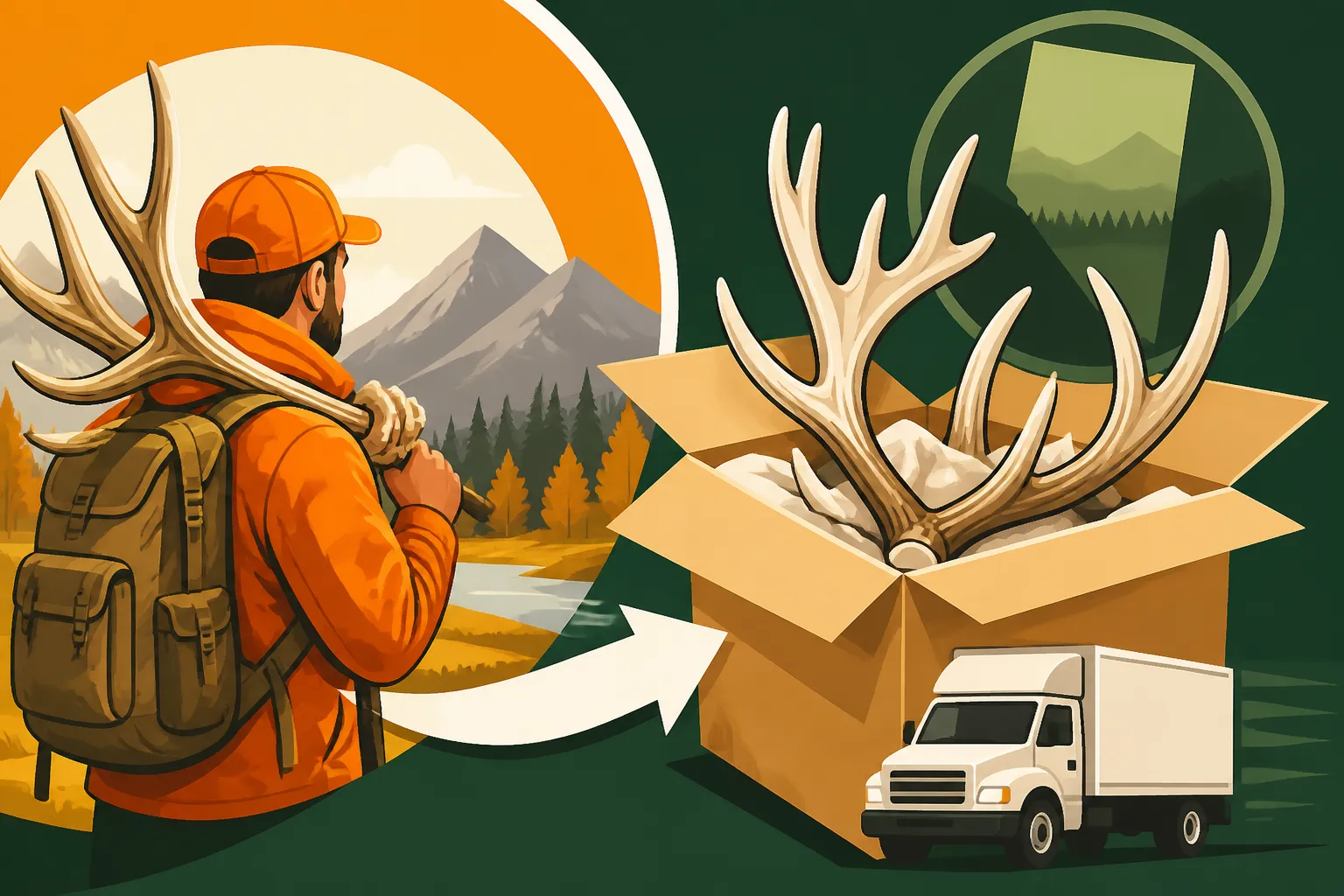
Small deer racks can sometimes fit into heavy-duty cardboard boxes, often reinforced internally with wood strips. However, for anything larger than a typical whitetail, a custom wooden crate is almost always the safest and most reliable option.
- Why a Crate? A wooden crate provides rigid protection against crushing, punctures, and impacts. It allows the antlers to be securely braced inside, preventing movement.
- How to Build (or Request) a Crate: The crate should be slightly larger than the widest and tallest points of your antlers. The antlers should be bolted to a sturdy base within the crate, then foam, bubble wrap, or other cushioning materials should be used to fill any gaps and prevent shifting. All points, especially brow tines and delicate tips, need extra padding. The outside of the crate should have clear "Fragile" and "This Side Up" markings.
- Skull Caps: If you're shipping just the skull cap with antlers attached, ensure the skull bone itself is well protected, as it can be brittle.
Don't skimp on packaging materials. A few extra dollars spent here can prevent hundreds (or thousands) in taxidermy repair costs or the heartbreak of a damaged trophy.
Documentation and Labeling: Don't Forget the Paperwork
Correct and thorough documentation is as important as the packaging itself.
- Inside the Package: Always put a clear, laminated copy of your contact information (name, address, phone, email) inside the crate or box, in case external labels are damaged or lost. Also include copies of your Alberta hunting licence, species tag, and CWD submission form (if applicable).
- Outside the Package:
- Shipping Label: Ensure it's robust, waterproof, and clearly displays both sender and recipient addresses, tracking number, and any special handling instructions.
- Contact Information: Have your phone number visible on the exterior for quick contact if there are issues.
- "Fragile" / "Handle With Care": Large, clear labels on all sides.
- "This Side Up": Crucial for preventing internal damage if the antlers are mounted to a base.
- Customs Declaration (International): Attach the required customs forms securely to the outside of the package, usually in a clear, plastic pouch. Be meticulously accurate in your descriptions and declared value.
This might seem like overkill, but trust me, when you're dealing with something as unique and valuable as a hunting trophy, over-communicating and over-protecting is always better than under-doing it.
Long-Term Planning and Cost Mitigation
The best way to manage shipping costs for your antlers is to plan ahead, long before you even draw your bow or shoulder your rifle. Proactive research can save you a significant amount of money and stress.
Budgeting for Your Trophy's Journey Home
When you're planning your Alberta hunt, whether it's for Whitetail Hunting in Alberta or Moose Hunting Alberta's Boreal Forest, make sure to factor in the potential cost of trophy shipping right from the start. Many hunters diligently budget for licences, travel, gear, and outfitter fees, but completely forget about the post-harvest logistics.
Here's what to consider:
- Research Shipping Estimates: Contact various carriers (Canada Post, UPS, FedEx, specialized freight companies) and get quotes before your trip. Provide them with approximate dimensions and weight (e.g., "typical 6×6 elk rack, 48 inches wide, 60 inches long, 30 lbs, going from Edmonton, Alberta to Kansas City, Missouri"). These will be estimates, but they give you a ballpark figure.
- Outfitter Services: If booking a guided hunt, ask your outfitter for their rates for trophy preparation and shipping assistance. Get it in writing or have a clear understanding of what's included and what's extra.
- Contingency Fund: Always build a buffer into your budget. Unforeseen circumstances, like unexpected brokerage fees or the need for a last-minute expedited service, can pop up.
A clear budget for your hunt should look something like this: hunt cost + travel + gear + licences + trophy shipping/taxidermy. Don't let the last item be an afterthought!
Insurance: Peace of Mind for Your Investment
Your hunting trophy represents not just an animal, but a significant investment of time, money, and personal effort. Insuring it during transit is a smart move, even if it adds to the upfront cost.
- Declared Value: When purchasing shipping insurance, you'll need to declare the value of your trophy. This isn't just the biological value, but the sentimental and replacement value (e.g., what it would cost to get another similar trophy, plus taxidermy). Be realistic but also ensure you're covered adequately.
- Coverage Limitations: Read the fine print of any insurance policy. Understand what's covered (damage, loss) and what's excluded (improper packaging, delays due to customs). Some carriers have maximum declared values, so if your trophy is truly exceptional, you might need a specialized insurer.
- Proof of Value: Keep records of your hunt costs, photos of the trophy, and any appraisals if you have them, as these can support your insurance claim if something goes wrong.
It's a tough call sometimes to spend more on insurance, but the peace of mind knowing your hard-won trophy is protected can be invaluable.
Leveraging Resources: Taxidermists and Shipping Specialists
Beyond your outfitter, other professionals can be instrumental in the trophy shipping process.
- Local Alberta Taxidermists: Many taxidermists offer services beyond mounting. They can handle proper skull cleaning, caping, salting, crating, and can act as a local agent for shipping. They are experts in preparing trophies for long-distance travel and are well-versed in import/export regulations. If you're not using an outfitter, or your outfitter doesn't provide these services, connecting with a good local taxidermist near your hunting area is a fantastic idea. For example, our post on Alberta Taxidermists and Their Wait Times might give you some leads.
- Specialized Trophy Shipping Companies: There are companies that specialize specifically in shipping hunting trophies. These businesses understand the unique requirements, regulatory landscape, and delicate nature of antlers and capes. While they might charge more, their expertise can be invaluable for high-value or complex international shipments. They often handle everything from pickup to customs clearance.
When you're doing your research, consider using platforms like BookYourHunt or GoHunt not just to find the perfect hunt, but to investigate which outfitters are connected with these services. A quick question to an outfitter you're considering might be: "What is your process for preparing and shipping antlers for a client from out of country, and do you have preferred partners for taxidermy and shipping?" The answer will tell you a lot about their client service.
Ultimately, getting your antlers home from Alberta shouldn't be a stressful ordeal. With careful planning, understanding the costs involved, and leveraging the right resources, you can ensure that your magnificent trophy arrives safely and legally, ready to adorn your wall and tell the story of your Alberta hunting adventure for years to come.
Disclaimer
This article is for general informational purposes only and does not constitute professional advice. Laws, prices and regulations vary by location and change over time. Consult a qualified professional for guidance on your specific situation.