How to Vet an Alberta Outfitter
It’s a tale as old as time in the hunting world: you dream of that incredible Alberta big game hunt, you save your hard-earned money, and then you book with an outfitter only to discover that the reality doesn’t quite match the glossy brochure. The frustration of feeling misled, of investing so much time and cash into a disappointing experience, is something no hunter wants to endure. This guide is here to walk you through the essential steps and critical questions to ask so you can confidently vet an Alberta outfitter and ensure your next adventure lives up to your expectations.
Why Vetting an Outfitter is Non-Negotiable
Booking a guided hunt is a significant investment, both financially and emotionally. You're not just paying for a service; you're entrusting someone with your precious hunting time, your safety, and the realization of a long-held dream. Skipping the vetting process is like buying a used truck without looking under the hood – you might get lucky, but you're far more likely to end up stranded. The stories of hunters arriving to ramshackle camps, unprepared guides, or outright scams are unfortunately too common, and they highlight precisely why taking the time to do your homework is paramount.
Protecting Your Investment and Your Time
Think about the hours you've spent scouting, practicing at the range, and researching potential hunting areas. That time is valuable. Now consider the substantial cost of an Alberta guided hunt, which can range from a few thousand dollars for a bear or deer hunt to tens of thousands for highly sought-after species like bighorn sheep. This isn't pocket change we're talking about. When you commit to a guided trip, you're tying up those funds and those vacation days. A poor outfitter choice means that money is gone, and those precious days off are wasted, leaving you with regret instead of cherished memories.
The last thing you want is to arrive in Alberta, ready for the hunt of a lifetime, only to find a disorganized camp, a guide who barely knows the area, or worse, an operation that isn't even legitimate. This isn't just about catching a trophy; it's about the entire experience, from the welcome at camp to the integrity of the hunt itself. Proper vetting ensures that the outfitter is professional, ethical, and capable of delivering what they promise, giving you peace of mind long before you ever set foot in the bush.
Ensuring a Safe and Ethical Hunt
Beyond the financial and experiential aspects, your safety is absolutely paramount. An ethical and professional outfitter will prioritize safety above all else, from well-maintained equipment and vehicles to knowledgeable guides who understand first aid and emergency protocols. They'll also adhere strictly to all Alberta Blaze Orange and Safety Rules and provincial hunting regulations. You don't want to find yourself in a dangerous situation because corners were cut or a guide was inexperienced.
Furthermore, a reputable outfitter operates within the bounds of Alberta's hunting laws and ethical practices. This means respecting quotas, using legal hunting methods, and ensuring proper Meat Care in Alberta's Cold and Warm Swings. You want to be confident that your hunt is not only successful but also conducted with the highest standards of sportsmanship and legality. An outfitter who cuts corners on ethics might also cut corners on safety or customer service, and that’s a risk no hunter should ever take.
The Digital Dive: Online Research & Due Diligence
Before you even pick up the phone, a wealth of information is available at your fingertips. The internet has revolutionized how hunters find and research outfitters, offering both incredible opportunities and potential pitfalls. Starting with a thorough online investigation can save you a lot of time and help you narrow down your choices significantly.
Scouring Websites and Social Media
Begin with the outfitter’s own website. A professional, up-to-date site often reflects a professional operation. Look for clear contact information, detailed descriptions of their hunts, and transparent pricing or package details (though remember, specific costs can change, so always verify directly). Pay attention to the quality of photos and videos – do they look authentic, or too generic? Are there specific testimonials that feel genuine? Be wary of sites that are poorly maintained, lack specific details, or promise unrealistic outcomes.
Next, dive into their social media presence. Platforms like Facebook, Instagram, and even YouTube can offer a candid look at their day-to-day operations, their camp life, and their recent successes. Look at the comments on their posts: are they positive, or do you see complaints? How do they interact with their followers? A vibrant, engaged, and transparent social media presence can be a good sign. However, remember that social media is a curated experience, so don't let it be your only source of information.
Reading Reviews and Forum Discussions
This is where the real digging begins. Hunt review sites, often found on platforms like BookYourHunt, can provide unfiltered feedback from previous clients. Look for patterns in the reviews. Are there consistent complaints about certain aspects, like food, guide quality, or camp conditions? Conversely, are there recurring praises for specific guides or the overall experience? Remember to take individual extreme reviews, both positive and negative, with a grain of salt. A single bad experience doesn't necessarily doom an outfitter, nor does one glowing review guarantee perfection. It's the overall sentiment and consistency that matters.
Hunting forums and online communities are also invaluable resources. Search for the outfitter's name and see what past clients or even other guides are saying. These discussions can offer nuanced insights that official review sites might miss. You might find information about how an outfitter handles challenging weather, unexpected tag issues, or even specific details about their hunting areas. Be polite, and if you ask questions, be specific about what you're looking for. Sometimes, simply lurking and reading past conversations is enough to gather critical intelligence. You might even discover details about Alberta's CWD Testing Requirements or specific Alberta Big Game Season Dates that are relevant to your chosen hunt and how the outfitter handles them.
Beyond the Website: Asking the Right Questions
Once you've done your preliminary online research, it's time to engage directly with the outfitter. This is your opportunity to clarify details, assess their professionalism, and get a feel for their communication style. Don't be shy about asking tough questions; a good outfitter will appreciate your thoroughness.
Licensing, Insurance, and Legal Compliance
The first and most critical questions revolve around their legal standing. Ask to see proof of their current Alberta outfitter license. Every legitimate outfitter in Alberta must be licensed by the provincial government. This isn't just a formality; it ensures they meet specific standards and are operating legally. You can even check with the relevant provincial authorities to verify their license status.
Next, inquire about their insurance. Do they carry adequate liability insurance? This protects both you and them in case of an accident. Accidents, while rare, can happen in the backcountry, and you want to know that you're covered. Understand their policies regarding cancellations and refunds. A clear, written policy is a must. Also, ask about their experience with Alberta's Mandatory CWD Submission WMUs and how they handle carcass transport and testing. A reputable outfitter will be well-versed in all current regulations and happy to provide this information.
Guide Experience and Hunter-to-Guide Ratios
Your guide can make or break your hunt. Inquire about the experience level of their guides. How long have they been guiding in Alberta, and specifically in the WMU you'll be hunting? Are they knowledgeable about the species you're pursuing? Do they have first aid certification? A good outfitter employs experienced, passionate guides who are not only skilled hunters but also excellent communicators and safety-conscious individuals. Ask about the guide you'll primarily be hunting with, if possible, and see if you can speak to them directly.
The hunter-to-guide ratio is another crucial factor. Are you looking for a truly personalized, one-on-one experience, or are you comfortable with a two-on-one or even a larger group? Generally, a lower ratio (like one-on-one) offers more dedicated attention and a more tailored hunting experience, which is often reflected in the price. Understand what their standard ratio is and whether they offer flexibility for different preferences. This is especially important for Booking a Father and Child Alberta Hunt or if you have specific physical limitations that require more focused assistance.
Understanding the Logistics: Camp, Guides, and Gear
A successful hunt isn't just about finding game; it's about the entire experience, from where you lay your head at night to the equipment you're using. Logistics are often overlooked but play a huge role in your comfort and success.
Camp Conditions and Food Quality
What are the accommodations like? Will you be staying in a comfortable lodge, a rustic cabin, or a wall tent in a spike camp? Each has its own charm and challenges. Be specific in your questions: What kind of heating is available? What are the sleeping arrangements? Are there showers, or is it a sponge bath in a bucket? Understanding these details prevents unpleasant surprises. If the hunt involves long treks into the backcountry, you might be in a more primitive setup, so manage your expectations accordingly.
Food quality can also significantly impact morale. Ask about the typical menu. Are meals hearty and nutritious, suitable for active hunters? Can they accommodate dietary restrictions? While you're not booking a gourmet cruise, good food goes a long way in keeping you energized and happy. Some outfitters pride themselves on their camp cooking, while others focus purely on the hunting aspect. Know what you're signing up for. You might be interested in reading What Camp Food Is Usually Like to get a better idea.
Transportation, Equipment, and Trophy Care
How will you travel to and from the hunting areas each day? Will it be by truck, ATV, horseback, or on foot? This impacts your personal gear needs and physical preparation. For example, a hunt involving significant horseback travel will require different gear than one primarily done from a truck or quad. Inquire about the condition of their vehicles and equipment. Are they well-maintained and reliable? The last thing you want is a breakdown deep in the bush, wasting precious hunting time.
Discuss their protocol for trophy care. Once you've successfully harvested an animal, what's the plan? Do they have facilities for field dressing, caping, and cold storage? How do they handle meat processing and transport? Many outfitters work with local butchers and taxidermists, so ask about those arrangements. If you're hoping to take your trophy home, confirm their procedures for shipping antlers home from Alberta or Taking a Cape Across the Border. Understanding these logistics upfront prevents potential headaches after the hunt is over.
Financial Security and Contractual Clarity
The financial aspect of booking a guided hunt can be complex. You need to understand every penny you're spending and ensure that your agreement is clearly laid out in writing. This is where a lot of misunderstandings can arise if not handled properly.
Deposit, Payment Schedule, and Cancellation Policies
Be crystal clear on the total cost of the hunt, what is included, and what is not included. Often, licenses, tags, CWD testing fees, meat processing, taxidermy, and tips are extra. Get a detailed breakdown. Next, understand the deposit amount required, when it's due, and if it's refundable under any circumstances. Most outfitters require a significant deposit to secure your booking, and these are often non-refundable or only partially refundable.
Equally important is the payment schedule. When are the remaining balances due? What forms of payment do they accept? And critically, what is their cancellation policy? Life happens, and sometimes plans change. A fair cancellation policy will outline what happens if you need to cancel, or if the outfitter has to cancel due to unforeseen circumstances (e.g., wildfires, extreme weather, or illness). Get all these terms in writing, usually in a formal contract. You might want to refer to Alberta Hunting Licences and What They Cost and Alberta's Special Licence Draws to understand how these costs factor into your total hunting budget.
Tipping, Taxes, and Hidden Fees
Tipping your guide and camp staff is customary in the hunting industry, but the amount can vary. Ask the outfitter about typical tipping practices and expectations. This way, you can budget for it appropriately and avoid any awkward surprises at the end of your trip. Also, inquire about any applicable sales taxes or other fees that might not be immediately obvious. Some outfitters include taxes in their stated price, while others add it on later.
A transparent outfitter will provide a comprehensive list of all potential costs, leaving no room for "hidden fees." If an outfitter is vague about costs or pressures you into booking without a clear breakdown, consider that a significant red flag. You want to feel confident that you know the full financial commitment before you sign on the dotted line. This transparency extends to understanding What a Guide Fee Actually Covers and What Is Never Included in a Package.
What to Expect After Booking and On Arrival
Booking the hunt is just the beginning. The communication and preparation leading up to your arrival, and the initial experience upon stepping into camp, are crucial indicators of a well-run operation.
Pre-Hunt Communication and Information
A good outfitter will maintain regular communication with you after booking. They should provide you with a comprehensive list of what to bring, including clothing suitable for Hunting Alberta Winter Weather Safely or Hunting Alberta in November Cold, boots, and personal gear. They should also offer advice on physical preparation, especially for physically demanding hunts like Backpack Hunting Alberta's Bighorn Country. This pre-hunt information should be clear, concise, and timely, giving you ample opportunity to prepare.
They should also provide details about travel logistics, such as the nearest airport, shuttle services (if any), and firearm import procedures for non-residents, like the Non-Resident Firearm Declaration Form. This proactive communication demonstrates their organization and commitment to ensuring you have a smooth and stress-free journey to camp. If you find yourself constantly chasing the outfitter for basic information, it could be a sign of disorganization, which might extend to other aspects of your hunt.
First Impressions and Camp Rules
When you finally arrive at camp, pay attention to your first impressions. Is the camp clean and orderly? Are you greeted warmly and professionally? Are the guides present and engaged? A well-run operation will typically make a good first impression. You should receive a clear briefing on camp rules, daily schedules, and safety protocols. This includes understanding the expectations for wake-up times, meal times, and any specific conduct required in the bush or around camp.
A good outfitter will also use this time to assess your shooting proficiency and discuss your hunting goals. They'll want to know what you're looking for in a trophy and confirm any specific preferences you might have. This initial interaction sets the tone for the entire hunt, and it's your last chance to gauge if everything is as it should be. Don't be afraid to voice any immediate concerns; a professional outfitter will address them promptly.
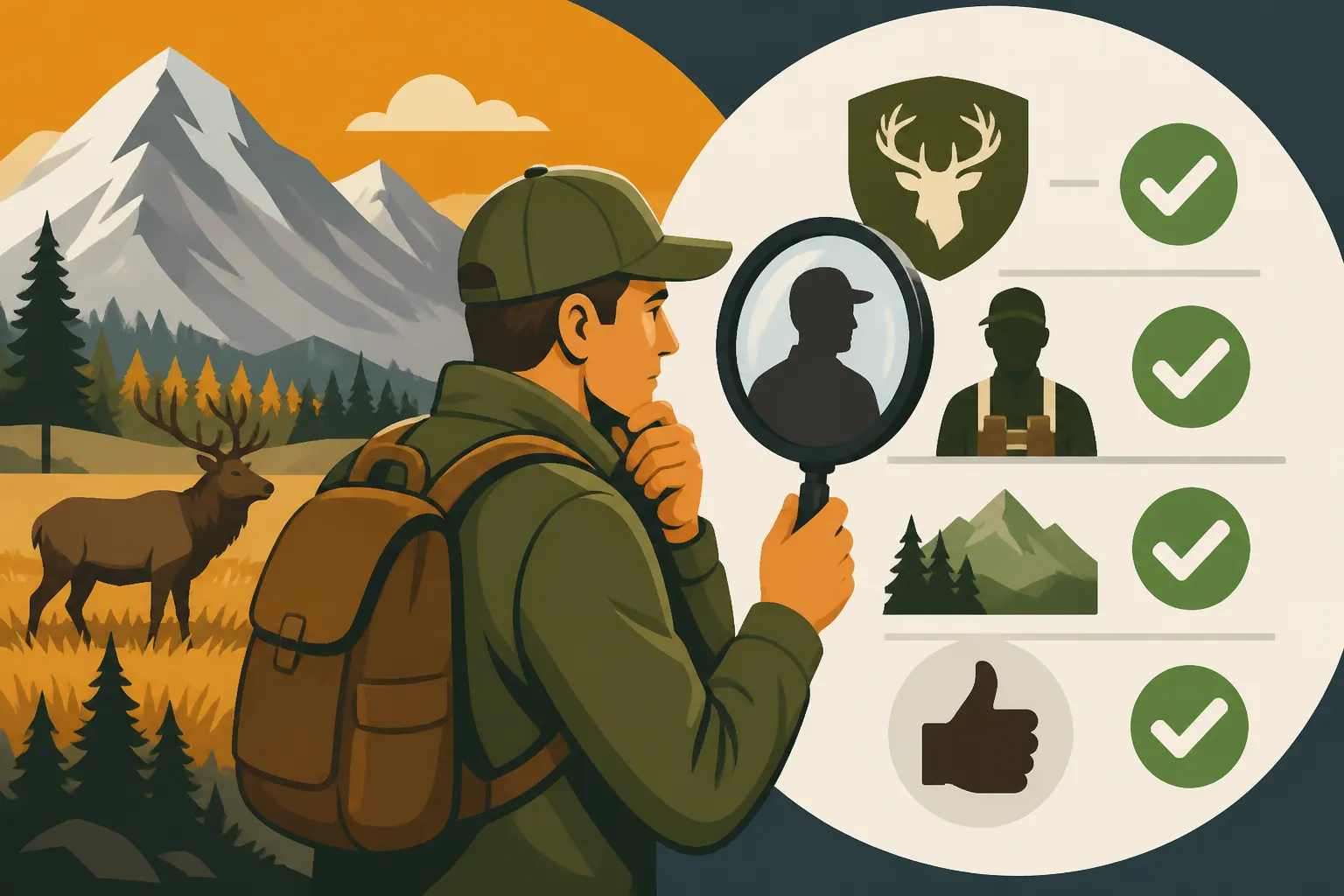
Outfitter Vetting Checklist
To help you keep track of your research, here's a handy checklist you can use:
| Category | Question / Item to Check | Yes/No/N/A | Notes |
|---|---|---|---|
| Online Research | Professional website? | Up-to-date, detailed information? | |
| Active and professional social media? | Authentic posts, positive engagement? | ||
| Consistent positive reviews on platforms like BookYourHunt? | Look for patterns, not just single reviews. | ||
| Mentions on hunting forums (e.g., GoHunt community)? | Insights from past clients. | ||
| Legal & Financial | Current Alberta outfitter license verified? | Ask for license number, verify with province. | |
| Adequate liability insurance? | Ask for proof. | ||
| Clear, written contract? | Read every clause carefully. | ||
| Detailed breakdown of included/excluded costs? | Licenses, tags, tips, CWD tests, taxidermy, etc. | ||
| Transparent deposit, payment, and cancellation policies? | Understand refund conditions. | ||
| Discussed tipping expectations? | Budget for guide and staff tips. | ||
| Guides & Camp | Guide experience and knowledge in the WMU? | Ask about specific guides you might hunt with. | |
| Hunter-to-guide ratio matches expectations? | One-on-one, two-on-one, etc. | ||
| Camp accommodations (lodge, tent, etc.) clearly described? | Heating, sleeping arrangements, facilities. | ||
| Food quality and dietary accommodation discussed? | |||
| Transportation methods and equipment condition? | Trucks, ATVs, horses – well-maintained? | ||
| Trophy and meat care protocols (field dressing, storage, shipping)? | |||
| Communication | Prompt and clear responses to inquiries? | Good communication before, during, and after. | |
| Comprehensive pre-hunt information provided? | Gear list, travel details, physical prep advice. | ||
| Willingness to provide references? | Crucial step – always call references. |
Disclaimer
This article is for general informational purposes only and does not constitute professional advice. Laws, prices and regulations vary by location and change over time. Consult a qualified professional for guidance on your specific situation.