Field Hunting Geese in Alberta Stubble
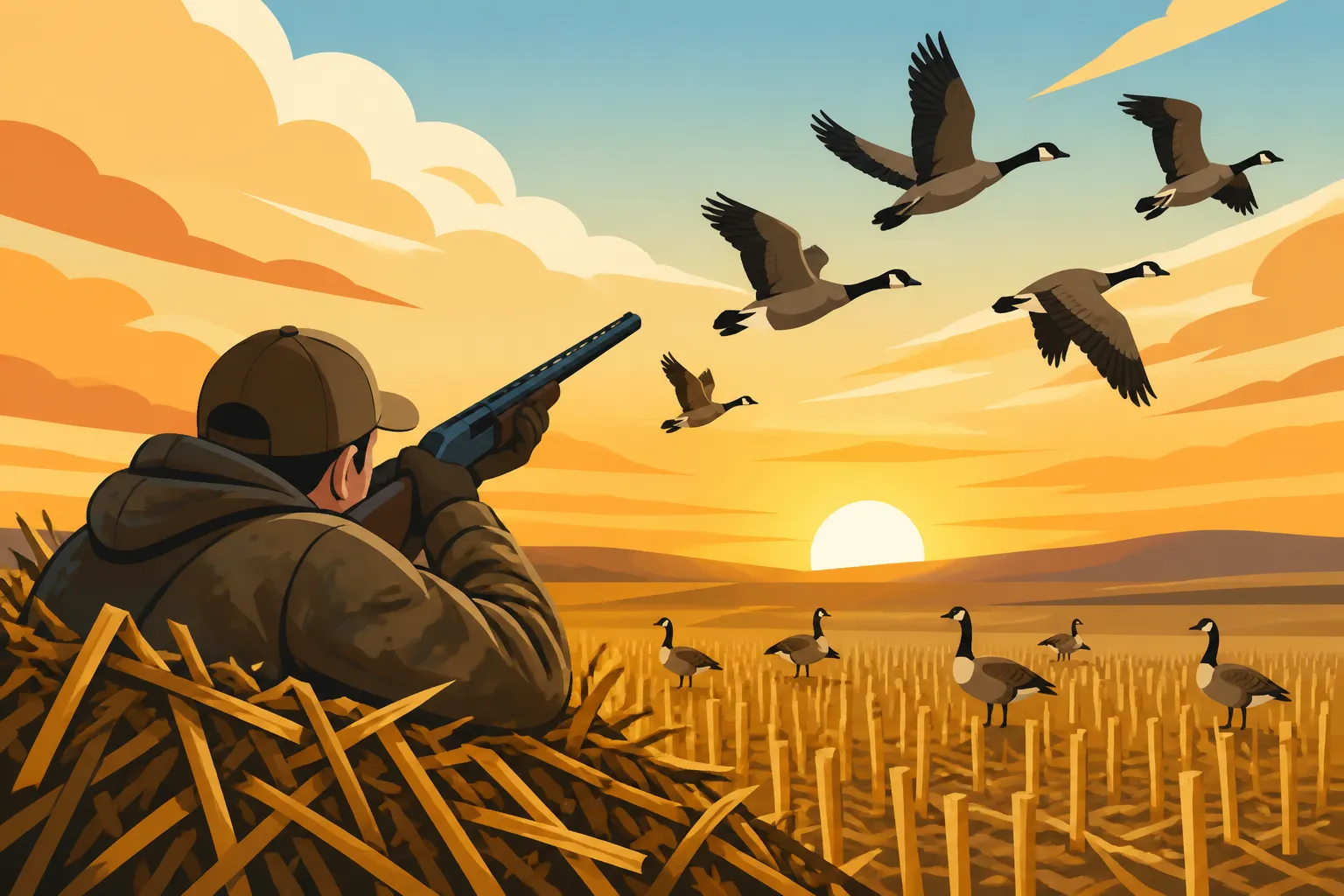
The crisp Alberta air, often filled with the distant sounds of honking geese, can be an exhilarating soundtrack for a fall hunt. But for many waterfowlers, the thought of actually getting those wary geese to cup their wings and commit to a spread in a vast stubble field is a dream that often feels out of reach. These birds are incredibly intelligent and, after a few weeks of hunting pressure, can spot a misplaced decoy or a glimmer of an unmasked face from hundreds of feet up. This comprehensive guide will walk you through the nuances of successful field hunting geese in Alberta's diverse agricultural landscape, offering practical strategies from meticulous scouting to effective decoy setups and calling techniques, helping you turn those frustrating flare-ups into unforgettable hunts.
Scouting and Field Selection for Geese
When it comes to field hunting geese in Alberta, you can have the best decoys, the most expensive calls, and the perfect shotgun, but if you're not where the birds want to be, it's all for naught. Scouting isn't just a suggestion; it's the absolute cornerstone of consistent success. Geese are creatures of habit but are also incredibly adaptable, constantly seeking the easiest meal and safest resting areas. Neglecting proper scouting is like trying to hit a moving target blindfolded.
Identifying Active Feeding Fields
The first step in a successful field hunt is to figure out where the geese are actually going to eat. They won't just land anywhere; they're looking for prime stubble, usually left over from barley, wheat, or pea crops. These fields offer readily available grain that was missed during harvest. You're looking for fresh sign: droppings that are still moist, scattered feathers, and disturbed stubble where they’ve been trampling around. Early mornings and late evenings are prime times to observe geese flying off and on to fields. Drive the backroads, watch from a distance with good optics, and pay attention to flight lines. Often, you'll see geese using the same fields for several days or even weeks until the food source is depleted or they've been pressured too much. This is a critical part of Scouting Fields for Alberta Waterfowl.
Don't just look for geese in the air; find them on the ground. A field might look good from the road, but a quick walk (with permission, of course) can reveal if it's truly being used. Look for concentrations of droppings, not just a few here and there. Geese are messy eaters, and they leave a lot of evidence. Also, note the type of stubble. Barley and pea stubble are often favourites in many regions. If you see a field with heavy goose traffic for a couple of days, chances are good they'll return, especially if the weather remains consistent. This consistent pattern is what you're trying to identify.
Understanding Goose Behavior and Patterns
Geese are intelligent birds, and their behavior is largely driven by food, water, and safety. In Alberta, you'll primarily be dealing with Canada Geese, but often Snow Geese and even Greater White-fronted Geese (specklebellies) will be mixed in or found in their own large flocks. Each species has slightly different flight patterns and comfort zones, but generally, they prefer wide-open fields where they can see predators coming from a mile away. They'll feed intensely in the morning and evening, resting on larger bodies of water or undisturbed fields during the day. Understanding these daily rhythms is crucial for timing your hunts. More detail on their specific movements can be found in a guide about Alberta Waterfowl and Migration Routes.
Their flight patterns are incredibly predictable once you find their preferred feeding grounds. They'll often fly from a specific roosting lake to a particular feeding field, sometimes taking the same flight path day after day. This is where you can intercept them. Pay attention to wind direction, as geese almost always land and take off into the wind. This knowledge will dictate your decoy spread orientation and blind placement. Pressure also plays a huge role; as the season wears on, geese become incredibly wary of human activity, turning away from fields that have been hunted heavily. That’s why securing fresh, unpressured fields is often the golden ticket.
Securing Landowner Permission
This is perhaps the most critical, yet often overlooked, aspect of field hunting in Alberta. Most prime goose hunting ground in the province is on private land, and hunting without permission is not only illegal but also incredibly disrespectful, ruining opportunities for everyone. Knocking on doors and asking for permission is an essential skill every hunter needs to master. Be polite, be respectful, and be prepared for "no." Sometimes, offering a share of the birds or helping with chores can go a long way. This dedication to Getting Permission for a Goose Field is vital for sustainable hunting and maintaining positive landowner relations.
Start by identifying the landowner of the active field. Online mapping tools, often those recommended by services like GoHunt or similar provincial land management systems, can help you find land parcel information. Present yourself well, dress neatly, and be clear about your intentions. Offer to share your contact information and ask if there are any specific rules or areas to avoid. Remember, you're building a relationship, not just asking for a one-time favour. The more respectful and responsible you are, the more likely you are to get future access. A good relationship with a landowner is more valuable than any fancy decoy spread.
Decoy Spreads and Setups
Once you’ve done your meticulous scouting and secured permission, the real artistry of goose hunting begins: setting up your decoys. This isn't just about throwing out a bunch of fake birds; it's about creating a convincing illusion that tells passing geese this field is safe, inviting, and full of their kind. A well-designed spread can pull birds in from afar, while a sloppy one will send them packing at the first sign of trouble.
Types of Decoys and Their Purpose
The world of goose decoys offers a vast array of options, each with its own advantages and ideal uses. Full-body decoys are incredibly realistic and mimic geese in various natural positions—feeding, sentry, resting. They offer excellent visibility from a distance and portray a three-dimensional depth that silhouettes can't match. However, they are bulky, expensive, and require significant effort to transport and set up, especially in large numbers. Shells, or half-shells, are a good compromise, providing some dimension but being more stackable and lighter than full bodies. They're often used to fill out a spread or as a more affordable option.
Silhouettes, on the other hand, are flat, two-dimensional decoys that are lightweight, compact, and quick to deploy. They work best on overcast days or with low sun angles where shadows aren't harsh, or when used in conjunction with other decoy types. They are fantastic for adding bulk and numbers to a spread without breaking the bank or your back. Then there are windsocks, which are essentially fabric bodies on stakes that inflate with wind, creating incredible motion and realism with minimal weight. They're particularly effective for large spreads of Snow Geese where motion is key, especially during the Snow Goose Limits and Late Seasons. The key to a successful spread often lies in a strategic combination of these types, playing to their individual strengths to create a dynamic and believable scene.
| Decoy Type | Pros | Cons | Ideal Use |
|---|---|---|---|
| Full-Body | Highly realistic, 3D presence, great visibility. | Bulky, heavy, expensive, slow to deploy. | Smaller, realistic spreads; primary attraction. |
| Shells | More compact than full-bodies, some 3D effect. | Less realistic than full-bodies, can be fragile. | Adding numbers, filling out spread. |
| Silhouettes | Lightweight, compact, quick to deploy, affordable. | 2D, less realistic up close, poor in harsh light. | Adding bulk, large spreads (especially Snows). |
| Windsocks | Excellent motion, very lightweight, affordable. | Less realistic shape, can tangle in high wind. | Large Snow Goose spreads, adding dynamic movement. |
Designing Effective Spreads for Geese
The layout of your decoy spread is critical. Geese are social birds, and they want to join a flock that looks comfortable and safe. The most common and effective spreads mimic natural feeding patterns. A U-shape or J-shape spread, with the opening downwind from your blind, is often highly effective. Geese prefer to land into the wind, right into the open "safe zone" of your spread, bringing them directly over your blinds. The "kill hole" should be within comfortable shooting range, typically 25-35 yards. Avoid placing decoys directly in front of your blinds; instead, position them to the sides and behind, guiding the birds to the landing zone.
Varying the density of your decoys can also add realism. Have some tight clusters, mimicking family groups, and some individual "loners" or pairs scattered about. Don't make everything perfectly uniform. A good spread might consist of 50-100 Canada Goose decoys for a typical hunt, but for Snow Geese, you might need hundreds, even thousands, to create the visual impact required to pull them from the sky. Remember the goal: make it look so natural that an approaching goose has no reason to suspect a thing. Proper placement, taking into account the prevailing wind and the birds' approach angle, is key to Setting a Goose Spread in Swathed Barley or any other stubble.
The Importance of Motion Decoys
Geese, like most birds, are highly attuned to movement. A spread of static decoys, especially on a calm day, can look unnatural and quickly spook wary birds. This is where motion decoys become invaluable. Flagging, using a hand-held flag to mimic a landing or feeding goose, is an old but still highly effective technique to grab attention and draw birds closer. As birds approach, even subtle flagging can make a huge difference, particularly for Hunting Specklebellies Over Decoys, which can be particularly finicky.
Motorized decoys, like spinning wing decoys designed for geese or even simple Texas-rigged full bodies that sway in the breeze, add another layer of realism. Windsocks, as mentioned, are kings of motion in larger spreads. Even strategically placed white rags on stakes can create the illusion of movement in a snow goose spread. The key is controlled, natural motion. Too much erratic movement can be as bad as no movement at all, especially with older, wiser birds. Use motion to simulate active, feeding geese, creating an irresistible invitation for passing flocks.
Calling Strategies
Calling geese isn't just about making noise; it's about having a conversation. A good caller can persuade wary birds to commit, calm them down, and even turn them when they're headed in the wrong direction. But a bad caller will send them running for the hills faster than you can say "honker." Mastering the art of goose calling is a journey, not a destination, and it takes practice and a keen ear for what the birds are saying back to you.
Mastering Basic Goose Calls
Before you can have a full-blown conversation, you need to learn the basics. The most fundamental calls for Canada Geese are the cluck, honk, and moan (or murmur). The cluck is a short, sharp note, often used to get attention or as part of a feeding chatter. The honk is the classic deep, resonant call that signals presence and communication between geese, often used by solo birds or pairs flying. The moan is a longer, softer sound, often associated with contented feeding or resting birds. Learning to produce these sounds clearly and consistently is your starting point.
Practice, practice, practice! Listen to real geese in the field, watch instructional videos, and spend time with experienced callers. A good call in the hands of an inexperienced caller is just noise. Focus on rhythm and cadence, mimicking the natural flow of goose chatter. Don't be afraid to experiment with different calls; what works for one person might not feel right for another. Start with a reliable short-reed call, like those from companies known for their durability and authentic sound, and gradually build your repertoire.
Advanced Calling Techniques
Once you've nailed the basics, you can move on to more advanced techniques that really separate the good callers from the great ones. The "hail call" is a long, loud series of honks and clucks designed to grab the attention of high-flying geese and bring them down. It's a powerful tool, but use it sparingly; too much can sound aggressive or unnatural. Another crucial technique is "feeding chatter"—a rapid, varied series of clucks and moans that mimics a contented flock on the ground. This is often what draws birds the last 100 yards into your spread.
The "comeback call" is used when geese are heading away from your spread. It's a more urgent series of honks and clucks designed to make them think they're leaving something important behind. Learning to read the birds' reactions is paramount. Are they turning? Are they looking? Are they still flying away? Adjust your calling based on what they're doing. Sometimes, less is more. When birds are cupping their wings and committed, often the best call is no call at all. It takes experience to know when to be aggressive and when to be silent. This constant adaptation is a hallmark of Rattling Volume in Open Parkland for deer, and it's no different for geese.
Reading Goose Reactions to Calls
This is arguably the most important skill in calling: understanding what the geese are telling you. Every movement, every head turn, every slight change in flight path, is a response to your calling or your spread. When high-flying birds turn their heads and start to drop altitude, you're doing something right. If they continue flying straight, ignoring you, you might need a louder, more aggressive hail call. If they flare wildly, you've likely overcalled, or they've spotted something they don't like.
Pay attention to their wingbeats. Slow, steady wingbeats often indicate comfort, while fast, frantic beats mean they're unsettled. Watch how they approach the spread. Are they flying a wide arc, giving you a suspicious glance? Or are they coming in direct, locked on? If they begin to shy away, soften your calls, or even go silent. Let the decoys do the work. If they're cupping their wings and dropping in, a soft murmur of feeding chatter might be all it takes to reassure them. Knowing when to call, what call to make, and when to shut up is the true art of goose calling.
Blinds and Concealment
No matter how good your scouting or how realistic your decoy spread, if the geese see you, the hunt is over. Geese have incredible eyesight, often compared to that of a human with binoculars. They'll spot an uncamouflaged hunter from hundreds of yards away, even from high altitudes. Effective concealment is non-negotiable for successful field hunting, especially in Alberta's wide-open stubble fields where natural cover is often scarce.
Choosing the Right Blind for Stubble Fields
For field hunting geese, specialized blinds are essential. Lay-out blinds are the most popular and often the most effective option. These low-profile blinds allow you to lie down flat in the field, becoming virtually invisible when properly brushed in. They offer excellent concealment and comfort, allowing you to stay hidden until the moment to shoot arises. Many models, like those from Avery Outdoors or Final Approach, are designed specifically for this purpose, with durable frames and comfortable padding. The best lay-out blinds are quick to set up and tear down, important for mobile hunters.
Another option, though less common for dedicated field hunts, is a panel blind or A-frame blind. These offer more upright concealment, ideal if you have some ditch lines, tree rows, or taller stubble to hide them in. They can be more comfortable for longer waits but are generally harder to conceal in open fields. Whatever blind you choose, make sure its color and pattern match the dominant stubble and soil type of the fields you'll be hunting. This will help you blend seamlessly into the background, providing the necessary stealth needed to bring in wary birds.
Maximizing Concealment
Just buying a blind isn't enough; you need to make it disappear into the landscape. This is where "brushing in" comes into play. Collect natural vegetation from the field you're hunting—stubble, weeds, whatever grows there—and secure it to your blind. The goal is to break up the outline of the blind and make it look like just another clump of natural debris. Don't skimp on this step; the more thoroughly you brush in, the more invisible you'll be. Pay particular attention to the edges and corners, as these are often the most noticeable.
Beyond the blind itself, personal concealment is also paramount. Wear camouflage clothing that matches the field conditions. Face masks, gloves, and even camouflage gun wraps can make a huge difference. Avoid shiny objects, exposed skin, or bright colors. Stay completely still when geese are approaching; even a slight movement of your head can be enough to spook them. The collective effort of yourself, your blind, and your hunting partners disappearing into the field is what will convince those educated Alberta geese to commit to your spread. This level of meticulousness is akin to Hunting Mule Deer on a Prairie Ridge, where every detail of concealment matters.
The Art of Lay-Out Blinds
Hunting from a lay-out blind is an acquired skill, but it’s one of the most effective ways to hunt geese in the stubble. The primary challenge is getting up quickly and smoothly to shoot without flaring the birds. Practice opening your blind and mounting your shotgun at home. It needs to be a fluid motion, not a jerky surprise. Position yourself so you can see approaching birds through the mesh top or small opening without lifting your head. Your gun should be easily accessible, ideally resting on the blind's gun rest.
When birds are working your spread, resist the urge to peek or move. Let your caller do their job, and only sit up when the designated "take 'em" call is made. Wait until the geese are committed, typically with their feet down or actively working the landing zone, before you rise. Sometimes, the most frustrating part is watching them circle overhead, but patience is key. The better you and your hunting partners work together—remaining still, only rising on command—the more successful your hunts will be. And remember, always keep safety in mind, knowing where your partners are and what's beyond your target.
Gear and Essential Equipment
Alberta's weather can be notoriously unpredictable, and goose hunting in stubble fields often means long hours exposed to the elements. Having the right gear isn't just about comfort; it's about safety and ensuring you can effectively execute your hunting plan. From the shotgun in your hands to the layers on your back, every piece of equipment plays a role in your success and enjoyment.
Shotguns and Ammunition Selection
For geese, a 12-gauge shotgun is almost universally recommended, offering the power and shot payload needed to consistently bring down these tough birds. Pump-action or semi-automatic shotguns are popular choices, known for their reliability in adverse conditions and quick follow-up shots. A 3-inch or 3.5-inch chamber is ideal, allowing you to use magnum loads for extended range and knockdown power. Make sure your shotgun fits you well; proper gun fit is crucial for consistent shooting, especially when rising quickly from a blind.
Ammunition choice is equally important. In Canada, federal regulations mandate the use of Non-Toxic Shot for Alberta Waterfowl. Steel shot is the most common and affordable option, but newer alternatives like bismuth or tungsten-based shots offer superior performance, better density, and more energy retention, albeit at a higher cost. For Canada Geese, typically a BB or BBB shot size is preferred, while for Snow Geese, smaller shot sizes like #2 or #1 can be effective due to the sheer volume of birds in a flock. Always match your choke tube to your ammunition and expected shooting ranges. A modified or improved modified choke is a good starting point for most field situations.
Cold Weather Gear and Layering
Hunting Alberta's stubble fields, particularly during the colder parts of the season, demands serious attention to your clothing system. You'll be lying still for extended periods, exposed to wind, cold, and sometimes even snow. The key is layering. Start with a moisture-wicking base layer to draw sweat away from your skin. Add an insulating mid-layer, such as fleece or down, to trap warmth. Your outer layer should be windproof, waterproof, and breathable camouflage, chosen to blend with the field. Investing in quality outerwear that can withstand the rigors of Alberta's climate, like that from Sitka Gear or Cabela's, will pay dividends.
Don't forget extremities. A warm hat that covers your ears is essential, as is a face mask to protect from windburn and aid in concealment. Insulated, waterproof gloves are a must, ideally with a finger that can be exposed for shooting. Your boots should be waterproof, insulated, and comfortable for walking across fields, offering good ankle support. Warm socks, possibly a thin liner sock under a thick wool sock, will prevent frostbite. Remember, being cold and miserable will significantly detract from your ability to focus and enjoy the hunt. Being prepared for Hunting Alberta Winter Weather Safely is paramount for any hunter.
Transportation and Logistics
Getting all your gear, decoys, and hunters to the field can be a significant logistical challenge, especially if you're running a large spread. A reliable truck or SUV with good ground clearance is essential for navigating potentially muddy or snowy backroads and field accesses. Consider a utility trailer for hauling large numbers of full-body decoys or blinds. Many hunters also use ATVs or side-by-sides to transport gear from the access point to the exact setup location in the field, making the process much quicker and less physically demanding.
Beyond the big items, don't forget the small essentials. A good headlamp or flashlight for setting up in the dark, a thermos of hot coffee or tea, snacks, garbage bags for spent shells and waste, and a sturdy knife are all invaluable. Ensure you have a first-aid kit, communication devices (cell phone, satellite messenger if remote), and emergency supplies. Before you leave home, double-check that you have your Federal Migratory Game Bird Permit Cost, your provincial hunting licence, and The Canadian Wildlife Habitat Conservation Stamp, all properly signed. Being organized and well-prepared will reduce stress and allow you to focus on the hunt. For detailed satellite imagery and terrain analysis, premium scouting tools such as those offered by GoHunt can give you a significant advantage in planning your logistics.
Weather and Timing Considerations
Goose hunting success is inextricably linked to the weather and the time of day. These factors influence not only goose behavior but also your own comfort and the effectiveness of your setup. Understanding how to read the weather and predict goose movements based on conditions is a crucial skill for any field hunter in Alberta.
Impact of Wind and Precipitation
Wind is perhaps the most critical weather factor in goose hunting. Geese almost always land and take off into the wind. This means the wind direction dictates where you should place your blinds and how you should orient your decoy spread. A strong, steady wind can be your best friend, as it helps bring birds down, adds motion to your decoys, and often pushes birds to lower altitudes. However, unpredictable or swirling winds can make decoying challenging, as birds might approach from unexpected angles. Always position your blinds downwind of your spread, allowing birds to finish into the wind, right into your shooting zone.
Precipitation, whether rain or snow, can also have a profound impact. Light rain or snow can often improve hunting, as it reduces visibility for the geese, making them less wary, and can sometimes push them to feed more aggressively. Heavy rain or a white-out blizzard, however, can ground birds or make hunting dangerous and unproductive. Pay close attention to the forecast, but also learn to read the immediate conditions in the field. A cold front often pushes new birds into the area, while a warm spell can make them lethargic.
Best Times of Day for Field Hunting
Geese are creatures of habit, and their daily feeding patterns are quite consistent. The vast majority of successful field hunts occur during the first few hours of daylight and the last few hours before dark. Geese will typically leave their roosting areas (large lakes, reservoirs, or major rivers) around first light to fly to their preferred feeding fields. This early morning flight often offers the best opportunities, as the birds are hungry and less pressured. Having your spread set up and being concealed well before legal shooting light is essential to intercept these first waves.
In the mid-day, after their initial feeding, geese will often return to their roosts or settle in loafing fields. While you can sometimes find birds feeding in the middle of the day, especially during very cold weather when they need more calories, it's generally less productive. The late afternoon flight, as birds leave their loafing areas to feed one last time before returning to roost, offers a second excellent opportunity. Understanding Goose Season Dates by Zone will also inform when these peak feeding times shift throughout the season as day length changes.
Adapting to Early vs. Late Season Conditions
Alberta's goose season spans several months, and conditions can change dramatically from the warm days of September to the deep freezes of November and December. Early season hunting, often around September, can mean warmer temperatures, more abundant food sources, and less wary birds. Decoy spreads might not need to be as elaborate, and calling can be more forgiving. However, weather can still be a factor, with heavy rains common.
As the season progresses into late fall and early winter, the challenges increase. Geese become incredibly educated and wary after weeks of hunting pressure. Food sources might be covered by snow or frozen, pushing birds to specific remaining open fields. Extreme cold means you'll need robust gear and a reliable way to keep your decoys free of ice and snow. Large numbers of Snow Geese, particularly during the Snow Goose Limits and Late Seasons period, can offer incredible opportunities, but they demand massive spreads and impeccable concealment. Adapting your strategies, gear, and expectations to the specific conditions of early, mid, or late season is vital for consistent success in Alberta's diverse goose hunting landscape.
Disclaimer
Hunting is an inherently dangerous activity. This guide is for informational purposes only and does not substitute for proper training, adherence to all local, provincial, and federal hunting regulations, and common sense safety practices. Always ensure you have the appropriate licenses and permits, understand firearm safety, and respect private property. The author and publisher assume no responsibility for any accidents, injuries, or legal infractions that may occur. Consult the official Alberta hunting regulations each season, as rules and dates can change.