Hunting Alberta’s Sandhill Crane Season
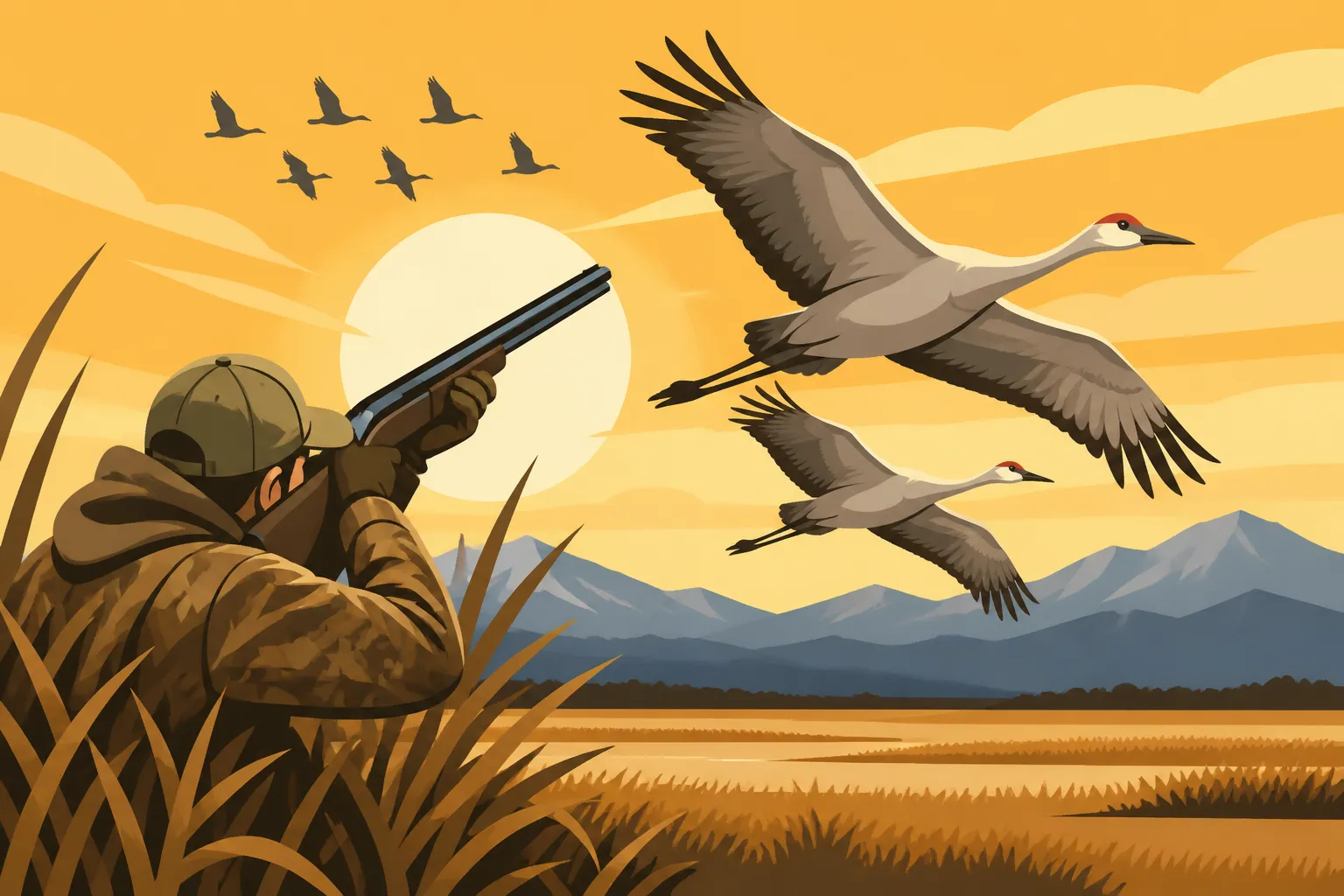
The distinct bugle of a sandhill crane is a sound that truly defines the Alberta autumn, echoing across vast grain fields and river valleys. While many hunters focus on ducks and geese, pursuing these majestic birds, often called the "ribeye of the sky," offers a unique and incredibly rewarding challenge. This comprehensive guide will walk you through everything you need to know to successfully navigate and enjoy Alberta's sandhill crane season.
Understanding Alberta's Sandhill Cranes
Hunting sandhill cranes in Alberta isn't just about showing up with a shotgun; it's about understanding these magnificent birds, their intricate migration patterns, and their unique behaviors. They're incredibly wary, smart, and often move in massive flocks, making them a formidable opponent for even seasoned waterfowlers. Their presence is a true highlight of the fall, and learning their ways is the first step to a successful hunt.
Migration Patterns and Timing
Sandhill cranes undertake incredible journeys, often breeding in Alaska, the Canadian Arctic, and northern parts of the Prairies, then migrating south through Alberta to wintering grounds in the southern U.S. and Mexico. Alberta serves as a critical staging area, particularly in the central and southern agricultural zones, where they fuel up on abundant grain before continuing their journey.
You'll start seeing early migrants by late August, but the main push, and generally the best hunting, typically occurs from mid-September through early to mid-October. The timing can vary year to year depending on weather patterns and the progression of harvest. A cold front pushing down from the north can concentrate birds, offering prime opportunities. Understanding these movements is key to being in the right place at the right time. For more general information on the feathered quarry we chase, you might want to look into topics like Alberta's Waterfowl and Migration Routes.
Preferred Habitats and Feeding Habits
Cranes are primarily ground-feeding birds, and their diet in Alberta largely consists of waste grain from harvested fields. They are particularly fond of peas, barley, and wheat, but will also readily feed in corn and potato fields. They often fly out to feed early in the morning, returning to roosting sites—large, shallow water bodies, river sandbars, or even sometimes dry stubble fields—in the late morning or early afternoon. They'll then repeat this feeding pattern in the late afternoon.
Identifying these preferred feeding fields is paramount. You'll often find them working fields that have been recently swathed or combined, where the grain is easily accessible. Unlike geese, which might feed in the same field for days, cranes can be a bit more unpredictable, often changing fields after only a day or two if they feel pressured or if food resources become scarce. This requires diligent scouting to stay on top of their movements.
Vocalizations and Social Structure
The distinctive, rattling bugle of a sandhill crane is one of the most recognizable sounds of the fall. These calls are essential to their social structure, used for communication within the flock, alerting others to danger, and during mating rituals. Hunters can use these vocalizations to their advantage, employing calls to draw birds into their decoy spreads.
Cranes are highly social birds, traveling in family groups and larger flocks. While you might see a few lone birds or pairs, they generally congregate in significant numbers, sometimes hundreds or even thousands. This social aspect influences how they react to decoys and calls; a lone crane might be more susceptible to decoying than a large, established flock, but a well-executed spread can still pull in big groups. Their keen eyesight and intelligence mean they scrutinize every detail, and any unnatural element will send them flaring out of range.
Navigating Sandhill Crane Regulations
Hunting sandhill cranes in Alberta requires careful attention to regulations. It's not just about having a valid licence; it's about understanding specific season dates, bag limits, and shot requirements to ensure you're hunting legally and responsibly. Overlooking a small detail can quickly turn a memorable hunt into a frustrating, and potentially costly, experience.
Licensing and Permits
To hunt sandhill cranes in Alberta, you'll need a few key documents. First and foremost, a valid Alberta Wildlife Identification Number (WIN) Card is essential. This is your personal identifier for all hunting and fishing activities in the province. With your WIN Card, you'll then purchase an Alberta hunting licence. For migratory birds like sandhill cranes, you'll also need to buy an Alberta Game Bird Licence.
However, since sandhill cranes are migratory birds managed federally, you also need a valid Federal Migratory Game Bird Hunting Permit and a Canadian Wildlife Habitat Conservation Stamp. These are mandatory across Canada for hunting any migratory game birds. Always carry all your licences and permits with you while hunting, as wildlife officers conduct routine checks. If you're wondering about the costs involved, you can always check out Federal Migratory Game Bird Permit Cost and Alberta Hunting Licences and What They Cost.
Season Dates and Bag Limits
Sandhill crane season dates and bag limits are set annually and can vary slightly by zone within Alberta. Generally, the season runs through September and into October in many parts of the province. It's crucial to consult the current Alberta Guide to Hunting Regulations each year, as these dates can be subject to change.
Daily bag limits typically range from 5 to 10 birds, with possession limits usually double the daily bag. These limits are in place to ensure sustainable hunting practices and healthy crane populations. It's your responsibility as a hunter to know and adhere to these limits. Exceeding them is a serious offense and can result in significant penalties. Staying informed through the official Alberta regulations, or even using digital tools like GoHunt that integrate regulation summaries, is paramount.
To give you a general idea, here's a simplified look at typical sandhill crane season dates and bag limits for Alberta. Always refer to the current year's official Alberta Guide to Hunting Regulations for precise and up-to-date information.
| Zone/Region | Season Start Date | Season End Date | Daily Bag Limit | Possession Limit |
|---|---|---|---|---|
| North/Central Zone | Early September | Mid October | 5 | 10 |
| Southern Zone | Early September | Mid October | 5 | 10 |
| WMU Specific | Varies | Varies | Varies | Varies |
Note: These are generalized dates and limits. Specific WMUs may have different regulations. Consult the official Alberta Guide to Hunting Regulations annually. For general bird season information, you can always reference Alberta Game Bird Seasons and Limits.
Non-Toxic Shot Requirements
One critical regulation for sandhill crane hunting, as with all migratory game birds in Canada, is the mandatory use of non-toxic shot. This means steel, bismuth, tungsten-matrix, or other approved non-lead alternatives are required. Lead shot is strictly prohibited for migratory bird hunting. This regulation is in place to protect wildlife from lead poisoning, as birds can ingest spent lead shot found in their feeding areas.
Failure to use non-toxic shot can result in significant fines and loss of hunting privileges. Ensure you have the correct ammunition well in advance of your hunt. While the regulations are clear, sometimes folks still forget, so it's a good reminder to check your shell box. For more specific details on what's allowed, you can delve into Non-Toxic Shot Requirements for Migratory Birds.
Essential Gear and Setup for Crane Hunting
Hunting sandhill cranes effectively requires specialized gear and a methodical approach to your setup. These birds are incredibly sharp-eyed and wary, meaning any shortcuts in your concealment or decoy spread will likely result in them flaring out of range. Don't underestimate their intelligence; they've seen it all, and a meticulous setup is your best friend.
Decoys and Spreads
Decoys are absolutely crucial for bringing sandhill cranes into range. Unlike geese, which can sometimes be lured with simple silhouettes, cranes demand realistic, full-body decoys to convince them to commit. These decoys are often larger than goose decoys and replicate the crane's distinct grey plumage and long legs. Some hunters also use motion decoys, like flags or flyers, to simulate movement in the spread, which can be highly effective.
A typical crane spread should be large and natural-looking, usually placed in a harvested grain field where you've observed birds feeding. Cranes are social, so a spread of a couple dozen decoys isn't uncommon. Arrange them in small family groups, leaving landing zones that mimic how real cranes would approach a field. Consider placing some "sentinel" decoys, standing tall and vigilant, on the upwind side of your spread, as cranes often land into the wind. When you're setting up a spread, the principles are quite similar to those for Setting a Goose Spread in Swathed Barley.
Blinds and Concealment
Given the unparalleled eyesight of sandhill cranes, superior concealment is non-negotiable. Pit blinds are arguably the most effective, as they place you completely below ground level, offering full concealment. However, digging pits isn't always feasible or permitted, especially on private land.
Layout blinds are a popular alternative, allowing hunters to lie flat in the field, blending in with the stubble. They must be meticulously brushed in with local vegetation to disappear into the surroundings. Hay bale blinds, while larger, can also be effective if they are positioned and camouflaged correctly to mimic existing farm structures. Whatever blind you choose, ensure it offers a complete, unbroken profile that blends seamlessly with the environment. Even a slight glint of metal or an unnatural shadow can send an entire flock veering away.
Firearms and Ammunition
When it comes to firearms for sandhill crane hunting, a 12-gauge shotgun is the standard choice, offering the power and shot payload needed for these large birds. Some hunters opt for 20-gauge, but the larger 12-gauge patterns better with the heavier non-toxic loads. Choke selection is important; modified or improved modified chokes are popular, providing a good balance of spread and density at typical decoying ranges.
For ammunition, remember the non-toxic shot requirement. Steel shot in sizes BB, 1, or 2 are common choices. Bismuth or tungsten-matrix loads, while more expensive, offer superior knockdown power and pattern density. Cranes are tough birds, and a clean kill requires a good pattern and sufficient energy. Practice with your chosen load before the season to understand its capabilities and ensure you're confident in your shooting.
Effective Hunting Methods and Strategies
Hunting sandhill cranes successfully hinges on a combination of diligent scouting, precise setup, and effective calling. These birds are incredibly wary, intelligent, and have exceptional eyesight, making every detail count. Simply showing up where you saw birds yesterday isn't enough; you need a well-executed plan.
Scouting for Cranes
Scouting is, without a doubt, the most critical element of a successful crane hunt. Cranes are creatures of habit but can change their minds quickly if conditions or pressure dictates. You'll need to locate where they are actively feeding, not just where they were seen flying over. This means spending time driving backroads, using binoculars and spotting scopes to observe fields at dawn and dusk.
Look for large flocks in harvested pea, barley, or wheat fields. Pay attention to their flight lines from roost to feed, as this will help you identify potential setup locations. If you're serious about finding consistent action, plan to scout several days before your hunt, and then again the evening before, to confirm current patterns. Tools like GoHunt can assist with identifying landowner boundaries and potential access routes once you've located a hot field. Knowing where the birds are going to be is half the battle won. For more on this, check out Scouting Fields for Alberta Waterfowl.
Setting Up Your Spread and Blind
Once you've identified a prime feeding field and secured landowner permission, your setup needs to be meticulous. Cranes prefer to land into the wind, so position your blind downwind of your decoy spread, creating a landing zone directly in front of you. This forces them to fly over your decoys, giving you the best shot opportunities.
Arrange your full-body decoys in natural-looking family groups, with spaces for incoming birds. Avoid rigid lines or unnatural clusters. Use plenty of decoys; a minimum of two dozen is often recommended, but more can be better. Incorporate a few "sentry" decoys standing tall to mimic wary birds. Crucially, brush in your layout blind or ground blind extensively with local stubble, dirt, and any other natural vegetation. Every seam, every shadow, and every unnatural outline needs to be hidden. Laying your blind on a track or wheel ruts can help break up its profile. Remember, you're trying to fool one of the smartest birds in the sky. If you want more tips on how to get access to the fields, take a look at Getting Permission for a Goose Field. Also, the general approach to hunting these birds is similar to Field Hunting Geese in Alberta Stubble.
Calling Techniques
Sandhill crane calls are often described as a "rattling bugle," and mastering these calls can significantly enhance your hunting success. There are various types of crane calls available, from mouth calls to larger bellows-style calls. Practice is key to mimicking the natural sounds.
The goal of calling is to attract the attention of passing flocks and reassure approaching birds that your spread is a safe place to land. Start with longer, drawn-out bugles to get their attention from a distance. As they approach, switch to shorter, more excited calls to mimic feeding birds. If birds are circling warily, softer, contented clucking sounds can help calm them and encourage them to drop their feet. Sometimes, less is more; over-calling can spook wary birds. Observe their reactions and adjust your calling intensity accordingly.
Field Care and Culinary Delights
After all the effort of scouting, setting up, and calling, the harvest is just the beginning of another important phase: field care. Properly handling your sandhill crane ensures you get the most out of this highly prized game bird. Many hunters consider crane meat a true delicacy, often dubbed the "ribeye of the sky," and for good reason.
Field Dressing and Meat Care
Once you've harvested a sandhill crane, prompt and proper field dressing is crucial, especially if hunting in warmer early season temperatures. The meat can spoil quickly if not cooled. Many hunters will breast out cranes in the field, as the breast meat is the primary culinary prize. To do this, simply locate the keel bone, make a cut along one side, and carefully peel back the breast meat. You'll be amazed at the size of these muscles!
Once the breasts are removed, place them in a cooler with ice immediately. If you plan to keep the legs, they should also be removed and cooled. Ensure the meat is kept clean and free from dirt or feathers. The goal is to get the internal temperature down as quickly as possible. Even in cooler Alberta autumns, leaving birds in the sun or piled up in a truck bed can degrade meat quality. For general advice on keeping your harvest in top condition, refer to Meat Care in Alberta's Cold and Warm Swings.
Cooking the "Ribeye of the Sky"
Sandhill crane meat is famously lean, dark, and incredibly flavourful, often compared to beef tenderloin or venison. Its robust flavour stands up well to various cooking methods, but because it's so lean, it benefits from quick cooking at high heat to prevent drying out.
Popular preparations include searing the breast whole or cut into thick steaks, grilling, or pan-frying. Many hunters marinate the meat for a few hours to add moisture and flavour before cooking. Common marinades include teriyaki, balsamic vinaigrette, or simple olive oil, garlic, and herbs. Cook to a medium-rare or medium doneness; overcooking will make the meat tough. Serve it simply with wild rice, roasted vegetables, or a rich sauce to complement its natural richness. If you've been successful Hunting Alberta's Sandhill Crane Season, you're in for a culinary treat!
Disclaimer
Please note that hunting regulations in Alberta are subject to change annually. It is the individual hunter's responsibility to consult the most current Alberta Guide to Hunting Regulations published by Alberta Environment and Protected Areas before heading into the field. This guide provides general information and should not be considered a substitute for official regulatory documents.