Hanging a Stand on an Alberta Bush Edge
There's nothing quite like the thrill of spotting a deer trail on the edge of an Alberta bush, full of fresh tracks and rubs, and knowing you've found a prime location. But the excitement often gives way to a common frustration: how do you effectively hunt this perfect spot? Hanging a stand on an Alberta bush edge is more than just strapping a platform to a tree; it's a strategic art form that requires careful planning, keen observation, and a solid understanding of deer behaviour. This guide will walk you through everything you need to know to set up a successful treestand on those elusive, game-rich bush edges.
Understanding the Bush Edge Advantage in Alberta
The "bush edge" is a magical phrase for Alberta hunters, and for good reason. It represents a transition zone, a place where the dense cover of aspen bluffs, willow thickets, or boreal forest meets more open ground like agricultural fields, pastures, or even old cutlines and clearings. These aren't just arbitrary lines in the landscape; they are crucial corridors and feeding grounds that whitetail and mule deer rely on for survival and daily routines.
Deer inherently seek security, and the dense cover of the bush provides exactly that. It's where they bed down during the day, escape from predators, and find shelter from the elements. But deer also need to eat, and often the most nutritious food sources are found in the more open areas adjacent to this cover. Think about a mature aspen bluff bordering a farmer’s golden canola field near Stettler, or a thick riparian zone of willows alongside a lush cattle pasture south of Peace River. These are classic bush edge scenarios where deer can feel safe while feeding just steps away from their bedding areas. They can quickly dart back into the security of the trees if danger presents itself, making these edges high-traffic zones, especially during low-light hours like dawn and dusk. Understanding this fundamental dynamic – the balance between security and food – is the first step to successful stand placement.
Scouting for the Perfect Stand Location
Finding a great bush edge is one thing; pinpointing the exact tree for your stand is another entirely. This is where meticulous scouting comes into play, a process that should ideally happen well before opening day. You’re looking for patterns, habits, and subtle cues that tell a story of deer movement.
Deciphering Deer Movement Patterns
When you hit a bush edge, you're not just looking for a deer trail, you're looking for the best deer trail. What constitutes the best? It's usually the trail with the freshest, most consistent sign, indicating regular use. Look for well-worn paths, freshly disturbed leaves or soil, and clear tracks. Pay close attention to rubs – saplings or small trees where bucks have scraped off bark with their antlers. Fresh rubs, especially those clustered together or leading in a specific direction, are like flashing arrows pointing to a buck's travel route. Scrapes, where bucks paw the ground, urinate, and sometimes rub overhead branches, are also crucial indicators of a buck's presence and activity, particularly as the rut approaches.
Consider how deer are using the edge. Are they traveling directly along the very edge, just inside the timber, or are there multiple trails converging into a thicker "superhighway" deeper in the bush? Often, the most productive stand locations are at natural funnels or pinch points along these edges. This could be where the bush line narrows, forcing deer into a smaller corridor, or where two trails converge into one main path. You might find a series of heavily used trails converging before crossing an old fence line, or perhaps a natural dip in the terrain that deer prefer to use when moving between two distinct bedding areas. It's all about observing and interpreting their preferred travel routes. For more specific insights into these movements, consider studying resources like Reading Whitetail Sign in Alberta Aspen Bluffs which can offer deeper understanding of how deer use different types of cover.
The Critical Role of Wind and Thermals
No matter how perfect your sign looks, if your stand location doesn't account for the wind, you're simply educating deer. Wind direction is arguably the single most important factor in stand placement, as deer rely heavily on their sense of smell to detect danger. You need to position your stand so that your scent cone blows away from where you expect deer to approach or pass. This isn't just about the prevailing wind; it's also about understanding thermals. In the morning, as the sun warms the ground, air currents typically rise, carrying your scent upwards. In the evening, as the air cools, thermals drop, pushing your scent downwards. This means a stand that's perfect in the morning might be terrible in the evening, or vice-versa.
For example, if you're hunting an edge where deer often filter out of a coulee bottom up onto a field, a morning hunt might require you to be positioned higher on the bank, letting your scent rise above the approaching deer. In the evening, as thermals pull scent down into the coulee, you might need to be on the opposite side or slightly lower, letting your scent fall away from where deer are emerging. This level of detail in wind planning is crucial. Utilize weather apps that provide detailed wind forecasts, and always confirm conditions with a wind checker once you're on site. Using mapping tools like GoHunt can help you visualize topography and how wind might behave in specific areas, allowing you to mark multiple stand locations for different wind directions.
Stealthy Entry and Exit Strategies
You've found the perfect tree, you've accounted for the wind, but if you spook deer getting to and from your stand, all your efforts are wasted. A well-planned entry and exit route is paramount to long-term success. Think like a deer: what's the path of least resistance and least detection? This often means using natural terrain features to your advantage. Walk along ditch lines, creek bottoms, or the backside of hills to stay out of sight. Avoid walking directly through known bedding areas or feeding zones.
Your approach should be as silent and scent-free as possible. Wear clean clothes, spray down with scent eliminator, and move slowly. If you're walking through a field edge, try to stick to the fenceline or the very edge of the bush, where natural vegetation might offer some cover. If you hunt a particular edge during Hunting the Rut in Early November, you'll find deer movement is even more sensitive to disturbance. When you're ready to leave, especially after an evening hunt, wait until it's completely dark or until you're sure no deer are in the immediate vicinity. Sometimes, the best strategy is to take a longer, more circuitous route that keeps you out of the prime deer habitat entirely. Planning your access with tools like GoHunt can help you visualize property boundaries and identify less intrusive paths, especially when working on Hunting a Quarter Section You Just Got where access points might be limited.
Choosing the Right Stand and Setup Strategy
Once you've zeroed in on the perfect tree, the next step is selecting the right type of stand and planning its setup. Not all stands are created equal, and what works best in one scenario might be completely ineffective in another.
Selecting the Ideal Stand for Alberta's Bush Edges
In Alberta's bush country, especially on those prized edges, hang-on stands are often the most versatile and practical choice. Unlike ladder stands, which can be cumbersome to move and set up, hang-ons are relatively lightweight and can be placed in a wider variety of trees. They also offer more flexibility in terms of height and angle. While climber stands are fantastic in areas with straight, limbless trees, Alberta’s aspen bluffs and mixed wood forests often present trees with too many low limbs or irregular trunks, making climbers less reliable. For a fixed, long-term setup, a well-secured hang-on stand is king. Brands like Summit, Lone Wolf, and Millennium all offer excellent hang-on options that are robust enough for Alberta's conditions.
When considering a hang-on, look for features like a comfortable seat for long waits, a spacious platform for stability and shooting, and quiet assembly. The choice of stand material also matters, with aluminum being lighter for packing in, though sometimes pricier than steel. For permanent stands on private land, a sturdy ladder stand might be an option if you have an open access route and a suitable tree, offering easy, quiet entry and exit. However, for most dynamic bush edge hunting, a hang-on provides the adaptability you need.
Optimal Stand Height and Shooting Lane Preparation
How high is too high? How low is too low? Finding that sweet spot for stand height is crucial. Generally, 17 to 25 feet is a good starting point for deer hunting. This height gets you above a deer's normal line of sight and helps disperse your scent more effectively. However, the specific terrain and cover will dictate the exact height. If you're overlooking a thick willow run, you might need to go higher to see over the brush. If the cover is sparse, you might need to find a taller tree that offers better concealment. Always prioritize safety and stability when choosing height.
Once your stand height is determined, you'll need to clear shooting lanes. The key here is minimalism. Only cut what is absolutely necessary to get an ethical shot from your seated and standing positions. Over-trimming creates an unnatural "hole" in the canopy that can alarm deer and eliminates natural cover for your stand. Think of it like creating narrow tunnels rather than wide-open windows. You want to be able to draw your bow or shoulder your rifle smoothly without interference, ensuring a clear shot at the vitals. Use a good set of limb trimmers, and if possible, do this well in advance of the season. This allows the scent of cut vegetation to dissipate and any visible disturbance to blend back into the natural environment. Consider how you'd manage this if you were Hunting a Willow Run in Farm Country, where the brush can be dense.
It's also a good idea to practice shooting from an elevated position at home, mirroring the angles and distances you anticipate in the field. Remember, if you're bowhunting, your Legal Bow Draw Weight in Alberta must be respected for an ethical harvest.
Prioritizing Safety: Essential Gear and Practices
I can't stress this enough: safety always comes first. Hanging a treestand, especially in a sturdy tree on an uneven bush edge, carries inherent risks. A full-body safety harness is non-negotiable. Wear it from the moment your feet leave the ground until they are back on solid earth. A lifeline, which keeps you tethered to the tree from the ground up, is also highly recommended, especially when climbing in and out of hang-on stands. Never climb without being tethered.
Before each hunt, inspect your stand, straps, and harness for any signs of wear, fraying, or damage. Carry a small first-aid kit, a whistle, and a reliable communication device. While cell service can be spotty in many of Alberta's wilder WMUs, a satellite messenger like a Garmin inReach is a wise investment, especially if you're hunting alone in remote areas. Always tell someone exactly where you're going and when you expect to be back. The peace of mind alone is worth the effort. Knowing your surroundings and having a plan for emergencies, whether you're Scouting an Alberta WMU Before Season or just heading out for a quick evening hunt, is part of being a responsible hunter.
The Art of Hanging and Concealment
Now for the hands-on part: getting that stand up and making it disappear into the landscape. This process needs to be deliberate and executed with minimal disturbance.
Step-by-Step Stand Installation for Stability
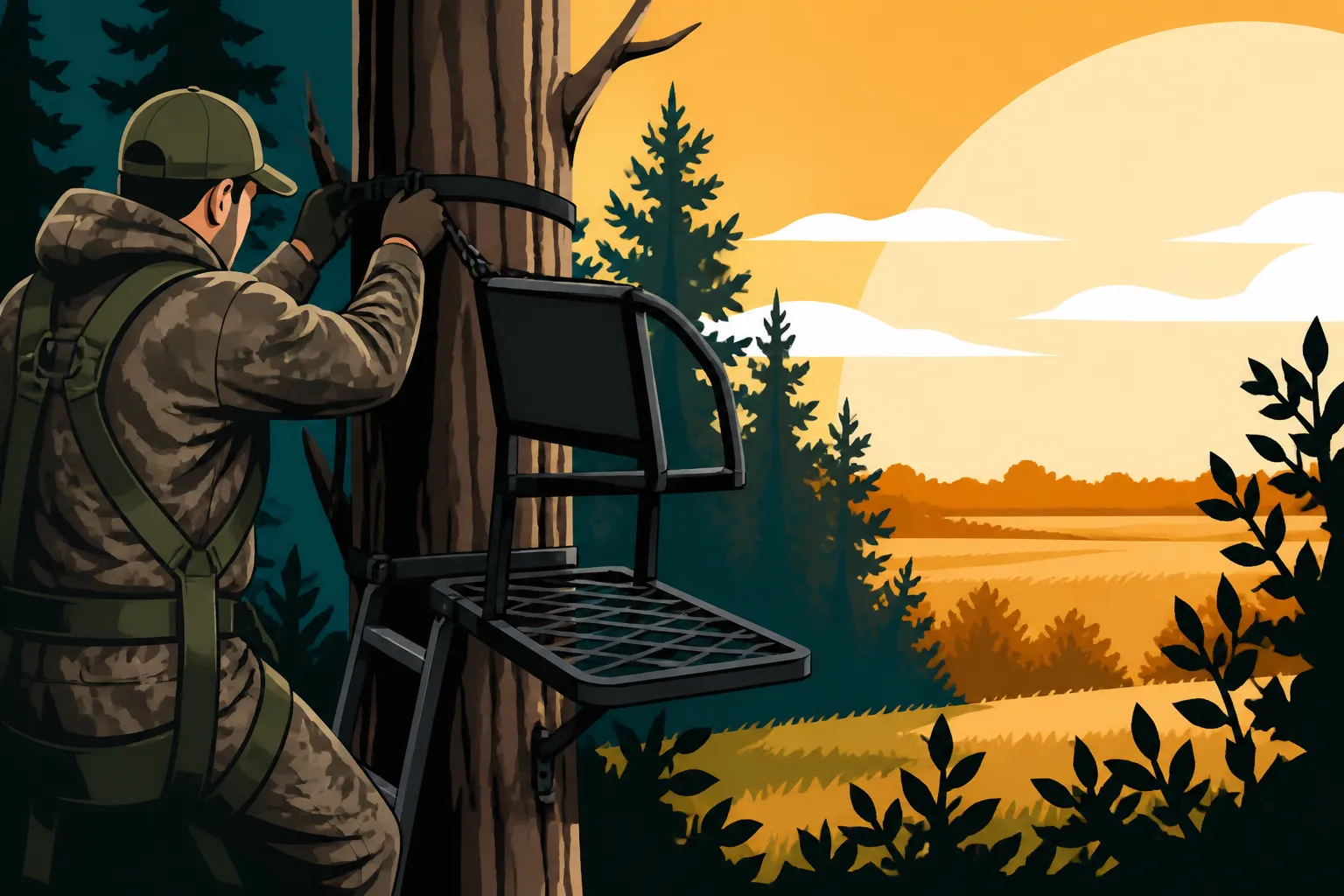
First, choose the right tree. Look for a healthy, living tree that's straight and sturdy enough to support your weight and the stand. Aspens, poplars, and some spruce or pine varieties are common in Alberta bush edges. Clear any brush or debris at the base of the tree to create a stable working area. Using a good set of climbing sticks or screw-in steps, carefully ascend the tree, ensuring each step is securely placed before moving up.
Once you reach your desired height, you’ll secure the hang-on stand. Most hang-ons attach with a ratchet strap or heavy-duty cam-buckle strap. Make sure the stand is level and incredibly secure – it should feel like an extension of the tree itself, with no wobbling or creaking. Double-check all straps and hardware. If using multiple straps, distribute the tension evenly. Remember, this is going to be your perch for hours, possibly in inclement weather, so stability is paramount. Always keep your safety harness on and tethered throughout the entire installation process. After the stand is installed, check for any areas that might creak or make noise; silence is golden in the woods.
Mastering Concealment and Breaking Up Your Silhouette
A stand, no matter how high, will stand out like a sore thumb if it's not properly concealed. The goal is to break up your silhouette and blend into the natural surroundings. This doesn't mean building a fortress; it means using the bush edge to your advantage. Look for trees with natural forks, clusters of branches, or even thick evergreen boughs that can act as natural camouflage. Sometimes, hanging your stand on the backside of a tree that has dense foliage can provide excellent cover.
If natural cover is sparse, you can enhance it by "brushing in" your stand. This involves cutting small branches and weaving them into the stand or around the tree itself. Use local vegetation like aspen leaves, willow branches, or pine boughs. Be careful not to overdo it, or you'll impede your shooting lanes or create too much visual clutter. The idea is to create an irregular outline that blends with the tree, making you look less like a hunter and more like a part of the forest. Camouflage netting can also be a discreet addition, particularly if you find yourself on a more open edge, like when you're Hunting Alberta's Aspen Parkland Bluffs. Always remember that movement will still give you away, so practice staying still.
Minimizing Scent and Disturbance During Setup
Deer have an incredible sense of smell, and they'll detect human scent long after you've left an area. When setting up your stand, treat it like an actual hunt. Wear clean clothes, use scent-free products, and avoid tracking in strong odours like gasoline or cigarette smoke. Wear rubber boots to minimize scent transfer on the ground.
Try to set up your stand well in advance of the hunting season, if possible. This allows any residual human scent to dissipate and any disturbed vegetation to settle. If you're hanging a stand closer to the season, choose a windy day to help carry your scent away, or plan your setup during the middle of the day when deer activity is generally lower. The less disturbance you create, the more confident deer will be using that bush edge. Whether you're considering Where Alberta Whitetails Bed in Deep Snow in the late season or planning for the early archery opener, minimizing your footprint during stand setup is a commitment to long-term success.
Key Considerations for Alberta's Specific Environment
Hunting in Alberta offers unique challenges and opportunities, and these should influence your stand hanging strategy. The vastness of the landscape, coupled with diverse habitats, means there's no one-size-fits-all approach.
One major consideration is the sheer amount of Crown Land available for public hunting. While private land offers control over your setups, many hunters frequent Alberta's public bush edges. This means your stand needs to be durable, potentially less conspicuous, and you need to be aware of the specific rules regarding leaving stands on public land (which is generally discouraged or requires annual removal in many areas). Always consult the Alberta hunting regulations for current rules regarding permanent structures on Crown Land. Using tools like GoHunt can help you differentiate between Crown and private land and plan your approach accordingly by using the various layers to visualize property. If you're heading into larger tracts of public land, perhaps for a Rifle Hunting Alberta's General Seasons hunt, your stand strategy might differ from a quick evening sit on a private quarter section.
Another factor is weather. Alberta weather can change on a dime, from warm fall days to sudden cold snaps. Ensure your stand and all its components are built to withstand these variations. Straps can degrade from UV exposure, and metal can rust. Regular checks are vital. Also, consider the seasonal changes in foliage; a stand well-hidden in September might be completely exposed once the leaves drop in late October. Plan your concealment with this in mind, perhaps by adding some evergreen boughs if deciduous trees dominate.
Lastly, remember the ethical considerations of hunting. This includes proper Meat Care in Alberta's Cold and Warm Swings after a successful harvest, ensuring no meat is wasted. It also means respecting property boundaries, understanding Alberta Landowner Permission Law for private land, and following all regulations for your chosen Wildlife Management Unit (WMU). Always read and understand the annual Alberta hunting regulations for specific WMU rules, which you can easily find after Reading an Alberta WMU Map Before You Go.
| Stand Type | Pros | Cons | Ideal Bush Edge Scenario |
|---|---|---|---|
| Hang-on Stand | Lightweight, versatile, portable, highly adjustable. | Requires climbing sticks/steps, can be noisy if not installed correctly. | Most common for dynamic hunting on varying tree types, short-term or semi-permanent. |
| Ladder Stand | Easy, quiet entry/exit, very stable, comfortable. | Bulky, less portable, limited to specific tree structures, more visible. | Permanent setups on private land with clear access, specific field edges. |
| Climber Stand | Highly portable, quick setup, integrated climbing. | Requires straight, limbless trees (less common on Alberta bush edges), can be noisy during climb. | Limited use in Alberta's mixed forests, best for specific, straight deciduous or pine trees. |
| Ground Blind | Excellent concealment, comfortable, can be heated. | Limited visibility, can spook deer if not brushed in well, scent control is tougher. | Thicker bush edges where suitable trees are scarce, open field corners, late season hunting. |
Disclaimer
Hunting is an inherently risky activity. The information provided in this guide is for educational purposes only and should not replace proper safety training or professional instruction. Always prioritize safety, understand and adhere to all local hunting regulations, and ensure you have the appropriate licenses and permits before heading into the field.