Bugling to a Foothills Bull Elk
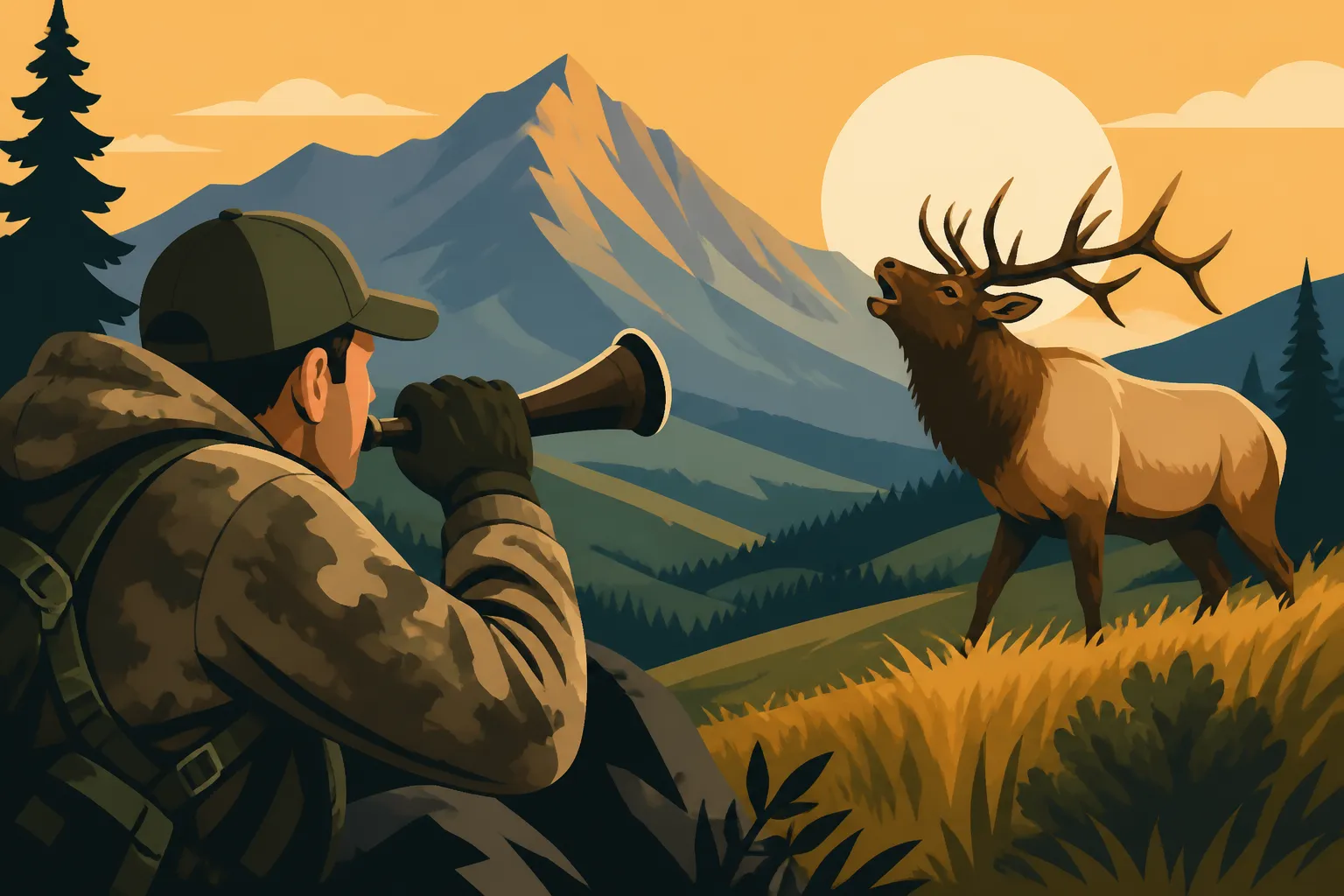
The thrill of chasing a bugling bull elk through Alberta's foothills is something truly special, but let's be honest, it can also be incredibly frustrating. You put in the scouting, you find the sign, and you let out what you think is a perfect bugle, only to be met with silence or a bull that just hangs up out of sight. This guide is all about demystifying the art of bugling for those elusive foothills elk, helping you understand their patterns, refine your calling, and increase your chances of bringing one into range in this challenging landscape.
Understanding Elk Behavior in Alberta's Foothills
Hunting elk in Alberta's vast and rugged foothills is a completely different ballgame than chasing them in open prairie or high alpine. The dense timber, steep draws, and broken country dictate how these magnificent animals live, move, and respond, especially during the breeding season.
The Dynamics of the Foothills Environment
The foothills of Alberta, stretching along the eastern slopes of the Rockies, are characterized by a mosaic of conifer and deciduous forests, clearcuts, and deep river valleys. This environment provides excellent cover, abundant food sources, and plenty of places for elk to disappear into. Unlike more open country, visibility is often limited to mere yards, which means your ears become your most valuable hunting tool. Elk here are masters of using the terrain to their advantage, often moving quietly through the timber or bedding down on benches and saddles that offer both concealment and an escape route. Understanding these natural patterns is crucial. For instance, elk often travel along existing game trails, old logging roads, or seismic lines – features you can identify using mapping tools like those offered by GoHunt, which can give you a crucial edge in finding likely travel corridors. The thick canopy and rolling hills can also muffle sound, making it harder to pinpoint a bugling bull's exact location, and even harder for your calls to carry.
The Rut and Bull Elk Vocalizations
The elk rut in Alberta's foothills typically kicks into high gear from early September into mid-October, though you can often hear some vocalizations beginning in late August and extending well into November as satellite bulls continue to search for receptive cows. This is the prime time for bugling, as bulls are actively challenging rivals and gathering their harems. Learning the language of elk is paramount to success. A bull's bugle is not just one sound; it's a complex sequence that can include a high-pitched whistle, a deep rumble or "grunt," and a series of "chuckles." The whistle often acts as a locator, announcing a bull's presence. The grunts and chuckles usually indicate agitation, challenge, or the bull's proximity to cows.
Beyond the classic bugle, cow and calf calls are equally important. A soft "mew" or "chirp" from a cow can be incredibly effective at luring in a curious bull, especially if he's not fully committed to another herd. Understanding the nuances of these calls and when to use them is the key to striking up a conversation with a bull. For deeper insights into the season, you might find our guide on Alberta Big Game Season Dates helpful, as it lays out the specific timing for various WMUs.
Mastering the Art of Bugling for Foothills Elk
Bugling isn't just about making noise; it's about communicating effectively with a wild animal in its own language, and doing it in a way that feels natural within the specific foothills environment.
Choosing the Right Calls and Techniques
When it comes to calls, most serious elk hunters carry a combination. Diaphragm calls are fantastic for their versatility, allowing for hands-free operation and realistic cow mews, chirps, and even soft bugles. Paired with an external bugle tube, they can project powerful, resonant bugles that carry well through the timber. External reed calls or "locator bugles" can also be effective, especially for reaching out over longer distances or into deep draws. The technique, however, is more important than the specific call.
In the foothills, aggressive bugling can sometimes work, especially on an equally aggressive bull or if you're trying to locate one in thick cover. However, a more nuanced approach often yields better results. Start with a locator bugle – a medium-volume, questioning bugle – to gauge interest. If you get a response, pay close attention to its tone and location. You might then transition to a challenge bugle, mimicking another bull pushing in. But don't overdo it. Sometimes, a series of soft cow mews is all it takes to pique a bull's curiosity, especially if he thinks you're a lost cow searching for the herd. Remember, the goal is to sound like an elk, not a human trying to sound like an elk. Practicing different sequences and volumes is crucial, mimicking what you'd hear from real elk.
Reading the Elk's Response and Adjusting Your Strategy
The most important part of bugling is listening. Every call you make is a question, and the elk's response is the answer. If a bull bugles back aggressively, he might be asserting dominance or challenging you. If his bugle sounds distant or fades, he could be moving away. A bull that gobbles up your bugle with his own, but doesn't seem to close the distance, might be "hung up," waiting for you to commit further.
- Distant Response: If a bull is far off, continue with locator bugles or try moving closer using the terrain for cover. Don't rush.
- Aggressive Response: If he sounds close and angry, back off the bugling slightly. Try some cow calls or soft chuckles to convince him you're a cow or a smaller bull that's not worth the fight, but still nearby.
- No Response: If you're getting no response after a few attempts, either move to a new location, change your calling sequence, or try a different type of call (e.g., a series of cow mews instead of a bugle). Elk can be pressured and might go silent.
- Moving In: The dream scenario! If a bull is clearly closing the distance, get ready. Set up for a shot, using cover, and be prepared to call sparingly – perhaps a soft chuckle or a single cow mew – to keep him coming the last few yards.
Remember, every situation is unique. A tool like GoHunt can help you analyze the topography in real-time, showing you potential routes a bull might take to circle downwind or approach your position, allowing you to anticipate his movements and set up effectively. For more details on adapting to the environment, you might consider reading about Hunting Elk in a Foothills Clearcut for specific terrain tactics.
Strategic Considerations for Foothills Bugling
Success in the foothills often boils down to more than just a good bugle; it's about how you integrate calling with smart hunting strategy, particularly regarding wind and your approach.
Wind, Topography, and Approach
In the foothills, wind is king. The swirling thermals and updrafts in valleys and over ridges can carry your scent in unpredictable directions, immediately blowing your chances. Always, and I mean always, try to approach from downwind, or at least crosswind. Pay close attention to how the wind changes throughout the day. Mornings often see thermals rising, carrying scent uphill, while evenings see them dropping, carrying scent downhill. Before you even think about calling, confirm the wind direction and use the topography to your advantage. Ridges and natural benches can serve as excellent calling platforms, allowing your sound to carry. They also offer crucial concealment as you work your way in.
When you've located a bull, your approach should be slow, quiet, and deliberate. Utilize every tree, every rise, every bit of brush for cover. Try to keep the wind in your favor as you close the distance. This often means taking a longer, roundabout path to get into an optimal calling and shooting position. Never charge straight in; elk have incredible hearing and eyesight. Remember the key is to maximize your chances when you get to a good spot. Our article on Bugling Elk in Alberta's Foothills offers further strategic advice for this exact scenario.
Combining Bugling with Other Hunting Methods
Bugling is incredibly effective, but it's rarely a standalone tactic. Often, the most successful hunts involve integrating calls with other strategies.
- Two-Person Calling Strategy: This is almost always superior to a solo hunt, especially in thick timber. One hunter, the "caller," stays back 50-100 yards, making the calls. The other hunter, the "shooter," positions themselves quietly ahead, ready for a shot. When a bull comes in, his attention is usually fixed on the sounds from the caller, providing the shooter with an opportunity to slip in undetected for a clean shot. This works wonders when a bull hangs up, searching for the source of the sound.
- Cow Calling & Chirps: Don't underestimate the power of subtle cow calls. While bugles announce a bull's presence, cow calls often pull them in, especially if they're looking for receptive females. A series of soft mews, followed by a light chuckle, can be incredibly enticing. Sometimes, if a bull is unresponsive to bugles, switching to purely cow-centric vocalizations can make all the difference.
- Spot-and-Stalk: Even the best bugler will encounter silent or uncooperative bulls. This is where observation and stealth come into play. If you've located a bull through a locator bugle but he goes silent, or if you spot a herd from a vantage point, consider switching to a spot-and-stalk approach. Using the terrain, wind, and vegetation to your advantage, try to get within bow or rifle range without being detected. This is where detailed topographic maps from a resource like GoHunt can be invaluable, helping you identify safe stalking lanes and potential ambush points. You'll want to consult our guide on Elk Hunting Alberta's Foothills for a broader view of tactics.
Common Challenges and Troubleshooting in the Foothills
Even with the best calling and strategy, elk hunting can throw curveballs. Understanding these common challenges and having a plan to address them can save a hunt.
Dealing with Hung-Up Bulls and Satellite Bulls
One of the most maddening scenarios is the "hung-up" bull. He's bugling, he's close, but he just won't commit. He'll stand just out of sight, bugling his head off, trying to get you to come to him. This is common, particularly with dominant herd bulls who expect other elk to approach their established territory. When this happens, patience is crucial.
- Go Silent: Sometimes, the best call is no call at all. Go completely silent for 15-20 minutes. The bull, expecting a response, might get curious and start moving in to investigate the quiet.
- Change Your Location (Slightly): If possible, subtly shift your position a few dozen yards. This can make the bull think the "other elk" are moving, potentially drawing him out.
- Become the Cow: Switch exclusively to soft, pleading cow calls. He might be less wary of a lone cow than another challenging bull.
- Flank Him: If you have a partner, one person can continue calling subtly to keep the bull's attention, while the other tries to circle wide to get downwind and into a shooting lane.
Then there are satellite bulls. These are often younger, smaller bulls that skirt the fringes of a herd, hoping to pick up a stray cow. They are usually more susceptible to aggressive bugles and can sometimes be called in easily. However, be wary – sometimes calling in a satellite bull can alert the dominant herd bull, who might then push his cows further away or circle to investigate, potentially busting your setup. Learn to distinguish their bugles – satellite bulls often have a less robust, sometimes "squeakier" bugle compared to a mature herd bull.
High-Pressure Areas and Educated Elk
Alberta's accessible foothills WMUs, especially closer to populated areas, often see significant hunting pressure. This creates "educated" elk that are highly wary of human activity and calling. These elk have heard it all, and they've learned to associate certain sounds and patterns with danger.
- Subtle is Better: In high-pressure areas, less is often more. Avoid overly aggressive or frequent bugling. Focus on soft, realistic cow mews and chirps. Try short, broken bugles instead of full-blown challenges.
- Patience and Persistence: These hunts demand extreme patience. You might need to sit silent for longer periods after a call, waiting for an educated bull to feel comfortable enough to respond or move. Elk in these areas often move primarily at night, becoming incredibly reclusive during daylight hours.
- Go Deeper, Go Further: If you're consistently running into wary elk, it might be time to put in the miles. Hike deeper into the backcountry, away from roads and ATV trails, to find less pressured animals. This is where advanced mapping and GPS tools like GoHunt become invaluable for navigating remote terrain and finding hidden pockets of unpressured elk. Consider what you need for Hunting Elk on Alberta's Forestry Roads or if you're exploring Hunting Alberta's September Archery Opener during peak rut.
- Focus on Wind and Stealth: Even more so than usual, unwavering attention to wind direction and silent movement are critical. One misstep, one gust of wind in the wrong direction, and your chances are gone.
Remember, elk hunting in the foothills is a marathon, not a sprint. The challenges are real, but the rewards of calling in a majestic bull are truly unforgettable.
Here's a quick look at common elk vocalizations and their potential meanings in a foothills context:
| Vocalization Type | Description | Typical Meaning | Hunter's Interpretation (Foothills) |
|---|---|---|---|
| Locator Bugle | High-pitched whistle, often followed by short grunts | "I'm here, where are you?" | Good for establishing contact; gauges bull's mood. |
| Challenge Bugle | Aggressive, often longer whistle with deep grunts | "This is my territory/cows. Stay away!" | Use with caution, can draw in or spook. |
| Chuckle | Short, guttural sounds, often after a bugle | Aggression, dominance, herding cows | Bull is agitated/close to cows. Get ready. |
| Cow Mew/Chirp | Soft, pleading, shorter vocalizations | Seeking company, contentment | Attracts curious bulls, less threatening. |
| Calf Whine | Higher-pitched, more urgent mew | Distress, lost | Can attract protective cows/bulls, but risky. |
| Roar/Bellow | Deep, powerful, drawn-out sound (less common) | Extreme challenge, rut intensity | Very aggressive bull. Approach with extreme care. |
Disclaimer
Hunting involves inherent risks, and conditions in Alberta's wilderness can change rapidly. Always prioritize safety, adhere to all provincial and federal hunting regulations, and ensure you have the necessary licenses and permits. This guide provides general information and recommendations; specific situations may require different approaches. It is your responsibility to be informed and prepared for your hunting trip.