Hunting a Big Snow Goose Spread
There's nothing quite like the sight of thousands upon thousands of snow geese descending into a field, but for many hunters, the thought of actually luring those birds into range feels utterly overwhelming. Trying to tackle such a massive undertaking without a proper plan can quickly lead to frustration and empty bags. This comprehensive guide will walk you through everything you need to know about effectively hunting a big snow goose spread in Alberta, from understanding their movements to setting up an irresistible decoy rig and executing a successful hunt.
Understanding the Snow Goose Phenomenon in Alberta
Alberta isn't just a place; it's a critical stopover and feeding ground for millions of migratory birds, and snow geese are no exception. Their sheer numbers and specific behaviors mean that hunting them effectively requires a different approach than, say, chasing ducks in a pothole.
Why Alberta is a Snow Goose Magnet
Alberta's vast agricultural landscape, particularly its endless stubble fields of barley, wheat, and peas, offers an unparalleled smorgasbord for migrating snow geese. These birds are on an epic journey from their Arctic breeding grounds to their wintering habitat in the southern United States, and they need to refuel. Alberta provides precisely what they need: abundant, high-energy food sources that allow them to put on critical fat reserves. The flat, open terrain also provides excellent visibility against predators, making these fields ideal staging areas. They move through the province in immense waves, often peaking in September and October, though early spring can also offer some incredible opportunities depending on ice-out. The consistent availability of food, combined with generally favorable weather patterns during migration, solidifies Alberta’s reputation as a prime location for snow goose hunting.
The Sheer Scale of Snow Goose Numbers
When we talk about "big" snow goose spreads, it’s not an exaggeration. These aren't small flocks of a dozen or two; snow geese travel in truly colossal numbers, often in the tens of thousands, sometimes hundreds of thousands. You might see a distant cloud on the horizon that slowly resolves into a swirling vortex of white birds, all intent on landing in the hottest field. This immense population density means they are incredibly wary. They've seen every trick in the book, and they're constantly evaluating dozens, if not hundreds, of potential landing zones. To effectively compete with the natural allure of their own kind already on the ground, your decoy spread needs to mimic that scale. A small spread of 50 or even 100 decoys simply won't cut it when you're trying to pull birds out of a sky filled with thousands more. It's about convincing them that your field isn't just good, it's the place to be – safe, full of food, and bustling with fellow geese. This demands a massive visual footprint and a sonic presence that matches their own cacophony.
Essential Gear for a Large Snow Goose Spread
Hunting snow geese effectively, especially when aiming for a large spread, demands specific gear tailored to their behavior and the environment. Skimping on quality or quantity here can be the difference between a memorable hunt and a frustrating day.
Decoy Selection and Quantity
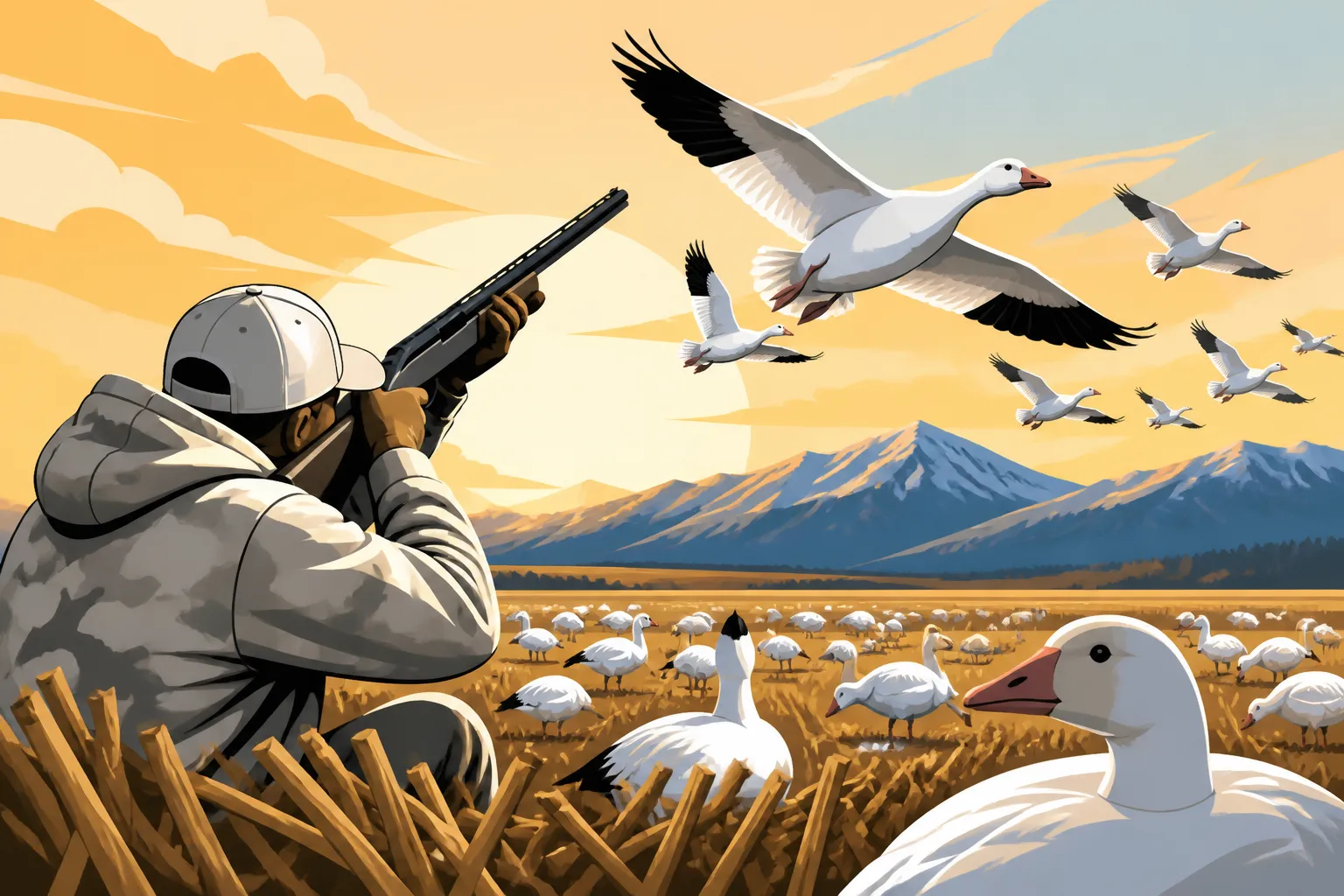
This is where the "big" in "big snow goose spread" truly comes to life. To simulate a feeding frenzy of thousands of geese, you need hundreds, if not thousands, of decoys. A typical serious snow goose spread might range from 500 to 2,000 decoys, sometimes even more for dedicated outfitters. The key is variety and motion. Full-body decoys, like those offered by Avian-X or Dakota Decoy, provide incredible realism and hold up well in various conditions, but their bulk and cost mean they're often used for the core of the kill hole or the leading edge. Wind socks are the workhorses of a big spread; they're relatively inexpensive, collapse for easy transport, and offer crucial motion with even a slight breeze. Adding a few dozen flying or "flapper" decoys, often mounted on poles, can really make your spread come alive. Rotary machines, like the SilloSock Rotator, provide constant, eye-catching movement that can be a game-changer on calm days.
The ratio of these decoy types will depend on your budget, effort tolerance, and transportation capabilities. Many hunters will build a core of 100-200 full bodies, then fill out the vast majority of the spread with 500-1000+ wind socks. These different types work together to create the illusion of a massive, active flock that’s irresistible to passing birds. Remember, it's not just about quantity; it's about the appearance of quantity and dynamic life that motion brings. For more tips on setting these up, you might want to read our guide on Setting a Goose Spread in Swathed Barley.
Blinds and Concealment Strategies
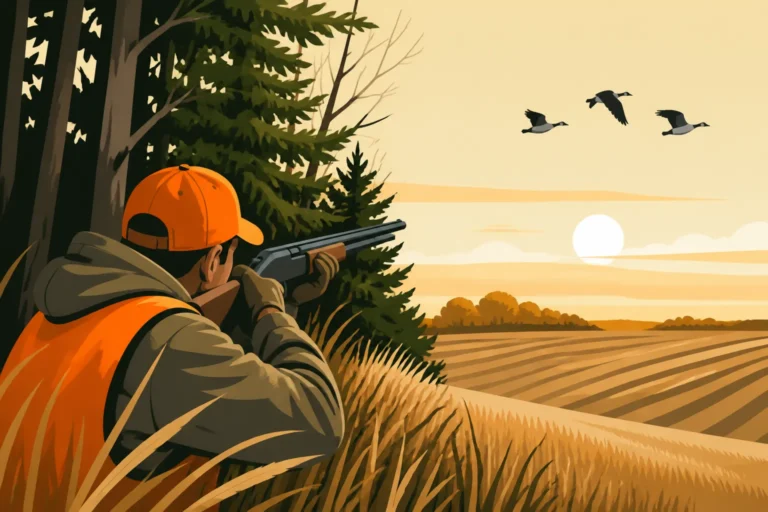
Snow geese have exceptional eyesight, and they've evolved to spot danger from high in the sky. Your concealment needs to be absolute, especially when you're dealing with hundreds or thousands of birds circling overhead. Layout blinds are the gold standard for field hunting. Brands like Avery Outdoors, Final Approach, or Tanglefree offer excellent models that are low-profile and comfortable for long waits in potentially harsh weather. You'll want to brush in your layout blinds meticulously, using natural vegetation from the field you're hunting. Stubble, dirt clods, and weeds should completely break up the outline of your blind.
Beyond the blinds, consider personal concealment. White camouflage suits are often essential, especially when hunting snow geese against a snowy or stubble background, particularly in later seasons. These suits help you disappear completely when you're outside your blind, whether you're flagging, calling, or adjusting decoys. Avoid anything shiny or reflective. Even a glint off a watch or a gun barrel can be enough to flare wary birds. The goal is to become an invisible part of the landscape, allowing the decoys and calls to do all the work of drawing the birds in. Remember that even the smallest amount of exposed dark clothing can stand out like a sore thumb against a bright white field or sky.
Calling Strategies and Electronic Calls
When dealing with thousands of birds that are constantly vocalizing, relying solely on mouth calls for a big snow goose spread is almost impossible. This is where electronic calls become absolutely essential and are legally permitted for snow geese in Alberta. Modern e-callers like the FoxPro or Lucky Duck systems can produce incredibly realistic snow goose sounds at high volumes, mimicking the deafening chatter of a massive flock. You’ll want a system with multiple speakers, strategically placed throughout your spread, to create a surround-sound effect that truly envelopes the incoming birds.
The key is not just volume, but variety and rhythm. Mix in feeding sounds, excited chatter, and aggressive squawks. Different recordings can appeal to different flock dynamics. You might start with a general feeding chatter, then switch to more excited "working" sounds as birds approach. Remote controls are crucial, allowing you to adjust volume and change sounds without spooking birds. While e-callers do the heavy lifting, don't forget the power of mouth calls for subtle, close-in finishing touches. A good mouth caller can add that personal touch, coaxing the last few wary birds into the kill hole. Understanding Calling Coyotes in Alberta Stubble offers some parallels in sound manipulation, even if the prey is very different!
Setting Up Your Big Snow Goose Spread for Success
Successfully hunting snow geese is often won or lost before a single shot is fired. The effort you put into scouting and setup directly correlates to your chances of bringing birds into the gun.
Scouting for the Perfect Field
This is arguably the most critical step in hunting snow geese. You must find the "X" – the exact field where the birds want to be. Snow geese are creatures of habit; they will return to the same feeding fields day after day until food runs out or pressure becomes too great. This usually means a stubble field, most commonly barley, wheat, or peas. Begin scouting days, or even weeks, before your hunt. Drive rural roads, use binoculars, and look for large concentrations of birds. Pay attention to flight patterns, identifying their roosting lakes or potholes and their preferred flight paths to feeding grounds.
Once you spot a working field, observe it carefully. Note which part of the field they are using, how they approach, and the prevailing wind direction. Is it a huge, unbroken expanse, or are there natural barriers like tree lines or power poles they tend to avoid? This information is gold. Once you've identified the "X," the next, equally vital step is securing landowner permission. Alberta's landowners are often generous, but it's paramount to ask respectfully and well in advance. Consider using resources like the GoHunt app or other mapping tools to identify land ownership and aid in your scouting efforts. For more detailed advice, check out Scouting Fields for Alberta Waterfowl and Getting Permission for a Goose Field.
Decoy Placement and Patterning
The way you lay out your decoys is fundamental to creating a believable illusion. A common and highly effective pattern for snow geese is a "V" or "J" shape, with the open end of the "V" facing into the wind. This creates a natural landing strip directly into the wind, which is how geese prefer to land. The "kill hole" – the open area where you want the birds to land – should be at the base of the "V" or within the curve of the "J," directly in front of your blinds. Ensure your blinds are downwind of the kill hole, so geese landing into the wind will be facing away from you, presenting optimal shot opportunities.
Mix your decoy types strategically. Place full-body decoys closer to the kill hole for maximum realism, with the less realistic (but still effective) socks and silhouettes fanning out from there. Scatter a few small groups of decoys slightly out of the main pattern to simulate stragglers or late arrivals. Crucially, pay attention to density. Create areas of higher density (tightly packed decoys) to mimic feeding hot spots, and areas of lower density to suggest movement. Add motion with a few rotary machines or flaggers placed strategically in the spread, especially on the upwind side to catch the attention of distant birds. The goal is to make the entire setup look chaotic yet inviting, just like a real snow goose feeding frenzy.
Maximizing Your Kill Hole
The kill hole is your bullseye. It needs to be the most inviting, most natural-looking landing zone in your entire spread. This isn't just an empty spot; it's a carefully crafted illusion of safety and opportunity for the geese. First, ensure it's large enough for multiple birds to feel comfortable landing. A tight little hole will make them wary. Second, make sure it’s devoid of any obstacles or anything that looks out of place. This means absolutely no visible blinds, no gear left out, and no human scent lingering.
Position a few "sentinel" decoys around the edges of the kill hole, facing different directions, as if they are watching for danger while others feed. This reinforces the idea of a safe haven. On calm days, consider adding a few decoys with open wings or even a couple of full-body geese in a landing posture right at the edge of your kill hole to convey a sense of arrival. The entire setup should funnel birds naturally into this zone, making them commit to landing right where you want them. You want them to feel so secure and confident that they drop their landing gear and glide right in, presenting easy, ethical shots.
Hunting Tactics and Adaptations
Once your spread is perfectly laid out and you're tucked into your blind, the real chess match begins. Snow geese are notoriously smart, and successful hunters are those who can adapt quickly to the birds' behavior.
Reading the Birds and Adjusting Your Spread
Snow geese rarely commit on the first pass. They'll circle, inspect, and evaluate your spread, often from high up. Your job is to read their body language and adjust accordingly. If birds are circling high and wide, not dropping altitude, it might mean they’re wary of something, or they just need more convincing. Increase your calling volume, or have your flaggers work harder. Flaggers – those folks lying in blinds, waving white flags to imitate landing birds – are invaluable. Consistent, synchronized flagging can make your spread look incredibly active and draw distant birds.
If birds start to "flare" – suddenly gaining altitude and banking away – something has spooked them. It could be movement in a blind, a glint of sun, or even a gap in your decoys. Take note and make mental adjustments for the next flock. Sometimes, a change in wind direction can completely throw off your carefully planned spread. If the wind shifts significantly, you might need to quickly re-position some decoys to maintain your landing zone into the breeze. Observation and adaptation are paramount. Understanding general Wind in Open Prairie Country is crucial for these quick adjustments.
The Importance of a Coordinated Team
Hunting a big snow goose spread is a team sport, not a solo endeavor. Communication among your hunting partners is absolutely vital for safety and success. Designate a lead caller who can direct the e-caller and coordinate mouth calling. Another person might be designated as the primary flagger, ensuring consistent and convincing motion. Before the hunt, establish clear shooting zones and rules of engagement. Who takes the lead bird? Do you all shoot on the count of three? When do you stop shooting? Clear communication prevents accidental injury and ensures ethical shots.
Having extra hands for setup and teardown is also a huge advantage. Deploying and retrieving hundreds of decoys is a monumental task, and a well-drilled team can do it efficiently. From hauling decoys into the field to helping brush in blinds and retrieving downed birds, every team member plays a crucial role. This coordination extends to safety protocols. Everyone should know where other hunters are and understand the safe shooting lanes, especially with so many birds potentially in the air at once.
Dealing with Changing Conditions
Alberta weather is notoriously fickle, and a bluebird morning can quickly turn into a blizzard. Successful snow goose hunting means being prepared for anything. Sun glare, for instance, can be a major challenge. If the sun is directly in front of the approaching birds, they might struggle to see your spread clearly or, worse, spot your blinds against the glare. Position your blinds with the sun at your back if possible, or use the terrain to your advantage to minimize direct glare.
Fog can ground birds entirely, or make them fly extremely low. While challenging, a foggy day can sometimes lead to incredible close-range shooting opportunities if you can hear them before you see them. Wind shifts, as mentioned, are common. Always have a plan for re-orienting your kill hole if the wind drastically changes direction. Bird pressure is another factor. If the same field has been hunted heavily for days, the birds might become extremely wary. Sometimes, the best tactic is to pack up and find a fresh field, even if it means more scouting. Being flexible and having a contingency plan for various weather and bird-pressure scenarios is the mark of an experienced snow goose hunter. Knowing what to expect when Hunting Alberta Winter Weather Safely is beneficial even for earlier fall hunts, as conditions can change rapidly.
Disclaimer
Hunting is an activity that carries inherent risks. Always prioritize safety, follow all local and federal hunting regulations, and respect wildlife. This guide is for informational purposes only and does not substitute professional advice or hands-on training. Ensure you have the proper licenses and permits before engaging in any hunting activity.