Hunting Elk on Alberta’s Forestry Roads
We've all been there – staring at a massive map, wondering where on earth to begin looking for elk in Alberta's sprawling forests. The sheer scale of the landscape can feel overwhelming, especially when you're trying to cover ground and understand where these elusive animals might be holding. But for many seasoned hunters, one of the most consistent ways to find elk, particularly when they're not bugling their heads off or in their typical high-country haunts, is by focusing your efforts around Alberta's extensive network of forestry roads. This guide will walk you through the nuances of hunting elk along these critical corridors, helping you understand their behavior and employ effective strategies for a successful hunt.
Understanding Elk Behavior Around Forestry Roads
Forestry roads aren't just pathways for industry; they often become integral parts of elk habitat. Understanding why elk frequent these areas is key to developing a successful hunting strategy. It's not as simple as just driving around; it's about interpreting the landscape and the animals' needs.
How Elk Utilize Road Systems for Travel and Forage
Elk are smart, adaptable creatures, and forestry roads, whether active hauling routes or overgrown seismic lines, offer distinct advantages for them. Think of a busy highway for humans versus a quiet country road. Elk often treat these roads similarly. Main arteries might be used for quick travel, especially under the cover of darkness, while quieter, less-used tracks provide pathways into denser cover or access to fresh forage.
Logging operations, while disruptive in the short term, create new clearings and areas of young growth that are prime food sources for elk. These regeneration areas, often accessed by a network of old logging roads, provide succulent browse and grasses that elk simply can't resist. You'll find them browsing along the edges of these clearings, especially during the early morning and late evening, utilizing the road for easier movement to and from bedding areas. The roads themselves can also expose mineral licks or create sunny openings that attract elk for sunning or simply moving with less effort than busting through thick timber. Sometimes, an old overgrown road becomes a natural corridor for deer and elk alike, a common phenomenon whether you're Hunting a Cutline Intersection for Whitetails or looking for bigger game.
Interpreting Elk Sign Along Road Edges
Learning to read the subtle clues elk leave behind is paramount when hunting forestry roads. It's not just about looking for fresh tracks; it's about understanding the whole picture. Tracks are the most obvious sign, of course. Look for fresh, clear hoof prints in mud or soft dirt, noting their direction of travel. Bigger prints often mean bigger animals, but don't get hung up on size; focus on freshness. Droppings can tell you a lot too – shiny, wet droppings are very fresh, indicating an animal was there recently, perhaps within the last few hours. Dry, crumbling droppings mean an older passage.
Beyond tracks and droppings, keep an eye out for rub marks on smaller trees, particularly during the rut, where bulls will thrash their antlers to remove velvet or show dominance. Fresh rubs, especially on young saplings, are a strong indicator of bull activity. Check for browsed vegetation; elk are grazers and browsers, so look for torn leaves or broken twigs at nose height. Sometimes, you'll even find fresh beds in soft earth or snow just off the road, indicating where an elk has rested. These signs are often concentrated near transitions – where thick timber meets a clearing, or where a road crosses a small creek. Pay particular attention to these "pinch points" and areas where the road offers cover on one side and food on the other.
Strategic Scouting and Planning for Road Hunting
Successful elk hunting along forestry roads is rarely about luck; it's about diligent preparation. Before you ever put boots on the ground, a significant portion of your success will be determined by how thoroughly you scout and plan your approach.
Utilizing Topographic and Satellite Maps for Pre-Season Scouting
In the vastness of Alberta's public lands, especially in areas like the foothills or boreal forest, knowing where to start is half the battle. This is where modern mapping tools truly shine. Before you ever head out, immerse yourself in topographic and satellite maps. Platforms like GoHunt, for instance, offer excellent layers that can reveal key features hidden to the naked eye. Look for areas with a high density of old logging roads, seismic lines, or active hauling routes. Overlay these with topographical features: steep ridges, creek bottoms, natural funnels, and areas of dense cover versus open clearcuts. Elk often use the path of least resistance, and roads provide just that, especially when leading to or from secluded bedding areas or prime feeding grounds.
Focus on identifying sections where roads run parallel to significant elevation changes, intersect with drainages, or lead into large blocks of mature timber that might serve as bedding cover. Notice how older, less-maintained roads might be overgrown, offering more security for elk compared to actively used routes. Satellite imagery, particularly high-resolution versions, can highlight areas of regeneration from old clearcuts, which are highly attractive to elk for forage. Look for changes in canopy density, areas with green up, or even subtle differences in vegetation color that might indicate different forage types. Cross-referencing current forestry activity maps, if available, can also give you a heads-up on recently logged areas that will soon become prime habitat. Remember, a thorough understanding of the terrain from a bird's-eye view with tools like GoHunt can save you countless hours of unproductive walking. It's an essential first step for Scouting With Satellite Imagery in Alberta.
Identifying Key Access Points and Elk Corridors
Once you've done your digital scouting, the next step is to ground-truth your findings and identify the specific access points you'll use. Alberta's forestry roads can be extensive, but not all are open or easily passable. Some may be gated, others might be washed out, and some might require a specific type of vehicle. Knowing the regulations for vehicle use on Crown land is crucial; for example, specific Public Land Use Zones (PLUZs) may have restrictions on motorized access. You can find excellent information on access and regulations by checking out resources like Alberta Forestry Road Access and Gates.
Drive or walk accessible portions of the identified roads and look for the elk sign discussed earlier. Your pre-season map study should have highlighted potential elk corridors – those natural funnels or travel routes that elk are likely to use. These often occur where a dense timber block narrows, forcing animals to funnel past a specific point on the road, or where a series of ridges or drainages naturally guides their movement. These are the spots you'll want to prioritize for hunting. Identify clearings or openings along the road that offer good visibility for spotting. Also, consider wind direction; elk typically travel and feed with the wind in their favor, so understanding prevailing winds in your chosen area will help you position yourself effectively. Look for natural windbreaks or sheltered areas that might provide thermal cover for elk during harsh weather, especially during Hunting Alberta Winter Weather Safely.
Effective Hunting Techniques on Forestry Roads
Hunting along forestry roads isn't about driving around and shooting from your truck – that's illegal and unethical. It's about using the roads strategically to access prime habitat, move quietly, and increase your chances of encountering elk.
Still-Hunting and Spot-and-Stalk Approaches
Still-hunting is one of the most productive methods when working forestry roads. This involves moving incredibly slowly and deliberately along the road or just off its edge, stopping frequently to glass, listen, and observe. Your pace should be painstakingly slow – think 20 yards in 20 minutes. At each stop, use your binoculars to scrutinize every shadow, every cluster of trees, and every distant hillside. Elk often blend in seamlessly with their surroundings, and it's amazing what you can pick out once your eyes adjust and you slow down. When moving, pay close attention to the wind direction; always try to hunt into or across the wind to prevent elk from scenting you. The rustle of dry leaves or the crunch of snow on a road can give you away quickly, so quiet footwear and a slow, deliberate cadence are essential.
When you spot elk, the game shifts to a spot-and-stalk. This is where your pre-scouting and knowledge of the terrain become critical. Can you use the topography for cover? Is there a parallel game trail or a dip in the terrain that can shield your approach? A successful stalk often means leaving the road entirely and moving through the timber, using every tree, bush, and rise as concealment. Sometimes, the road system itself can be an advantage, allowing you to quickly cover ground to get ahead of moving animals before dropping off into the bush to set up an ambush. This blend of slow, deliberate movement and rapid, strategic repositioning is what makes road hunting so dynamic. If you're hunting in the foothills, this can be combined with other tactics as detailed in Elk Hunting Alberta's Foothills.
Using Calls and Decoys Along Road Systems
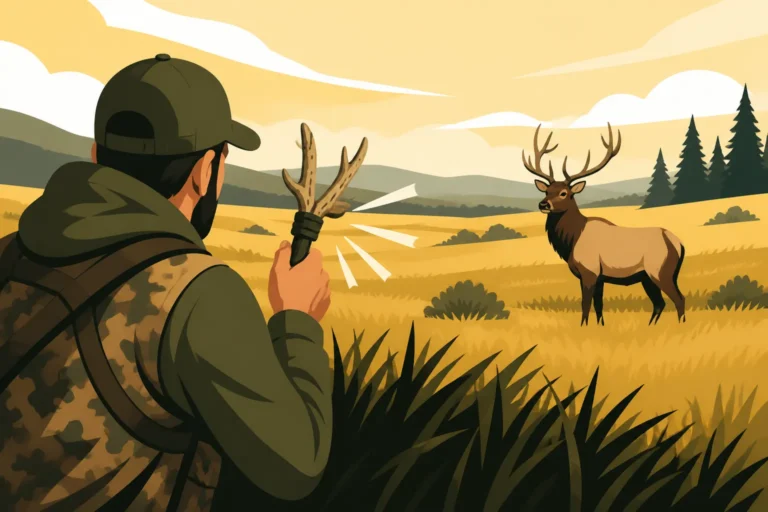
Calling can be incredibly effective when hunting elk around forestry roads, particularly during the rut. The sounds of a cow chirp or a bull bugle can travel far down a road corridor, potentially drawing in curious or territorial elk. When using calls, position yourself smartly. Don't call from the middle of the road. Instead, find a spot just off the road, preferably with some cover, that offers good shooting lanes but also allows you to disappear if an elk comes in hard. A common strategy is to set up where the road turns or crests a hill, offering limited visibility to an approaching elk, making them commit further before spotting you.
Decoys can also play a role, especially when trying to entice a wary bull that hangs up just out of sight. A full-sized elk decoy can divert an elk's attention, giving you precious moments to draw your bow or shoulder your rifle. When placing a decoy, consider wind direction and your intended shooting lanes. Remember that a decoy should always be placed away from your shooting position, never near or behind you, to ensure any incoming elk focuses on the decoy, not you. Combine calling with a decoy for maximum effect, especially if you're trying to Bugling Elk in Alberta's Foothills.
| Road Type | Characteristics | Elk Behavior Implication | Hunting Strategy |
|---|---|---|---|
| Active Hauling Road | Main, well-maintained, frequent vehicle traffic | Less daytime use, more night travel, quick crossings | Focus on dawn/dusk, glassing clearcuts, ambush points |
| Deactivated Road | Gated, overgrown, less traffic, some reclamation | Increased daytime use, more secure travel | Still-hunting, walking in, accessing deeper areas |
| Seismic Line | Narrow, straight, often overgrown, less defined | Covert travel, foraging, excellent ambush routes | Still-hunting, focus on intersections, wind control |
| Old Skid Trail | Very narrow, often very overgrown, winding | Dense cover, travel between bedding & feeding | Slow still-hunting, close quarters, reading fresh sign |
Spotting Elk in Clearcuts and Openings
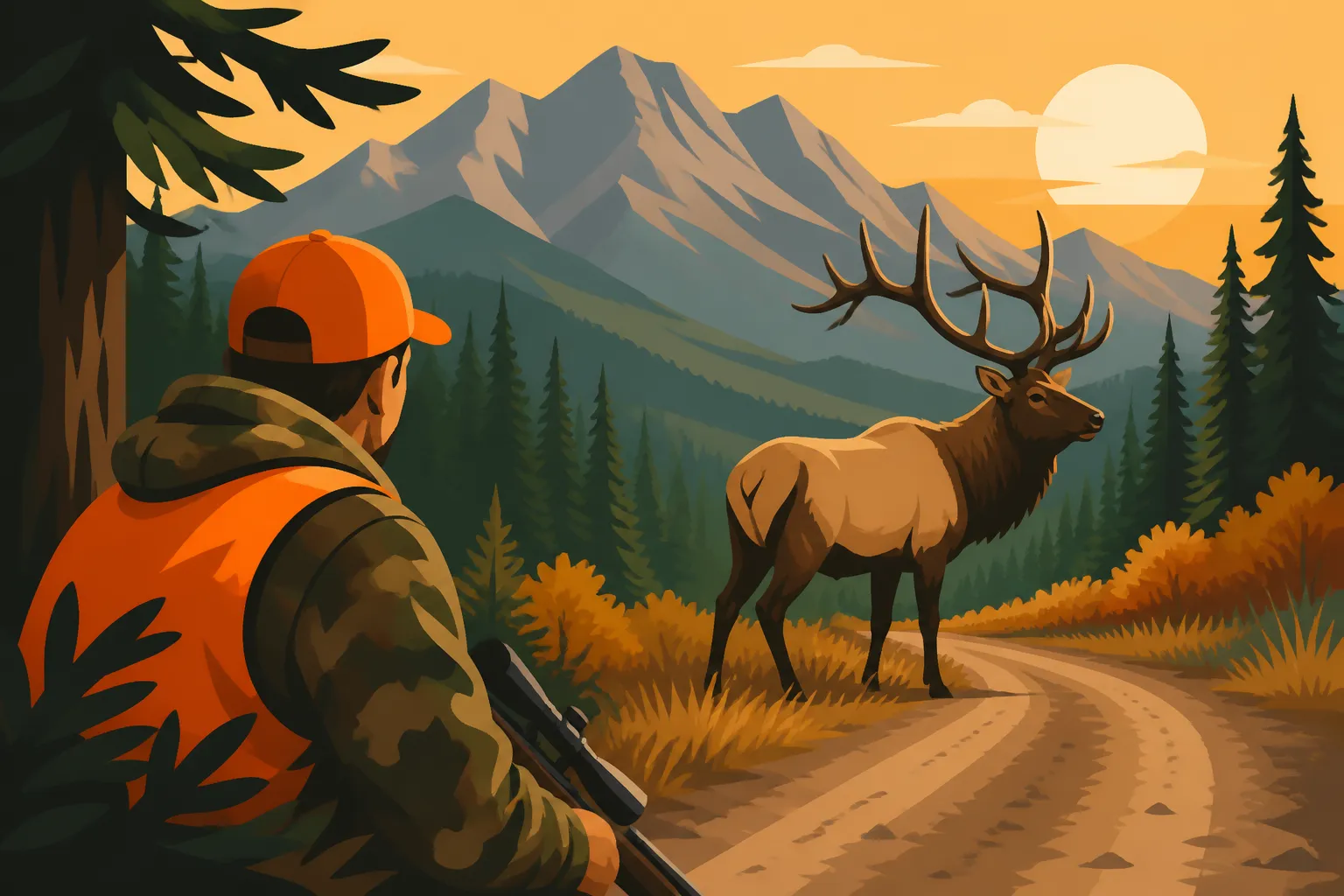
Forestry roads frequently border or lead into clearcuts and other openings created by logging. These areas are magnets for elk, especially during feeding times. Your binoculars or a spotting scope will be your best friend here. Find elevated vantage points along the road that overlook clearcuts, regenerated areas, or even distant hillsides. Set up before first light or in the late afternoon and spend significant time glassing. Don't just glance; methodically break down the landscape into grids and scan every inch. Look for any unusual shapes, colors, or movements. Elk can look like stumps or shadows, so train your eye to pick out the subtle differences.
When glassing, pay particular attention to the edges of the clearcut where it meets the standing timber. Elk often feed out into the open for a while, then retreat to the safety of the trees. Also, don't forget to look for elk bedding down in the open, especially on sunny slopes in cooler weather. They might be nestled in a patch of long grass or behind a rise, visible only through careful glassing. If you're Hunting Elk in a Foothills Clearcut, patience is key. Once spotted, assess the situation. Is a stalk feasible? What's the wind doing? Having a solid plan before you move is critical for converting a sighting into a successful harvest.
Safety and Regulations When Hunting Near Roads
Hunting along forestry roads comes with its own set of rules and safety considerations that every hunter must be keenly aware of. Alberta Fish and Wildlife officers are vigilant, and ignorance of the law is no excuse.
Understanding Alberta's Rules for Hunting from a Vehicle
This is a critical point that cannot be stressed enough: it is illegal to discharge a firearm or bow from any motor vehicle, aircraft, or boat that is under its own power. This includes ATVs, trucks, and even stopped vehicles if the engine is running or it's still considered "under its own power." The intent of road hunting is to use the road for access and travel, not as a hunting platform.
When you spot an animal from your vehicle, you must stop, turn off the engine, exit the vehicle, and then ensure you are safely away from the vehicle and any road before you consider taking a shot. Furthermore, most jurisdictions have rules about how far you must be from the centerline of a developed road to discharge a firearm. In Alberta, you cannot discharge a firearm within 183 meters (200 yards) of any occupied building or within any provincial park, without permission. The "Rules on Hunting From a Vehicle" are very strict, and penalties for violations are severe, so always err on the side of caution.
Wearing Blaze Orange and Other Safety Protocols
When hunting along forestry roads, especially those that see some level of public access, visibility is your first line of defense. Alberta's regulations stipulate that hunters must wear blaze orange, specifically a minimum of 400 square inches of solid blaze orange material visible from the front, back, and sides, including a head covering, when hunting big game during the open season. This rule applies to everyone, regardless of whether you're carrying a firearm or bow. Even if you're not directly on a main road, hunters and other recreational users may be present, making high visibility paramount.
Beyond blaze orange, always practice standard firearm safety. Treat every firearm as if it's loaded, keep the muzzle in a safe direction, keep your finger off the trigger until you're ready to shoot, and be absolutely sure of your target and what's beyond it. When Transporting Firearms Into Alberta, ensure they are properly cased and unloaded as per federal and provincial regulations. Be mindful of others using the roads – hikers, mountain bikers, other hunters, or industrial workers. A quick wave and a friendly interaction go a long way in promoting a positive image for hunters. Always have a first aid kit, extra food and water, and emergency communication devices like a satellite messenger, especially when venturing onto less-traveled roads in remote areas.
Respecting Road Closures and Industrial Activity
Alberta's forestry roads are primarily for industrial use, and timber harvesting, oil and gas operations, and other activities take precedence. You will frequently encounter gates, road closures, or active work sites. Always respect these closures and give industrial traffic the right of way. These closures are for your safety and the safety of the workers. Do not attempt to bypass gates or enter active logging areas. Not only is it dangerous, but it can also lead to fines and loss of hunting privileges.
Before heading out, check local land use plans, PLUZ maps, and forestry websites for any current road closures or restrictions in your chosen Wildlife Management Unit (WMU). GoHunt often has updated maps with these closures indicated, which is incredibly helpful. These roads are dynamic; a road that was open last week might be closed today due to weather, maintenance, or active operations. Always be prepared to adjust your plans if you encounter a closure. Ethical hunters understand that access to these lands is a privilege, and respecting the rules ensures that these areas remain open for future hunting opportunities.
Disclaimer
The information provided in this guide is for general informational purposes only and does not constitute legal advice. Hunting regulations, seasons, and access rules in Alberta can change frequently. It is the responsibility of every hunter to consult the most current Alberta Hunting Regulations, available from Alberta Environment and Protected Areas, before planning or engaging in any hunting activity. Always confirm specific rules for your chosen Wildlife Management Unit (WMU) and ensure you have all necessary licenses and permissions. Safety is paramount; always hunt ethically and responsibly.