Setting a Bear Bait Site in Alberta
Few things are more frustrating than spending hours scouting, hauling bait, and setting up a bear site, only to have it sit untouched or, worse, completely ravaged by non-target animals. It's a common struggle for hunters trying to attract bears consistently. This comprehensive guide will walk you through the nitty-gritty of successfully setting up and maintaining a bear bait site in Alberta, from choosing the right location to understanding the regulations and ethical considerations, so you can increase your odds for a successful hunt.
Choosing Your Bear Bait Site Wisely
The foundation of a successful baiting operation lies long before you ever haul the first bucket of goodies into the bush. It starts with strategic planning and scouting to pick the perfect spot.
Understanding Bear Movement and Habitat
Black bears in Alberta are creatures of habit, often following established travel corridors and frequenting areas rich in food sources. In spring, they emerge hungry, often seeking out fresh green growth in low-lying areas, south-facing slopes, or recent cutblocks. Later in the season, berries and agricultural fields become major attractions. Understanding these natural patterns is crucial. You're not just putting out bait; you're trying to intercept a bear on its regular travels or pull it slightly off its usual path with an irresistible smell. Look for areas where different habitat types converge, like the edge of dense timber meeting a creek bottom or a mature forest bordering a younger regrowth area.
A good starting point for identifying potential zones is to study topographical maps and satellite imagery. Tools like GoHunt can be incredibly helpful for this, allowing you to visualize terrain features, water sources, and potential travel corridors from the comfort of your home. You're looking for natural funnels, pinch points, or areas where historical bear sign has been observed. Remember, bears are looking for easy meals, and if your bait is convenient to their existing routes, they're far more likely to find and commit to it.
Once you have a few promising spots on the map, it's time for boots on the ground. Walk these areas, searching for bear scat, tracks, rubbed trees, and overturned rocks or logs. Pay close attention to trails, especially those leading to water or dense cover. A fresh rub on a tree or recent tracks near a berry patch can tell you that bears are actively using the area. These details are invaluable for confirming your initial theories and narrowing down your options for where to put your bait site.
Assessing Access and Safety
Access to your bait site is often an overlooked but critical factor. While you might be tempted to hike deep into the wilderness for untouched ground, consider the logistics of hauling heavy bait in and out, often multiple times a week. An ideal site is one that's somewhat secluded, offering bears a sense of security, but still reasonably accessible for you. This often means finding a balance between remoteness and practicality. You don't want to burn yourself out on the walk-in before you even get to the work of setting up.
Safety is paramount, both for yourself and for other potential land users. Ensure your chosen site is well away from public trails, campgrounds, or residential areas. You need to have a clear understanding of the land ownership and any specific regulations pertaining to that area. When setting up a bait site, always refer to the current Alberta hunting regulations, specifically the Rules on Baiting Big Game, to ensure you're in compliance. You want enough distance from roads and human activity that bears feel comfortable approaching the bait during daylight hours, but also that you're not creating a conflict with other users.
Furthermore, think about your escape routes and potential hazards. Are there any thick, nasty tangles that a bear might use to get too close for comfort without you knowing? Can you approach and leave the site quietly and discreetly, minimizing disturbance? Your bait site should allow for predictable wind patterns for your stand, clear shooting lanes, and a safe entry and exit strategy. It's not just about the bears; it's about making your entire hunting experience as safe and manageable as possible.
Scouting the Perfect Spot
Once you've identified a general area and assessed access, it's time to pinpoint the exact location for your bait barrel or pile. This involves detailed on-the-ground scouting, keeping in mind both the bear's perspective and your hunting strategy. Look for a location with good visibility from your proposed stand site, but also one that offers cover for the bear to approach comfortably. Think about the prevailing wind direction; you'll want to set up your stand downwind from the bait site so your scent doesn't blow directly to the approaching bear. This is a common challenge, as wind can be fickle, but doing your best to account for it can make a huge difference.
Consider the natural cover around the bait. Bears are often wary and prefer to approach under the cover of dense bush or treelines. A small clearing within a thicker block of timber, or an opening along a cutline, can be perfect. It allows them to feel hidden while still accessing the food. Avoid wide-open fields where they'll feel exposed and are less likely to visit during daylight hours. A good location will encourage a bear to linger, giving you time for a proper shot selection.
Finally, think about concealment for your stand and your approach. Can you easily hang a stand or build a ground blind without altering the landscape too much? Can you walk to your stand without crunching through dry leaves or breaking branches? The less disturbance you create, the more natural the area will feel to the bears. Spending an extra hour or two scouting this precise spot can literally make or break your hunt, so don't rush this critical step. Having a clear idea of your Reading an Alberta WMU Map Before You Go and knowing the specific regulations for that zone is also vital at this stage.
Setting Up Your Bait Station Effectively
Once you've chosen your prime location, the real work of setting up the bait site begins. This isn't just about dumping food; it's about creating an enticing, secure, and huntable setup.
Choosing Bait Material and Containers
The key to effective bear bait is high caloric value and a strong, lingering scent. Bears have an incredible sense of smell, and you want that aroma drifting through the woods to pique their interest from afar. Sweet, sugary, and greasy foods are excellent choices. Stale bakery goods like donuts, pastries, and bread are classic staples because they're relatively inexpensive and bears absolutely love them. Candy, especially hard candy that melts slowly, can provide a sustained attractant. You can also incorporate meat scraps, bacon grease, or even beaver carcasses (if legally allowed and sourced) for a more protein-rich offering. The smellier, the better!
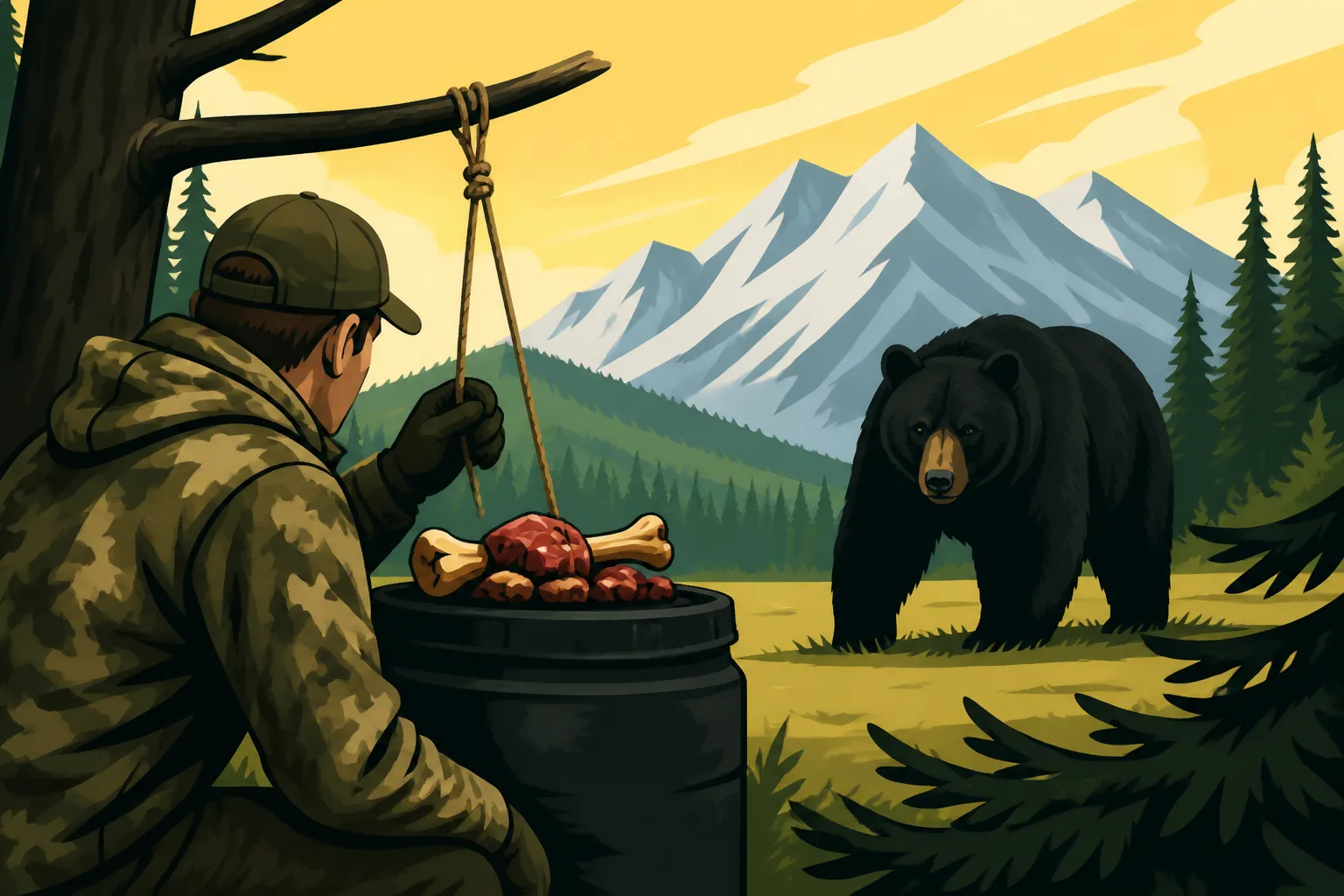
To contain your bait and prevent it from being scattered or completely devoured by smaller critters, a sturdy container is essential. The most common and effective solution is a heavy-duty steel barrel, often 45-gallon drums, chained to a tree. These barrels can be difficult for bears to completely empty, and they resist chewing from other animals like coyotes or even determined raccoons. Drill a few small holes in the bottom to allow rainwater to drain, preventing the bait from becoming a soggy mess.
Beyond the main barrel, many hunters also use a "scent bomb" — a smaller container, often a five-gallon pail with holes drilled in it, filled with particularly odorous items like rotting meat, fish guts, or strong molasses mixed with grease, hung high in a tree. This broadcasts a powerful scent plume that can draw bears from a greater distance. Remember that in Alberta, certain types of bait might be restricted in certain areas or for specific seasons, so always double-check the current regulations before deploying anything. Knowing What Bears Eat in Spring can also give you clues about natural attractants.
Securing Your Bait from Other Animals
It's a universal frustration: you put out a perfectly good bear bait, only to have raccoons, coyotes, or even deer make short work of it before a bear ever gets a sniff. Securing your bait site effectively is crucial to ensure it's still there when your target animal arrives. The aforementioned heavy-duty barrel, chained securely to a sturdy tree, is your primary defense. Use heavy chain and strong padlocks, making it as difficult as possible for anything smaller than a bear to access the bulk of the bait. Bears are incredibly strong and persistent, but raccoons and other small animals will quickly give up if the reward isn't immediate.
Beyond the main container, consider elevating some of your bait. Hanging a small bag of stale bread or a scent bomb well out of reach of deer or small predators can still allow the scent to disperse without becoming an easy meal. Some hunters even construct small, enclosed cribs from logs around their barrels, making it harder for opportunistic animals to get at the bait, while still allowing a bear to push through. The goal isn't necessarily to bear-proof it entirely, as a mature black bear will likely get into anything, but to critter-proof it against everything else.
Regular monitoring of your site will also give you clues about how well your security measures are working. If you consistently find the bait scattered or completely gone within a day or two, you might need to re-evaluate your setup. Adjusting the height of a hanging bait, strengthening your chains, or even adding another barrel can make a significant difference. It's an ongoing battle against the elements and other wildlife, but a well-secured site saves you time, money, and frustration in the long run.
Establishing a Shooting Lane and Stand Location
Once your bait is deployed and secured, the next crucial step is establishing your hunting setup. This involves clearing effective shooting lanes and choosing the optimal stand location. Start by identifying the most likely approach paths for a bear. Bears are generally predictable; they'll use the path of least resistance from cover to your bait. Clear any brush or small trees that obstruct your view or a potential shot in these approach zones and around the bait itself. You want a clear line of sight, free of branches or saplings that could deflect an arrow or bullet. Remember to trim branches with a purpose, not just clear-cutting, to maintain a natural look.
Your stand location is equally important. Whether you're using a tree stand or a ground blind, it needs to be positioned for both concealment and shot opportunity. Generally, you want to be downwind of your bait, as previously mentioned, to prevent your scent from reaching the bears. Elevated tree stands are often preferred as they get your scent higher off the ground and offer a better vantage point, reducing the chances of a bear spotting you. A height of 15-20 feet is usually adequate. Make sure your stand is rock solid and offers a comfortable, quiet sit for extended periods.
For ground blinds, ensure it's well-camouflaged and set back into natural cover. Use existing vegetation to break up your outline. Whichever method you choose, practice drawing your bow or shouldering your rifle from that exact position to ensure you have a clear, unobstructed shot at the bait. Don't forget to consider the angle of the sun at different times of the day to avoid being silhouetted or having glare in your eyes. This meticulous planning around your stand and shooting lanes drastically increases your chances of a clean, ethical shot when a bear finally commits to the bait. When you're preparing for your Black Bear Hunting in Alberta adventure, this step is paramount.
Maintaining Your Bait Site for Success
Setting up the bait is just the beginning. Consistent and smart maintenance is what truly draws bears in and keeps them coming back.
Consistency is Key: Refreshing Bait
Bears are intelligent and quickly learn when a food source is reliable. Consistency in baiting is arguably the most critical factor for success. Once you start a bait site, commit to refreshing it regularly, ideally every 2-3 days, especially in the initial stages. A bear that finds an empty bait barrel repeatedly will quickly lose interest and move on to more dependable food sources. Think of it as operating a restaurant for bears; if the doors are always open and the food is always fresh, they'll become loyal customers.
When refreshing, don't just dump more bait on top. Take a moment to stir the existing bait, releasing fresh scents, and check for signs of activity. Top up the barrel, ensuring there's a good volume of enticing food. If possible, add a fresh "starter" – something exceptionally odorous like fresh bacon grease, anise oil, or even a rotting fish – to kickstart the scent cone for the next few days. The stronger the initial smell, the more likely new bears are to pick it up as they roam.
Monitoring the consumption rate is also part of consistent refreshing. If the bait is being emptied very quickly, it's a good sign you have active bears, and you might need to increase the quantity or frequency of your drops. Conversely, if it's sitting untouched for longer periods, consider if your bait choice is appealing enough or if your site location needs re-evaluation. Consistency builds trust with the bears and conditions them to visit your site regularly. This is especially true when you're Timing an Alberta Spring Bear Hunt, as bears are emerging from hibernation and actively seeking calories.
Monitoring Activity and Sign
Every visit to your bait site is an opportunity to gather critical intelligence. Don't just dump bait and leave; take time to examine the area for fresh sign. Look for tracks around the barrel, specifically noting their size and freshness. Larger, wider tracks with clear claw marks indicate a mature bear. Scat can also tell you what they've been eating and how recently they've visited. Overturned logs, broken branches, or even claw marks on the bait barrel itself are all clues about who's been visiting.
Installing a trail camera is one of the most effective ways to monitor activity without disturbing the site. Set it up to capture images or video of the bait barrel, ensuring it's out of reach of inquisitive bears but can still get a clear shot. Trail camera footage can tell you not only if bears are visiting, but when they visit (daylight vs. nocturnal), how many bears, what size they are, and potentially even help you Judging a Boar From a Sow With Cubs. This information is invaluable for planning your actual hunt, helping you decide when to sit in your stand and what to expect.
Beyond direct bear sign, also observe other wildlife activity. Are other animals consistently raiding the bait? This might prompt you to adjust your security. Are coyotes or wolves frequenting the area? This could indicate a wider predator presence. The more you know about the ecosystem around your bait site, the better equipped you'll be to adapt your strategy and increase your chances of success. Many hunters use their trail cam data to inform their decisions on when and how to hunt specific animals, even for their Hunting Bear on a Green Cutline in June.
Dealing with Unwanted Visitors
It's inevitable: your bear bait will attract more than just bears. From raccoons and squirrels to deer and even other larger predators, unwanted visitors can be a constant headache, consuming your valuable bait and deterring your target bears. Your primary defense, as discussed, is securing your bait in heavy-duty, chained barrels. This makes it difficult for smaller animals to access the bulk of the food, forcing them to work harder for less reward.
However, sometimes larger animals like wolves or cougars might show interest. While these are also huntable species in Alberta (with the appropriate tags and seasons), if your primary goal is a black bear, they can be problematic. Bears, especially smaller ones, can be intimidated by larger predators and might avoid a site frequented by them. If you notice consistent visits from wolves or cougars on your trail camera, you might consider slightly altering your bait type (less meat, more sweets) or even taking a few days off from baiting to let them move through.
Sometimes, the best solution for unwanted visitors is to simply accept them as part of the ecosystem, as long as they aren't completely decimating your bait. Focus on keeping your primary bear bait secure and appealing enough that bears will still visit despite other animals. Regularly cleaning up the area around your bait, removing any scattered food, can also help reduce the attraction for smaller scavengers. The key is to manage the situation rather than try to eliminate every single non-bear visitor, as that's often an impossible task. This level of diligence is part of effective Wildlife Safety in Alberta Bear Country, ensuring you're aware of all animals in the vicinity.
Alberta Regulations and Ethical Considerations
Baiting bears is a privilege, and it comes with specific rules and responsibilities in Alberta. Understanding these is not just about staying legal, but also about being a responsible, ethical hunter.
Understanding the Legal Framework
Alberta has clear regulations regarding bear baiting, and it is absolutely essential to know and follow them to the letter. These regulations dictate everything from how far a bait site must be from a public road or dwelling, to the types of bait that are permissible, and specific season dates for hunting. For instance, in many areas, big game bait sites must be removed within 14 days of the close of the spring bear season. There are also rules about specific Wildlife Management Units (WMUs) where baiting may or may not be allowed, or might have special conditions.
Before you even consider setting out your first piece of bait, you must consult the current Alberta Hunting Regulations Guide, published annually by the provincial government. This guide is your bible. Don't rely on word-of-mouth or last year's rules, as regulations can change. Pay close attention to the section on "Rules for Baiting Big Game" and the specific WMU you plan to hunt. Make sure you have all the necessary licences, including your What a Black Bear Licence Costs and an Alberta Wildlife Certificate, before commencing any hunting activity related to your bait.
Ignorance of the law is not an excuse. Violating baiting regulations can lead to significant fines, loss of hunting privileges, and even confiscation of equipment. Alberta Fish and Wildlife officers take these regulations seriously to protect both wildlife and public safety. Take the time to read, understand, and adhere to every rule. This ensures a legal and enjoyable hunting experience for you and helps maintain the positive reputation of hunters in the province. Be sure to check Alberta Bear and Cougar Seasons for specific dates in your chosen WMU.
Minimizing Impact and Respecting Wildlife
As ethical hunters, we have a responsibility to minimize our impact on the environment and show respect for the wildlife we pursue. This extends beyond just following the regulations; it's about being a good steward of the land. When setting up and maintaining your bait site, aim for as little disturbance as possible. Avoid excessive clearing of brush beyond what's necessary for shooting lanes. Pack out everything you pack in – absolutely no litter should be left behind. This includes empty bait containers, food wrappers, and any other garbage. Leave the site cleaner than you found it.
Consider the type of bait you use, even if it's legally permissible. Avoid anything that could be toxic to other animals, domestic livestock, or could introduce non-native species. While bears aren't picky, aim for natural, digestible bait. After the season closes and you dismantle your site, make sure to remove all non-biodegradable materials, especially barrels and chains. Any remaining bait should be either removed or spread out to decompose naturally without attracting unwanted attention.
Respecting wildlife also means making ethical shot choices. The bait site is designed to offer a controlled environment for a clean, humane shot. Study your trail camera photos and be confident in your ability to make an ethical shot before you ever climb into your stand. If a sow comes in with cubs, do not shoot the sow. Judging a Boar From a Sow With Cubs is a skill you must master for ethical bear hunting. The goal is a quick, clean harvest, not just any bear. Our actions as individual hunters reflect on the entire hunting community, so uphold the highest standards of ethics and respect.
Safety Protocols and Best Practices
Operating a bear bait site, by its very nature, means you'll be spending time in bear country and intentionally attracting bears. Therefore, stringent safety protocols are non-negotiable. Always inform someone of your whereabouts and expected return time when you're visiting your bait site or hunting. Carry bear spray and know how to use it. A sidearm might also be considered for defense in some areas, but always be aware of legal requirements for carrying firearms for personal protection.
Approach your bait site with caution every time. Make noise as you walk in to avoid surprising a bear that might already be on the bait. Before climbing into your stand, visually scan the area carefully. Once in your stand, remain vigilant. Bears are incredibly stealthy, and they can appear silently. Avoid walking directly to your stand from your entry point; instead, take a slightly circuitous route to keep your approach less predictable.
Lastly, practice meticulous meat care immediately after a successful harvest. Field dress the animal quickly and efficiently, and remove the meat from the site as soon as possible. This minimizes the time spent handling a carcass in an active bait area and reduces the chance of attracting other bears or predators to your kill site. Always be prepared for the work that comes after the shot, especially when it comes to getting the meat out safely and promptly. Always prioritize Wildlife Safety in Alberta Bear Country and your personal well-being above all else.
Disclaimer
This information is for general guidance only. Hunting regulations, seasons, and access rules in Alberta can change frequently. Always consult the most current Alberta Hunting Regulations Guide from the provincial government and relevant land use bylaws before planning or engaging in any hunting activity.