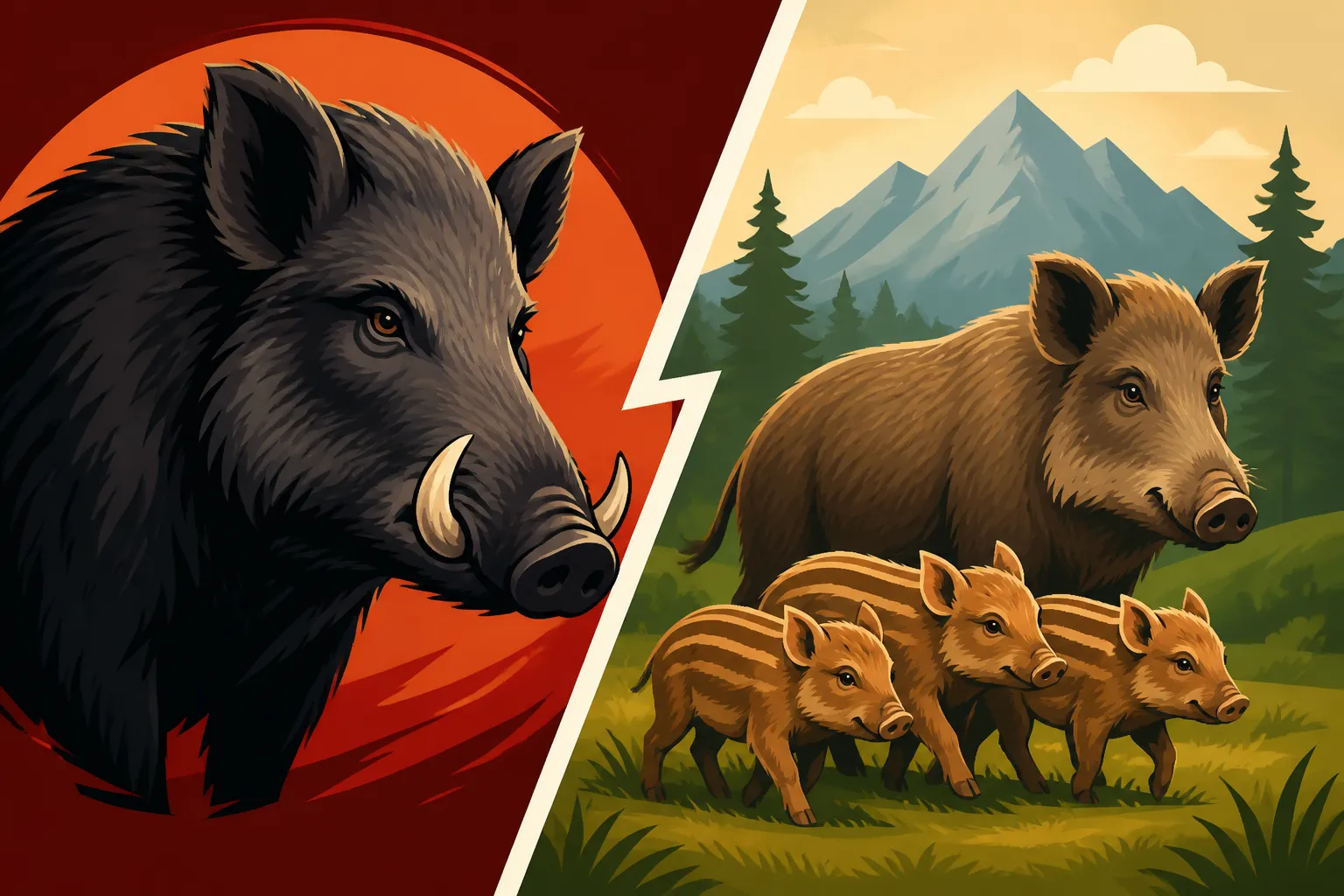
Judging a Boar From a Sow With Cubs
There's a unique thrill that comes with hunting black bears in Alberta's wild landscapes, whether you're patiently waiting over a bait site or Spring Bear Hunting Alberta's Cutblocks. But that thrill also carries a heavy responsibility, especially when it comes to correctly identifying your target. Misjudging whether you're looking at a mature boar or a sow with cubs can have profound ethical and conservation implications, and this guide is here to walk you through the essential cues to ensure you make the right call every time.
The Critical Importance of Ethical Bear Hunting
Hunting isn't just about the harvest; it's about stewardship, respect for the animal, and upholding the integrity of the sport. Nowhere is this more evident than in bear hunting, where distinguishing between sexes, and particularly identifying a sow with dependent cubs, is not just good practice but a moral imperative. Alberta's black bear population is robust, but maintaining that health requires every hunter to play their part responsibly. The deep satisfaction of a successful hunt is always intertwined with the knowledge that you've done so ethically and within the bounds of conservation principles. It's a fundamental aspect of being a responsible hunter.
Understanding Alberta's Regulations and Ethics
In Alberta, it is strictly prohibited to harvest a sow accompanied by cubs, or even a cub itself. This isn't just a guideline; it's a hard and fast rule embedded in the provincial hunting regulations, designed to protect the bear population's reproductive future. The legal ramifications of violating this rule are severe, including hefty fines, licence suspensions, and even potential jail time. But beyond the legalities, there's a deep ethical component. No true outdoorsperson wants to be responsible for orphaned cubs, which face extremely slim odds of survival without their mother. Our role as hunters is to be selective, to know our target, and to ensure we are contributing positively to wildlife management.
This ethical framework extends to our broader conduct in the field. It means taking the time to observe, to confirm, and to be absolutely certain before making any decision. Rushing a shot or taking a guess is not only dangerous but entirely antithetical to the spirit of ethical hunting. Understanding the specific nuances of bear behavior and physical characteristics is crucial for every Black Bear Hunting in Alberta expedition. It demonstrates a commitment to the animal and the ecosystem, fostering a culture of respect that benefits everyone involved in the hunting community.
The Ramifications of Misidentification
The most immediate and devastating consequence of misidentifying a sow and harvesting her is the certain demise of her cubs. Young cubs are entirely dependent on their mother for milk, protection, and crucial survival skills like foraging, climbing, and identifying threats. Without her, their chances of making it through their first year are virtually non-existent. This loss impacts not only the individual cubs but also the local bear population's recruitment rate, potentially affecting numbers in that specific area for several years. Every sow represents future generations, and her survival is key to sustained population health.
On a broader scale, repeated instances of misidentification could lead to more restrictive hunting regulations, impacting all hunters. Conservation efforts rely on accurate population data and responsible harvest practices. When ethics are compromised, public perception of hunting suffers, and the privilege to hunt can be jeopardized. Therefore, each hunter holds a piece of this collective responsibility. Knowing What a Big Black Bear Weighs might help with size estimation, but it's only one piece of the puzzle. It underlines why diligent observation and understanding bear biology are not merely suggestions but essential skills for anyone pursuing black bears in Alberta's wilderness.
Key Indicators for Identifying Boars and Sows
Successfully distinguishing a boar from a sow is a skill developed through experience, but there are fundamental physical and behavioral cues that can significantly improve your chances. It requires patience, good optics, and an understanding of bear biology. Focusing on a combination of these indicators rather than just one can provide a more reliable identification in the field, reducing the likelihood of making a mistake that could cost a sow and her cubs their lives.
Body Shape and Size: A Primary Clue
When you first spot a bear, one of the most immediate indicators is its overall body shape and size. Mature boars tend to be significantly larger and more robust than sows of similar age. Think of a boar as having a "heavyweight boxer" build – broad shoulders, a thick neck that often blends seamlessly into the head, and a generally stocky, muscular appearance. They carry more mass, especially in the forequarters, giving them a formidable presence. This bulk often makes their head appear smaller in proportion to their body.
In contrast, sows are typically more slender and feminine in their build. Their neck is usually more distinct, tapering from the body to the head, and their shoulders are less pronounced. While some older, larger sows can approach the size of a smaller boar, they rarely possess the same barrel-chested, thick-necked look. Pay close attention to the midsection as well; a sow, particularly one that has recently denned and given birth, might have a noticeable sag or looseness around her belly and flanks, even if she's not actively lactating. This can sometimes be a subtle but helpful clue when combined with other observations. Knowing how to assess these features when Hunting Bear on a Green Cutline in June can make all the difference.
| Characteristic | Boar (Male Bear) | Sow (Female Bear) |
|---|---|---|
| Overall Size | Generally larger and heavier, especially mature animals. | Typically smaller and lighter than a mature boar. |
| Body Shape | Blockier, stockier build; broad shoulders, thick neck. | More slender, often a noticeable neck between head and shoulders. |
| Head Shape | Broad, blocky, often appears smaller relative to body. | More refined, narrower, triangular appearance. |
| Ear Placement | Ears appear smaller and set wider apart on the broad head. | Ears often appear larger and more prominent relative to head. |
| Muzzle | Shorter, wider, more blunt muzzle. | Longer, narrower, more pointed muzzle. |
| Belly/Flank | Tighter, less saggy belly. | Can appear saggy or loose, especially after denning or lactation. |
| Behavior | Often solitary, confident, less alert. | May be accompanied by cubs, more vigilant, often nervous. |
| Genitalia (if visible) | Obvious male characteristics. | No visible external genitalia, or possible teats if lactating. |
Head Shape, Ears, and Muzzle Characteristics
Beyond the overall body, a bear's head provides some of the most consistent and telling features for sex identification. Boars typically have a very distinct head shape: it's broad across the forehead, often appearing blocky or square. Their ears tend to look relatively small in proportion to their large heads and are often set wider apart, appearing more to the sides of the head. Their muzzles are usually shorter and wider, giving a blunt appearance. Imagine a classic "grizzly-like" head, though we are talking about black bears here; the principle of broadness applies. This robust head structure is a hallmark of a mature male.
Sows, conversely, generally possess a more refined, narrower, and almost triangular head shape. Their ears, while still round, often appear larger relative to their smaller heads and are typically set closer together and more towards the top. The muzzle of a sow is often longer and more pointed, giving her a more delicate facial profile. When observing a bear's head, don't just glance; take your time. Look for the subtle differences in the curve of the forehead, the set of the ears, and the length-to-width ratio of the muzzle. These seemingly minor details, when observed carefully, can be critical identifiers that help you avoid mistakes when Baiting Black Bear in Alberta.
Observing Behavior and Group Dynamics
Behavior is perhaps the most obvious and critical indicator, especially the presence of cubs. Boars are overwhelmingly solitary animals, especially during the spring and early summer after they emerge from their dens. They are typically focused on foraging and establishing their dominance, and while they might tolerate other bears in resource-rich areas, they won't be seen tending to young. When a boar moves, he often does so with a confident, almost lumbering gait, less prone to nervousness or constant scanning of his surroundings unless directly threatened.
Sows, on the other hand, will either be accompanied by cubs or show definitive signs of having recently raised them. The sight of even one cub, no matter how small or large, immediately tells you it's a sow, and she is off-limits. Cubs can vary in size; first-year cubs might be tiny, but second-year cubs (yearlings) can be surprisingly large, sometimes mistaken for a small adult. Even if a sow temporarily separates from her cubs to feed, her behavior will reveal her parental status. She will be hyper-vigilant, constantly looking around, listening, and exhibiting protective instincts. She'll move cautiously and will often try to herd her cubs to safety if she senses danger. If you see a bear that appears nervous, frequently looking back or into the surrounding cover, and moving with an almost anxious energy, there's a good chance she's a sow with cubs nearby, even if you haven't spotted them yet. Always err on the side of caution. This is particularly true in areas where you might be Hunting Moose Around Alberta Beaver Ponds, as bears frequent similar habitats.
Practical Field Strategies for Positive Identification
Making a confident and ethical decision in the field requires more than just knowing the physical characteristics of bears; it demands practical application of observation skills and patience. The conditions in Alberta's diverse hunting landscapes – from dense boreal forests to open foothills – can present unique challenges. Implementing a methodical approach to identification can dramatically reduce the risk of error and ensure a responsible hunt.
Using Optics and Patience for Better Judgement
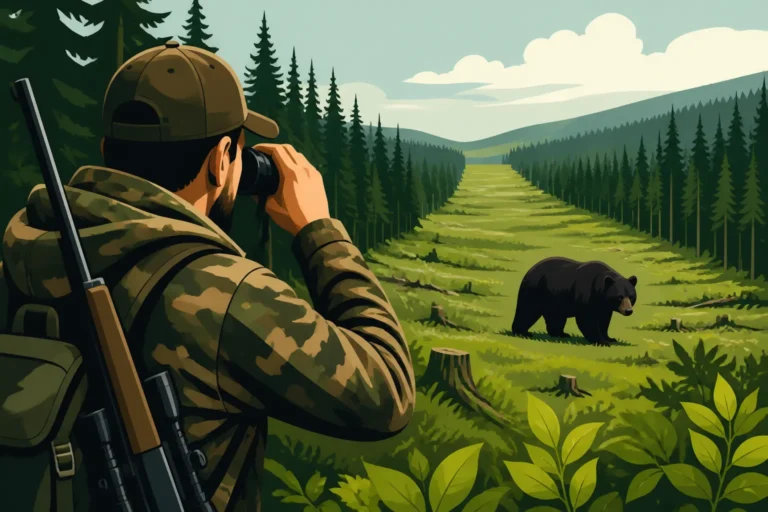
The importance of quality optics cannot be overstated when it comes to bear identification. A good pair of binoculars (10×42 or 12×50) and a spotting scope are indispensable tools. These allow you to study a bear from a safe distance, thoroughly examining its physical characteristics without alerting it. When a bear approaches a bait site or is feeding in a cutblock, resist the urge to immediately raise your rifle. Instead, grab your binos and take your time. Observe the bear from every angle possible. Wait for it to turn, stand up, or move in a way that reveals more clues. The goal isn't just to see a bear, but to see all of the bear, and observe its full range of behavior.
Let's imagine a scenario: you're set up near a bait site in the Swan Hills, and a bear emerges from the thick timber. It's a decent-sized bear, possibly a boar. Don't rush. Use your binoculars to scrutinize its head, looking for that blocky, broad forehead and small-looking ears. Watch its gait; does it move with a solitary purpose, or is it constantly scanning, perhaps making soft huffing sounds? A mature boar will often approach a bait site with a confident swagger, asserting its presence. It might stand on its hind legs to get a better look, offering a clear view of its belly and flank. Look for any signs of teats or a saggy underside, which would immediately indicate a sow. If after 15-20 minutes of observation, you're still not 100% sure, it's always best to let that bear walk. There will be other opportunities, and the ethical decision is always the right one. For planning such observations, resources like GoHunt can provide valuable satellite imagery to identify prime viewing spots around bait sites or feeding areas.
Distinguishing Cubs and Their Proximity
Understanding what constitutes a "cub" in Alberta's regulations is crucial. Generally, any bear that is dependent on its mother for survival, typically in its first or second year of life, is considered a cub. This means that yearlings, which can sometimes be nearly half the size of an adult sow, are still protected. The biggest challenge often arises when cubs are obscured by vegetation or the sow moves in such a way that the cubs are hidden. They might not always be directly at her side; sometimes, they'll trail a short distance behind, or even be up a tree while the sow feeds below.
This is where unwavering patience becomes your best friend. If you see a bear that looks like a sow, or even if you're just unsure, wait. Scan the surrounding area meticulously. Watch for any smaller movements, any rustling in the bushes, or listen for faint cub vocalizations. Cubs will often play, climb trees, or venture short distances away before returning to their mother. If you've been observing a bear for a significant period and still haven't seen any cubs, and all other indicators point to a boar, you can make a more confident decision. However, if there's any doubt, if your gut tells you something isn't quite right, or if you simply cannot get a clear, unobstructed view of the bear's entire body and its immediate surroundings, do not take the shot. An ethical shot is an informed shot, and leaving with an unfilled tag is always preferable to making an irreversible mistake. Remember, Telling a Black Bear From a Grizzly is also paramount, as grizzlies are protected in Alberta.
Advanced Tips and GoHunt Integration
Beyond direct observation, integrating pre-hunt scouting and leveraging modern tools can significantly improve your chances of ethical identification. Before the season even begins, use satellite imagery and topographical maps, perhaps through platforms like GoHunt, to identify potential bear travel corridors, feeding areas, and dense cover where sows might seek refuge with cubs. This allows you to set up observation points strategically and know what to expect in a given area. When Setting a Bear Bait Site in Alberta, consider placing trail cameras. These invaluable tools capture countless hours of footage, allowing you to study individual bears, track their patterns, and, most importantly, confirm whether a specific bear is a boar or a sow with cubs before you even step foot in your stand. Reviewing this footage repeatedly can help you recognize subtle differences that are harder to spot in real-time.
For those engaging in Spot-and-Stalk Mule Deer in Alberta (or bear, in this case), using a rangefinder with angle compensation can help you maintain distance and evaluate size accurately. Also, consider the timing of your hunt. Early spring bears, particularly boars, are often the first to emerge from dens, making identification slightly easier. As the season progresses, more sows with cubs become active. Being aware of When Bears Come Out of the Den helps anticipate what you might encounter. Always remember to check Reading an Alberta WMU Map Before You Go and research the specific Wildlife Management Unit (WMU) you are hunting in. Some WMUs may have different bear densities or specific regulations that could influence your strategy. Utilizing all available resources, from high-tech mapping to simple, patient observation, creates the most robust strategy for ethical bear hunting in Alberta. Remember, safety is always paramount, and familiarizing yourself with Alberta Blaze Orange and Safety Rules is essential for any hunt.
Disclaimer
This guide is for informational purposes only and is not a substitute for official Alberta hunting regulations. Hunters are responsible for understanding and adhering to all current provincial hunting laws. Always consult the most recent Alberta Hunting Regulations Guide before heading into the field.