Hunting Specklebellies Over Decoys
There's nothing quite like the sight of a perfect "V" of geese descending into your spread, but if you've ever spent countless hours meticulously setting up for Canada geese only to watch a flock of high-flying specklebellies veer off without a second glance, you know the unique frustration. These intelligent birds demand a different strategy, a more nuanced approach than their larger, often more forgiving cousins. This guide is dedicated to unlocking the secrets of successfully hunting specklebellies over decoys here in Alberta, helping you understand their behaviour, master your spread, and perfect your calling.
Understanding Alberta's Wary Specklebelly Geese
Specklebelly geese, officially known as greater white-fronted geese, are a prized bird for many waterfowl hunters in Alberta. They're known for their distinct yodel call, their striking barred bellies, and perhaps most notably, their incredible wariness. Unlike some other geese, specks don't often tolerate sloppy setups or half-hearted calling. To consistently bring them into range, you first need to understand what makes them tick.
Habits and Migration Patterns in Alberta
Alberta plays a crucial role in the migration of specklebellies, particularly those that breed in the Arctic and sub-Arctic regions of Alaska and northern Canada. As autumn progresses, these birds make their way south, staging in the rich agricultural fields of central and southern Alberta. They typically start arriving in numbers around late August and early September, with peak migration often occurring through September and October, before pushing further south to their wintering grounds in the central and southern United States. Understanding Alberta Waterfowl and Migration Routes is crucial here; their flight paths are often consistent year after year, and identifying these flyways can give you a significant advantage.
These geese are primarily grazers, feasting on waste grain left behind after harvest. Fields of swathed barley, cut wheat, and pea stubble are absolute magnets for them. They'll also readily utilize lentil fields. They prefer to feed in open areas where they have a clear view of potential predators, which contributes to their extreme wariness. They'll often scout a field from high above, circling multiple times, before committing to land. If anything looks out of place – a hunter standing up, a decoy facing the wrong way, or a poorly concealed blind – they'll simply move on. Their feeding patterns are quite predictable; they'll often feed twice a day, once in the morning and again in the late afternoon, loafing on large bodies of water in between.
Key Differences from Other Geese
It's easy to lump all geese together, but specklebellies have several distinct characteristics that set them apart from Canada geese or snow geese. First and foremost is their vocalization. Their call is a high-pitched, two-note yodel, often described as a "laughing" sound. It's utterly unique in the goose world, and you must be able to replicate it accurately to attract them. Trying to call specks with a Canada goose call is often a wasted effort, and can even spook them.
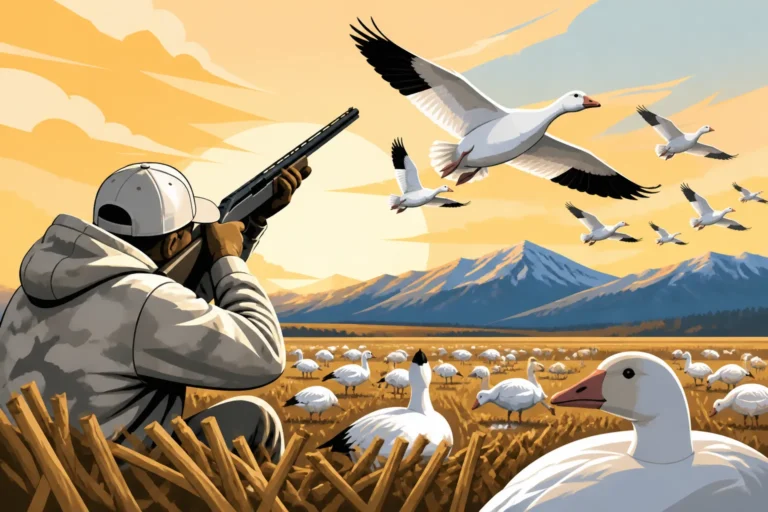
Visually, their distinct white 'face mask' at the base of their pink-orange bill, along with prominent black bars across their white belly, makes them identifiable even at a distance. Their flight pattern is also often tighter and more deliberate than the loose, straggling V-formations of Canada geese. They tend to fly in smaller, more cohesive family groups. When they commit to a field, they'll often descend more steeply, with rapid wing beats, eyes locked on the landing zone. Being able to spot these subtle differences, both in the air and on the ground, will drastically improve your chances. While you might occasionally find them mixed in with Geese That Stage in Alberta like Canada geese or snow geese, they generally prefer the company of their own kind, making a dedicated specklebelly spread a more effective strategy.
Crafting the Ideal Specklebelly Decoy Spread
Setting up a decoy spread for specklebellies isn't just about throwing out a bunch of fake birds. It's about creating a believable, inviting scene that convinces these incredibly cautious birds to drop their guard and commit to your landing zone. This often means less is more, and realism is everything.
Decoy Types, Numbers, and Realism
When it comes to specklebelly decoys, quality almost always trumps quantity. A spread of a dozen high-quality, realistic full-body or shell decoys will often outperform a hundred cheap, shiny silhouettes. Full-body decoys offer the most realistic profile from all angles, especially crucial for birds circling high above. Shells can work well, particularly if you're trying to cover more ground on a budget, but ensure they have good texture and non-glare finishes. Silhouettes and wind socks can be used to add volume in a pinch, but they should be strategically placed further from your kill hole, acting more as confidence builders or to catch the eye from a distance.
Motion is another critical factor. While Canada goose hunters might swear by a dozen rotary wing spinners, specklebellies are typically much warier of anything too artificial. A few well-placed flags or a single, subtle flapping-wing decoy that mimics a bird stretching can be effective, but overuse can easily spook them. The key is natural, subtle movement. I've found a handful of full-body decoys with natural head positions – some feeding, some upright alert, some resting – to be far more effective than an aggressive spread with too much artificial motion. Remember, Setting a Goose Spread in Swathed Barley demands that realism to convince birds that the field is safe and inviting.
Strategic Spread Layouts and Concealment
The layout of your spread is paramount. Specklebellies prefer an open landing zone, mimicking a safe area where their flock mates are already feeding. A "J" or "U" shape, with the bend of the letter pointing into the wind, is a classic and highly effective setup. This creates a natural pocket for the birds to land into the wind, placing them right in front of your blinds. Ensure the decoys forming the arms of your "J" or "U" are spaced realistically – not too tight, not too far apart. You want to convey a sense of a comfortable, uncrowded feeding area.
Should you mix specklebelly decoys with other species? Generally, for a dedicated specklebelly hunt, I try to keep my spread focused on specks. However, if you're hunting a field where you know both Canadas and specks are feeding, a small, separate pod of Canada goose decoys set slightly downwind or off to the side can sometimes act as a confidence builder without deterring the specks. Never overdo it. The core of your spread should remain true to the species you're targeting.
Concealment is non-negotiable. Specklebellies have incredible eyesight and are acutely aware of anything out of place. Layout blinds are almost essential for field hunting these birds. Ensure your blinds are brushed in meticulously with local vegetation from the field you're hunting. Stubble straps filled with cut stubble, dirt, and even some loose chaff from the swaths will make your blind virtually disappear. Don't forget to hide your face with a facemask and keep movement to an absolute minimum. Even a quick glance at your phone can blow an incoming flock. Using scouting tools like GoHunt can help you identify open fields where natural cover might be sparse, allowing you to plan your blind placement well in advance.
Mastering the Call and Fieldcraft
Even the most perfect decoy spread can be rendered useless without effective calling and meticulous fieldcraft. Specklebellies are highly vocal birds, and their distinct calls are a crucial part of drawing them into range. But knowing when and how to call is just as important as the call itself.
Essential Calling Techniques
The specklebelly call, that unique yodel, is what you need to master. It's typically a two-note call, often described as a "wa-WAAAAH" or "YEE-AWWWK." There are various high-quality specklebelly calls available on the market, from brands like Zink Calls, Molt Gear, or Tim Grounds. Find one that fits your style and spend serious time practicing. Listen to real specklebelly vocalizations online or in the field. You'll want to be proficient in a few key sounds:
- The Confidence Yodel: A relaxed, drawn-out yodel, used to reassure birds that everything is safe.
- The Excited Yodel: A slightly faster, more emphatic series of yodels when birds are directly approaching or circling, signalling excitement about the feeding opportunity.
- Feeding Chatter: A series of softer, almost guttural clucks and murmurs that mimic birds happily feeding on the ground. This is crucial for drawing them closer once they're within eyesight.
It’s about rhythm and realism. Don't overcall. When a flock is locked in and coming, sometimes the best call is no call at all. Let your spread do the work. Start calling softly when they're far out, building excitement as they get closer, then soften again as they commit. Often, just a few well-timed yodels and some soft feeding chatter are all it takes.
Scouting and Location Importance
For specklebellies, scouting isn't just recommended; it's absolutely paramount. These birds will return to the same feeding fields day after day until the food source is depleted or they're pressured too heavily. You need to put in the windshield time, driving back roads, watching flocks fly, and observing where they land. Early morning and late afternoon are prime scouting times. Look for large concentrations of birds, particularly in pea, barley, or lentil stubble fields. Pay attention to how they enter the field, where they prefer to land, and how they navigate any obstacles.
This is where digital tools like GoHunt become invaluable. Their mapping features allow you to pinpoint exact field locations, identify potential access points, and even help you determine land ownership for seeking permission. Speaking of which, once you've identified a hot field, the next critical step is Getting Permission for a Goose Field. Many of these prime fields are on private land, and respecting landowner rights is essential for the future of hunting. Don't just assume access; always knock on doors, be polite, and offer to share some of your harvest if they're interested.
Understanding how to read the landscape for Field Hunting Geese in Alberta Stubble is also vital. Look for areas of higher stubble for better concealment, subtle rises that might offer a slight advantage in your blind placement, or edges where birds prefer to start their feeding. Pay attention to wind direction during your scout, as this will dictate your setup on the hunting day.
Concealment and Ethical Considerations
I can't stress concealment enough. You could have the most expensive decoys and the best call, but if a speck sees you, the hunt is over. Layout blinds are standard equipment for this style of hunting, but simply putting the blind in the field isn't enough. It needs to be brushed in meticulously with the surrounding crop stubble, dirt, and any other natural debris. Every square inch of the blind must blend seamlessly. Wear camouflage that matches the stubble, use a headnet or face paint, and keep your hands gloved and out of sight. Remember that even the glint of sunlight off a watch or a shiny call can be enough to turn a flock.
Beyond concealment, ethical hunting practices are fundamental. In Alberta, as with all migratory bird hunting in Canada, Non-Toxic Shot for Alberta Waterfowl is mandatory. Steel, bismuth, or tungsten loads are required, and lead shot is strictly prohibited for waterfowl. Always know your effective range and practice your shooting to ensure clean kills. Wounding birds and not retrieving them is not only unethical but also illegal. A good retrieving dog can be an immense asset, not only for finding downed birds quickly but also for boosting your spirits in the field. When planning your hunt, be sure to check the Goose Season Dates by Zone to ensure you're hunting legally and within the established limits. The federal government also requires hunters to purchase The Canadian Wildlife Habitat Conservation Stamp, which directly supports habitat conservation efforts.
Execution and Troubleshooting on the Hunt
Even with perfect scouting and a well-planned setup, the actual hunt can throw curveballs. Specklebellies are notoriously intelligent, and being able to adapt and react to their behaviour in real-time is what separates good hunters from great ones.
Reading the Birds and Adapting Your Calling
Once a flock of specks spots your spread and starts to show interest, the real game begins. Watch them intently. Are they circling wide, or are they tightening up their turns? Are their feet dropping, or are they still high and wary? Each behaviour gives you clues.
- High and Wide Circles: This is when your softer, confidence yodels are most effective. You're trying to draw them closer, tell them "it's safe down here." Resist the urge to blast them with loud, aggressive calls.
- Tightening Circles, Head-on Approach: As they get closer and start to commit, you can increase the intensity of your calling. A series of excited yodels, followed by soft feeding chatter as they look directly into your spread, can often be the final convincing factor.
- Flare or Veer Off: If they suddenly turn away or gain altitude, something spooked them. It could be movement in the blind, a decoy that shifted, or a call that sounded unnatural. At this point, revert to softer, reassurance calls and try to get their attention back. Sometimes, silence is best, letting them calm down and perhaps make another pass. It's a delicate balance.
Learn to use your call as a conversation, not just a noise maker. Respond to their calls with similar yodels, almost mimicking their rhythm. There are times when a slight change in the pitch or cadence of your call can be the difference between them flaring and landing.
Adjusting to Conditions
Alberta weather is famously unpredictable, and conditions can change rapidly, significantly impacting how geese approach your spread.
- Wind: The wind is your best friend and worst enemy. Geese always land into the wind. Your spread should be set up so that your landing zone is directly into the prevailing wind, placing birds right in front of your blinds. If the wind shifts unexpectedly, you might need to quickly adjust your blinds and decoys. Knowing the wind direction is just as crucial as knowing Hunting a Willow Run in Farm Country or Hunting a Frozen Slough Crossing for deer.
- Sun: The sun's position can work for or against you. Try to set up with the sun at your back, shining into the faces of the incoming birds. This not only illuminates your spread better but also makes it harder for them to see into your blinds. If the sun is in your eyes, it can make identifying birds and taking a shot challenging.
- Cloud Cover and Fog: Overcast days often bring lower-flying birds, which can be fantastic for decoying. Fog, however, can ground birds completely or make for extremely short-range engagements. Be prepared for visibility changes and adjust your calling and readiness accordingly. Heavy rain or snow can also suppress bird movement, but sometimes a break in the weather can lead to a flurry of activity. Always check the forecast and understand the general Alberta winter weather conditions.
The Shot and Follow-Up
Patience is the ultimate virtue when hunting specklebellies. It can be tempting to jump up and shoot at the first sign of feet down, but holding out for that perfect, close-range shot, with birds fully committed and sailing right into your kill hole, significantly increases your success rate and reduces the chance of wounding birds. Wait until you can clearly see the individual bars on their belly and their orange feet are dangling just above the decoys.
When they commit, pick a single bird, preferably one with its head up, and aim for the head or neck for a quick, humane kill. If they're coming in low over the decoys, a shot just above the bird's back will often be perfect for hitting the vitals. Be ready for follow-up shots on birds that are still flying or trying to escape. After the shot, mark where your bird fell. Specklebellies are tough birds and can glide a considerable distance even after being hit hard. A good retrieving dog is invaluable here. Always retrieve every downed bird to honour the animal and comply with regulations. Remember, Non-Toxic Shot Requirements for Migratory Birds means your shot performance might be different than with lead, so practice with your chosen non-toxic loads.
| Specklebelly Call Type | Description | When to Use It | Hunter's Goal |
|---|---|---|---|
| Confidence Yodel | Soft, drawn-out, two-note yodel ("wa-WAAAAH") | Birds are distant, circling, or slightly wary | Reassure birds, draw initial interest |
| Excited Yodel | Faster, more emphatic series of yodels | Birds are directly approaching, tightening circles | Signal excitement, encourage commitment |
| Feeding Chatter | Soft clucks, murmurs, gurgles | Birds are close, looking at the spread, or landing | Mimic contentment, provide realism in the kill hole |
| Double Cluck/Yelp | Quick, sharp vocalizations, often in a series | Birds are turning away, need to be re-engaged | Grab attention, try to turn them back |
Disclaimer
Hunting is an activity that carries inherent risks. Always prioritize safety, follow all local, provincial, and federal regulations, and obtain proper licensing. The information provided in this guide is for informational purposes only and should not replace professional instruction or official government resources. Be aware of your surroundings and respect private property.