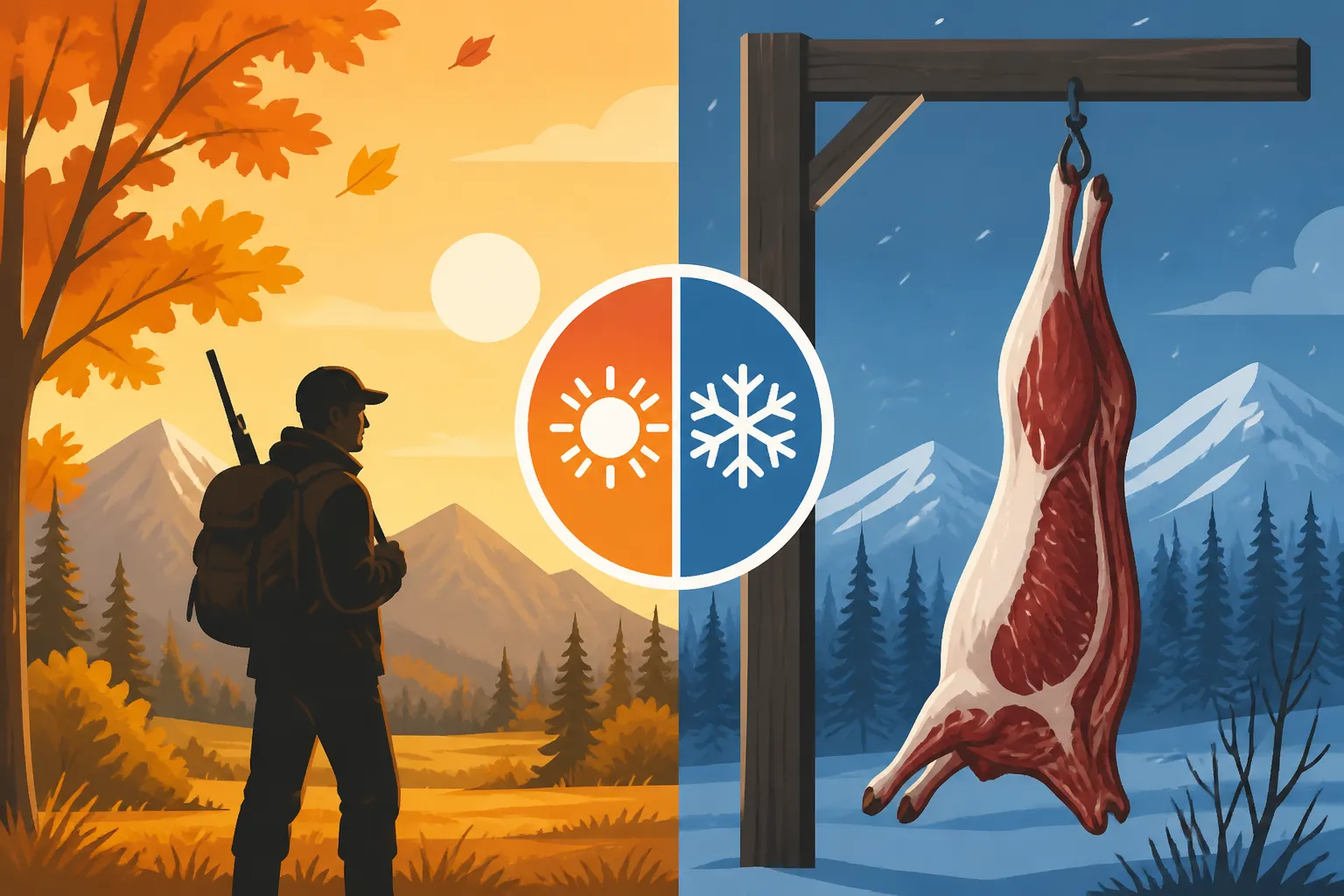
Hanging Meat in Fall Temperature Swings
You’ve just made a successful shot, and the adrenaline is still coursing through you. Congratulations! But as you stand over your hard-earned big game animal in the beautiful, crisp Alberta fall, a new challenge begins to emerge: the weather. Fall in Alberta is notorious for its dramatic temperature swings – what starts as a cool morning can quickly turn into a surprisingly warm afternoon, only to plummet back below freezing after sunset. This unpredictable dance of the thermometer can be a real nightmare when it comes to properly cooling and caring for your game meat, threatening to undo all your hard work. This comprehensive guide is here to walk you through the practical realities of managing your game meat during these challenging conditions, helping you ensure your harvest is preserved in peak condition.
Understanding Alberta's Fall Temperature Swings and Their Impact on Game Meat
The thrill of a successful hunt in Alberta’s fall often comes with the added stress of Mother Nature’s fickleness. One day it’s frosty, the next it’s pushing double digits, and then a sudden snow squall rolls in. These rapid fluctuations are more than just an inconvenience; they pose a significant threat to the quality of your game meat if not managed proactively.
The Reality of Prairie and Foothills Weather
Alberta's vast landscapes, from the open prairies to the rolling foothills and dense boreal forests, all experience their own version of fall’s unpredictability. On the prairies, sunshine can warm things up surprisingly quickly, even in October, turning a cool morning into a potential meat-spoiler by midday. In the foothills, microclimates mean one valley might be chilly while the next is significantly warmer, or a chinook arch can suddenly bring unseasonably mild air. This isn't just about comfort; it's about the very real possibility of your meat starting to sour or spoil if not handled correctly. We've all been there, getting that animal down on a beautiful sunny day, only to realize by afternoon that the air temperature is far too high for ideal cooling. This is where diligent planning and quick action become paramount. Tools like GoHunt can be invaluable for scouting weather patterns specific to your hunting area, giving you an edge in anticipating these changes.
Why Consistent Temperature is Crucial for Meat Quality
Meat quality hinges on effective and consistent cooling. The goal is to bring the internal temperature of the carcass down as quickly as possible, ideally below 4 degrees Celsius (40 degrees Fahrenheit), and keep it there. This rapid cooling inhibits bacterial growth, which is the primary cause of spoilage. When temperatures fluctuate, particularly when they swing warm, bacteria that were dormant during the cold night can become active again, accelerating spoilage and potentially leading to a sour or tainted taste. Uneven cooling, where the outside chills but the core remains warm, is also a recipe for disaster. The meat needs to chill evenly throughout. Think of it like this: if you leave a roast out on the counter, it doesn't take long for it to start feeling "off." The same principles apply to a whole animal carcass, just on a larger scale. Ignoring these temperature warnings is not just about losing a bit of flavor; it’s about potentially losing the entire harvest to spoilage, which goes against the fundamental Rules on Wasting Game Meat.
Preparing Your Harvest for Optimal Cooling in Variable Weather
Proper field dressing and initial processing are your absolute best defense against spoilage, especially when facing unpredictable fall temperatures. This isn't a step to rush; it's an investment in the quality of your future meals.
Field Dressing and Skinning: The First Line of Defense
As soon as your animal is down and secure, the clock starts ticking. The very first thing to do is field dress it thoroughly. Get those entrails out quickly. This removes a massive source of heat and bacteria from the carcass. Don't be shy; make sure everything is cleared out. For larger animals, consider splitting the sternum and pelvis if you have the right tools and knowledge. The more open the body cavity, the faster it will cool.
In warmer fall conditions, or if you anticipate a long retrieve, skinning the animal immediately after field dressing can make a huge difference. Skin acts as an insulator, holding heat in the carcass. Removing it exposes the meat directly to the cooler air, allowing for much faster heat dissipation. However, there's a trade-off: skinned meat is more vulnerable to drying out (forming a "crust" or "case hardening") and to insects. If you choose to skin in the field, you'll need a plan to protect the exposed meat, which we'll discuss next. For detailed guidance on this initial process, especially in challenging conditions, consider looking up resources on Field Dressing in Alberta's Deep Cold – many of the techniques for quick heat removal apply just as much to warm conditions.
Quartering and Airflow: Maximizing Surface Area
While a whole carcass might look impressive, quartering your animal significantly increases the surface area exposed to the air, speeding up the cooling process dramatically. This is particularly vital for larger animals like moose or elk, but even deer benefit from it. Quartering also makes the animal much easier to handle and transport, especially if you're deep in the bush or have a long haul back to your vehicle. Remember that a whole deer, moose, or elk will cool much faster as individual quarters than it ever will as a whole.
When quartering, aim for clean cuts, minimizing contamination. Once separated, place the quarters on game bags immediately. High-quality synthetic game bags are permeable to air, allowing cooling, but act as a barrier against insects and dirt. Don't use plastic tarps or bags directly on the meat, as they trap heat and moisture, creating a perfect breeding ground for bacteria. Hang the quarters so air can circulate freely around each piece. This is where Quartering a Moose Alone in the Bush can provide excellent tips on how to handle these larger animals efficiently and effectively.
Choosing the Right Hanging Location and Method
Once your animal is field dressed and potentially quartered, where and how you hang it becomes critically important for sustained cooling and protection. The ideal setup creates a microclimate that keeps the meat cool and dry, away from pests.
The Advantages of a Ventilated Game Cooler
If you have access to a dedicated game cooler or a walk-in fridge, you're in the best possible scenario. These controlled environments maintain a consistent, low temperature (ideally between 1-4 degrees Celsius or 34-40 degrees Fahrenheit) and often manage humidity, providing perfect aging conditions for your meat. This eliminates the worries about external temperature swings, insects, and scavenging animals. If you hunt regularly, especially bigger game, investing in or building a small walk-in cooler can pay dividends in meat quality and peace of mind. Even a large chest freezer used strategically (unplugged and filled with ice to create a temporary cooler) can work in a pinch for smaller animals, but requires constant monitoring.
Improvised Solutions for Backcountry and Remote Camps
Most hunters aren't lucky enough to have a walk-in cooler in the backcountry. This is where ingenuity and proper technique come into play. Your goal is to find a spot that offers natural shade and good airflow, and then protect the meat.
- Shade is Paramount: Find the densest shade possible. North-facing slopes, thick stands of evergreens, or even the shady side of a large rock outcrop can provide crucial protection from direct sunlight. Even on a cool fall day, direct sun can quickly warm up exposed meat.
- Airflow is Key: Choose a spot with a gentle breeze. If you're quartering, hang each piece separately from a sturdy branch, ensuring there’s space between them for air to circulate. The higher off the ground, the better, both for cooling and to deter ground predators.
- Game Bags are Non-Negotiable: Always, always use good quality game bags. They are breathable, protect against flies and dirt, and help prevent the dreaded "case hardening" where the outside dries out too quickly, sealing in moisture and heat. Companies like GoHunt often review various gear, and a good set of game bags should be high on your list.
- Security from Predators: This is a big one in Alberta. Bears, wolves, coyotes, and even opportunistic magpies or ravens will quickly find your hanging meat. Hang meat high enough (at least 10-12 feet off the ground for bears) and away from climbable trees. If hanging isn't possible, a secure tarp structure or even piling heavy logs around the quarters might offer temporary protection, but this is less ideal for cooling. Remember that you may be entering active bear territory, and knowing what to do if you see a grizzly is crucial.
Monitoring and Protecting Your Meat from Contaminants
Even with the best hanging setup, you still need to actively monitor your meat, particularly when fall temperatures are volatile. Contamination from insects, moisture, and scavengers can quickly ruin your efforts.
The Threat of Insects and Scavengers
Flies, especially blowflies, are the bane of a hunter's existence in warm weather. They can lay eggs on exposed meat in minutes, leading to maggots that quickly render the meat unappetizing and unsafe. This is why game bags are so critical. If you see flies buzzing around, double-check that your game bags are sealed and intact. If you have any exposed meat (e.g., if you skinned), you can wipe it down with a dilute vinegar solution to deter flies, or even sprinkle black pepper.
Scavengers, from coyotes and wolves to ravens and even mice, are another persistent threat. Even if you've done your best to hang meat high, determined critters can find a way. Regularly check your hanging site. Look for disturbed ground, tracks, or torn game bags. If you're camping nearby, keep your meat scent to a minimum around your camp and ensure food is properly stored. For remote camps, consider setting up a perimeter with bells or noisemakers if allowed, or even using a portable electric fence if available and practical. For advice on managing access, checking Alberta's Recreational Access Regulation is always a good idea, as it defines your rights and responsibilities.
Managing Moisture and Preventing Mold Growth
While you want to prevent the meat from drying out too quickly, too much moisture can lead to mold and bacterial growth, especially in stagnant air. Game bags help manage this by allowing moisture to evaporate slowly. If you notice condensation inside the bags, or if the meat feels damp, it might indicate insufficient airflow or excessively high humidity.
Consider these steps:
- Increase Airflow: Can you adjust the hanging location or spread the quarters out more?
- Wipe Down: If you see any slimy spots or early signs of mold, wipe the affected area immediately with a clean cloth dampened with white vinegar. This can often salvage the situation if caught early.
- Avoid Ground Contact: Never let meat touch the ground, as it's a prime source of bacteria and moisture.
- Protect from Rain/Snow: While direct rain can clean meat, prolonged exposure can lead to waterlogging and bacterial issues. If rain or wet snow is in the forecast, consider a tarp overhead, ensuring it doesn't impede airflow around the meat itself.
Practical Strategies for Active Temperature Management
When nature isn’t cooperating with ideal cooling conditions, you’ll need to take a more active role in temperature management. This often means combining traditional methods with a bit of modern ingenuity.
Using Ice and Water Bottles Strategically
In those classic Alberta fall days where it’s warm during the day but cools off at night, ice can be your best friend.
- Ice Inside the Cavity: If you're hauling a whole carcass back to a more permanent camp or vehicle, a great trick is to fill the body cavity with ice bags (bottled water frozen solid works wonders). This internal cooling system can drop the core temperature significantly, even if the ambient air is warm. Just make sure the meltwater can drain out and isn't pooling inside the carcass.
- Ice Around Quarters: Once quartered and bagged, you can strategically place frozen water bottles or ice packs around the game bags, especially during the warmer daytime hours. Position them so they don't block airflow, but instead help cool the circulating air. As the evening cools, you can remove them, letting the natural cold air do its work.
- Portable Coolers: Large coolers filled with ice are excellent for transporting quarters. Just ensure the meat is in game bags before it goes into the cooler to keep it clean and prevent it from soaking in meltwater, which can cause significant issues. For longer trips, draining and refreshing the ice regularly is essential. When you're Getting a Deer Out on a Frozen Trail, you might think cold is enough, but even short warm spells during transit can cause problems.
Day vs. Night Management in Unpredictable Conditions
The key to fall meat care in Alberta is adapting to the 24-hour cycle.
- Warm Daytime Strategy: During warmer days, focus on maximizing shade, airflow, and utilizing your ice. If it's really warm, you might even consider moving quarters into a shaded, insulated vehicle (if available) with windows cracked for airflow, or even burying them in a snowdrift if you're lucky enough to find one. This is where pre-scouting your hunt area with tools like GoHunt or Scouting With Satellite Imagery in Alberta can help you identify potential cold spots or dense timber where shade is always available.
- Cool Nighttime Strategy: As evening approaches and temperatures drop, let the cold air do its work. Ensure the quarters are still well-ventilated. You might even remove any tarps or extra coverings to allow the maximum exposure to the cold, dry night air.
- Transportation: Remember that getting your meat off the ground and out of the elements to a processing facility or home freezer is the ultimate goal. For information on legalities and best practices, check Transporting Game Meat and Proof of Sex to ensure you're in compliance. Also, be aware of CWD testing requirements in certain WMUs; knowing Where Alberta's CWD Freezers Are can be crucial for proper carcass disposal or testing.
Here’s a quick overview of cooling methods depending on ambient temperature:
| Ambient Air Temperature Range | Ideal Action for Meat Care | Considerations & Tips |
|---|---|---|
| 0°C to 4°C (32°F to 40°F) | Ideal hanging conditions. | Ensure good airflow and protection from scavengers. Minimal active management needed. Check periodically for surface dryness. This is the sweet spot for natural aging. |
| 5°C to 10°C (41°F to 50°F) | Active cooling required, especially during daylight. | Immediately field dress and skin. Quarter the animal. Use game bags. Hang in deepest shade with maximum airflow. Consider using frozen water bottles/ice packs around quarters during the day. Transport to cooler/processor ASAP. |
| 11°C to 15°C (51°F to 59°F) | Urgent and aggressive cooling. | Field dress and skin immediately. Quarter without delay. Pack body cavity/quarters with ice. Transport to a walk-in cooler or professional processor within hours. Do not attempt to hang for prolonged periods in these temperatures. Focus on rapid temperature drop. |
| Below 0°C (32°F) | Great for cooling, but prevent freezing if aging. | Excellent for initial cooling. Be aware of rapid freezing, which can make cutting difficult. If aging is desired, aim to keep it just above freezing. If immediate freezing for storage, this is ideal. Ensure protection from extreme cold windburn. Consider Hunting Alberta Winter Weather Safely tips. |
When to Call it Quits: Recognizing Spoiled Meat
It's a heartbreaking decision, but sometimes, despite your best efforts, meat can spoil. Knowing when to walk away from a tainted harvest is essential, not just for your health, but out of respect for the animal.
Signs of Spoilage
- Smell: This is the most obvious indicator. Fresh meat has a mild, almost metallic smell. Spoiled meat will have a distinct, unpleasant sour, putrid, or ammonia-like odor. Trust your nose – if it smells bad, it probably is.
- Color: Fresh game meat is usually a deep red. Spoiled meat might turn dull, greenish, or even black. Greenish discoloration is a strong sign of bacterial growth.
- Texture: Spoiled meat often feels slimy or sticky to the touch. Fresh meat should feel firm and slightly moist.
- Insects/Maggots: Any sign of maggots means that portion of the meat is compromised. You might be able to trim away heavily infested areas if the rest of the meat is otherwise fine, but often, it indicates deeper issues.
Don't Risk It
If you're unsure, it's always better to err on the side of caution. Eating spoiled meat can lead to severe food poisoning. While it hurts to potentially lose meat, it's a small price to pay for your health. Remember the ethical principle of the hunt: you take an animal's life, and in return, you owe it the respect of utilizing its meat properly. If you find yourself in a bind with too much meat and not enough time or resources, consider reaching out to local butchers or processors. Sometimes they can help with expedited processing. If you hunt private land, fostering good relationships with landowners by asking for permission upfront can lead to easier access for retrieving and cooling game, especially in areas where you might need to leave it briefly.
By being proactive, understanding Alberta's unique fall weather challenges, and implementing these diligent meat care strategies, you can ensure that your hard-earned wild game makes it to your table in prime condition, regardless of what the weather throws at you.
Disclaimer
Hunting and meat processing regulations are subject to change. Always consult the most current Alberta hunting regulations and guidelines published by Alberta Fish and Wildlife before heading into the field. This guide provides general information and best practices, but it is the hunter's responsibility to adhere to all legal requirements and safety protocols.