Alberta Muzzleloader Rules for Big Game
Many hunters in Alberta find themselves curious about muzzleloaders, drawn by the challenge and the unique seasons they offer, but often feel overwhelmed by the specific rules that set them apart from modern firearms. It’s not just about loading from the front; there are distinct regulations regarding bore size, ignition, and even how you carry them. This comprehensive guide will meticulously break down the legal requirements and practical considerations for hunting big game with a muzzleloader in Alberta, helping you confidently navigate the season.
Understanding Alberta's Legal Muzzleloader Definition
When you decide to pick up a muzzleloader for your Alberta big game hunt, the first hurdle is understanding what actually qualifies as a legal muzzleloader in the eyes of the law. It’s not simply any old gun that loads from the front; there are very specific design and performance criteria that must be met. This isn't just bureaucratic red tape; it's about ensuring fair chase, humane harvesting, and a consistent hunting experience for everyone.
Calibre and Minimum Requirements for Big Game
For big game hunting in Alberta, your muzzleloader isn't exempt from minimum calibre rules, just like a modern rifle isn't. The province sets clear guidelines to ensure that any shot taken has enough energy and projectile mass to humanely dispatch the animal. For most big game species, like deer, elk, and moose, you'll need a muzzleloader that is at least a .44 calibre. This is a critical point; showing up with a .36 or .40 calibre might be fine for small game or target shooting, but it won't be legal for an antlered whitetail. This minimum ensures that the projectile has sufficient knock-down power, reducing the chance of wounding an animal and having it escape. It’s about ethical hunting, plain and simple.
Furthermore, it's not just the calibre, but the projectile itself. Alberta regulations generally require that the muzzleloader fires a single, non-jacketed projectile. This often means lead bullets, conical projectiles, or round balls. While modern muzzleloaders sometimes use sabots with smaller, jacketed handgun bullets, it’s crucial to verify current regulations. Generally, a sabot is allowed as long as the bullet itself meets the non-jacketed requirement. Always double-check the latest Alberta hunting regulations guide, as these details can sometimes see minor tweaks between seasons.
Ignition Systems and Propellants
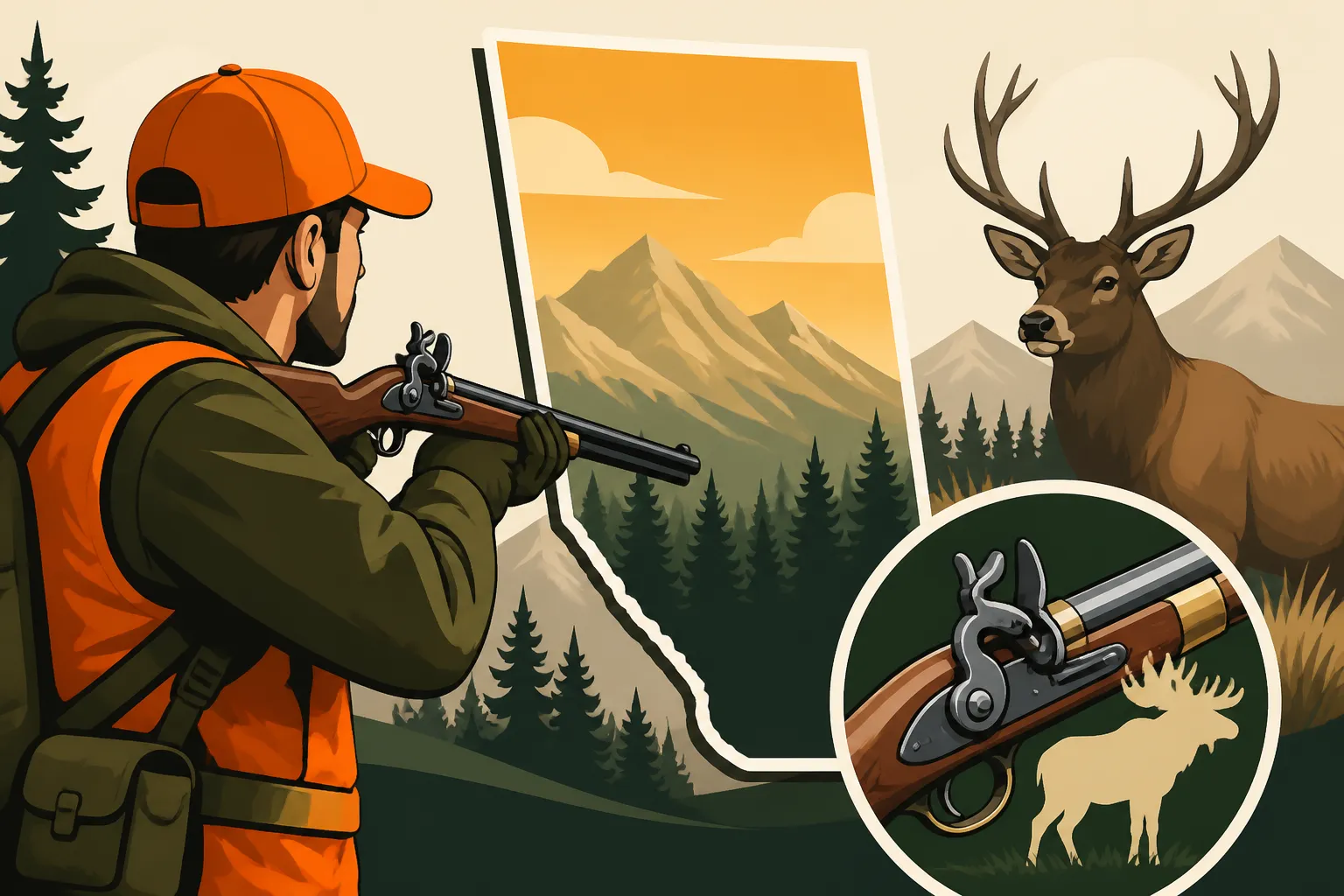
The heart of a muzzleloader lies in its ignition system and the propellant it uses. Alberta regulations are quite specific here too, and they cater to the traditional nature of these firearms. You're typically looking at traditional systems like flintlock, percussion cap (using caps such as #10, #11, or musket caps), or the more modern 209 primer systems. Each has its own nuances and reliability in different weather conditions. A flintlock, while incredibly traditional and satisfying, can be notoriously finicky in damp weather, whereas a 209 primer offers a hotter, more reliable spark, especially when it’s cold or wet out.
When it comes to propellants, the rules are very clear: you must use black powder or a black powder substitute. Think Triple Seven, Pyrodex, or Hodgdon 777. These powders are designed to burn in the unique way that muzzleloaders require, creating gas pressure that pushes the projectile down the barrel. What you absolutely cannot use are modern smokeless powders, which are designed for cartridge firearms and generate pressures far exceeding what a muzzleloader barrel is designed to handle. Using smokeless powder in a muzzleloader is incredibly dangerous and illegal. Always ensure your powder choice is explicitly approved for muzzleloaders and black powder systems.
Projectile Type and Loading Mechanics
The way you load your muzzleloader is what truly defines it and is a core part of the regulations. By definition, a muzzleloader must be loaded from the muzzle (the front end of the barrel). This means each component – the powder, the patch or wadding, and the projectile – is loaded separately and pushed down the barrel to the breech using a ramrod. This is a distinct difference from a cartridge firearm, where a factory-assembled cartridge containing primer, powder, and bullet is loaded into the breech or chamber.
As mentioned, the projectile must be a single, non-jacketed slug or round ball. This generally excludes projectiles designed for modern rifle cartridges. While sabots are common in contemporary inline muzzleloaders, they essentially allow a smaller, more aerodynamic bullet to be fired from a larger bore. As long as the bullet itself adheres to the "single, non-jacketed" rule and the entire assembly is loaded from the muzzle, it's usually compliant. For hunters relying on digital tools like GoHunt to scout and plan, remember to cross-reference any equipment choices with the official Alberta regulations, as interpretations and specific wording can evolve. It’s always best to be overly cautious when it comes to legal compliance.
Muzzleloader Seasons and Licensing in Alberta
One of the big draws for many hunters considering a muzzleloader is the opportunity to extend their time in the field, often with specific seasons dedicated to these traditional firearms. However, understanding how these seasons intertwine with general and archery seasons, and what licensing is required, is crucial to avoiding disappointment or, worse, legal trouble.
General Seasons vs. Muzzleloader-Specific Seasons
Alberta's hunting regulations define distinct periods when certain weapons are allowed. For many big game species, there's a general open season where rifles and shotguns are typically permitted. There are also early archery-only seasons, like the one for Hunting Alberta's September Archery Opener. Muzzleloaders often have their own specific seasons, which can sometimes precede or extend beyond the general rifle seasons in certain Wildlife Management Units (WMUs). These dedicated muzzleloader seasons are a fantastic opportunity for hunters who appreciate the challenge and unique experience of traditional hunting, offering less pressure and potentially different animal behaviour.
For example, in some WMUs, you might find a short window for muzzleloader-only hunting for mule deer or whitetails that falls between the archery season and the full rifle opener. This can be a sweet spot, as the deer might not be as pressured as they become once rifle season kicks off. It's imperative to check the Alberta Big Game Season Dates for your specific WMU and target species, as these dates vary significantly across the province and from year to year. A quick check on a platform like GoHunt can often help you identify these specific weapon-restricted seasons for the areas you're interested in.
Specific Big Game Species and Muzzleloaders
Muzzleloaders can be used to hunt most big game species in Alberta, provided you adhere to the calibre and season requirements. This includes white-tailed deer, mule deer, moose, and elk. The strategy for hunting these animals with a muzzleloader will differ from rifle hunting. Due to the generally shorter effective range of muzzleloaders, shot placement and stalking skills become even more critical. For a species like White-Tailed Deer, Alberta's Most Hunted Big Game, getting within 100 yards or less is often the goal, which means you need to be incredibly patient and proficient at reading deer sign.
For larger animals like Moose Across Alberta's Boreal and Foothills or Elk in Alberta's Mountains and Farmland, the minimum calibre requirements are particularly important. A .50 calibre or larger is often recommended for these animals to ensure enough ethical stopping power. While muzzleloader seasons might be available for these species, the primitive nature of the weapon adds a layer of challenge that many hunters cherish. Always consider the animal's size and resilience when selecting your muzzleloader and projectile.
Licensing and Eligibility: How It Fits In
To hunt big game with a muzzleloader in Alberta, you'll still need all the standard licenses and permits. This includes your Wildlife Identification Number (WIN) Card and a valid Wildlife Certificate. Then, for the specific species you're pursuing, you'll need the appropriate Special Licence (if it’s a draw species like mountain goat, or for certain sheep draws such as resident class 2 sheep (draw 29)) or a General Licence.
The key distinction for muzzleloader hunters isn't usually in a separate "muzzleloader licence," but rather in how the weapon choice dictates which season you can hunt within the existing licence framework. For instance, if you purchase a General White-tailed Deer Licence, you might be able to use it during the general rifle season, an archery-only season (if you have an archery endorsement), or a muzzleloader-only season, provided you are using the legal weapon for that specific season and WMU. Always ensure you understand Alberta Hunting Licences and What They Cost and how your chosen weapon fits into the season structure. Remember, knowing your WMU and its regulations is paramount, and a tool like GoHunt can make navigating these details much easier.
Practical Considerations and Field Rules for Muzzleloader Hunters
Hunting with a muzzleloader isn't just about understanding the legalities; it's a completely different experience in the field. From the unique safety considerations to the specific challenges of managing your shot, there are practical aspects that every muzzleloader hunter needs to master.
Safety and Handling on the Go
Muzzleloaders, by their very nature, require a different approach to safety than modern cartridge firearms. Reloading in the field is a slower, more deliberate process, which means you typically get one shot. This emphasizes the importance of making that first shot count. Before heading into the field, practice loading and firing repeatedly until it becomes second nature, even under pressure. You’ll want to have all your components — powder, wadding, projectile, and primer — easily accessible and organized. Speed loaders are a fantastic invention for muzzleloader hunters, allowing for quicker and more efficient reloading.
Misfires are also a more common occurrence with muzzleloaders, especially in damp conditions. If you experience a misfire, do not immediately open the breech or look down the barrel. Wait a safe amount of time (often 30-60 seconds, or longer in cold weather) as a hangfire can occur, meaning the primer ignites but the main charge takes longer to burn. Always keep the muzzle pointed in a safe direction. For transporting a loaded muzzleloader, the rules are similar to other firearms: it must be unloaded or rendered inoperable unless actively hunting. However, "unloaded" for a muzzleloader often means removing the primer/cap and ensuring there's no live powder or projectile in the barrel, or at least no cap/primer. Consult the specific definitions in the Alberta hunting regulations.
Blaze Orange and Other Safety Gear
Just like during general rifle seasons, if you're hunting big game with a muzzleloader during a season where rifles are permitted or where muzzleloader season overlaps with general big game seasons, the Alberta Blaze Orange Requirements will apply. This means you must wear an outer garment of blaze orange or florescent yellow-green that is visible from all sides. This is a critical safety measure, ensuring you are visible to other hunters in the field. Don't skimp on this; your life and the lives of others depend on it.
Beyond blaze orange, consider other practical gear for muzzleloader hunting. A good rain cover for your rifle and your lock mechanism is crucial for keeping powder dry, especially if you're using a flintlock or percussion cap system. A reliable rangefinder is also incredibly helpful, as judging distances accurately is paramount for ethical shots within a muzzleloader's effective range. You might also find a sturdy shooting stick or bipod invaluable for achieving stability, especially if you’ve had to make a long stalk and your heart rate is up.
Best Practices for Success and Compliance
The path to success with a muzzleloader starts long before the season opens. Thorough scouting of your chosen WMU, much like you would for Scouting an Alberta WMU Before Season, is essential. You need to know the terrain, where the animals are bedding, feeding, and travelling, and identify potential shooting lanes that are within your effective range. Muzzleloader hunting often demands closer encounters, so your ability to move silently and read the landscape becomes even more important.
Ethical shot placement is paramount. Due to the slower velocities of muzzleloader projectiles compared to modern rifle bullets, energy transfer and bullet trajectory can be different. Understand your rifle's capabilities and your own limitations. Practice at various distances, especially those within your realistic hunting range, and in different conditions. After the shot, be prepared for a potentially longer blood trail, as animals may run further even with a lethal hit. Give the animal time before tracking, and always report your harvest as required by Alberta regulations. Platforms like GoHunt can assist in understanding game movement patterns and terrain features, which is invaluable for muzzleloader hunters seeking that perfect, close-range opportunity.
Comparing Muzzleloaders to Other Legal Hunting Methods
Understanding where muzzleloaders fit into the broader context of Alberta hunting means recognizing their unique attributes compared to archery or modern rifle hunting. Each method offers distinct advantages and challenges, shaping the hunting experience in different ways.
Muzzleloader vs. Archery Season Overlaps
Alberta's hunting calendar often sees early archery-only seasons before the general firearms seasons open. Sometimes, muzzleloader-only seasons will follow or even overlap with these archery periods, presenting unique opportunities and challenges. While both muzzleloader and archery hunting are considered "primitive" by some, they are fundamentally different. Archery hunting, discussed more deeply in resources like Hunting Alberta's Early Archery Seasons, typically demands even closer ranges (often 20-50 yards) and an incredibly precise understanding of animal behaviour to get that close without detection.
Muzzleloaders, while offering slightly longer effective ranges (typically 50-150 yards for most hunters), still require a greater degree of stealth and patience than modern rifle hunting. The slower single-shot nature of muzzleloaders fosters a similar mindset to archery: make the first shot count, as follow-up shots are slow and often unlikely. Both methods encourage a deeper connection with the hunt, focusing on tracking, stalking, and understanding the quarry's habits in a way that modern long-range rifle hunting sometimes lessens.
Distinctions from Modern Rifle Seasons
The most significant difference between muzzleloader and modern rifle hunting lies in range, reloading speed, and the overall "feel" of the hunt. Rifle Hunting Alberta's General Seasons allows for much greater effective distances, often extending to several hundred yards with modern optics and cartridges. The ability to quickly chamber a second or third round also changes the dynamic, offering more forgiveness for a missed shot or the opportunity for a follow-up.
Muzzleloaders, with their single-shot capacity, slower projectile speeds, and more limited range, strip away some of these modern conveniences. This isn't a drawback for the dedicated muzzleloader hunter; it's the appeal. It forces a return to fundamentals: superior woodcraft, more precise shot placement, and a deeper commitment to the stalk. It can lead to a more intense, personal experience when you successfully harvest big game with a muzzleloader, knowing you earned that close encounter through skill and patience rather than long-range capability. The challenge associated with mastering a muzzleloader is its own reward, offering a unique perspective on the pursuit of big game.
Alberta Muzzleloader Hunting Summary
To help clarify the specific requirements and considerations for muzzleloader hunting in Alberta, here's a quick overview:
| Feature | Requirement/Consideration |
|---|---|
| Minimum Calibre | Generally .44 calibre for big game (e.g., deer, elk, moose). |
| Ignition System | Flintlock, percussion cap (#10, #11, musket caps), or 209 primer systems are legal. |
| Propellant | Must use black powder or approved black powder substitutes (e.g., Pyrodex, Triple Seven). Smokeless powder is strictly prohibited. |
| Projectile Type | Single, non-jacketed projectile (e.g., lead conical, round ball, or sabot with an approved bullet). Must be loaded from the muzzle. |
| Season Dates | Check Alberta Big Game Season Dates for specific muzzleloader-only seasons and general seasons where muzzleloaders are permitted in your WMU. |
| Licensing | Requires standard WIN Card, Wildlife Certificate, and appropriate General or Special Licence for the target species. |
| Blaze Orange | Required if hunting during a season where rifles are permitted or if muzzleloader season overlaps with general big game seasons. |
| Effective Range | Typically shorter than modern rifles (50-150 yards for most hunters), emphasizing stalking and shot placement. |
| Safety | Exercise extreme caution with misfires, allow safe hangfire time. Transport loaded only if actively hunting, with cap/primer removed for safety. |
| Reloading | Single-shot capacity requires deliberate action and preparation; practice and speed loaders are highly recommended. |
Disclaimer
The information provided in this guide is for general informational purposes only and is not a substitute for the official Alberta hunting regulations. Hunting regulations can change annually. It is the hunter's responsibility to consult the current Alberta Guide to Hunting Regulations published by the Government of Alberta and any specific WMU updates before planning and engaging in any hunting activities. Always prioritize safety and ethical hunting practices.