What a Big Black Bear Weighs
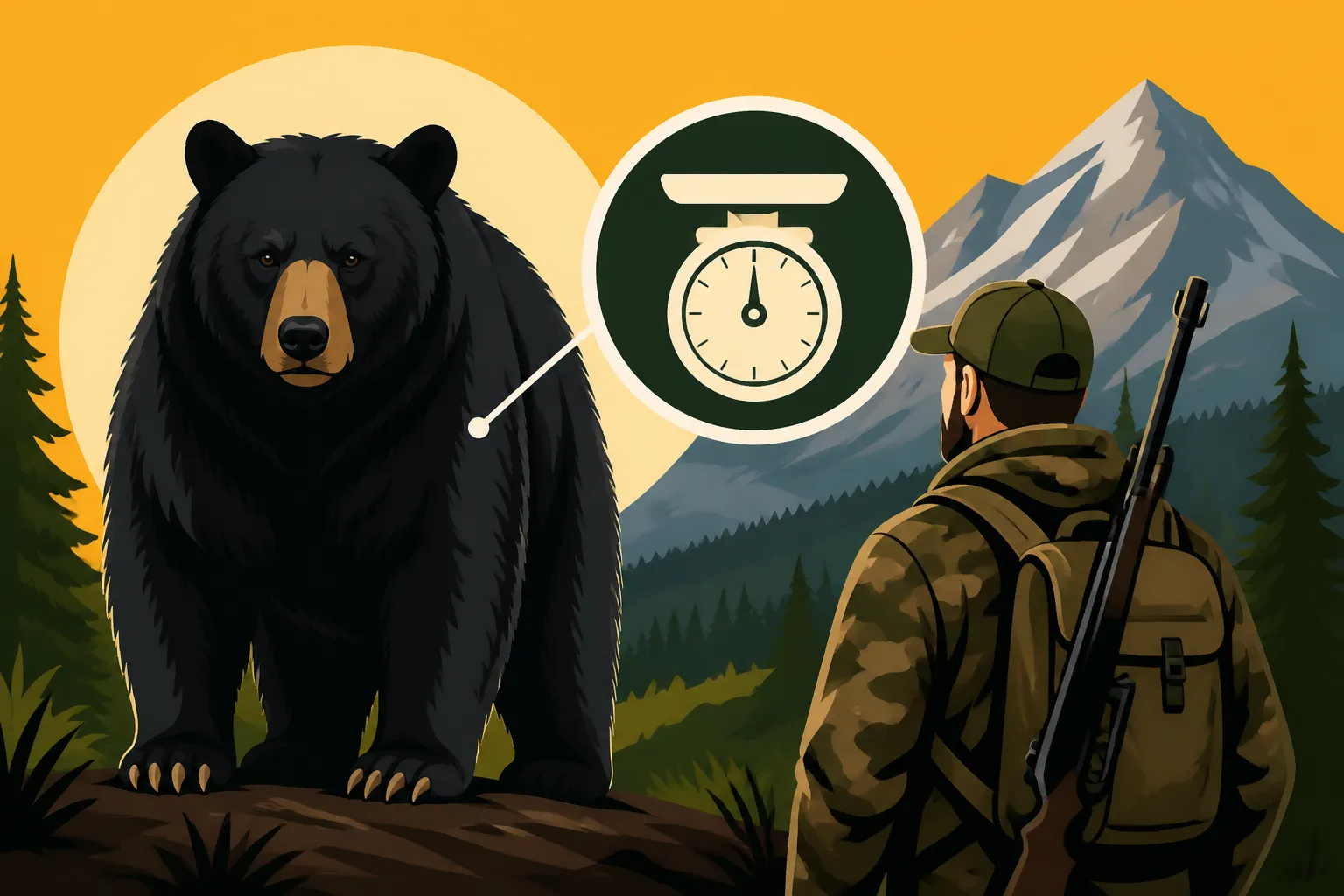
One of the biggest head-scratchers for any hunter, especially when you're glassing a dark spot moving through the distant timber or staring at a bait site camera photo, is trying to figure out just how big that black bear really is. It’s incredibly tough to judge size, let alone an actual weight, in the field. This guide is all about helping you understand what makes an Alberta black bear truly "big" in terms of weight, what you can realistically expect, and how to get a better handle on estimating their size before you commit to a shot.
Understanding Black Bear Weight Dynamics in Alberta
The weight of a black bear is far from a static number; it's a constantly shifting figure influenced by a complex interplay of factors. We all dream of a truly massive bear, but understanding what contributes to those impressive weights can help set realistic expectations and improve your scouting efforts.
Age and Maturity: The Foundation of Size
Just like any other animal, a black bear's weight is intrinsically linked to its age. A two-year-old bear, often called a "sub-adult," might tip the scales at a respectable 100-150 pounds, but it's a far cry from a mature bruin. These younger bears are still growing, still learning the ropes, and putting most of their energy into survival and basic development. They typically have a lankier appearance, often looking more leggy with a thinner neck and smaller head in proportion to their body.
As a bear matures, typically reaching its prime between 5 and 10 years old, its skeletal structure finishes developing, and it starts to put on serious muscle and fat. A prime-age boar (male bear) will have broader shoulders, a thicker neck, and a more pronounced sway to its back. They're no longer just growing up but filling out. These older bears are efficient foragers, knowing where and when to find the best food sources, allowing them to accumulate significant body mass. Every year they survive and thrive adds another layer to their potential for substantial weight.
Sex Differences: Boars vs. Sows
There's a significant difference in weight potential between male (boar) and female (sow) black bears, a crucial factor to consider when judging an animal in the field. Boars are almost always larger and heavier than sows of the same age class. A mature boar can easily outweigh a mature sow by 50-100 pounds, or even more, especially when you're talking about those truly giant bears.
Sows, particularly those with cubs, dedicate immense energy to reproduction and raising their young. This often means they have less opportunity to pack on extreme weight, as their caloric intake is shared or directed towards nurturing cubs. Boars, on the other hand, have the singular goal of breeding and survival, allowing them to focus entirely on foraging and growing. When you spot a bear that looks exceptionally blocky, with a thick neck, heavy shoulders, and a broad skull, your chances of it being a mature boar are much higher. Conversely, a bear that appears more slender, even if long-bodied, might very well be a sow, especially if you catch a glimpse of cubs trailing behind her, which is always a signal to pass on that animal. Judging a Boar From a Sow With Cubs can be one of the most important skills you develop.
Diet and Habitat: The Buffet of the Boreal Forest
A bear's diet and the abundance of food in its specific habitat play an enormous role in its overall weight. Alberta offers a diverse range of environments, from the rich berry patches of the boreal forest to the agricultural fringes of the parkland, and these resources directly impact how big a bear can get. In areas with a consistent and high-calorie food supply, bears can put on weight much more readily. This means lush spring greens, prolific berry crops in summer, and consistent mast crops like saskatoons, chokecherries, and hazelnuts in the fall.
Bears in areas adjacent to agricultural lands, especially those with access to oat, canola, or pea fields, can often pack on weight at an accelerated rate. These high-energy crops provide a caloric punch that simply isn't always available in purely wild forage areas. Think about the bears that spend their summers gorging on grain; they enter hibernation much heavier than their bush-dwelling counterparts. A lean year for berries or other natural foods can mean bears go into winter lighter, and emerge lighter, affecting their overall growth curve.
Regional Variations Across Alberta
Alberta is a huge province, and the size and weight of black bears can vary significantly from one region to another, primarily due to differences in food availability, population density, and genetic factors. Generally speaking, bears in the northern boreal forest and the eastern foothills regions tend to grow larger on average. These areas offer vast expanses of uninterrupted habitat, abundant natural food sources, and often lower human pressure, allowing bears to live longer and reach their full genetic potential.
In contrast, bears found in some of the more fragmented parkland regions, while still capable of impressive size, might face more competition for resources or have smaller home ranges. However, as mentioned, agricultural areas can also produce exceptional bears. When scouting for a hunt, research the specific WMU you plan to hunt. Using tools like GoHunt can help you assess habitat types and historical harvest data, providing insights into the potential for larger bears in that particular area. Bears in the deep bush of the north, where they might feast on blueberries and saskatoons all summer, can easily rival those on the edge of farm country. Alberta's Black Bear Numbers by Region can give you a better idea of where these populations thrive.
Average vs. "Big" Bear Weights in Alberta
Understanding what constitutes an "average" black bear versus a truly "big" one in Alberta is key to managing expectations and making informed decisions in the field. It’s easy to get caught up in the stories of monster bears, but the reality for most hunters is a bit different.
Typical Weights for Alberta Black Bears
For the majority of Alberta's black bear population, particularly those taken by hunters, the live weight typically falls into a certain range. A healthy adult sow might weigh anywhere from 120 to 250 pounds, depending on her age, current condition, and whether she's raising cubs. An adult boar, as we discussed, will generally be heavier, usually ranging from 180 to 350 pounds.
These are good, solid animals, representing the bulk of the population. A 200-pound bear is a substantial animal, requiring significant effort to handle in the field. Don't let social media posts of exceptional specimens skew your perception of what a successful and rewarding black bear hunt entails. Every bear taken ethically is a trophy, regardless of its precise number on the scale. When planning your hunt, consider the typical weights for your target Alberta Spring Bear Season Dates or Fall Bear Season Dates and WMUs to know what to expect.
Defining a "Big" Bear: Beyond the Average
So, what elevates a bear from "typical" to "big" in Alberta? We're generally talking about a mature boar that has lived for many years and maximized its growth potential. For most hunters, a "big" black bear in Alberta would be one that weighs in the range of 350 to 450 pounds live weight. These are often older, dominant boars, easily recognized by their massive build, blocky head, and short, heavy legs that give them a powerful, almost sumo-like appearance.
These bears are not common, but they are certainly present in Alberta's forests and foothills. Their sheer size often means their hide is thick and their skull measurement is impressive, making them highly sought-after trophies. It takes a combination of good genetics, abundant food resources, and the wisdom to avoid trouble for a bear to reach these proportions. Such bears are often solitary, moving through their territory with confidence, having outlived many of their peers.
Trophy Class Bears: The Outliers
Then there are the true giants – the trophy-class bears that push, and sometimes exceed, the 500-pound mark. These are the bears that make headlines and set records. In Alberta, a black bear weighing 500+ pounds live weight is an exceptionally rare and remarkable animal. These bears are almost exclusively very old boars, often 10-15 years old or more, that have spent their lives in prime habitat with ample food. They are the apex predators of their environment, masters of survival and foraging.
For perspective, a 500-pound black bear would be roughly the size of a small domestic horse or a very large grizzly bear. Their frame is simply immense. While dreams of such a beast are exciting, hunters should understand that encountering and successfully harvesting such a bear is often a once-in-a-lifetime event. Focusing on a mature, healthy bear that represents a good challenge and provides excellent meat is a more realistic and equally fulfilling goal for most Black Bear Hunting in Alberta trips. It's truly a special experience to connect with an animal that has grown to such impressive dimensions.
Factors Affecting a Bear's Live Weight and Dressed Weight
When we talk about a bear's weight, it's critical to distinguish between its live weight and its dressed weight. Many hunters, especially new ones, underestimate how much difference field dressing makes, and how seasonal changes can dramatically impact the scale.
Seasonal Fluctuations: Spring vs. Fall Bears
A black bear's weight is not constant throughout the year; it fluctuates wildly with the seasons, driven by their annual cycle of feasting and fasting. When bears emerge from their dens in spring, they are at their leanest. They've just spent months burning off stored fat, and while they might look surprisingly large due to their thick winter coat, their actual body mass is significantly reduced. A bear that might weigh 350 pounds in the fall could easily be down to 250-280 pounds in the early spring. Spring bears are focused on replenishing lost energy and building muscle, but they haven't yet had months to gorge.
By late summer and fall, however, bears enter a period of hyperphagia, meaning they eat almost constantly to build up fat reserves for hibernation. This is when they are at their heaviest. A bear taken in late October or early November will often be 20-30% heavier than the same bear would have been in May. They are literally packed with dense layers of fat, which not only adds significant weight but also changes their appearance, making them look even blockier and thicker. This is why a fall hunt can often yield a much heavier animal, even if the frame size is similar to a spring bear. For those keen on Baiting Black Bear in Alberta, timing your hunt to the peak of this feeding frenzy can make a substantial difference in the size of the animal you encounter.
Field Dressing Considerations
Once a bear is harvested, the first step is typically field dressing, which involves removing the internal organs. This process dramatically reduces the overall weight of the animal, and it's important for hunters to understand the difference between live weight and dressed weight. The gut pile, while varying depending on the bear's recent meal, can account for a significant portion of the animal's total mass, often 20-30%.
For example, a bear with an estimated live weight of 350 pounds might have a dressed weight of closer to 250-280 pounds once the entrails are removed. This dressed weight is what you're actually dragging or packing out of the bush, and it's what you'll typically see if you take your bear to a butcher or weigh it on a hanging scale. Always account for this reduction when you're estimating how much muscle and manpower you'll need to extract your animal from the field. It’s a good idea to have a plan for Getting a Moose Out With a Quad or other large game, as bears can be just as difficult to move.
Hide, Skull, and Meat Weight Breakdown
Beyond the dressed weight, if you're planning on a full-body mount, a rug, or simply taking the meat, it's useful to know the breakdown of the remaining components. The hide alone, especially from a large fall bear, can be surprisingly heavy. A thick hide with plenty of fat attached can easily weigh 50-70 pounds, sometimes even more for a truly massive bear. This is important to remember when Skinning a Bear for a Rug or packing out the trophy.
The skull, too, adds a few pounds, particularly if you're interested in a European mount or having it measured for record books. The actual meat yield will, of course, be the bulk of the remaining weight. For a 350-pound live weight bear, you might realistically expect 150-200 pounds of boned-out, trimmed meat, depending on the fat content and how tightly you trim it. Knowing these approximate figures can help you plan for processing, storage, and transport, especially if you're hunting in a remote area and need to pack out your harvest over a few days.
Here's a simplified table illustrating these weight differences:
| Bear Size Category | Estimated Live Weight (lbs) | Estimated Dressed Weight (lbs) | Estimated Hide Weight (lbs) | Estimated Meat Yield (lbs, boned) |
|---|---|---|---|---|
| Small Sub-Adult | 100-150 | 70-110 | 15-25 | 40-70 |
| Average Sow | 120-250 | 90-180 | 20-40 | 60-120 |
| Average Boar | 180-350 | 140-280 | 30-60 | 90-180 |
| Large Boar | 350-450 | 280-360 | 50-70 | 150-220 |
| Trophy Boar | 450-600+ | 360-480+ | 70-100+ | 200-300+ |
Estimating Weight in the Field: Visual Cues and Strategies
Accurately estimating a black bear's weight in the field is arguably one of the most challenging aspects of bear hunting. They are incredibly deceptive, and what looks "huge" often turns out to be a good, but not record-book, animal. Developing a keen eye for visual cues and utilizing scouting tools can help you make more informed decisions.
Visual Cues for Judging Size
When you're trying to size up a bear, ignore its coat length, as a thick, fluffy coat can make any bear look bigger. Instead, focus on these key indicators:
- Body Shape and Proportions: A truly big bear will look like a "walking barrel" or a "bus." Its body will be long and deep, not tall and gangly. Look for a pronounced sag or sway in the back, indicating heavy mass. The biggest bears will have a low-slung, powerful appearance, with their belly often appearing closer to the ground than their chest. Younger bears tend to be more athletic-looking, with a higher, straighter back and a leaner profile.
- Leg Length and Thickness: Large bears will have noticeably shorter-looking legs in proportion to their body. The legs themselves will appear thick and muscular, not spindly. If a bear's legs look long, it's usually a younger, less mature animal still growing into its frame.
- Head Size and Neck: This is often the most reliable indicator. A really big bear will have a massive head that looks small in proportion to its body. Think about it: a small head on a giant body means the body is truly massive. The ears will also appear smaller, set further apart, and sometimes almost lost in the fur, like little nubs. Coupled with this, a thick, beefy neck that blends almost seamlessly into the shoulders is a sign of an older, dominant boar. Smaller bears, on the other hand, will have heads that appear larger relative to their bodies, and their ears will look more prominent.
- Shoulder and Chest Depth: Mature boars will have incredibly broad shoulders and a deep chest. They look powerful from the front, with a width that screams strength. This width is often accentuated by their thick neck and muscular front quarters.
These cues, when taken together, can help paint a more accurate picture of the bear's true size and potential weight. It takes practice and experience, but with time, you'll start to recognize the subtle differences.
Scouting and Trail Camera Insights
In today's hunting world, technology can be a huge advantage for judging bears. Trail cameras, especially those set up on bait sites or travel corridors, offer invaluable insights. They allow you to observe bears repeatedly, noting their body changes over weeks or even months. You can compare different bears, look for consistent patterns, and gain a much better understanding of the local bear population's size potential. Many hunters use mapping software like GoHunt to mark camera locations, track bear sightings, and analyze historical data from their scouting efforts.
When reviewing camera footage, pay close attention to the visual cues mentioned above. Look for consistency in how a bear appears across multiple images or videos. If you're running bait, set up a stick or other fixed reference point next to the barrel, roughly hip height on a typical bear. This gives you a consistent scale to judge against. When a bear walks past, you can compare its back height, belly depth, and leg length to that known reference. This method is far more reliable than simply "eye-balling" a lone picture. Understanding Hunting Alberta's Fall Bear Season or spring season means understanding how to use every tool available.
The Limitations of Eye-Balling a Bear
Despite all the tips and tricks, it's crucial to acknowledge that eye-balling a black bear in the wild is inherently difficult and often leads to overestimation. Their shaggy coats, particularly in the spring and fall, can create an illusion of greater bulk. A bear standing alone in an open field with no reference points looks much larger than the same bear next to a fallen log or a human. The excitement of the moment, often combined with low light conditions, can also play tricks on your perception.
Furthermore, angle and distance are massive factors. A bear quartering away or walking uphill can appear much larger or smaller than it truly is. That's why patient observation, ideally through good quality optics, is paramount. Take your time. Watch the bear move. Compare it to any nearby objects if possible. If you're unsure, it's always better to pass and wait for another opportunity or a bear you can confidently identify as the one you're looking for. A good hunt is about making responsible, ethical decisions, not just pulling the trigger.
Disclaimer
This article is for general informational purposes only and does not constitute professional advice. Laws, prices and regulations vary by location and change over time. Consult a qualified professional for guidance on your specific situation.