Ptarmigan Colour Change Through the Season
One of the most fascinating challenges, and indeed, one of the greatest joys, of hunting ptarmigan in Alberta's high country is witnessing their incredible ability to vanish right before your eyes. These hardy birds are true masters of camouflage, and their plumage undergoes a dramatic transformation with each passing season, making them a puzzle for even the most seasoned hunter. If you've ever wondered how these birds seemingly disappear and reappear, this guide is for you, breaking down their remarkable seasonal colour changes.
The Master Disguisers: Understanding Alberta's Ptarmigan and Their Alpine World
Before we dive into the specifics of their seasonal wardrobe changes, it's important to understand why ptarmigan are such phenomenal camouflagers. These aren't your typical bush grouse; they live a tough life in some of Alberta's most extreme environments, high above the treeline in our rugged mountains. Here, there's often little cover beyond rocks, sparse alpine vegetation, and, for much of the year, snow. This exposed habitat means that blending in is not just an advantage for ptarmigan; it's absolutely essential for survival.
Alberta is home to three species of ptarmigan: the Willow Ptarmigan, the Rock Ptarmigan, and the White-tailed Ptarmigan. While all share this incredible ability to change colour, the White-tailed Ptarmigan is unique in that it never has any black feathers in its winter plumage, remaining pure white. The Willow and Rock ptarmigan will retain a black tail. No matter the species, their lives are a constant dance of hiding from keen-eyed predators like raptors, coyotes, and even wolves. Their seasonal molts are genetically programmed to perfectly match the dominant colours and textures of their alpine home. Hunting these birds often means traversing some truly spectacular, but equally demanding, terrain. If you're planning a trip, reading up on Ptarmigan Hunting High in the Alpine can give you a real leg up.
From Winter White to Summer's Mottled Tones: The Spring and Summer Molt
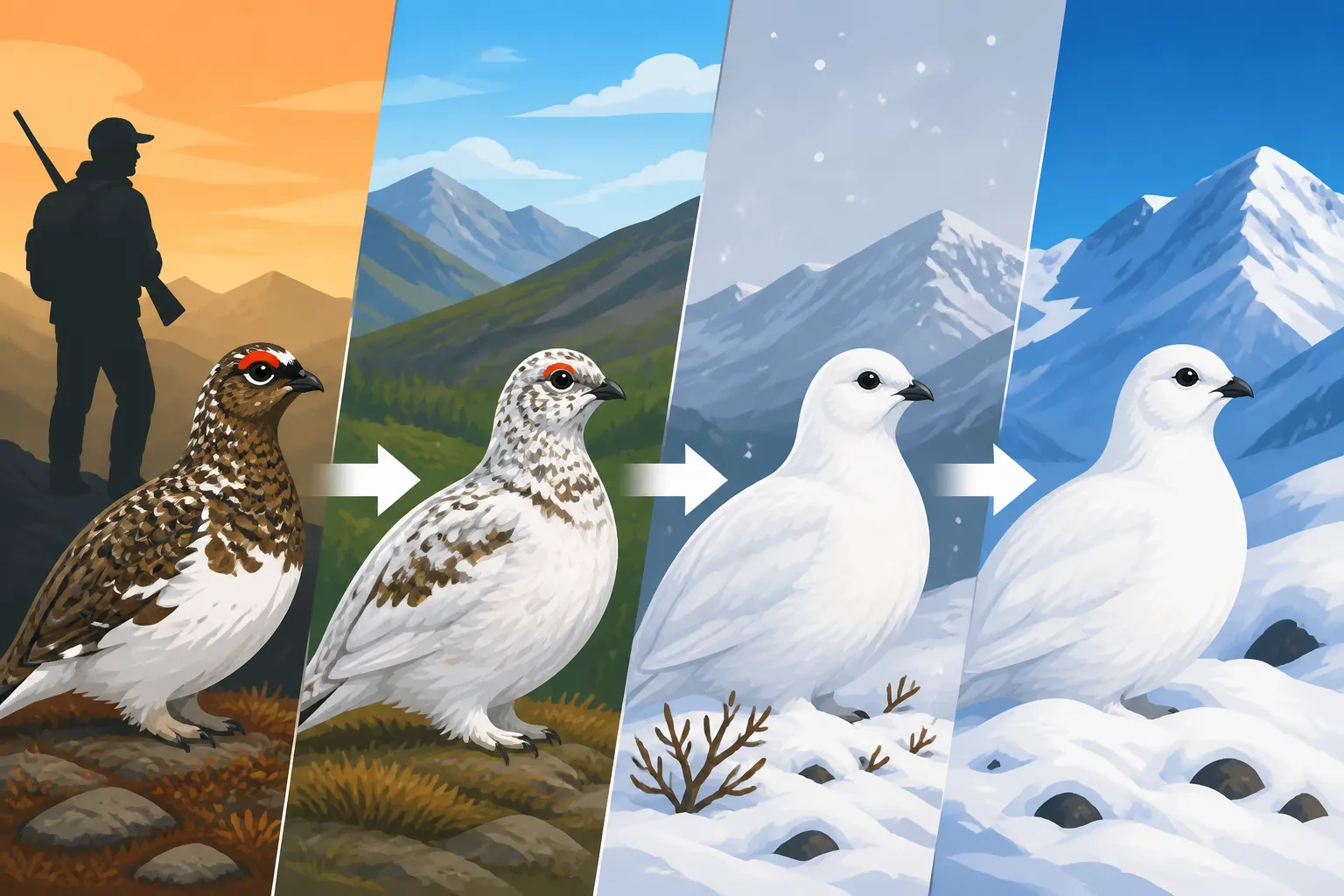
When winter's iron grip begins to loosen its hold on the high alpine, usually starting around April or May, the ptarmigan's pristine white coat starts its slow, deliberate transformation. This isn't an overnight change; it's a gradual molt, where old white feathers are replaced by new ones that reflect the awakening tundra. Imagine patches of melting snow interspersed with emerging brown earth, grey rocks, and the first hints of green alpine growth – that's exactly what the ptarmigan begins to emulate.
In spring, you'll start to see a patchwork quilt of colours. Brown feathers begin to appear on their heads, necks, and backs, often in mottled patterns that perfectly mimic the melting snow line. For a hunter, this can make them incredibly hard to spot. One minute you see a patch of snow, the next, a brown rock, and then, if you're lucky and observant, that "rock" might just sprout legs and fly. The legs, though, typically remain feathered white for longer, offering insulation as they still trek through lingering snowdrifts. Their bellies will also transition, often becoming a creamy white or pale brown, blending with lighter soil or exposed roots. This slow, almost artistic transition can take several weeks, varying slightly depending on the individual bird and the specific environmental conditions of the year, like how quickly the snow melts. Scouting tools, perhaps from a platform like GoHunt, can be invaluable here to see how snow lines are receding in specific alpine basins, giving you a better idea of when these transitions might be occurring. This can help you predict where the birds might be feeding or holding as the seasons shift.
By summer, typically from late June through August, the ptarmigan's plumage is predominantly a cryptic mix of browns, greys, and yellows, with intricate barring and speckling. This is their ultimate warm-weather camouflage, allowing them to disappear against the backdrop of tundra mosses, lichen-covered rocks, and low-lying shrubs. They are incredibly difficult to pick out, even when you know they are there. Their bodies become a living tapestry of the landscape, making them almost invisible to predators soaring overhead or stalking from the ground. Only their dark eyes give them away, and sometimes, a flash of white if they're still in mid-molt. During this period, the vibrant greens of the short alpine growing season are quickly absorbed into their feather patterns, providing seamless integration with their surroundings. If you're researching potential areas, remember that knowing Where Ptarmigan Live Above the Treeline will give you a major advantage.
Autumn's Camouflage: Blending with the Fall Tundra
As the days shorten and the crisp air of late summer gives way to the undeniable chill of autumn, usually from September into October, the alpine landscape undergoes another dramatic shift. The vibrant greens of summer fade, replaced by the russets, golds, and muted browns of dying vegetation. The rocks take on a deeper, often damp, hue. And, true to form, the ptarmigan begin another molt to match.
This fall transition is particularly crucial for hunters, as it often coincides with key hunting seasons for upland birds. The ptarmigan's plumage starts to incorporate more greys, darker browns, and even some rusty tones, blending perfectly with the fading tundra grasses, bare rock faces, and the first dusting of early season snow that might cling to north-facing slopes. You'll notice that the browns often deepen, becoming richer and more earthy, while the underparts might take on a subtle greyish-white. This stage of camouflage is an absolute marvel; the birds can sit motionless, and you can literally walk within feet of them without ever realizing they are there. Their patterned backs merge with the intricate textures of alpine scree and sparse foliage, making visual detection a monumental task. When hunting for other alpine game, you might stumble upon them, or if ptarmigan are your target, you'll truly appreciate their ability to vanish. Platforms like GoHunt can help you scout high-elevation areas and understand the typical snowfall patterns, which directly influence how and when ptarmigan transition their plumage, and therefore, where you might find them. Understanding the seasonal weather changes is key when planning your hunt.
The fall molt is sometimes less uniform than the spring one, with some birds showing a more patchy appearance as they shed summer feathers and grow winter white ones. This can actually enhance their camouflage, as a mix of white, grey, and brown feathers can mimic the broken patterns of early snowfalls on rocky terrain. This makes them even more challenging for predators and hunters alike. Keeping an eye on the weather forecasts for the mountains will give you a clue as to when these changes will be most complete, as colder temperatures and early snow will often accelerate the transition to white. For up-to-date information, checking Alberta Game Bird Seasons and Limits is always a good practice before heading out.
Returning to Ghostly White: The Winter Transformation and Survival
As winter truly sets in, typically from late October or November through to early spring, the ptarmigan completes its final and most famous colour change: a full transformation back to brilliant white. This is the plumage most people associate with ptarmigan, and for good reason—it's utterly breathtaking in its effectiveness. Every feather, save for a few dark tail feathers in the Willow and Rock Ptarmigan, and their dark eyes and beaks, becomes pure white.
This ghostly white coat allows them to disappear seamlessly into the vast, snow-covered expanses of the alpine landscape. When they hunker down, they truly become one with the snow, making them nearly impossible to distinguish from the drifts and cornices of their high-altitude home. The white feathers aren't just for camouflage; they're also incredibly insulating. The dense, downy underlayer, combined with their feathered feet, provides superior protection against the extreme cold and biting winds that characterize Alberta's mountain winters. This is a critical survival adaptation, allowing them to conserve energy in a food-scarce environment. For those brave enough to pursue them in these conditions, even a bright white bird in an all-white world can be incredibly hard to spot. Sometimes, the only way to locate them is to spook them into flight, or to rely on tracks in fresh snow. Make sure you're familiar with Hunting Alberta Winter Weather Safely if you venture out in these conditions.
The speed and completeness of this winter molt are influenced by the onset of cold weather and the depth of snow. The earlier and deeper the snow, the faster the birds tend to complete their transformation. By the peak of winter, a ptarmigan sitting motionless in a snowdrift is practically invisible, a testament to millions of years of evolutionary adaptation. This remarkable cycle of camouflage ensures their survival year after year, offering an incredible display of nature's ingenuity to anyone fortunate enough to spend time in their challenging, beautiful world.
Summary of Ptarmigan Seasonal Colour Changes
To give you a clearer picture of these incredible transformations, here's a brief overview:
| Season | Primary Colour Phase | Description | Key Blending Factors |
|---|---|---|---|
| Winter | Pure White | Almost entirely white plumage, except for dark eyes/beak (and tail for some species). | Snowdrifts, ice, complete snow cover |
| Spring | Patchy White & Brown/Grey | Gradual transition from white; brown/grey feathers emerge on head/back. | Melting snow patches, exposed earth, grey rocks |
| Summer | Mottled Brown/Grey/Yellow | Predominantly cryptic browns, greys, and yellows with barring. | Tundra vegetation, lichen, alpine rocks, sparse soil |
| Fall | Darker Brown/Grey/Rusty & White | More earthy browns, greys, and rusty tones with emerging white patches. | Fading vegetation, dark rocks, early snow dustings |
Whether you're an avid hunter or simply a lover of wildlife, understanding the ptarmigan's seasonal colour changes offers a deeper appreciation for these resilient birds and the incredible environments they call home. Every season presents a new challenge and a new reward when you're looking for these true masters of disguise in Alberta's high country.
Disclaimer
This article is for general informational purposes only and does not constitute professional advice. Laws, prices and regulations vary by location and change over time. Consult a qualified professional for guidance on your specific situation.