What a Velvet Bull Looks Like in August
August in Alberta's hunting world is a time of incredible anticipation. While many hunters are still months away from their primary seasons, this is prime time for scouting, and there's nothing quite like catching a glimpse of a big game bull or buck sporting a full rack of velvet antlers. It's a fleeting moment, a unique phase of growth that gives these majestic animals a distinct, almost ethereal appearance, and understanding what you're looking at can be critical for planning your fall hunt. This guide will walk you through the fascinating world of velvet antlers, what to expect when scouting Alberta in late summer, and how to spot those impressive velvet bulls.
The Marvel of Antler Growth: What is Velvet?
Before we dive into what a velvet bull looks like, let's understand why they look that way. Antlers aren't just bone; they're one of nature's most incredible examples of rapid bone growth, and velvet is an essential part of that process. It's truly a marvel to witness each year, especially knowing the sheer speed at which these racks develop.
The Antler's Nursery: Blood and Skin
Velvet is essentially a highly vascularized (full of blood vessels) skin covering that supplies nutrients, oxygen, and minerals to the rapidly growing bone underneath. Think of it like a living, breathing skin that's working overtime. It feels soft and fuzzy to the touch, hence the name "velvet." Underneath this soft exterior, the bone structure of the antler is forming at an astonishing rate. For a big bull elk or a mature mule deer buck, this can mean growing several pounds of bone in just a few short months. This incredible biological process is something every hunter should appreciate, as it speaks to the vitality and health of the animal.
During August, the antlers are usually nearing their full growth potential for the year, but the velvet is still actively nourishing them. They'll look thicker and more robust than hardened antlers, with a distinct, often dark or reddish-brown hue from the blood flow just beneath the surface. It’s a delicate phase, and during this time, bulls and bucks are incredibly careful with their racks to avoid injury, as any damage to the velvet can lead to permanent deformities in the hardened antler.
The Purpose of Velvet Antlers
Beyond being a temporary protective and nourishing layer, the velvet plays a crucial role in the development of those impressive racks we all admire. It's not just cosmetic; it's a vital part of the animal's annual cycle. The rich blood supply ensures the bone grows strong and dense, capable of withstanding the rigors of the upcoming rut.
This rapid growth is fueled by an abundance of hormones and good nutrition from the lush summer forage available across Alberta, whether it's the rich mountain valleys for elk or the productive agricultural lands for whitetails and mule deer. A healthy bull with access to good feed and minimal stress will typically grow larger, more symmetrical antlers. When you see a bull with a magnificent velvet rack in August, you're looking at an animal that has been thriving in its environment. It's a testament to good habitat and strong genetics.
The Distinctive Appearance of a Velvet Bull in August
Spotting a velvet bull in August is a unique experience. Their antlers have a look unlike any other time of year, making them both exciting to see and sometimes a bit tricky to judge accurately if you're trying to estimate their hardened size.
Visual Cues for Elk
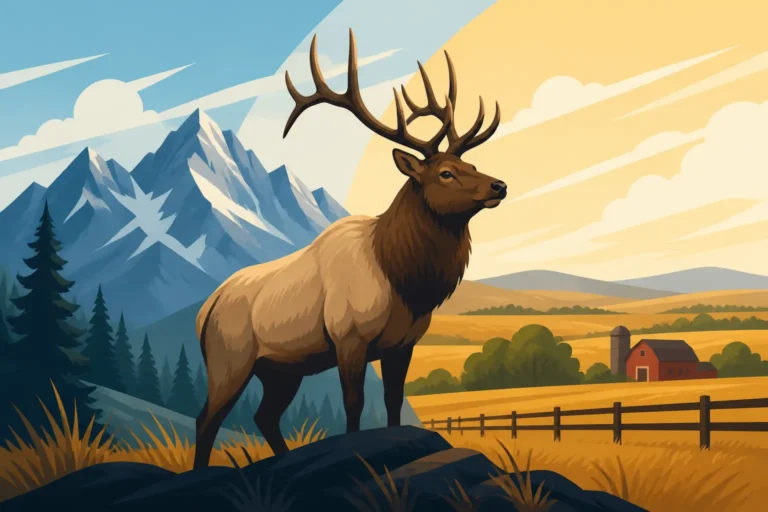
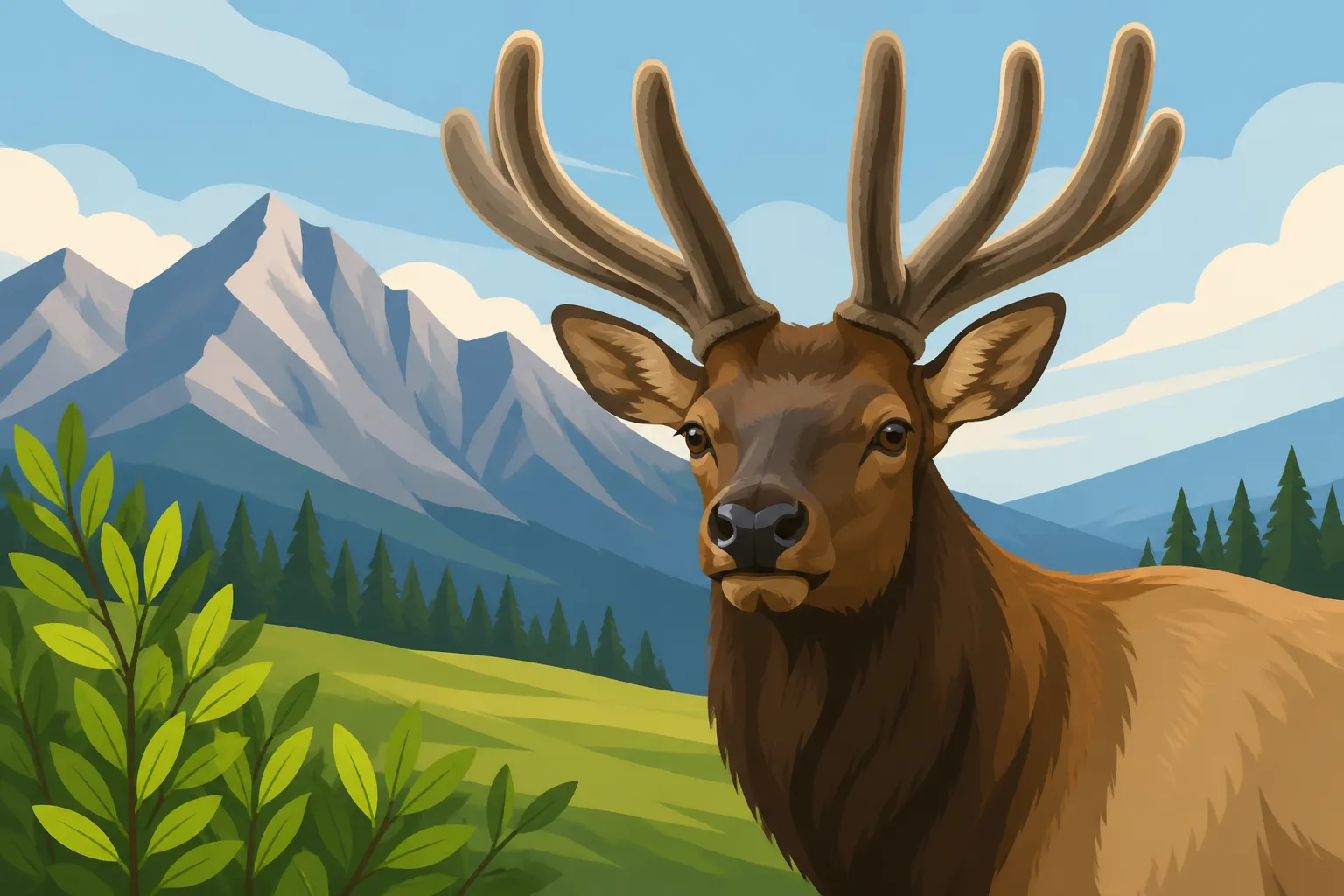
When you spot an elk bull in August, his antlers will appear incredibly massive, almost disproportionately so, due to the velvet. The entire rack will be covered in that soft, fuzzy skin, making the tines and beams look thicker than they will once the velvet is shed. The colour will often be a rich, dark brown or even reddish-brown, a deep hue caused by the network of blood vessels just beneath the surface. You might even notice subtle veins visible through the fine hair of the velvet on closer inspection, though that typically requires some really good optics.
From a distance, the fuzzy texture can sometimes make the antlers appear slightly blurred or less defined, particularly at the tips of the tines. This can make judging tine length or overall mass a bit of a challenge. What looks like an absolute monster in velvet might harden into a still-impressive but slightly smaller-looking rack. This is a common "frustration" among hunters who get excited by a velvet giant, only for it to shrink visually once shed. Patience and understanding that velvet adds bulk are key. The sheer width and general shape will be established, but the fine details and actual hardened mass can be deceiving. Elk in Alberta's Mountains and Farmland often showcase some truly massive velvet racks this time of year.
Visual Cues for Mule Deer
Mule deer bucks in August also sport magnificent velvet racks. Like elk, their antlers will appear significantly thicker and bulkier than their hardened counterparts. The velvet itself tends to be a lighter brown or tan colour on mule deer, blending well with their summer coat. The characteristic deep forks of a mule deer buck will be clearly visible, but the points themselves might seem blunter or more rounded because of the velvety covering.
A common observation is that a buck's antlers, when in velvet, often make his head look much larger and heavier than it actually is. This can create a truly imposing silhouette, especially when you see a big prairie buck on a ridge at sunrise. Again, the fuzzy texture can obscure fine details, making it hard to definitively count points or assess true length. When scouting for Mule Deer in Alberta's Open Country, it’s always good to use high-quality binoculars or a spotting scope to get the clearest possible view, but even then, remember the "velvet illusion."
Visual Cues for White-Tailed Deer
Alberta's whitetail bucks in August are also nearing their peak antler growth, fully covered in velvet. Their racks will look soft, spongy, and often have a darker, almost reddish-brown appearance, similar to elk velvet, reflecting the rich blood supply. The tines will appear thicker and more rounded than when hardened, and the entire rack will seem to have an added layer of fuzziness.
The classic forward-sweeping main beams and individual points of a whitetail are all formed by August, but the velvet adds a certain amount of visual "fluff." Judging the mass of a whitetail rack in velvet can be particularly tricky, as the blood-filled skin adds girth. A buck that looks exceptionally heavy in velvet might still be heavy once stripped, but the visual impact of the velvet can be misleading. Many hunters eagerly anticipate the White-Tailed Deer, Alberta's Most Hunted Big Game season, and August scouting provides crucial intel on which bucks are worth pursuing come fall.
Here’s a quick comparison of what to look for:
| Feature | Elk Antlers (Velvet) | Mule Deer Antlers (Velvet) | White-Tailed Deer Antlers (Velvet) |
|---|---|---|---|
| Appearance | Very massive, thick beams & tines | Thick, bulky, pronounced forks | Soft, spongy, often reddish-brown |
| Colour | Dark brown, reddish-brown, often deep | Lighter brown, tan | Darker brown, reddish-brown |
| Texture | Velvety, fuzzy, appears soft | Velvety, fuzzy, appears soft | Fuzzy, soft, sometimes looks 'wet' |
| Perceived Size | Appears much larger than hardened | Appears bulkier, head looks bigger | Looks thicker, adds visual mass |
| Blood Flow | Often visible veins on closer inspection | Less distinct veins, lighter colour | Blood vessels give deep colour |
| Handling | Extremely sensitive, avoid contact | Very delicate, bucks avoid rubbing | Fragile, bucks stay clear of obstacles |
Scouting for Velvet Bulls in August
August is a fantastic month for scouting. The animals are generally in their summer patterns, often in more open areas or predictable feeding grounds, and their velvet antlers are a dead giveaway that they're the bulls you're looking for. This is where you can put your boots on the ground or your glass to your eyes and truly start to build a picture of what your hunting season might look like.
Where to Focus Your Efforts
In August, big game animals like elk, mule deer, and whitetails are focused on feeding and conserving energy, especially with their fast-growing antlers. They'll often be found in areas with abundant, high-quality forage and easy access to water. For elk, this might mean lush mountain meadows or the edges of agricultural fields adjacent to timber. For mule deer, open prairie coulees with some browse, or badlands breaks offering shade and cover, are prime locations. Whitetails often prefer the security of aspen bluffs bordering crop fields or river bottoms.
Think about areas where deer and elk can feed heavily in the cooler parts of the day, then bed down in thick cover or shaded spots during the heat. Water sources are also critical. A lone pond or a slow-moving creek can be a magnet for animals in late summer. Using tools like GoHunt can be incredibly helpful here, allowing you to identify potential feeding and bedding areas, water sources, and access points before you even leave your couch. Reviewing historical movement patterns or satellite imagery for changes in vegetation can also give you an edge. Scouting With Satellite Imagery in Alberta is a game-changer for this kind of early season reconnaissance.
Tools for Effective Velvet Scouting
Good optics are absolutely non-negotiable for scouting velvet bulls. A pair of high-quality binoculars (10×42 or 12×50) is essential for covering ground, and a powerful spotting scope (20-60x or higher) on a sturdy tripod is invaluable for evaluating animals at a distance without disturbing them. You want to be able to study antler growth without pushing the animals out of their comfortable summer patterns.
Beyond optics, a reliable mapping app is your best friend. Apps like GoHunt allow you to mark observations, track animal movements, and understand land ownership. You can drop pins where you see specific bucks or bulls, note their estimated size, and even document their travel routes from feeding to bedding. This data becomes invaluable when the season opens, especially if you're trying to figure out which deer are using a particular Hunting a Cutline Intersection for Whitetails or which elk herd is moving through a Hunting an Old Logging Road in the Foothills. Pay attention to fresh tracks, rub lines (even small ones from delicate velvet antlers), and bedding areas near food sources.
Ethical Considerations and Avoiding Disturbance
While it's exciting to find a big velvet bull, remember that August is a sensitive time for these animals. Their antlers are still growing and very fragile, and they are trying to put on as much weight as possible before the rut. Avoid disturbing them at all costs. This means keeping your distance, using optics instead of trying to get close, and being mindful of wind direction and noise.
Pushing animals around in August can stress them, potentially impacting their antler development, shifting their patterns, or worse, pushing them into areas where they might get injured. The goal of scouting is to observe and learn, not to interfere. Respecting the animals and their space now pays dividends in the long run for healthier herds and better hunting opportunities later in the season. Plus, you want them to feel safe and secure in those prime feeding areas so they'll be there when the season finally opens.
The Transition: From Velvet to Hard Horn
The velvet phase is a temporary one, a magnificent but fleeting spectacle. As summer progresses into early fall, a dramatic change takes place. Understanding this transition is crucial for any hunter, as it marks a significant shift in the animal's behaviour and appearance.
The Shedding Process
Typically, in late August or early September, as testosterone levels in the bull or buck's body begin to rise, the blood supply to the velvet is cut off. The velvet then dries and begins to itch. This is when you'll start to see bulls and bucks rubbing their antlers on trees, bushes, or even the ground to scratch off the irritating velvet. It's often a messy, bloody process, and you might find strips of velvet hanging from branches or scattered on the ground.
This shedding process can happen quite rapidly, sometimes over a period of just a few hours or a day or two. After the velvet is completely gone, the antlers are left as hardened bone, often stained dark from the sap and tannins of the trees they've rubbed. This staining is why many hunters find dark-horned bucks and bulls so appealing – it tells a story of where they've been. This hardened antler is now ready for the rigors of the rut, used for sparring with rivals and impressing cows or does. This is also the time when hunters are out in full force for Hunting Alberta's September Archery Opener.
Behavioural Changes After Shedding
Once the velvet is shed, there's a noticeable shift in behaviour. Bulls and bucks become much more aggressive and territorial. Their focus moves from primarily feeding to establishing dominance and preparing for breeding. The gentle giants you observed in August with their soft, fragile antlers transform into tough, combative animals ready for the challenges of the rut.
They'll begin to spar more seriously, rub aggressively, and move into their rutting territories. This change in behaviour is why your August scouting, while important, isn't the final word on where these animals will be come rifle season. Their patterns will shift. However, knowing which animals are in a general area and the size of their antlers is an invaluable piece of the puzzle. It gives you a baseline. Keep in mind that for many, hunting the rut in Hunting the Rut in Early November is the ultimate goal, and knowing what kind of bucks are in the area well in advance can give you a significant advantage. It's a great time to be out looking for Where to Look for Sheds in Alberta once the season is over too.
Maximizing Your August Scouting
August offers a unique window into the antler development of Alberta's big game. By taking the time to understand what a velvet bull looks like and how to effectively scout during this period, you set yourself up for a more informed and potentially more successful hunting season.
Patience and Persistence
Scouting in August, especially in the heat of late summer, can be challenging. Bugs are often out, and animals might be most active during the early morning and late evening, requiring dedication and patience. It's not always about covering miles; sometimes it's about finding a good vantage point and spending hours glassing. A quality mapping tool like GoHunt can help you plan your glassing points and access routes efficiently, minimizing wasted effort. Remember, the goal isn't to walk up on them, but to observe from a distance.
Be prepared for the elements, bring plenty of water, and understand that you might not see a monster bull every time you go out. But every observation, every track, every sign you find, adds another piece to your hunting puzzle. Take detailed notes, photograph what you see, and mark it all on your map. This consistent effort will build a comprehensive picture of the area and its inhabitants.
Reading the Landscape and Antler Growth
Beyond just spotting animals, August scouting is about reading the landscape. What are the food sources available? Where are the bedding areas in relation to water? Are there travel corridors that animals are consistently using? All these factors influence where velvet bulls will be. A good year with plenty of rain and lush feed often means bigger, healthier antlers. You might notice differences in antler growth year over year, which can be influenced by factors like Reading Antler Growth in a Wet Year.
By understanding the seasonal patterns and habitat preferences, you can predict where animals might be later in the year, even when their patterns shift. This holistic approach to scouting, combining direct observation with habitat analysis and strategic planning, is the hallmark of a truly successful hunter. And it all starts with those distinct, fuzzy, blood-rich velvet antlers of August.
Disclaimer
This article is for general informational purposes only and does not constitute professional advice. Laws, prices and regulations vary by location and change over time. Consult a qualified professional for guidance on your specific situation.