When Snow Geese Pass Through Alberta
Trying to predict exactly when the masses of snow geese will descend upon Alberta can feel like a guessing game. One year they might show up early, the next they seem to vanish as quickly as they appeared, leaving hunters scratching their heads about missed opportunities. This guide is here to help you understand the intricate dance of the snow goose migration through Alberta, from the initial trickle to the full-blown invasion and beyond, so you can be better prepared to intercept these incredible birds.
Understanding the Snow Goose Migration Cycle in Alberta
Snow geese are truly global travelers, undertaking immense journeys between their arctic breeding grounds and their southern wintering areas. Alberta, strategically located right in the heart of several major flyways, becomes a critical staging ground for these birds, offering essential feeding and resting spots. Their passage here isn't a single event but a complex series of movements dictated by weather, food availability, and the sheer instinct to survive and thrive. Understanding this broader cycle is the first step to knowing when to expect them in our province.
The Arctic Exodus: Why They Head South
The driving force behind any waterfowl migration is, of course, the changing seasons. As the brief Arctic summer wanes and the tundra begins to freeze, snow geese are compelled to move south to find open water and abundant food sources. They breed in vast colonies across the Canadian Arctic, from the high Arctic islands down to the mainland. Once their young are fledged and strong enough for the journey, the adults, along with their broods, begin to coalesce into massive flocks, preparing for the arduous flight. These birds are not just moving to escape the cold; they are seeking out critical energy reserves—often in the form of waste grain in agricultural fields—to fuel their continued journey south, or to sustain them through the early parts of winter if they decide to stage for longer periods.
This initial push from the breeding grounds is a key indicator of when to start paying attention in Alberta. While we don't feel the freeze of the high Arctic directly, satellite imagery and reports from northern regions can offer clues. Once the birds are on the move, their arrival in Alberta is usually only a matter of days or a couple of weeks, depending on the conditions. Their sheer numbers are astonishing, and when they do arrive, they can literally blacken the sky.
Alberta's Role as a Critical Staging Ground
Alberta's landscape, particularly the vast agricultural expanses of the White Area and the parkland regions, offers an irresistible buffet for migrating snow geese. Fields of peas, barley, wheat, and corn provide the high-energy carbohydrates these birds desperately need. The network of shallow wetlands, sloughs, and larger lakes scattered across the province provides safe roosting sites where they can rest, socialize, and protect themselves from predators. Without these crucial resources, the success of their migration would be severely hampered.
Because Alberta provides such ideal conditions, the snow geese don't just pass through quickly. They often spend significant time here, sometimes weeks, building up fat reserves. This makes Alberta a prime location for hunters, but it also means hunters need to understand that the birds are not just flying over; they are living in this landscape for a period. Their daily routines of feeding in fields and returning to water will be patterned, and observing these patterns is key to successful hunting. Alberta's Waterfowl and Migration Routes provides more insight into these broader patterns.
The Spring Return: A Different Kind of Passage
While many hunters focus on the fall migration, snow geese also make a significant return journey through Alberta in the spring. This northbound migration is often even more compressed and explosive than the fall, as the birds are in a hurry to reach their breeding grounds to claim nesting territories. The spring passage typically occurs as soon as enough snow has melted to reveal waste grain in the fields and as soon as large bodies of water begin to open up.
The dynamics of the spring hunt can be quite different. The birds are often more restless, pushing hard to the north, and may not spend as much time in any one area. However, when they do settle, they can offer some incredible hunting opportunities. It’s a spectacular sight to witness millions of birds returning, driven by the ancient urge to reproduce. Spring hunting can also present unique challenges, with rapidly changing weather conditions and unpredictable melt patterns impacting bird movements.
Factors Influencing Snow Goose Migration Timing and Routes
The timing and specific pathways of snow goose migration through Alberta aren't set in stone. They are incredibly dynamic, influenced by a complex interplay of environmental factors. Being able to read these signs and understand their impact is crucial for any hunter hoping to intercept these birds. It’s not just about looking at a calendar; it’s about observing the world around you.
Weather Patterns: The Ultimate Predictor
There's no single factor more influential on snow goose migration than the weather. A strong cold front pushing down from the north can trigger a mass exodus from northern staging areas, sending waves of birds south. Conversely, a prolonged period of warm, mild weather can delay their departure, allowing them to linger longer in areas with abundant food. Similarly, strong tailwinds can accelerate their journey, bringing birds into Alberta sooner than expected, while headwinds can slow them down significantly.
Heavy snowfalls that blanket prime feeding fields can force birds to move quickly to areas where waste grain is still accessible. Freezing temperatures that lock up roosting wetlands will also push them further south or compel them to concentrate on the few remaining open water bodies. Keeping a close eye on long-range weather forecasts for Alberta and the regions directly to our north is paramount. Resources like GoHunt often integrate weather data, allowing hunters to connect regional weather patterns with potential bird movements, giving you an edge in predicting their arrival and departure.
Food Availability: The Fuel for the Journey
As mentioned, agricultural fields are literal lifeblood for migrating snow geese. The availability of waste grain—especially peas, barley, and corn—is a huge draw. If there's an abundance of easily accessible food, birds are more likely to linger. If fields are already picked clean, or covered by snow, they will move on quickly. This is why scouting is so critical. A field that was teeming with birds one week might be empty the next if they've depleted the available food.
The type of harvest also plays a role. Fields that have been swathed (cut and laid in rows to dry) often hold waste grain that is more accessible than those harvested directly. Fields that have been recently combined can sometimes be re-visited by geese to glean what's left behind. Scouting Fields for Alberta Waterfowl covers how to identify these prime feeding areas. Farmers' harvesting schedules, which vary year to year due to weather, directly impact how much food is available and when. A late harvest in northern Alberta might mean geese arrive later, but find more abundant food upon arrival.
Population Dynamics and Flight Corridors
Snow geese are incredibly numerous, and their populations can fluctuate. Larger populations might mean more birds pushing through, potentially spreading out over a wider area or forming even denser concentrations. While we don't have control over population sizes, understanding that there are millions of birds migrating helps put the scale of the migration into perspective. Alberta sits astride several major flight corridors that these birds have historically used. These corridors are often shaped by geographical features like major river valleys, large lake systems, and mountain ranges that create natural funnels or guideposts.
While snow geese can appear almost anywhere, there are definitely regions of Alberta that see consistent, heavy traffic year after year. The central and eastern parts of the province, with their mix of agricultural land and wetlands, are typically hotspots. However, birds can and do show up in unexpected places, especially if driven off course by severe weather or unusual feeding opportunities. Knowing these traditional routes helps focus your scouting efforts, but always be prepared for the unexpected when dealing with such a dynamic natural phenomenon.
Pinpointing Peak Migration: Early Fall, Late Fall, and Spring Passages
The snow goose migration through Alberta isn't a single, monolithic event; it's a series of waves, each with its own characteristics. Knowing when these different phases typically occur, and what to look for, can significantly increase your chances of being in the right place at the right time. Being flexible and adaptive is key, as mother nature rarely follows a strict schedule.
The Early Fall Push: September Surprises
The earliest waves of snow geese can start making their appearance in Alberta's northern and central regions as early as late August, but more typically, they begin in earnest by the second or third week of September. These initial flocks are often the first birds to leave the Arctic breeding grounds, perhaps non-breeders or adults that finished molting early. They might be smaller, more scattered groups at first, easily missed if you're not actively looking.
These early birds are often quite vulnerable as they are just arriving in human-modified landscapes and may not be as wary. They're also often very hungry, having just completed the first leg of their long journey. Look for them in fields that have been recently harvested, particularly those with peas or barley stubble. This is when the first reports from other hunters, or even just keen birdwatchers, can be invaluable. It's often a good time to get out and scout, as these initial movements can give you a hint of what the main migration might look like. Hunting Alberta's September Archery Opener can sometimes coincide with these early bird movements, even though it's focused on big game.
| Migration Phase | Typical Timing (Alberta) | Key Characteristics | Preferred Habitat | Hunter Strategy |
|---|---|---|---|---|
| Early Fall | Late August – Mid-September | Smaller, scattered flocks; less wary; very hungry | Freshly harvested pea/barley fields; smaller sloughs | Aggressive scouting; focus on new stubble; smaller decoy spreads |
| Main Fall Push | Late September – Mid-October | Massive flocks; more wary; strong feeding patterns | Large stubble fields (wheat, corn); larger lakes/roosts | Large, realistic spreads; careful concealment; calling |
| Late Fall/Staging | Late October – Mid-November | Birds linger if food/weather holds; move with cold fronts | Remaining unharvested crops; major open water | Adapt to changing conditions; focus on feeding flights |
| Spring Return | Late March – Mid-April | Rapid, intense push north; very concentrated | Melting fields showing waste grain; open water on lakes | Fast setup/takedown; target high-traffic corridors |
The Main Fall Passage: October's Deluge
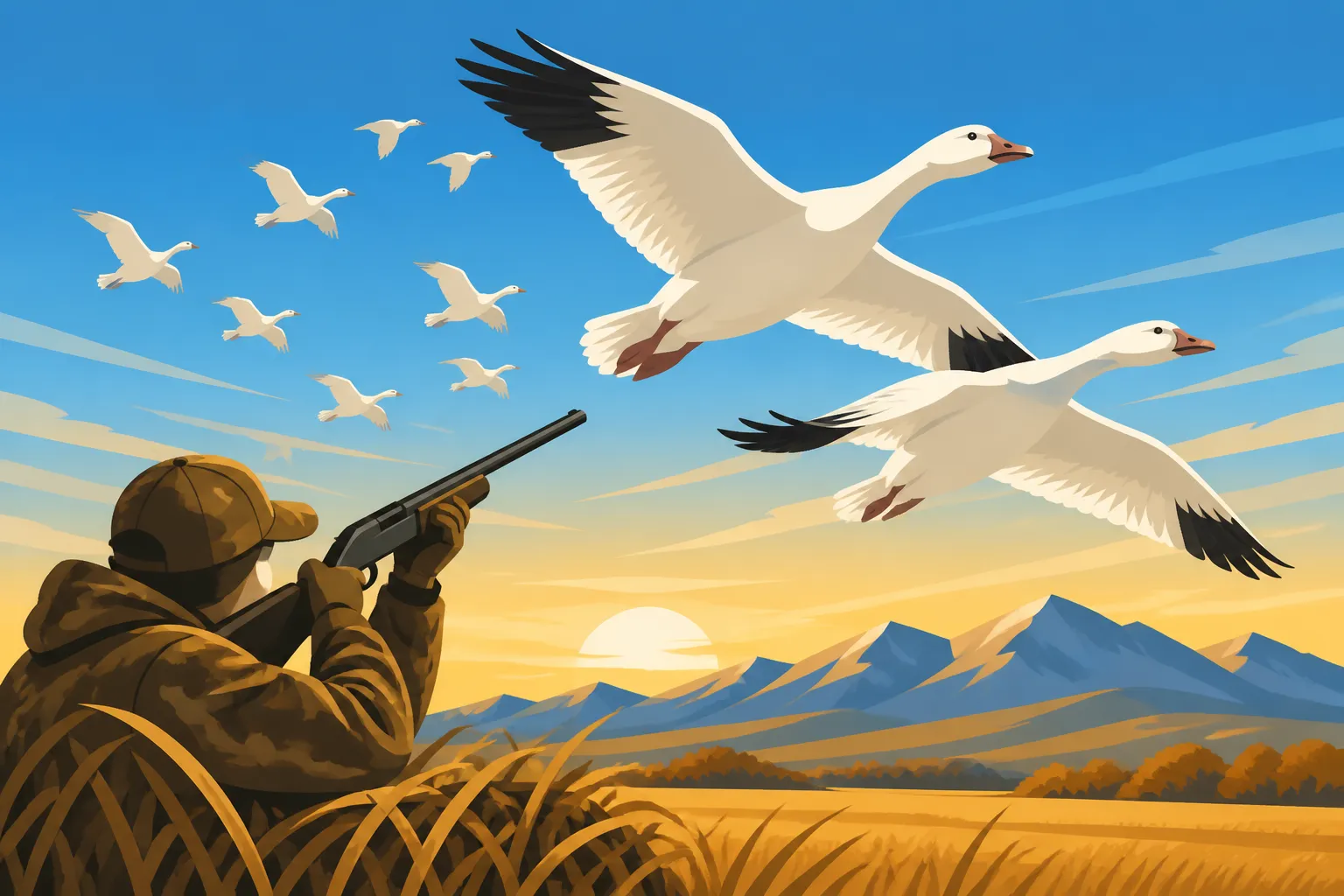
For many, October is the month for snow geese in Alberta. From late September through mid-October, the province typically experiences the peak of the fall migration. This is when truly colossal flocks, numbering in the tens or even hundreds of thousands, descend upon the agricultural heartland. These birds are often more experienced travelers, and as a result, can be much warier than the early arrivals. They've seen decoy spreads and heard calls before.
During this period, focus your scouting on larger stubble fields, especially those with corn or wheat, and seek out the major roosting lakes or sloughs where hundreds of thousands of birds might gather overnight. The daily pattern will typically involve leaving the roost at first light, flying to a feeding field, returning to the roost midday, and then perhaps another feeding flight in the afternoon before settling in for the night. This consistency, if you can find it, is what allows for effective decoy spreads and strategic calling. Using tools like GoHunt can help you identify these larger agricultural tracts and potential roosting areas by analyzing satellite imagery and public land access points. Field Hunting Geese in Alberta Stubble offers specific tactics for this time.
Lingering and Late Season Opportunities
While the main push might be over by mid-October, snow geese can continue to pass through or stage in Alberta well into November, especially if mild weather persists and there’s ample food. These late-season birds are often the last of the adults, or birds that have been pushed further south by successive cold fronts. They can be incredibly wary, having survived many hunting encounters already.
Sometimes, birds that have staged for a long period in northern Alberta might make a short "hop" further south within the province before moving out of Alberta entirely. Hunters prepared for cold weather and who understand the birds' increased wariness can find excellent opportunities. At this point in the season, water sources may be freezing over, forcing birds to concentrate on the few remaining open areas. This can be a huge advantage for hunters who have done their homework. Hunting Deep Cold Late in the Season might provide useful tips for enduring these conditions.
The Spring Migration: Northbound Rush
As winter slowly releases its grip, usually by late March and extending through mid-April, the snow geese embark on their northern journey. This spring migration is characterized by an urgency that can be palpable. Birds are eager to reach their breeding grounds, and their flights can be incredibly direct and fast. The timing is often dictated by the "green-up" line and the retreating snow line—they'll follow the melting edge, feeding on the first exposed waste grain.
Spring hunting is usually focused on these newly exposed fields. The birds may not spend as much time in any one area, but when they do, the sheer numbers can be astounding. Licenses and regulations for spring snow goose hunting are distinct from fall, and it's essential to be aware of the specific Snow Goose Limits and Late Seasons that apply. Keep a close watch on weather reports for rapid warm-ups in late winter/early spring, as this will trigger the northward push.
Strategies for Hunting Alberta's Migrating Snow Geese
Knowing when snow geese pass through Alberta is only half the battle; the other half is knowing how to effectively hunt them during these various phases. Successfully hunting snow geese is an art form that blends meticulous scouting, strategic setup, and a good understanding of bird behavior.
Scouting and Identifying Hot Zones
Effective snow goose hunting begins long before you set out your first decoy. Scouting is absolutely non-negotiable. You need to identify where birds are feeding and where they are roosting. This means driving country roads, glassing fields at dawn and dusk, and observing flight lines. Pay attention to specific field types—recently combined pea, barley, or corn stubble are often prime. Using tools like GoHunt can be immensely helpful here, as you can layer public and private land boundaries with satellite imagery to identify promising areas and plan your access routes.
Once you've spotted birds, watch their patterns. Where do they enter the field? Where do they concentrate? What direction are they coming from? Are they consistently using the same field or moving around? Remember, snow geese are not shy about flying long distances between roosts and feeding areas. A prime feeding field might be 20 miles from their nearest roost, but they will make that flight twice a day without fail if the food is good. Getting permission from landowners is also critical, and early scouting can help you identify land to approach for access. Getting Permission for a Goose Field is a great resource.
Decoy Spreads and Concealment
When it comes to snow geese, bigger is often better for decoy spreads. We're talking hundreds, sometimes thousands, of decoys to truly replicate the massive feeding flocks these birds are accustomed to. A mix of full-body decoys, silos, and windsocks can be effective, with full bodies often reserved for the kill hole. Place your decoys in a general "J" or "V" shape, with the open end facing into the prevailing wind, indicating a landing zone. Crucially, leave a large landing zone in the middle of your spread for birds to feel comfortable dropping into.
Concealment is paramount. Snow geese have incredible eyesight, and they've learned to associate anything out of place with danger. Layout blinds are the standard for field hunting, and they must be brushed in meticulously with natural vegetation from the surrounding field. Digging pits, if landowner permission allows and ground conditions permit, offers superior concealment. Even a slight glint from a bare face or hand can flare a flock of wary snows. Consider wearing a facemask and gloves that match your surroundings. Setting a Goose Spread in Swathed Barley delves into specific setup tactics.
Calling and Decoying Tactics
Snow goose calling is a cacophony. Unlike the nuanced calls of Canada geese, snow geese are loud and constant. Your calling needs to mimic this volume and rhythm. Electronic callers are legal in many areas for snow geese and are often essential for attracting large flocks. Supplementing e-callers with mouth calls can add realism and allow for dynamic adjustments as birds approach. The goal is to create a constant "roar" of excitement that sounds like a safe, food-rich haven.
As birds approach, assess their reaction. If they're cupping their wings and looking to land, ease off the calling. If they're hesitant or flying by, increase the volume and intensity. Pay attention to how the lead birds are reacting. Sometimes, a well-placed flag waved strategically can be the final trigger to bring birds into range, simulating the wing beats of landing geese. Remember to use Non-Toxic Shot for Alberta Waterfowl as it's a requirement for hunting migratory birds.
Adapting to Conditions and Post-Harvest Landscapes
Alberta's weather can be notoriously unpredictable, and successful snow goose hunters must be adaptable. A warm spell might scatter birds, while a sudden freeze could concentrate them on specific open water or unharvested fields. The agricultural landscape itself is constantly changing; a field that was golden barley one day might be stubble the next, and then under a foot of snow a week later. Stay informed on local conditions, both weather and harvest.
Be prepared to move your spread if the birds shift their patterns. What worked yesterday might not work today. This might mean physically moving hundreds of decoys, but that flexibility is often what separates successful hunters from those who go home empty-handed. Late in the season, when most fields are combined, you might find birds targeting unharvested crops like standing corn, or even digging for tubers in wetlands if all else is frozen. The game is always changing, and your approach needs to change with it.
Disclaimer
This article is for general informational purposes only and does not constitute professional advice. Laws, prices and regulations vary by location and change over time. Consult a qualified professional for guidance on your specific situation.