Best Alberta Public Ground for Elk
Finding good public land for elk in Alberta can feel like looking for a needle in a haystack, especially when you're dreaming of those big bulls that seem to vanish the moment season opens. Many hunters get discouraged by heavy pressure or dense, unyielding timber, but don't give up hope! This guide is here to walk you through some of Alberta's best public grounds for elk, offering insights into where they live and how to effectively find them.
The Lay of the Land: Where Alberta Elk Thrive
Elk are adaptable creatures, but they definitely have preferences when it comes to habitat. Understanding these preferences is your first step to narrowing down those vast stretches of public land. It's not just about finding "public ground," it's about finding public ground that screams "elk habitat."
Foothills and Mountain Fringe
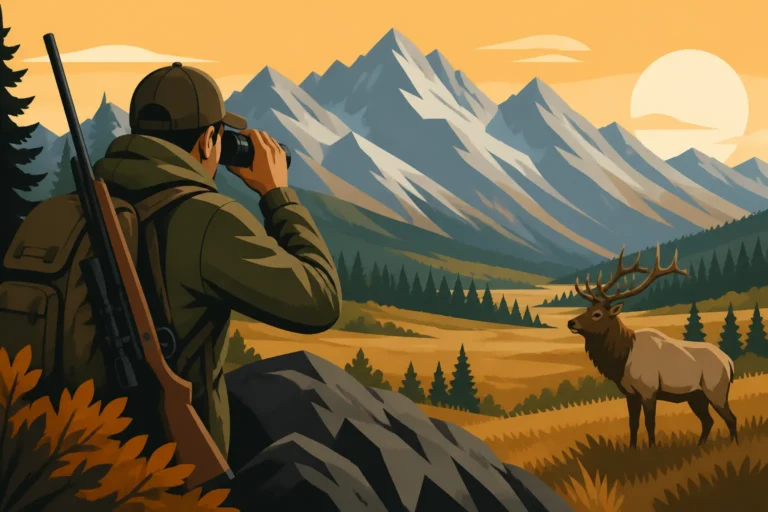
When most people think of elk in Alberta, their minds immediately go to the majestic foothills and mountain fringe country. And for good reason! These areas offer an incredible mosaic of habitat that elk absolutely adore. You'll find a mix of dense coniferous timber stands providing vital security cover, interspersed with open alpine meadows and grassy slopes that are perfect for feeding. Add in the numerous creek bottoms and river valleys, which offer water sources and crucial bedding areas, and you've got prime elk real estate.
Elk in these regions are masters of using the terrain to their advantage. They often gravitate towards north-facing slopes during warmer weather, seeking the cooler temperatures and denser shade. As the seasons progress, their patterns might shift, with early season bulls holding tight in thick timber, only to become more visible during the rut when their focus turns to breeding. Winter often sees them moving to lower elevations or south-facing slopes where snow depth is less and forage is more accessible. These dynamic movements mean you need to be versatile in your approach. For a deeper dive into the overall range, check out Elk in Alberta's Mountains and Farmland.
Parkland Pockets and Agricultural Edges
While the mountains get a lot of attention, don't overlook Alberta's parkland and agricultural edges. These transition zones, often characterized by a mix of aspen bluffs, dense willow thickets, and expansive cultivated fields, can hold surprisingly large numbers of elk. Here, elk find excellent security cover within the bluffs and brushy ravines during the daylight hours, often emerging into agricultural fields under the cover of darkness to feed on rich crops like barley, wheat, or canola.
Hunting these areas often presents a different set of challenges than the mountains. Access can be a major hurdle, as much of this land is private. However, there are still significant public land pockets, river valley bottoms, and Crown land parcels that border these agricultural zones. These interfaces are key, as elk will often travel between the safety of public cover and the abundant food on private land. Building relationships with landowners can sometimes unlock access to these prime feeding areas, though focusing on the public land avenues where elk retreat is often a more reliable strategy. The dynamic between elk and farmland is a complex one, as explored further in Elk on Farmland and the Damage Problem.
Top Public Land Destinations for Elk in Alberta
Now, let's talk about specific regions and areas where you stand a good chance of finding public land elk. These aren't secrets by any means, but they are consistently productive if you put in the effort.
The Foothills Public Land Use Zones (PLUZs)
Alberta's Public Land Use Zones (PLUZs) in the foothills are perhaps the most popular and productive public elk hunting grounds. Areas like the Ghost, McLean Creek, and the vast Livingstone-Porcupine Hills PLUZs offer hundreds of thousands of acres of accessible Crown land.
- The Ghost PLUZ: West of Cochrane, the Ghost offers rugged terrain, dense timber, and high-country meadows. Access points typically involve gravel roads leading into the heart of the zone. Early season can be quite busy, especially on weekends, but if you're willing to hike or utilize horseback access, you can quickly get away from the crowds. This area is known for its resident elk herds that move between the timbered slopes and river valleys. For more details on this particular area, you might find Hunting the Ghost Public Land Use Zone useful.
- McLean Creek PLUZ: Situated southwest of Calgary, McLean Creek is another popular destination. While perhaps more renowned for recreation, its eastern edges and more rugged sections still hold elk. It's a challenging hunt due to the close proximity to urban areas and associated recreational pressure, but persistent hunters can find success, especially in the deeper valleys and less-traveled timber. Learn more about navigating this zone in Hunting the McLean Creek Area.
- Livingstone-Porcupine Hills: South of Calgary, stretching towards Crowsnest Pass, these hills offer a mix of open grasslands, aspen groves, and conifer stands. They hold strong elk populations, and the rolling hills provide excellent glassing opportunities. Access can be found off secondary roads, but like all PLUZs, understanding the specific motorized access rules is crucial. Be prepared for some steep climbs and dense cover, particularly along the creek drainages. Detailed strategies for these areas are covered in Hunting the Livingstone-Porcupine Hills.
While these areas see significant pressure, especially during the archery and early rifle seasons, the sheer size and ruggedness allow elk to find refuge. Success often comes down to pushing further than others, getting off the main trails, and being willing to cover tough ground.
| PLUZ Name | Primary Terrain | Typical Elk Density | Hunting Pressure | Key Access Challenge |
|---|---|---|---|---|
| Ghost PLUZ | Rugged mountains, dense timber, river valleys | Moderate to High | High, early season | Steep hikes, horse zones |
| McLean Creek PLUZ | Foothills, mixed forest, recreational trails | Moderate | Moderate to High | Recreational users |
| Livingstone-Porcupine Hills | Rolling hills, grasslands, timber pockets | High | Moderate | Off-road restrictions |
Remote Boreal and Northern Forests
When you want to truly get away from the crowds and challenge yourself, look north to Alberta's vast boreal forests. While elk densities might be lower and more dispersed than in the foothills, these areas offer the potential for truly unpressured bulls. The sheer scale of the landscape means elk can roam undisturbed across huge tracts of land.
These areas, often deep within the "Green Area" of the province, are characterized by muskeg, black spruce bogs, aspen and birch stands, and numerous lakes and rivers. Access often means navigating a network of logging roads, oil and gas seismic lines, and cutlines. While the cover is thick, these linear features can be key travel corridors for elk. Species like moose also thrive here, as described in Moose Across Alberta's Boreal and Foothills, and their habitat often overlaps.
Hunting here requires patience, excellent navigation skills (a good GPS unit or a reliable app like onX Hunt is non-negotiable), and a willingness to still-hunt or call effectively in dense cover. Focus on transitional zones between different forest types, edges of muskeg, and areas with recent timber cuts that offer new browse. Expect a more wilderness-style hunt, often requiring a quad or even a boat for deep access. More general information on hunting these types of regions can be found in Hunting Alberta's Boreal Forest Country.
Cypress Hills Interprovincial Park (Public Land Portions)
Tucked away in southeastern Alberta, the Cypress Hills stand as a unique "island" forest rising out of the prairie. While much of the park is protected, there are specific WMUs (often requiring special draw licences) and surrounding Crown land areas that offer elk hunting opportunities. The elk here are distinct from their mountain cousins, often smaller-bodied but still offering a challenging hunt in an incredibly scenic setting.
The unique ecosystem of the Cypress Hills, with its lodgepole pine forests, fescue grasslands, and deep coulees, provides excellent habitat for a contained elk herd. Due to the limited public access and often draw-only nature of the hunts, pressure can be managed, offering a quality experience. Hunters targeting this area will need to be diligent about checking current draw regulations and understanding the specific boundaries of where hunting is permitted. The local herd dynamics are fascinating, which you can learn more about in The Elk Herd in the Cypress Hills. For specific park hunting information, refer to Hunting Cypress Hills Interprovincial Park.
Strategies for Finding and Accessing Public Elk Land
Identifying regions is one thing, but actually putting boots on the ground in a productive spot takes effort and smart planning.
Leveraging Mapping Tools and Scouting
In today's hunting world, digital mapping tools are an absolute game-changer, especially for public land elk. Platforms like onX Hunt and GoHunt provide invaluable layers of information that can save you countless hours of unproductive scouting. Start by using satellite imagery to identify key features:
- Dense Cover: Look for large, unbroken blocks of timber that offer security from human disturbance.
- Feed Areas: Identify natural clearings, old burns (which often produce lush new growth), and edges of agricultural fields if you're near the White Area.
- Water Sources: Elk need water daily, so mark all creeks, springs, and small ponds.
- Topography: Identify saddles, ridges, and pinch points where elk might travel. Look for north-facing slopes for bedding and south-facing slopes for winter feeding.
The land ownership layers are critical. With onX Hunt, for instance, you can clearly see the boundaries of Crown land, grazing leases, and private parcels. This allows you to plan your approach to avoid trespass and maximize your time on legal hunting ground. Learn how to interpret these layers by reviewing Reading Alberta's Crown Land Layers on onX. Using historical data, if available through services like GoHunt, can sometimes give insights into past harvest locations or herd movements. Pre-season scouting, even from your couch, can make a huge difference, as detailed in Scouting With Satellite Imagery in Alberta.
Understanding Access and Regulations
Access is king, especially on public land. Just because it's Crown land doesn't mean you can drive your quad anywhere. Alberta has specific regulations regarding motorized vehicle use on public land, particularly within PLUZs. Some areas may be restricted to foot or horseback traffic only, or only allow quads on designated trails. Always check the specific regulations for the WMU and PLUZ you intend to hunt.
- Green Area vs. White Area: Alberta's land is broadly categorized into the Green Area (forested Crown land) and White Area (privately owned or settled Crown land). While the Green Area typically offers more expansive public hunting opportunities, parts of the White Area also have significant river valley systems and smaller Crown parcels that can hold elk. Understanding the Finding Access on Alberta Crown Land guidelines is crucial.
- Grazing Leases: Some Crown land is leased out for grazing. While you still have the right to hunt, it's a matter of courtesy and good hunter-landowner relations to contact the leaseholder before entering. They can often provide valuable information about elk movement and can direct you to appropriate access points, avoiding conflicts with cattle. Check out Using Alberta's Recreational Access Mapping Tool to identify these leases and access information.
- Special Considerations: Some WMUs might have specific antler point restrictions or draw requirements for antlered elk. Always refer to the current Alberta Hunting Regulations to ensure you are compliant.
Physical Scouting and Local Knowledge
While maps are powerful, there's absolutely no substitute for physical scouting. Nothing beats boots on the ground to confirm what your maps are telling you. Get out there before the season opens, if possible, and look for fresh sign:
- Tracks: Look for recent tracks in muddy areas, along trails, or near water sources. Pay attention to size and direction of travel.
- Rubs and Wallows: During the rut, rubs on trees and muddy wallows are clear indicators of bull activity.
- Droppings: Fresh droppings indicate recent elk presence.
- Trails: Follow well-used game trails, especially those leading from bedding to feeding areas.
Another often-overlooked strategy is talking to locals. Ranchers, forestry workers, or even just folks at the local coffee shop in a small town near your hunting area can offer invaluable, current insights into elk movements, areas that are holding animals, or recent changes in habitat. Just be respectful and don't expect them to give up their secret spot, but general information can be incredibly helpful. This kind of research is part of Scouting an Alberta WMU Before Season and can even lead to Asking an Alberta Landowner for Permission for private land opportunities if you build a good rapport.
Hunting public land elk in Alberta is rarely easy, but it is immensely rewarding. It requires effort, smart planning, and often, a good dose of perseverance. By understanding elk habitat, targeting known public land hotspots, and effectively using modern tools combined with old-fashioned scouting, you can dramatically increase your odds of success. Remember to always hunt ethically, respect the land, and leave no trace.
Disclaimer
This article is for general informational purposes only and does not constitute professional advice. Laws, prices and regulations vary by location and change over time. Consult a qualified professional for guidance on your specific situation.