Wolverine in Alberta’s Backcountry
For those of us who spend any real time deep in Alberta’s wildest places, whether it's chasing big game or just soaking in the untamed beauty, there's always an air of mystery around the truly reclusive creatures. The wolverine is perhaps the ultimate symbol of that wild remoteness, rarely seen, often heard about in hushed tones, and generally misunderstood. This guide aims to pull back the curtain on this incredible animal, helping you understand where they roam in Alberta's backcountry, their unique adaptations, and how to appreciate their presence even if you never catch a glimpse.
Understanding the Elusive Wolverine in Alberta
The wolverine, or Gulo gulo as the scientists call it, is more than just a fierce-looking animal; it's a testament to raw survival in some of the most unforgiving landscapes on Earth. In Alberta, these powerful mustelids inhabit the vast, often impenetrable backcountry, embodying the spirit of the true wilderness.
The Wolverine's Natural Range and Habitat in Alberta
When we talk about wolverine country in Alberta, we're really talking about the province's most rugged and remote regions. Their primary haunts are the expansive boreal forest in the north, stretching east from the foothills, and the majestic Rocky Mountains to the west. Think of those massive tracts of undisturbed wilderness, places where human impact is minimal and nature still dictates the terms.
These animals thrive in environments with deep, persistent snow cover and cold temperatures, which are hallmarks of Alberta’s northern and mountain climes. They'll utilize dense coniferous forests for cover, venturing into alpine tundra and even treeline habitats in the mountains. The vastness of these areas provides the necessary isolation and abundant food sources they need to survive. If you're backpacking into areas like the Willmore Wilderness Park or the remote sections of the northern Hunting Alberta's Boreal Forest Country, you're in prime wolverine habitat, even if you never see one. They're masters of staying hidden, melting into the shadows of spruce and pine.
Physical Characteristics and Adaptations for Survival
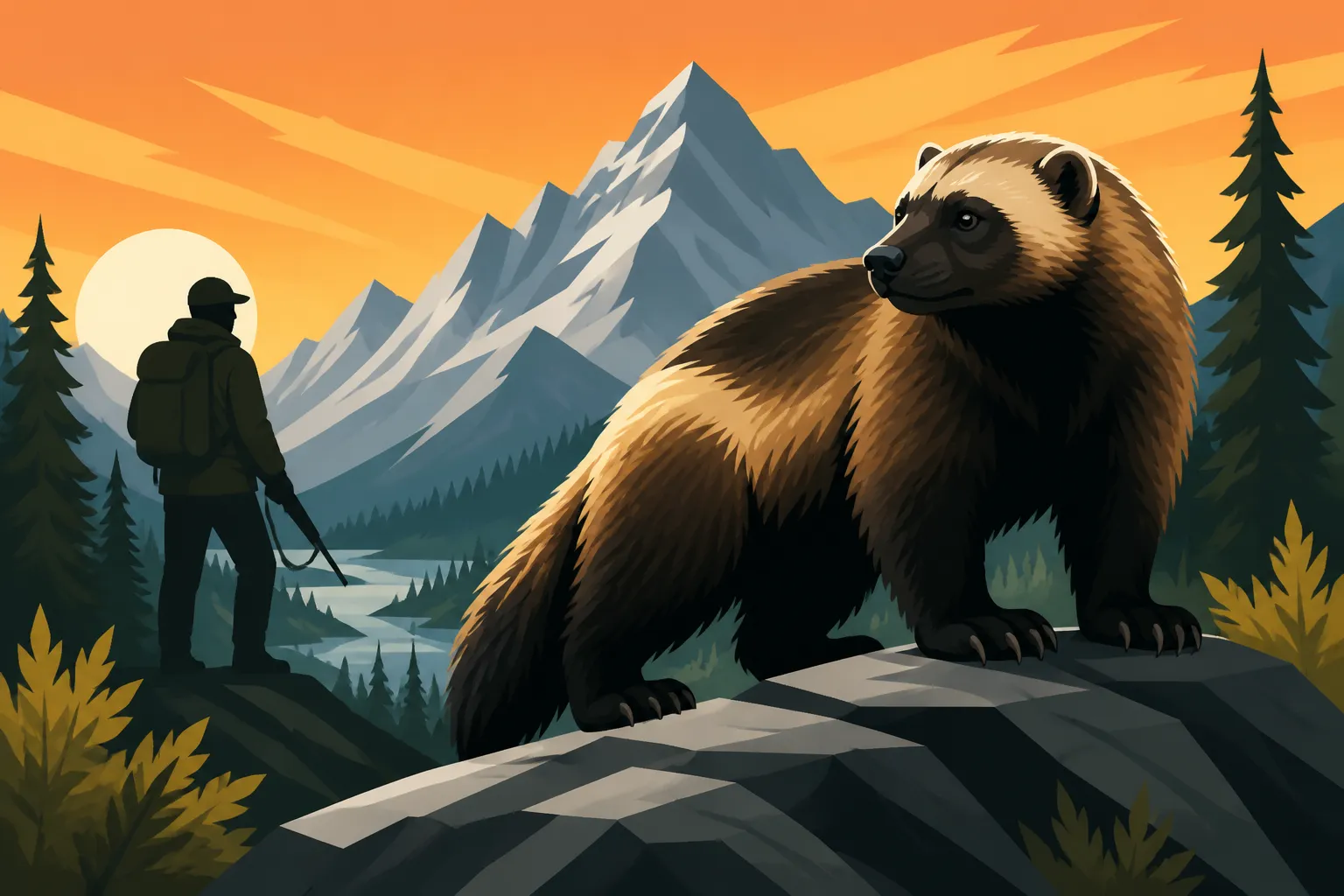
A wolverine is a stocky, muscular animal, often described as a miniature bear with a bushy tail. They typically weigh between 20 to 40 pounds, though some males can push beyond that, making them surprisingly heavy for their stature. Their dark brown fur, often highlighted by a lighter, yellowish stripe running from their shoulders down their flanks, provides excellent camouflage in timbered environments. But it's not just about looks; every aspect of a wolverine is built for extreme conditions.
Their thick, coarse fur is highly insulating and remarkably frost-resistant, keeping them warm in brutal Arctic-like cold. Their large, five-toed paws act like natural snowshoes, allowing them to traverse deep snow drifts with relative ease, a huge advantage over other predators that might sink and flounder. Perhaps most iconic are their incredibly powerful jaws and strong claws, which allow them to tear through frozen carcasses, crush bone, and dig into snow or frozen earth with astonishing efficiency. They possess a tenacity that is legendary, capable of driving off much larger predators like bears or wolves from a kill. Their keen senses of smell and hearing are vital for locating prey and carrion across vast distances in their harsh environments, helping them to locate even deeply buried food caches.
Wolverine Behavior and Ecology in Alberta's Wilds
Understanding how wolverines behave and interact with their environment gives us a deeper appreciation for their role in the ecosystem and their incredible resilience.
Diet and Hunting Strategies
Wolverines are, above all, opportunists. While they are certainly formidable predators, their diet is incredibly varied, often relying heavily on carrion, especially during the lean winter months. They are adept at scavenging kills left by larger predators, and their powerful jaws and digestive system allow them to process bones and frozen meat that other scavengers might ignore.
When they do hunt, they are persistent and clever. They'll stalk deer, elk, or moose, particularly young, old, or injured animals, but they are also incredibly efficient at preying on smaller mammals like hares, voles, and marmots. Their ability to travel long distances, even through deep snow, gives them an edge. They’ve been known to chase down prey in snow-covered terrain where the prey struggles, using their broad feet to stay on top. They're also notorious for caching food, burying surplus meat or even entire carcasses under snow or debris to return to later, a vital strategy for survival in lean times. This caching behaviour means they can make the most of every hunting success.
Reproductive Habits and Lifecycle
Wolverines are largely solitary animals, preferring to roam vast territories alone, coming together only briefly for mating. Their reproductive cycle is quite unique, featuring a phenomenon called "delayed implantation." Mating typically occurs in the summer, but the fertilized embryos don't implant in the female's uterus and begin developing until late winter, often in January or February. This ensures that the kits are born in early spring when conditions are starting to improve, around February or March, giving them the best chance of survival.
Litters usually consist of two to three kits, born in secure dens often dug deep into snowdrifts, under fallen logs, or in rock crevices, particularly in areas like Hunting an Alpine Basin in the Mountain WMUs. The mother raises the kits alone, teaching them essential survival skills throughout the spring and summer. They remain with their mother until they are strong enough to disperse and establish their own territories, usually by the following winter. Given their extensive range and solitary nature, finding another wolverine for mating can be a challenge, and their relatively low reproductive rate makes them more vulnerable to population changes.
Encountering and Coexisting with Wolverines in the Backcountry
While a direct encounter with a wolverine is incredibly rare for most backcountry users, understanding their presence and respecting their habitat is key to responsible outdoor ethics.
Signs of Wolverine Presence
Since seeing a wolverine is like winning the wildlife lottery, most of us will only ever find signs of their passing. Learning to identify these clues can be immensely rewarding and give you a sense of just how wild the country you’re in truly is. Look for their tracks in snow or mud – they’re quite distinctive. Wolverines have five toes, and their tracks are relatively large for their body size, often appearing more rounded than a canine print and showing prominent claw marks. They tend to have a bounding gait, leaving paired tracks when moving at speed. A skilled tracker might even confuse them with other large predators, but pay attention to the size and the distinct five toes.
| Feature | Wolverine Track | Wolf Track | Lynx Track | Fisher Track |
|---|---|---|---|---|
| Toes Visible | 5 (usually 4 in print) | 4 (usually 4 in print) | 4 (often indistinct) | 5 (usually 4 in print) |
| Claw Marks | Prominent | Prominent | Retractible claws, usually absent | Prominent |
| Shape | Rounded, stout | Oval, elongated | Rounded, large pad | Rounded, smaller than wolverine |
| Size (Length) | 3-5 inches | 4-5 inches | 4-6 inches | 2-3 inches |
| Gait | Bounding, shuffling | Direct register, trotting | Direct register, bounding | Bounding, gallop |
Beyond tracks, you might find scat, which can vary depending on their diet but often contains hair, bone fragments, and berries. Perhaps the most compelling evidence of a wolverine is the aftermath of a kill or a food cache. These will be messy, often showing signs of powerful tearing and digging. Sometimes, a wolverine will bury a large portion of a carcass under snow, dirt, or debris, a clear sign of their industrious nature. Setting up remote trail cameras in deeply wild areas can also provide valuable insights; many wolverine sightings come from dedicated researchers using these tools. If you use a trail camera, ensure you follow all regulations for Trail Camera Rules on Alberta Public Land.
Safety and Respect in Wolverine Habitat
It's crucial to understand that wolverines pose virtually no threat to humans. They are incredibly shy and reclusive, preferring to avoid people entirely. Most reported sightings are fleeting glimpses as the animal quickly vanishes into cover. That said, any wild animal should be treated with respect and caution. If you are fortunate enough to spot a wolverine, observe it from a distance and never attempt to approach it. If you happen upon a wolverine that feels cornered or is protecting a kill, it might display defensive behaviour, but this is incredibly rare. The general rules for backcountry safety apply: make noise on trails, carry bear spray in areas where large carnivores might be present (see What Happens If You See a Grizzly), and store food securely to avoid attracting any wildlife to your camp. Keeping a clean camp is paramount, not just for wolverines, but for all animals who might be tempted by an easy meal. This is part of being a responsible steward of the land.
Conservation Status and Management Efforts
Wolverines are listed as a "Species of Special Concern" in Alberta, reflecting their low population density and sensitivity to human disturbance. Their vast territory requirements mean that habitat fragmentation and loss are significant threats. As roads push deeper into the boreal forest or development encroaches on mountain ranges, the undisturbed wilderness they depend on shrinks. Climate change is also a concern, as their reliance on deep, persistent snow for denning and travel could be impacted by warming temperatures.
Alberta Environment and Parks, along with research institutions, conduct monitoring programs to track wolverine populations and better understand their movements and needs. Data collected from trappers, remote cameras, and incidental sightings (which you can report to Fish and Wildlife if you get lucky enough to see one) all contribute to these efforts. Understanding these magnificent creatures is the first step toward ensuring they continue to thrive in Alberta's wild landscapes for generations to come. Your presence in the backcountry, while respectful and informed, contributes to the value of these wild places for all species.
Tools and Techniques for Tracking and Observing Wolverines (from a distance)
For those who are truly fascinated by wolverines and want to learn more about their movements and presence, there are some modern tools and techniques that can help, primarily used by researchers but also beneficial for the curious enthusiast.
Remote Sensing and Data Collection
One of the most effective ways to understand wolverine distribution and activity without direct human interference is through remote sensing. This primarily involves the strategic placement of trail cameras. These motion-activated cameras can capture images or video of wolverines as they move through their territory, providing invaluable data on their presence, travel corridors, and even individual identification through unique markings. Placing these cameras along natural travel routes, like old logging roads, game trails, or near potential food sources, increases the chances of capturing an image. Researchers also use GPS collars to track individual wolverines, collecting detailed information on their vast home ranges, daily movements, and habitat use, though this is a highly specialized and regulated activity.
For the keen backcountry enthusiast or hunter, understanding potential wolverine habitat can also be aided by digital mapping tools. Platforms like GoHunt offer detailed satellite imagery and topographical maps, allowing you to identify remote, rugged terrain, dense timber stands, and high-elevation areas that wolverines prefer. By overlaying public land boundaries, you can pinpoint areas of Public Hunting Land in Alberta that also happen to be prime wolverine country. While you won't be "hunting" wolverines, using these mapping tools to explore and understand their potential stomping grounds can deepen your connection to the wild. You can examine remote areas using Scouting With Satellite Imagery in Alberta to identify suitable wolverine habitat, such as unfragmented forests or high-altitude treelines, helping you appreciate the sheer scale of the wilderness they inhabit.
Understanding Their Movements in Relation to Other Game
Wolverines, as opportunistic scavengers and predators, are intrinsically linked to the movements and populations of other big game species. They will often follow the migrations of ungulates like deer, elk, and moose, capitalizing on any natural mortalities or kills made by other predators such as wolves and cougars. Understanding where populations of species like White-Tailed Deer, Alberta's Most Hunted Big Game or Moose Across Alberta's Boreal and Foothills are densest can give you clues about areas where wolverines might also be present, albeit in lower numbers.
Their wide-ranging habits mean they often overlap territories with other large carnivores. They're part of a complex web, sharing a role in keeping ecosystems healthy by cleaning up carcasses and preying on vulnerable animals. Using mapping applications or even physical maps, you can identify remote wilderness areas that feature diverse game populations, knowing that such an environment is more likely to support a wolverine. These tools can highlight areas of the Hunting Alberta's Foothills Country or the northern boreal that are rich in wildlife, suggesting prime habitat for the elusive wolverine, offering a sense of the complete ecosystem you're exploring. Even if your goal is to hunt, recognizing the signs of these top-tier predators like wolverines, wolves, and even Alberta's Predators and Where They Live adds another layer of appreciation for the wildness of your surroundings.
Disclaimer
This article is for general informational purposes only and does not constitute professional advice. Laws, prices and regulations vary by location and change over time. Consult a qualified professional for guidance on your specific situation.