How a Hard Alberta Winter Culls Game
Alberta winters are legendary for their beauty, but for our wild game populations, they can be an absolutely brutal test of survival. When the snow piles up and the mercury plunges for weeks on end, it's natural to worry about the deer, moose, and elk out there. This guide dives deep into how these harsh conditions naturally cull game, impacting everything from individual animals to the long-term health of our beloved herds.
The Harsh Reality of an Alberta Winter for Wildlife
Let's face it, winter in Alberta isn't just a "cold snap." We're talking about relentless cold, deep snow, and blizzards that can last for days, blanketing the landscape and locking away vital food sources. It's a true gauntlet for every wild creature, pushing them to their absolute physical limits. Understanding these challenges helps us appreciate the incredible resilience of Alberta's wildlife, and the tough choices nature makes to ensure the strongest survive.
Deep Snow: Impact on Mobility and Energy Expenditure
Imagine trying to wade through waist-deep snow, day in and day out, just to find your next meal. That's the daily reality for many of Alberta's ungulates when a hard winter settles in. Deep snow is probably the biggest physical challenge. Every step becomes an energy-sapping struggle, burning precious calories that animals desperately need to stay warm and alive.
Think about a mule deer trying to escape a coyote in deep drifts. Its long legs might give it an advantage over a whitetail in some terrain, but in truly deep, crusty snow, both are at a severe disadvantage. The deep snow acts like a treadmill, forcing them to expend enormous amounts of energy just to move from a bedding area to a feeding area, or to evade a predator. This constant struggle weakens them, making them more vulnerable. Animals that might easily outrun a wolf in the fall might be brought down simply because they can't break through the snow fast enough. You can often see this firsthand after a particularly heavy snowfall – tracks showing where deer have wallowed, not walked, through the drifts.
Extreme Cold and Wind Chill: The Energy Drain
Beyond the physical barrier of snow, there's the relentless cold. When temperatures drop to -30°C and lower, especially with wind chill, animals are constantly burning energy just to maintain their core body temperature. They grow thick winter coats for a reason, but even the densest fur has its limits.
Imagine standing outside in just a heavy coat for hours, without movement, in those kinds of temperatures. Your body would scream for warmth and fuel. Wildlife is no different. They have evolved incredible adaptations, like metabolic slowdowns and seeking thermal cover, but there's only so much they can do. Every degree below freezing requires more energy, more fat reserves to be metabolized. If their diet isn't providing enough calories, or if they're already weakened by disease or injury, these extreme temperatures can quickly become lethal. This is why you often see deer yarding up in dense stands of conifers, or elk hunkering down in thick river bottoms – they're desperately trying to escape the biting wind and conserve every bit of warmth. Hunting Alberta Winter Weather Safely highlights the risks even we face, let alone the animals.
Scarce Food Resources: Nutritional Stress
The third major punch winter delivers is the scarcity of food. Not only are growing plants dormant, but whatever forage is available is often buried under layers of snow. What was once an abundant buffet in the fall becomes a challenging treasure hunt.
Deer, moose, and elk are browsers and grazers. Whitetails, for example, rely heavily on woody browse, the buds and twigs of shrubs and young trees. But when a metre of snow covers everything but the tallest branches, their options shrink dramatically. Mule deer in more open country might scrape away snow to find dried grasses or forbs, but if the snow is too deep or has a hard crust, this becomes impossible or too costly in terms of energy. Moose, with their long legs, can browse higher than deer, but even they struggle when deep snow restricts movement to new feeding grounds. What Whitetails Eat Through Winter explains just how limited these options can become.
Animals often enter winter with varying fat reserves. Those that didn't get enough to eat during the fall, perhaps due to drought or a poor mast crop, are already at a disadvantage. When the winter diet is further restricted in quantity and quality, they enter a state of nutritional stress. Their bodies start breaking down muscle tissue for energy, further weakening them and making them susceptible to disease and predation. It's a vicious cycle where less food means less energy, which means less ability to find more food.
How Winter Selectively Culls Game Populations
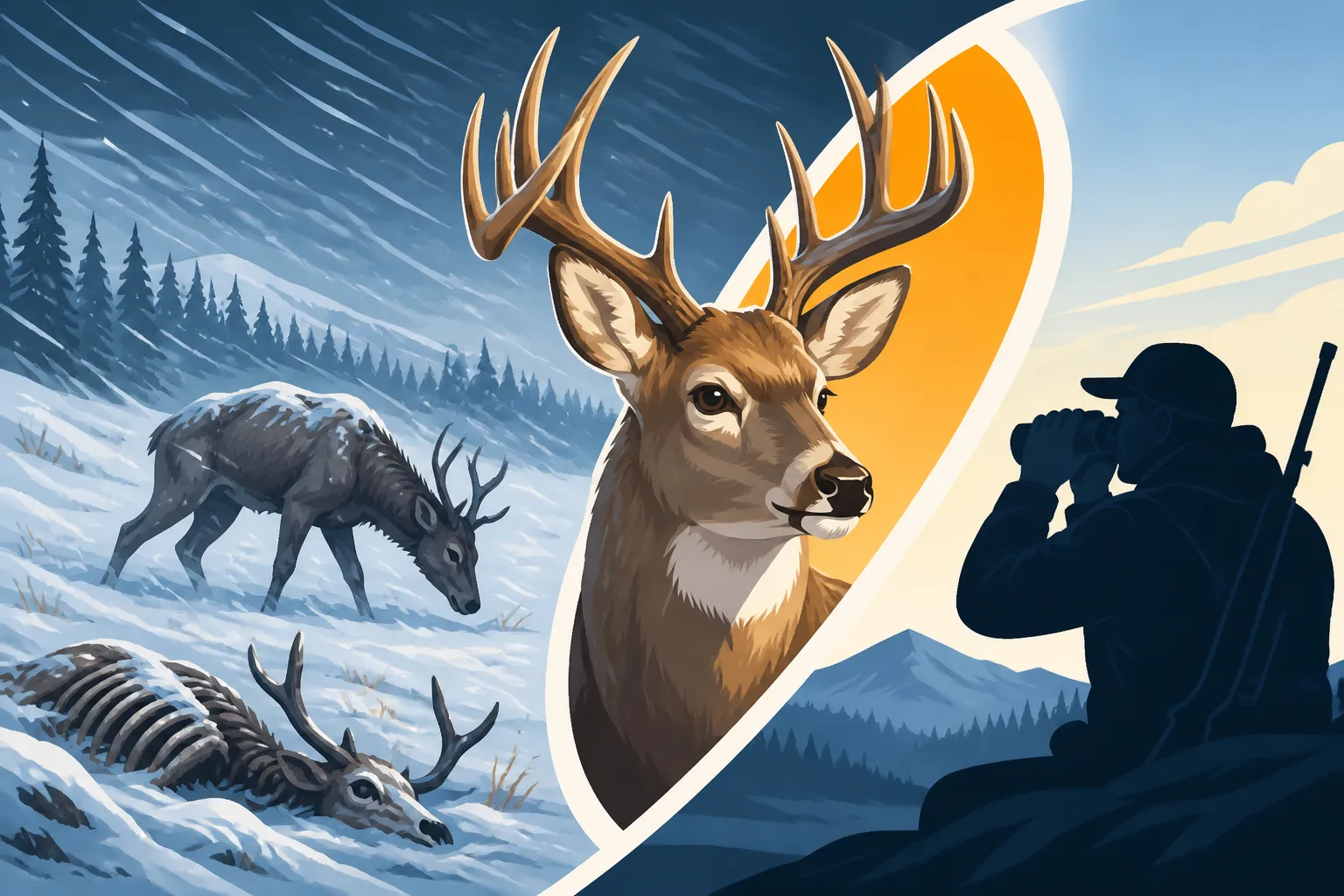
The concept of a "winter kill" might sound harsh, but it's a natural, albeit brutal, mechanism that plays a critical role in the long-term health and balance of wildlife populations and their ecosystems. It's nature's way of ensuring that only the fittest survive to reproduce, and that herd sizes stay within the carrying capacity of their habitat.
The Young, Old, and Weak: Natural Selection at Play
Winter isn't an indiscriminate killer; it's a highly selective one. The animals that typically succumb first are:
- The Young (Fawns, Calves): First-year animals simply haven't had as much time to build up fat reserves, nor do they have the experience or physical strength of their adult counterparts. Their smaller bodies lose heat faster, and their ability to move through deep snow is often limited. A late-born fawn, for example, stands a much lower chance of surviving a tough winter than one born earlier in the spring.
- The Old: Senior animals, especially those past their prime reproductive years, might have worn teeth making it harder to process tough winter forage. They may have accumulated injuries over the years, or their metabolism simply isn't as efficient. They are less able to withstand the nutritional stress and physical demands.
- The Sick or Injured: Any animal carrying a disease, parasite load (like ticks on moose), or a lingering injury from the rut or an accident, is already compromised. Winter simply tips the scales against them. This is where you really see natural selection in action – the truly resilient animals make it through, strengthening the genetic pool of the survivors.
This culling, while sad to witness, ultimately leads to a healthier, more robust population. It removes individuals that might struggle to reproduce successfully or might spread disease if they survived.
Impact on Different Species: Varying Vulnerabilities
Not all big game species in Alberta are equally affected by harsh winters. Their biology, size, and preferred habitats play a huge role in their vulnerability.
- White-tailed Deer: Whitetails are often hit hardest by deep snow. Their relatively short legs make travel in deep snow extremely difficult, forcing them to "yard up" in sheltered areas. While this conserves energy, it also concentrates them, putting more pressure on limited browse in that specific area. If those yards are heavily browsed out or predators find them, mortality can be significant. Their preferred habitat often includes aspen parkland or bush country, which offers some shelter, but even these areas can become challenging. Where Alberta Whitetails Bed in Deep Snow illustrates how crucial specific cover becomes.
- Mule Deer: Mule deer, with their longer legs and preference for more open, broken country like coulees and badlands, can often handle moderate snow depths better than whitetails. However, they rely more on foraging by pawing through snow for dried grasses. If the snow becomes too deep, crusted, or icy, they struggle to access food. Their movement is less restricted than whitetails, but their energy expenditure can be higher if they must constantly move to find ungrazed patches. A hard winter combined with habitat fragmentation can hit mule deer populations significantly, as seen in Why Mule Deer Numbers Fell in Some WMUs.
- Moose: Moose are built for snow. Their long legs allow them to navigate deep drifts that would completely immobilize deer. They also browse higher, accessing twigs and branches above the snow line. However, they are not immune. Extremely deep snow can still restrict their movement, making finding new browse challenging. Furthermore, moose can be heavily impacted by winter ticks. A prolonged, late spring can mean more ticks survive, weakening moose that are already stressed from the winter. How Winter Ticks Affect Alberta Moose is a real problem.
- Elk: Elk are quite resilient. Their larger size and herd dynamics offer some protection. They can push through snow, and in many areas, they feed in open fields that can be blown clear of snow, or in river bottoms where thermal cover is good. However, concentrated elk herds, especially on winter ranges with limited forage, can suffer during severe winters, particularly the calves. When they move onto agricultural fields for food, they often do so out of necessity.
Predation Increases: The Advantage Shifts
Winter shifts the balance of power in the predator-prey relationship. A healthy, strong deer or moose can often outrun a wolf or coyote. But a deer weakened by cold, hunger, and struggling through deep snow becomes an easier target.
Predators, such as wolves and coyotes, are often better adapted to travel in deep snow due to their smaller foot loading (their weight is spread over a larger paw surface area). This means they can move more efficiently, closing the gap on struggling prey. A hard crust on the snow that supports a wolf's weight but breaks under a deer's can be a death sentence for the deer. This increased predation on weakened animals is another aspect of the natural culling process, ensuring that the most robust individuals are the ones that continue the lineage.
The Long-Term Effects and Ecosystem Balance
While observing the immediate impacts of a harsh winter can be tough, these events are integral to the long-term health and balance of Alberta's ecosystems. They represent a natural reset, ensuring sustainability for future generations of wildlife.
Population Dynamics and Recovery
After a severe winter, game populations will naturally see a dip in numbers. Wildlife managers keep a very close eye on these trends using various monitoring methods, which can often be tracked or understood by utilizing advanced mapping tools. For example, knowing general herd movements through tools like GoHunt can provide insights into where significant impacts might have occurred. This allows them to adjust hunting quotas and seasons for the following years, sometimes reducing tags to allow populations to rebound. The good news is that healthy populations are incredibly resilient. With good spring and summer conditions, survivors often have higher reproductive success, and calf/fawn survival rates improve due to less competition for resources. In a few years, numbers can bounce back remarkably well.
Habitat Improvement: Less Pressure on Browse
One of the less obvious but significant benefits of a winter culling event is the relief it provides to the habitat. When animal numbers are high, they can put immense pressure on their food sources, particularly woody browse in winter. This over-browsing can stunt plant growth, reduce future forage availability, and degrade the overall quality of the habitat.
A winter kill reduces the grazing and browsing pressure, allowing plants to recover and grow more robustly in subsequent years. This leads to a healthier, more diverse plant community, which in turn can support a larger, healthier game population in the long run. It's a harsh way to achieve it, but it's a vital part of the natural cycle, much like a forest fire clears out old growth to allow new life to flourish.
The Role of Hunters in a Hard Winter
As hunters, our role isn't just about the harvest; it's also about understanding and respecting the wildlife we pursue. In the wake of a truly hard winter, ethical considerations come to the forefront.
- Observation and Reporting: If you're out scouting or just enjoying the outdoors after a severe winter, observe the condition of the animals you see. Notifying Fish and Wildlife about significant winter kill observations can provide valuable data for management. Look for signs of weakened animals, or carcasses that might indicate the severity of the winter's toll. Alberta's Winter Kill and Game Numbers is a topic that wildlife managers track closely.
- Respecting Management Decisions: If wildlife managers decide to reduce tags or close certain seasons due to winter kill, it's crucial to understand and support these decisions. They are made based on scientific data to ensure the long-term health of the herds.
- Ethical Harvesting: Even without specific tag reductions, a tough winter can mean animals are more vulnerable. As hunters, we always strive for ethical, clean harvests. In a year following a hard winter, some hunters might choose to be even more selective, allowing younger animals more time to mature and contribute to the population's recovery.
Preparing for and Understanding Winter's Impact
For us hunters, understanding how winter impacts game isn't just academic; it influences our scouting, our hunting strategies, and our appreciation for the resilience of the animals we pursue.
Scouting for Winter Range: Identifying Crucial Areas
Long before the first snowflake falls, savvy hunters are thinking about winter range. These are the areas where game animals concentrate when the deep cold sets in, seeking thermal cover and whatever limited food they can find. These are typically south-facing slopes that get more sun exposure and may melt off faster, or dense stands of conifers like spruce and pine that intercept snow and block wind. River bottoms with thick brush and mature trees also offer excellent thermal cover.
When you're Scouting With Satellite Imagery in Alberta (and a tool like GoHunt can really shine here), you can pinpoint these areas from your armchair. Look for dense pockets of evergreens, steep slopes that will shed snow, and areas with south-facing aspects that get more sun. These are the lifeboats for game when the real winter hits. Understanding these patterns will give you a significant edge in future hunts, as animals will always gravitate to these critical survival zones.
Reading the Landscape: How Winter Changes Animal Movement and Survival Strategies
Once winter arrives, the landscape itself tells a story. Fresh snow reveals travel corridors, bedding sites, and feeding areas. Animals become much more predictable, as their movements are dictated by the most energy-efficient routes and access to the dwindling food supply. You'll notice deer, for instance, often sticking to well-worn trails or following frozen waterways to conserve energy. How Deep Snow Moves Deer Around is a prime example of this altered behaviour.
Learning to "read" these signs is essential. If you see signs of heavy browsing in a specific area, it tells you that animals are concentrated there, and likely struggling. If you observe animals moving slowly or lying down frequently, it's an indicator of their energy conservation efforts. Observing changes in their patterns allows you to anticipate where they'll be and understand the challenges they face. In extreme conditions, they often won't move much at all, unless absolutely forced to. Reading Whitetail Sign in Alberta Aspen Bluffs becomes even more critical in winter.
Post-Winter Observations: Finding Winter Kill and Understanding the Season's Toll
After the snow finally recedes and spring emerges, many of us head out to shed hunt or simply explore. This is when the true impact of the winter becomes visible. Finding carcasses, unfortunately, is a grim reality in some areas after a particularly hard winter. This isn't just a sad sight; it's a valuable data point.
When you find evidence of winter kill, pay attention to the species, age class (fawn, adult), and location. This information can help you understand which areas were hit hardest, and which animals were most vulnerable. Was it mostly fawns? Or older bucks that were run down by the rut? These observations contribute to a larger understanding of population health. Remember that this isn't a sign of failure in wildlife management, but rather a natural part of the cycle that ensures the long-term viability of our wild populations. When you're Hunting an Alberta Winter Range in Late Season, these observations become especially poignant.
Disclaimer
This article is for general informational purposes only and does not constitute professional advice. Laws, prices and regulations vary by location and change over time. Consult a qualified professional for guidance on your specific situation.