Alberta Trespass Law and Posted Land
One of the biggest anxieties for any hunter in Alberta, especially if you're new to a Wildlife Management Unit (WMU) or venturing beyond familiar territory, is the constant worry of accidentally stepping onto private land without permission. It's a real and valid concern, given the patchwork of ownership across the province. This guide is here to walk you through Alberta's trespass laws, help you understand what "posted land" actually means, and equip you with the knowledge and tools to confidently and legally access hunting areas, ensuring you avoid costly mistakes and maintain the integrity of our hunting community.
Understanding Alberta's Trespass Law: The Basics for Hunters
Alberta's landscape is a diverse mosaic of Crown land, private holdings, and various forms of lease agreements. For hunters, navigating this can feel like a minefield. The fundamental principle is clear: unless it's designated public land, you need explicit permission to be there. This isn't just about avoiding a confrontation; it's the law, and it's enforced. Many seasoned hunters have found themselves in hot water, not always intentionally, but due to misunderstandings or simply not knowing the specific rules that apply to different types of land.
The Core Principles of Alberta's Trespass Act
At its heart, Alberta's Trespass Statutes make it an offence to enter or remain on private land without the express permission of the owner or occupier. This isn't just a polite request; it carries legal weight. For hunters, this is amplified because you're often carrying a firearm, which adds another layer of responsibility. The law is designed to protect private property rights, and it applies whether the land is fenced, unfenced, cultivated, or wild. The onus is entirely on the hunter to know where they are and to have permission if they're on private ground. There's no grey area here: if you're on land that isn't publicly accessible Crown land, you need to have asked first. Many assume that if it's not explicitly signed, it's fair game, but that couldn't be further from the truth in Alberta. This is a crucial distinction that can save you a lot of grief. For a deeper dive, read What Alberta's Trespass Act Requires.
Hunter Responsibility: Ignorance Isn't a Defence
As hunters, we bear a significant responsibility to know the rules and to act ethically. Claiming ignorance of property lines or land ownership simply won't hold up if you're caught trespassing. This means you can't just follow a game trail across a field, assuming it's unowned wilderness. It's up to you to determine land status before you step foot on it. This proactive approach is not only essential for legal compliance but also for fostering positive relationships with landowners, who are often our most valuable allies in maintaining healthy game populations and access opportunities. Think about it: if you show up having already done your homework, a landowner is much more likely to trust you and grant access. It’s about building a reputation, not just for yourself, but for all hunters. This is why understanding Alberta Hunter Education Requirements often emphasizes ethical conduct and land access.
Recognizing Posted Land and No Trespassing Signs
You'd think recognizing posted land would be straightforward – just look for a sign, right? Well, in Alberta, it's a bit more nuanced than that. While signs are a clear indicator, not all private land is explicitly posted, and the absence of a sign doesn't automatically grant you permission. It's vital to know what you're looking for and what different markers imply.
What Constitutes "Posted" Land?
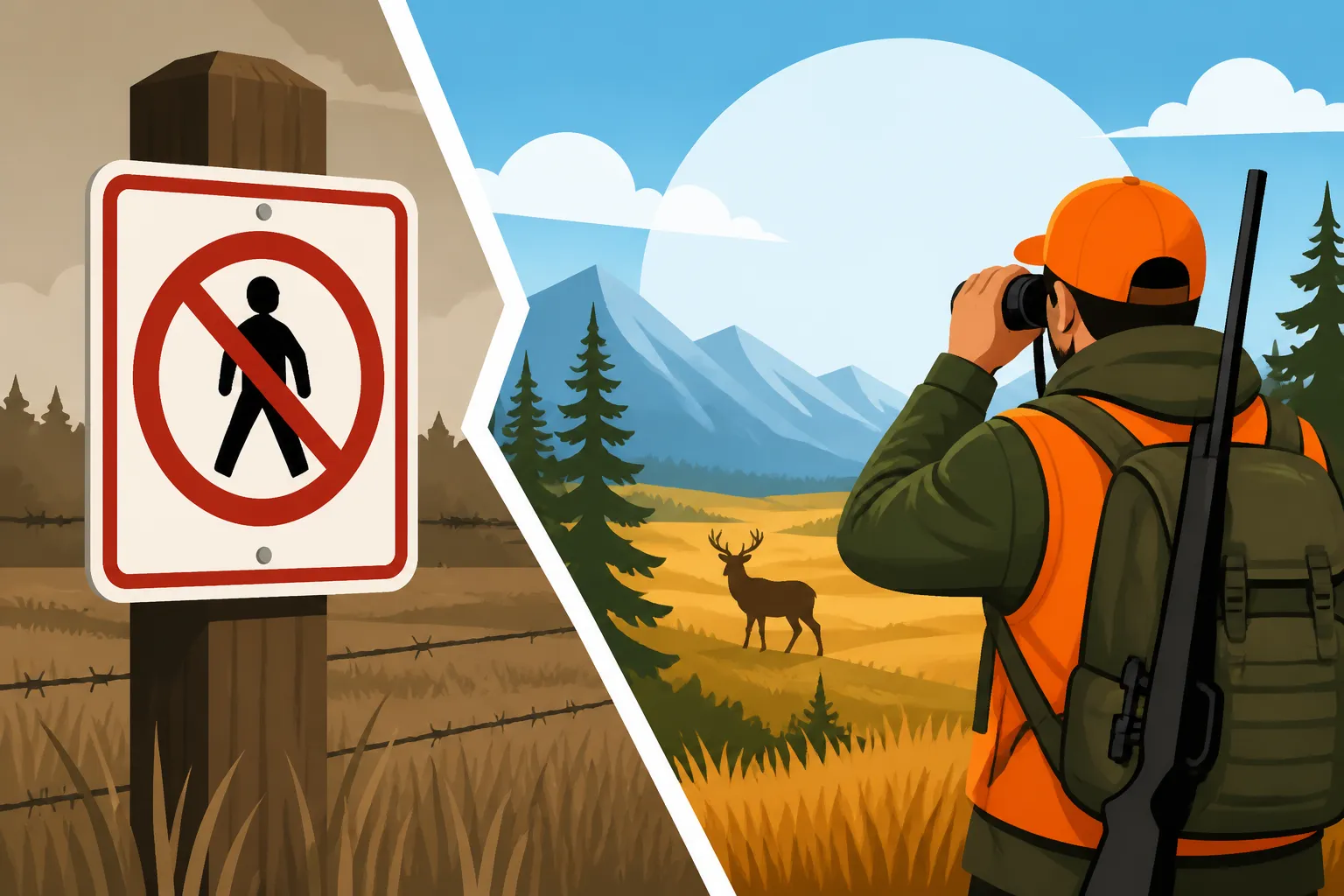
In Alberta, "posted land" generally refers to private property where the owner has clearly indicated that entry is prohibited or restricted. This can take many forms beyond the classic "No Trespassing" sign. It might be painted posts (often red or orange), signs indicating specific rules like "No Hunting" or "No Motorized Vehicles," or even physical barriers like locked gates or robust fencing. The key is that the owner has made a reasonable effort to communicate their intent to restrict access. However, it's critical to remember that even if land isn't posted with official signage, it's still private property if it's not designated Crown land. The lack of a sign does not make private land public or grant implied consent. Always assume land is private unless proven otherwise. Alberta Posted Land and Signage Rules goes into further detail on the legal requirements for posting.
Interpreting Different Signage and Fences
When you're out scouting or hunting, pay close attention to any markers you see. A simple fence line, even without a sign, can indicate a property boundary. If you see signs that say "No Hunting," "Private Property," or "No Entry," those are unambiguous. Sometimes, you might encounter signs specifically permitting some activities but restricting others, such as "Foot Traffic Only" or "No ATV Access." These are still clear directives from the landowner. A good practice is to always err on the side of caution. If you're unsure, treat it as private and seek permission, or simply find another spot. Ignoring these visual cues not only puts you at risk of legal trouble but also damages the relationship between hunters and landowners in general.
| Signage/Barrier Type | Implication for Hunters | Action Required |
|---|---|---|
| "No Trespassing" Sign | Explicitly prohibits entry. | Do NOT enter without direct permission. |
| "Private Property" Sign | Explicitly identifies land as private. | Do NOT enter without direct permission. |
| "No Hunting" Sign | Prohibits hunting specifically. | Do NOT hunt on this property. |
| Locked Gate/Robust Fence | Strong indication of restricted access. | Do NOT cross without permission. |
| Painted Posts (e.g., Red) | Often used to mark boundaries or restrictions. | Treat as restricted; confirm land status. |
| Working Farm/Ranch | Clearly private, even without signs. | Assume private; seek permission. |
| Unmarked Fence Line | Often indicates a property boundary. | Assume private beyond the fence; confirm. |
Navigating Different Land Types: Public vs. Private
Understanding the various categories of land in Alberta is fundamental to hunting legally and ethically. It's not a simple black-and-white distinction; there are nuances to Crown land, private deeded land, leased land, and even special management areas that hunters need to grasp.
The Nuances of Crown Land Access
Crown land in Alberta is generally considered public land and is open for recreational use, including hunting, unless otherwise specified by specific regulations or seasonal closures. This includes large tracts of the Green Area (forested land) and many areas within the White Area (privately owned land with some Crown parcels interspersed). However, even on Crown land, there can be restrictions. For example, Public Land Use Zones (PLUZs) have specific rules regarding vehicle use, camping, and other activities. Some areas may be designated as Provincial Parks or Natural Areas, where hunting is often prohibited. It's crucial not to assume all non-private land is fair game. Always check the regulations for the specific WMU and any local land use designations. Tools like Using Alberta's Recreational Access Mapping Tool can be incredibly helpful for identifying Crown land boundaries and associated regulations. You might also want to consult Finding Access on Alberta Crown Land for more general information.
Private Land: Deeded, Leased, and Controlled Access
Private land in Alberta is primarily categorized as deeded land (owned outright by an individual or corporation) or leased land.
- Deeded Land: This is straightforward. If land is deeded, it's privately owned, and you absolutely need permission from the owner or occupier to hunt on it. This is where most of Alberta's agricultural activity takes place, often characterized by cultivated fields, pastures, and farmsteads. Even small patches of bush within these areas are usually part of the private deed.
- Leased Land: This is where it gets a little more complex. The provincial government leases certain Crown lands to private individuals or companies, often for grazing livestock or forestry. These leases grant the leaseholder certain rights and responsibilities, but they do not automatically revoke public access for hunting, fishing, or other recreational activities unless specifically posted or regulated otherwise. The key here is the Recreational Access Regulation. While you can often access these lands, it's always best practice, and often legally required, to notify the leaseholder of your intent to enter. This courtesy can go a long way in building goodwill. Using mapping tools like onX Hunt, which clearly delineates land ownership and lease boundaries, can be a game-changer here. Similarly, GoHunt's mapping features can provide valuable insights into these complex land statuses.
Understanding Provincial Grazing Reserves
Provincial Grazing Reserves are a specific type of Crown land that is leased to grazing associations for livestock production. These lands are managed to balance agricultural use with other public values, including recreation. While they are technically Crown land, they have specific rules that hunters must adhere to, often related to vehicle access, potential livestock conflicts, and sometimes seasonal closures to protect sensitive areas or during specific farming operations. While general access for hunting is permitted, you absolutely should understand the specific rules for each reserve and often need to contact the grazing association or manager beforehand. Being courteous and upfront about your intentions will prevent misunderstandings and help ensure continued access for all hunters. For detailed information on specific access, refer to Getting Access to an Alberta Grazing Lease.
The Critical Importance of Gaining Permission
The single most important rule when hunting on private or leased land in Alberta is to always get permission. This isn't just about adhering to the law; it's about respect, safety, and ensuring that access opportunities remain open for future generations of hunters.
Why Permission is Non-Negotiable on Private Land
Simply put, it's illegal to hunt on private land without permission. The Trespass Statutes are clear on this. Beyond the legal implications, which can be severe, failing to ask for permission erodes trust between landowners and the hunting community. Landowners are often protective of their property, livestock, and families, and rightly so. An unannounced hunter can be perceived as a threat or a nuisance. Obtaining permission shows respect for their property rights, acknowledges their hard work, and opens the door for a cooperative relationship. Many of Alberta's most productive hunting grounds are on private land, and our continued access depends entirely on maintaining positive relationships with those who own and manage it. This really boils down to Alberta Landowner Permission Law.
Best Practices for Approaching Landowners
Approaching a landowner can feel intimidating, but a respectful and prepared approach usually yields positive results.
- Do Your Homework: Before you even knock on the door, know whose land you're trying to access. Use mapping tools like onX Hunt or GoHunt to identify property owners and boundaries. Know what species you're interested in hunting and approximately where on their land you'd like to go.
- Timing is Everything: Avoid busy times like calving season, harvest, or meal times. Weekday afternoons are often a good bet. Don't show up in the dark or too early in the morning.
- Dress Respectfully: You don't need to be in a suit, but don't show up covered in mud or looking disheveled. Make a good first impression.
- Be Polite and Clear: Introduce yourself, state your purpose directly (e.g., "I'm a hunter, and I'm interested in deer hunting on your property"), and ask if they would consider granting you permission.
- Listen More Than You Talk: Landowners often have concerns or specific rules. Listen carefully to what they say. They might have areas they want you to avoid, or specific gates they want closed.
- Offer Something in Return (If Appropriate): Sometimes, offering to help with a chore, like closing gates or checking fences, can go a long way. Don't assume this is necessary, but if the opportunity arises naturally, consider it.
- Leave a Card: If you have one, leave a business card or a piece of paper with your name and phone number. This shows responsibility.
- Accept "No" Gracefully: If a landowner says no, thank them for their time and move on. Don't argue or try to persuade them. Respect their decision. Remember, a polite "no" today doesn't mean a "no" forever. You can always try again another season. For more specific advice, check out Knocking on Doors in Alberta Farm Country.
What to Discuss When Seeking Permission
When you get a chance to speak with a landowner, be ready to discuss key points. This isn't an interrogation; it's a conversation to build trust and set clear expectations.
- Specifics of Your Hunt: Clearly state what you intend to hunt (e.g., whitetail deer, ducks), what weapon you'll be using (bow, rifle, shotgun), and generally where on their property you'd like to focus.
- Dates and Times: Provide an approximate timeframe for when you plan to hunt. "Opening weekend" or "mid-November for the rut" is usually acceptable.
- Vehicle Access: Ask about where you can park and if vehicle access (e.g., truck, ATV) is permitted on their land, and if so, where. Respect their wishes on limiting disturbance.
- Boundaries and Livestock: Ask them to point out any specific areas to avoid, any sensitive spots, or pastures where livestock are currently grazing. Always give livestock a wide berth.
- Safety Concerns: Reassure them you're a safe and responsible hunter. Inquire about any specific safety concerns they might have (e.g., proximity to buildings, other people on the land).
- Contact Information: Exchange phone numbers so you can notify them when you're on their land and when you leave, and so they can reach you if needed.
- Game Retrieval: Discuss protocols for retrieving downed game, especially if it runs onto their private land or if they have specific requirements for leaving their property clean. This also links to Retrieving Game From Private Land in Alberta.
- Guest Policy: If you plan to bring a hunting partner, ask if that's acceptable. Don't assume permission for one extends to others.
Consequences of Trespassing While Hunting
The repercussions of trespassing while hunting in Alberta extend far beyond a simple slap on the wrist. They can include significant legal penalties, damage to your reputation, and a negative impact on the broader hunting community. No hunter wants to face these consequences, which is why prevention through knowledge and respect is so vital.
Legal Penalties: Fines and Licence Suspensions
Trespassing in Alberta, especially while hunting, can lead to substantial fines. The specific amounts can vary depending on the severity of the offence, whether it's a first offense, and if other violations (like hunting out of season or without a license) are involved. Beyond monetary penalties, an individual convicted of trespassing can face a temporary or permanent suspension of their hunting privileges. This means losing the right to purchase hunting licences and participate in draws in Alberta for a set period, or even indefinitely. This penalty effectively takes away your ability to enjoy a cherished pastime, a consequence that many find far more impactful than a fine. Conservation officers take these infractions seriously, and rightfully so, to protect both landowners and wildlife. For a complete understanding of potential repercussions, consult Alberta Penalties for Hunting Violations.
The Reputational Damage to Hunters
Beyond the legal ramifications, trespassing carries a heavy cost in terms of reputation. An individual caught trespassing earns a black mark that can make it incredibly difficult to gain permission from any landowner in the future. Word travels fast in rural communities, and a reputation as someone who doesn't respect property rights can close many doors. More broadly, instances of trespassing fuel negative stereotypes about hunters in general, contributing to a perception that we are disrespectful or disregard the law. This makes it harder for everyone to secure access, influences public opinion against hunting, and undermines conservation efforts. Every time a hunter acts irresponsibly, it makes it harder for the next ethical hunter to gain trust.
Retrieval of Game from Private Land
Imagine you've made a perfect shot on a magnificent whitetail, but the animal crosses a fence line onto private property before expiring. What do you do? This is a common, stressful scenario. Under Alberta law, even if you lawfully shot the animal on public land, you cannot automatically enter private property to retrieve it without permission. Doing so constitutes trespassing. This means you must contact the landowner and request permission to enter their property to retrieve your game. Be prepared to show them exactly where the animal is, the tag, and any relevant details. Most landowners, when approached respectfully, will grant permission, especially if you handle the situation courteously and efficiently. However, they are not legally obligated to do so, and they may impose conditions (e.g., "stay on the fence line," "come back later"). This situation underscores the importance of having landowner contact information beforehand or, at the very least, identifying them quickly. Don't risk a trespassing charge by impulsively crossing a boundary.
Tools and Best Practices for Hunters
In today's world, hunters have incredible resources at their fingertips to help them navigate complex land ownership and ensure they are always hunting legally and ethically. Combining these tools with solid best practices is key to a successful and responsible hunting season.
Utilizing Mapping Apps for Land Ownership Verification
Modern GPS mapping applications have revolutionized how hunters access and navigate the landscape. Services like onX Hunt and GoHunt offer detailed mapping layers that clearly show property boundaries, land ownership (public vs. private), and even landowner names in many areas. These apps are invaluable for:
- Pre-season Scouting: Before you ever set foot in a WMU, you can virtually scout areas, identify public access points, and pinpoint private parcels that might offer good hunting if you secure permission. This allows you to plan your hunt meticulously and identify potential landowners to contact. You can even use these to identify areas described in articles like Reading Alberta's Crown Land Layers on onX.
- Real-time Navigation: In the field, these apps allow you to see your exact location relative to property lines, eliminating any guesswork. This is especially critical in areas with mixed ownership or subtle boundary markers. You can avoid accidentally crossing onto private land or identify the precise boundary where a game animal may have crossed.
- Identifying Lease Land: Many of these apps also highlight different types of Crown land, including grazing leases, helping you understand the specific access requirements for those areas.
While these tools are incredibly powerful, they are not infallible. Always cross-reference with official maps and local knowledge where possible, and remember that technology is a guide, not a substitute for respectful conduct.
Developing Positive Landowner Relationships
The most valuable "tool" a hunter can have is a positive relationship with a landowner. These relationships are built on trust, respect, and open communication.
- Be a Good Steward: When granted permission, treat the landowner's property as if it were your own. Close gates, don't litter, avoid driving off established trails unless specifically permitted, and be mindful of crops and livestock.
- Follow All Instructions: If a landowner tells you to stay out of a certain field or not to use an ATV, adhere strictly to their wishes.
- Report Concerns: If you notice anything unusual on their property (e.g., downed fences, sick livestock, suspicious activity), inform the landowner. This shows you care about their property.
- Share Your Success (Appropriately): If you're successful, a photo of your harvest or an offer of some wild game meat (if appropriate and they express interest) can be a nice gesture of gratitude.
- Thank Them: A simple thank you, whether in person, with a card, or a small gift (like a gift certificate to a local store), goes a long way. This ensures that the door remains open for future seasons.
- Don't Overstay Your Welcome: Respect the time limits they give you, and don't abuse the privilege by constantly asking to hunt or bringing too many people without explicit permission. Cultivating these connections is crucial for Asking an Alberta Landowner for Permission.
Being a Responsible and Ethical Hunter
Ultimately, the best defense against trespassing issues, and the best way to ensure the future of hunting in Alberta, is to be a responsible and ethical hunter. This means:
- Know the Regulations: Be intimately familiar with the Alberta Guide to Hunting Regulations for the current season and the specific WMU you're in. This includes understanding season dates, bag limits, and specific land access rules.
- Plan Your Hunt: Thoroughly plan your hunt, including routes, potential access points, and contingency plans. Use your mapping tools extensively during this phase.
- Prioritize Safety: Always follow firearms safety rules, know your target and what's beyond it, and understand safe shooting hours.
- Respect Private Property: This is paramount. If you're unsure, don't go. Seek permission, or find another spot.
- Report Violations: If you witness someone else violating trespass laws or other hunting regulations, report it to Fish and Wildlife. This protects our resources and ensures that irresponsible individuals don't tarnish the reputation of ethical hunters. The "Report a Poacher" line is there for a reason and it's something every hunter should know. Reporting a Poacher in Alberta is an important responsibility.
By embracing these tools and best practices, hunters can not only avoid the legal pitfalls of trespassing but also become better ambassadors for the sport, contributing to a positive public image and ensuring robust hunting opportunities for years to come.
Disclaimer
This article is for general informational purposes only and does not constitute professional advice. Laws, prices and regulations vary by location and change over time. Consult a qualified professional for guidance on your specific situation.