Opening Weekend Crowds on Alberta Public Land
There’s nothing quite like the excitement of an Alberta hunting season opener. The air is crisp, the leaves are turning, and the anticipation is thick enough to cut with a knife. You’ve scouted, prepared your gear, maybe even burned a few vacation days, only to pull up to your favourite public land access point and see a dozen other trucks already parked. That sinking feeling of "well, there goes my quiet morning" is a familiar ache for many Alberta hunters. This guide will walk you through understanding why opening weekend can be a challenge on public land and, more importantly, equip you with strategies to navigate the crowds, find your own space, and still have a successful and enjoyable hunt.
Understanding the Allure and Challenge of Opening Weekend
The draw of opening weekend is undeniable, and for good reason. It represents a fresh start, a new opportunity, and the culmination of months of planning and anticipation. However, this shared enthusiasm often leads to significant congestion in popular hunting areas.
Why Everyone Rushes Out
For many, opening day isn't just a day to hunt; it's a tradition. It's the first chance to get out after a long off-season, to breathe the fresh air, and to pursue game when the animals are often less pressured than they will be later in the season. You're eager to capitalize on the animals being in their regular patterns before they become wise to human activity. Deer, moose, and elk might still be in their summer feeding patterns, making them somewhat predictable, and the weather is often more forgiving than the deep cold of late fall. The sense of adventure and the hope of encountering a big buck or bull that hasn't seen a hunter all year is a powerful motivator, drawing countless eager hunters to the woods and fields simultaneously.
Beyond tradition, there's a practical aspect too. Many believe that the first few days of the season present the best opportunity because game animals haven't yet been pushed around. Fresh sign is abundant, and deer, for instance, might be more relaxed in their movements, especially in agricultural areas where they haven't experienced concentrated pressure. This initial window before animals become nocturnal or relocate to thicker cover is often perceived as prime time, leading to a concentrated effort from a large number of hunters right out of the gate.
The Inevitable Congestion
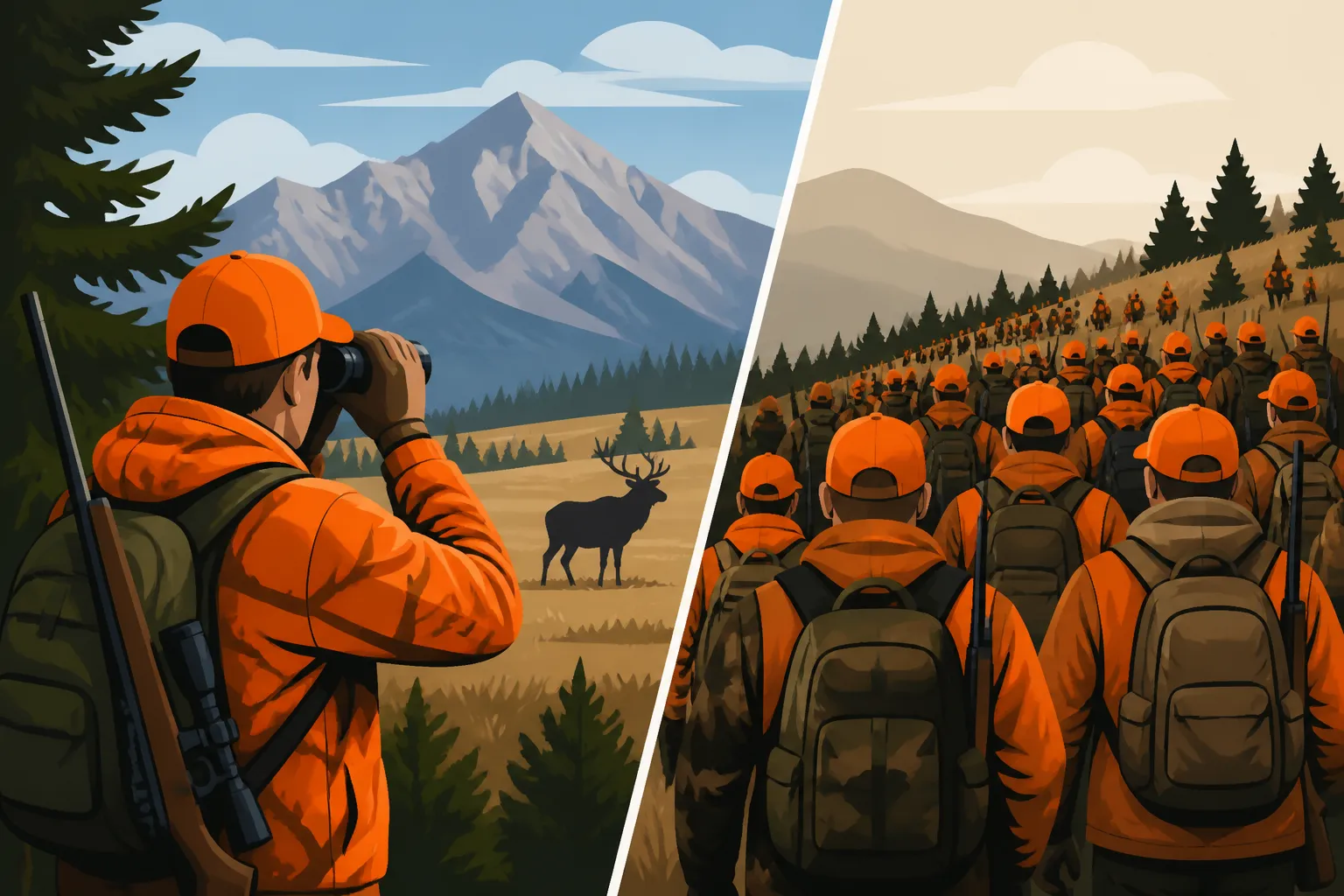
The sheer volume of hunters hitting the same public lands simultaneously creates challenges. Access roads become busy, popular cutlines turn into ATV highways, and even seemingly remote areas might have other camps set up. This isn't just a minor inconvenience; it can actively impact your hunt. Increased human activity pushes game deeper into cover, makes them more wary, and can scatter them in unpredictable directions. What was once a prime feeding area might become a deer-free zone after a few hours of constant pressure.
The problem is particularly acute in easily accessible WMUs (Wildlife Management Units) or those bordering major population centres. Everyone has their "spot," and often, those spots are the same well-known tracts of Crown land or provincial grazing reserves that are simple to drive into. This means you might spend more time trying to find an un-pressured area or dealing with other hunters than actually hunting. It also raises safety concerns, as more people in the bush can increase the risk of accidents if proper safety protocols, like wearing blaze orange, aren't strictly followed. Understanding Alberta Blaze Orange and Safety Rules is critical, especially when the woods are full of fellow hunters.
Strategies to Mitigate the Opening Weekend Crush
While the crowds on opening weekend can be frustrating, you don't have to give up on hunting Alberta's public lands during this exciting time. The key is to be smarter, more strategic, and willing to put in extra effort to differentiate your hunt from the masses.
Pre-Season Scouting and Digital Reconnaissance
Your preparation before the season even opens is paramount. Gone are the days when you could just drive out on opening morning and expect to have a prime spot to yourself. Modern hunting demands thorough pre-season scouting, and this increasingly includes digital reconnaissance. Start by poring over detailed maps and satellite imagery from tools like onX Hunt. This app allows you to overlay public and private land boundaries, identify potential access points, and pinpoint areas of dense cover or natural funnels that might hold game. You can literally "walk" the terrain from your living room, marking areas of interest and eliminating others that appear too open or too close to known access points. Look for those small, often overlooked pockets of Crown land that might be surrounded by private property but still offer legal access.
Beyond simply looking at land boundaries, consider how game animals use the landscape. Where are the feeding areas? What are the bedding areas? How do they travel between them? Look for natural barriers like rivers, deep coulees, or thick bush that might deter other hunters, creating de facto sanctuaries for game. The more thoroughly you understand the terrain and how animals might react to pressure, the better equipped you'll be. It's also wise to check out resources like GoHunt, which can provide insights into harvest data, population trends, and historical draw success for specific WMUs. This kind of data can help you identify areas that, while perhaps not offering easy trophy animals, might offer a more consistent hunting experience with less competition. Don't forget to physically scout on foot if possible, checking for fresh sign, trails, and pinch points. The ground truth always beats satellite imagery alone, but using them together is the winning combination. A lot can be learned by Scouting an Alberta WMU Before Season.
Seeking Out Less Obvious Access Points
Most hunters will default to the easiest and most obvious access points – the main forestry roads, well-maintained gravel roads, or marked entry points into grazing leases. To escape the crowds, you need to think differently about access. This might mean driving an extra 20 minutes down a less-maintained road that few bother with, even if it adds time to your trip. Look for small, unmaintained tracks or even old seismic lines that might not show up clearly on older maps but are visible on current satellite imagery. These often require a higher-clearance vehicle or even a short walk just to reach the true "start" of your hunt, but that extra effort is often enough to deter others.
Another tactic is to identify Crown land that abuts private land and look for indirect access. Sometimes a small piece of Crown land might be accessible via a ditch or an easement that isn't widely known or frequently used. Always be absolutely sure of your legal right to access before crossing any land, but by spending time researching these less conventional entry points, you open up opportunities that most other hunters overlook. Sometimes it's as simple as parking your truck a kilometer or two further down the road from where everyone else parks, and simply walking a different approach angle. Remember to respect all private property boundaries; Finding Access on Alberta Crown Land can sometimes mean just driving past the obvious entry points.
Diving Deeper into the Backcountry
The single most effective way to escape opening weekend crowds is to go where most people aren't willing or able to go: deep into the backcountry. This means leaving behind your quad, side-by-side, or even your truck, and relying on your own two feet, or perhaps a reliable horse. The further you are from a road or major ATV trail, the less hunting pressure you're likely to encounter. This strategy requires a higher level of fitness, better navigational skills, and a commitment to carrying all your gear and meat out. But the rewards can be immense: truly unpressured game, a more pristine wilderness experience, and the satisfaction of earning your animal through hard work.
Consider WMUs that have extensive areas designated as Public Land Use Zones (PLUZs) or areas with limited vehicle access. These regions naturally filter out casual hunters, leaving more space for those willing to trek. Backpack hunting, for example, allows you to set up spike camps far from any road, giving you multiple days to hunt areas that only see sporadic human presence. This doesn't necessarily mean scaling mountains for sheep; it could mean pushing several miles into a dense boreal forest block or traversing a network of old, overgrown logging roads that are no longer accessible by vehicle. The deer, moose, or elk that have been pushed by hunters closer to roads will often gravitate towards these deeper, quieter sanctuaries, making them excellent places to focus your efforts. Backpack Hunting Alberta's Bighorn Country is an extreme example, but the principle applies to many species.
Choosing the Right WMU and Timeframe
Sometimes, the solution isn't just how you hunt, but where and when you choose to hunt. Making informed decisions about your WMU and the specific timing of your hunt can dramatically impact your success in avoiding opening weekend crowds.
Targeting Larger, More Remote WMUs
Not all WMUs are created equal when it comes to hunting pressure. The ones closest to urban centres or with abundant, easy-to-access Crown land tend to get hammered on opening weekend. To avoid this, consider venturing further afield into larger, more remote WMUs. These are typically found in the Green Area of Alberta, often characterized by extensive boreal forest, rugged foothills, or mountainous terrain. While they might require more travel time and more effort to navigate, these WMUs often contain vast tracts of undisturbed habitat where game can disperse, and hunters are spread thinner.
Look for WMUs with limited road networks or those where access is challenging due to rough terrain, swamps, or river crossings. These natural barriers act as deterrents, ensuring that only the most dedicated or well-equipped hunters venture into their depths. A quick glance at a map with the "Green Area" and "White Area" clearly marked can help you identify these regions; the Green Area generally signifies forestry and wildland, while the White Area is predominantly agricultural. Hunting Alberta's Green Area and White Area can help you understand these distinctions. While you might not see a truck on every corner, remember that solitude often comes at the cost of accessibility, so be prepared with robust navigation tools like onX Hunt and a solid understanding of wilderness first aid.
The Advantage of Mid-Week or Later Season Hunts
If opening weekend is truly unavoidable due to crowds, consider shifting your hunting schedule. The hunting pressure, particularly on public land, drops dramatically after the first few days of the season. Many hunters only have the weekend off, so by Tuesday or Wednesday, much of the initial rush has subsided. Hunting mid-week can feel like a completely different experience, with quieter woods and more relaxed game. Animals that were pushed by the weekend warriors might start to settle back into their routines, making them more predictable.
Furthermore, consider hunting later in the season. While the weather can be more challenging with colder temperatures and snow, many species become more active and concentrated as the rut approaches or as winter feed sources become critical. For instance, Hunting the Rut in Early November can offer incredible opportunities for whitetails when they are focused on breeding, and many of the early-season hunters have already packed it in. Later in the season, you might also find that some of the more popular areas have been overlooked or that game has moved into different patterns that aren't as obvious to casual hunters. This requires different tactics and preparedness for harsh weather, but it can be a highly rewarding strategy for avoiding the initial wave of hunters.
Hunting Smaller, Overlooked Pockets
Sometimes the biggest challenge isn't a vast wilderness, but finding unpressured ground in areas that are otherwise heavily hunted. This is where truly detailed map scouting and local knowledge come into play. Look for small, isolated pieces of Crown land – even just a quarter section – that are surrounded by private agricultural land. Many hunters overlook these small parcels, assuming they're too small to hold game or too difficult to access. However, these little islands of public land can often become sanctuaries for deer, especially if they offer good cover and are close to feeding areas on private land.
These spots often require a bit of legwork to gain permission to cross private land to access the public parcel, or a strategic approach from a road that might seem less ideal. This is where Asking an Alberta Landowner for Permission becomes crucial. A friendly knock on the door, a polite request, and demonstrating respect for their property can unlock access to truly hidden gems. These small, unpressured pockets, even if they're only a few acres, can sometimes hold surprisingly large numbers of deer that have learned to avoid the bigger, more accessible blocks of public land. It’s about finding the less obvious routes and being willing to think outside the box when everyone else is focused on the large, well-known areas.
Tools and Tactics for Dealing with Pressure
Even with the best planning, you might still encounter other hunters. The trick then becomes how you react and adapt your hunting style to the existing pressure. Having the right tools and employing smart tactics can make all the difference.
Utilizing Mapping Apps to Avoid Hunters
Your smartphone, armed with a powerful mapping app like onX Hunt, is an invaluable tool for navigating crowded public land. Not only does it show property boundaries, but many apps allow you to mark other hunters' locations if you see them, or note their parked vehicles, giving you a real-time understanding of where the pressure is concentrated. This allows you to quickly adjust your plan, detour around occupied areas, and push into less-trafficked zones. You can identify potential escape routes for game animals and predict where they might be pushed by other hunters, positioning yourself strategically along those corridors.
Use the satellite imagery to identify natural funnels, thick cover, and terrain features that might concentrate animals, especially when they're on the move. When you know where other hunters are, you can position yourself downwind of likely travel routes, intercepting deer or elk that are being pushed by activity. This isn't about interfering with another hunter's pursuit, but rather about dynamically adapting your own strategy to capitalize on game movement patterns influenced by human presence. Familiarize yourself with Reading Alberta's Crown Land Layers on onX to truly leverage these digital tools.
Adapting Your Hunting Style
When the woods are busy, a static, sit-and-wait approach might not be the most effective, especially if you're in a highly pressured area. Consider adapting your hunting style to become more mobile and proactive. Still-hunting, moving slowly and deliberately through the timber, pausing frequently to glass and listen, can be incredibly effective. This allows you to cover ground, find unpressured pockets, and potentially bump game that other hunters have overlooked or pushed. The key is stealth and patience, moving only a few steps at a time, scrutinizing every piece of cover.
Alternatively, if you know other hunters are pushing game in a certain direction, you can set up an ambush point along a known travel corridor, thick bedding area, or pinch point. Deer and elk often use specific routes when feeling pressured, heading for the thickest cover available. By studying maps and understanding the terrain, you can anticipate these movements. This might mean getting into your spot well before first light, or staying late into the evening, long after others have left the woods. Consider employing calls more subtly; while loud, aggressive calling might work in unpressured areas, a more discreet approach might be better when other hunters are nearby. Rattling and Calling Whitetails in Farm Country might require a different approach in these conditions.
Communication and Safety in Crowded Areas
Hunting in crowded public areas necessitates an increased focus on safety and respectful communication. Always wear your blaze orange as required by Alberta regulations, and consider exceeding the minimum requirements for visibility. Before you head into an area, consider making your presence known, whether by leaving a note on your dashboard with your intended general area (without giving away your secret spot!) or by simply being friendly and conversational if you encounter other hunters. A quick chat can sometimes reveal where others are heading, allowing you to adjust your plans to avoid overlap.
It's also crucial to identify your target absolutely before taking a shot, and be aware of your backdrop. The sound of gunshots can be disorienting, and it's easy to assume you're the only one in a particular piece of bush. Maintain a clear understanding of the rules for Hunting Near Buildings and Rules on Shooting Across a Road, even in seemingly remote areas. Remember, we're all out there to enjoy the outdoors and pursue game. A little courtesy and awareness go a long way in ensuring everyone has a safe and positive experience, even when you're sharing the landscape with many others.
Opening Weekend Strategies Compared
Here's a quick look at the pros and cons of different approaches to opening weekend hunting:
| Strategy | Pros | Cons | Best Suited For |
|---|---|---|---|
| Hunting Popular Public Land | Easy access, familiar territory, high initial game activity | High hunting pressure, scattered game, potential safety concerns | Casual hunters, those with limited time, social hunters |
| Deep Backcountry/Remote WMUs | Low pressure, unpressured game, wilderness experience | High physical demand, difficult access, complex logistics | Experienced hunters, high fitness levels, trophy hunters |
| Mid-Week / Later Season Hunt | Significantly reduced pressure, more relaxed game | Colder weather, shorter daylight, changed game patterns | Flexible schedules, patient hunters, those preferring solitude |
| Small, Overlooked Pockets | Potential for unpressured local game, less competition | Requires extensive scouting, permission needed, limited space | Dedicated scouts, those with good landowner relations |
| Adaptable "Follow the Pressure" | Intercepts moving game, dynamic and engaging | Requires quick thinking, good map skills, ethical awareness | Mobile hunters, still-hunters, those who enjoy a challenge |
Disclaimer
This article is for general informational purposes only and does not constitute professional advice. Laws, prices and regulations vary by location and change over time. Consult a qualified professional for guidance on your specific situation.