Why National Parks Are Closed to Hunting
It's a familiar scene for many of us who hunt in Alberta: you're driving along a highway, perhaps heading towards the mountains for an elk hunt or through the foothills looking for whitetails, and you glance into a vast, protected area. You see incredible wildlife—a bull moose grazing peacefully, a herd of deer unconcerned by passing traffic, or even a magnificent bighorn ram on a rocky slope. And then the thought hits you: why can't I hunt here? The frustration is real, especially when game populations seem robust within these boundaries. This guide is here to shed light on exactly why Canada's National Parks, including those right here in Alberta, are strictly closed to hunting, exploring the legal, historical, and ecological reasons behind these long-standing regulations.
The Foundational Laws: Federal Jurisdiction and Park Acts
The most fundamental reason why you can't hunt in Banff, Jasper, Waterton Lakes, Elk Island, or Wood Buffalo National Parks is rooted deeply in Canadian law. These aren't just provincial lands; they are federal properties, governed by federal legislation designed specifically for their protection. It’s a completely different legal landscape from the provincial lands where most of us pursue game.
The Canada National Parks Act
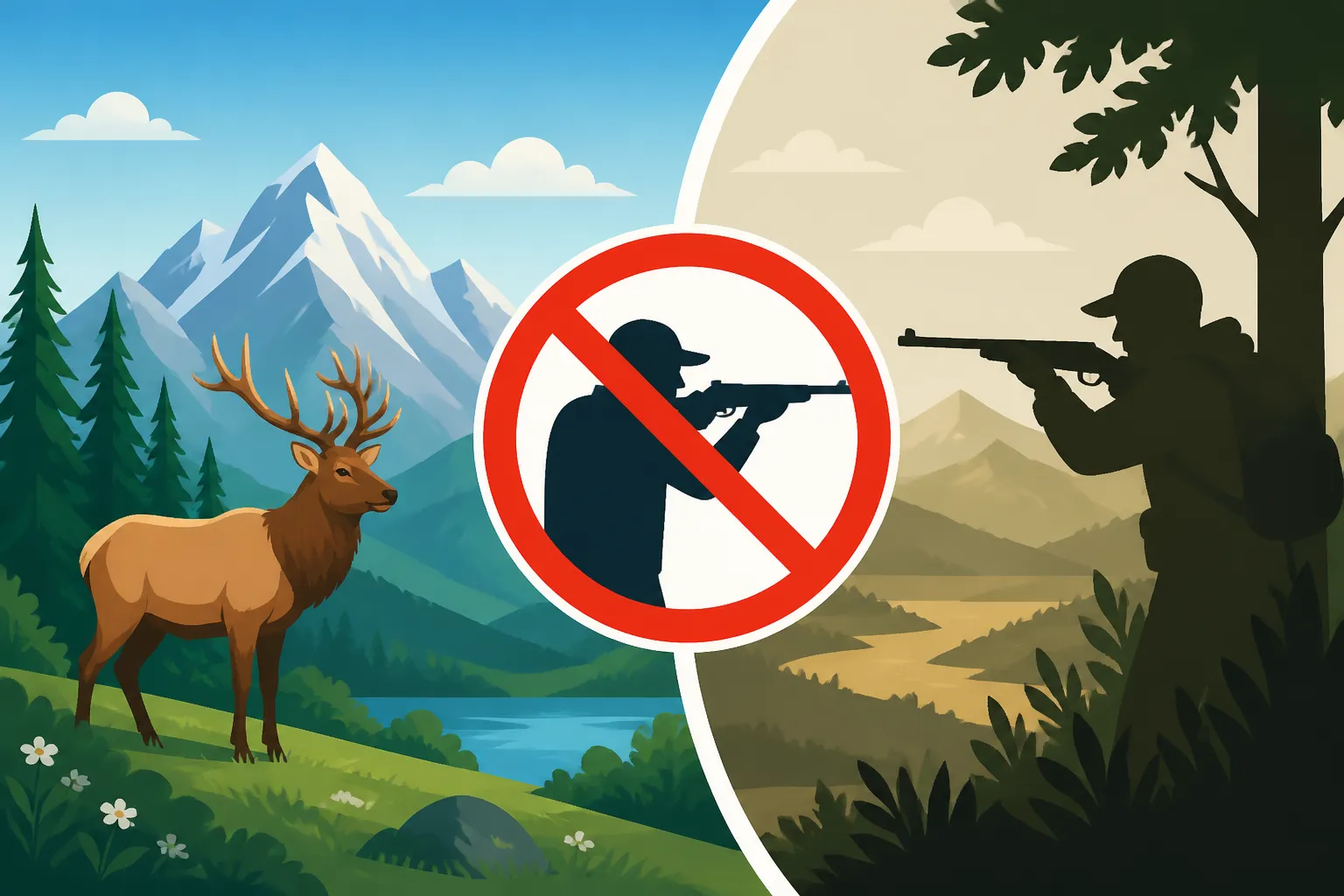
At the heart of it all is the Canada National Parks Act. This federal legislation lays out the rules and regulations for all of Canada's National Parks. Unlike provincial acts that often balance multiple uses, including hunting and resource extraction, this act prioritizes ecological integrity. Its primary mandate is to protect the parks for present and future generations, focusing on conservation above all else. This means that activities deemed incompatible with this primary goal, such as hunting, are expressly prohibited. When you step inside a National Park, you're entering a zone managed by Parks Canada, whose directives are very clear about maintaining these areas as sanctuaries.
Think of it like this: if you own a quarter section of land and decide that it will be a nature preserve where no hunting is allowed, that's your right. The federal government has essentially done the same with National Parks, but on a grand scale, backed by specific legislation that gives them the authority to enforce it. Trying to hunt in a National Park is not just a breach of park rules; it's a violation of federal law, which carries significant penalties.
Federal vs. Provincial Authority
It can be a little confusing, especially when you consider that right outside a National Park boundary, you might be on provincial Crown land where hunting is perfectly legal during open seasons. The key distinction is jurisdiction. Provincial governments manage wildlife and allocate hunting opportunities on provincial lands through their own legislation, like Alberta's Wildlife Act. They set seasons, bag limits, and manage populations within their borders.
However, National Parks fall squarely under federal jurisdiction. This means provincial hunting licenses, tags, and regulations simply don't apply within park boundaries. The federal government has chosen a path of absolute protection for wildlife within these areas. This separation of powers is why you’ll see different approaches to land use and wildlife management just meters apart. For hunters, it means you absolutely must know where those lines are drawn. Tools like onX Hunt can be incredibly helpful for visualizing these boundaries, making sure you stay on the right side of the law when you're hunting near a National Park. You can find detailed information about general hunting access on Public Hunting Land in Alberta and Hunting Alberta's Crown Land, which are under provincial jurisdiction.
A History of Preservation: Why Parks Were Created
Understanding the history behind National Parks helps us grasp why hunting was excluded from their inception. These weren't established with hunting in mind; they were born from a different vision for nature and human interaction with it.
Early Conservation Movement in Canada
The concept of National Parks in Canada emerged in the late 19th and early 20th centuries, often driven by a desire to preserve areas of outstanding natural beauty for public enjoyment and to protect specific landscapes from industrial exploitation. Banff, Canada's first National Park, was initially established around the hot springs discovered during the construction of the Canadian Pacific Railway. The idea was to create a wilderness playground, a place for tourism and recreation, distinct from areas designated for resource extraction.
At this time, wildlife populations in many parts of North America were facing significant pressures due to unregulated hunting and habitat loss. The conservation movement gained momentum, advocating for the protection of certain species and habitats. Establishing parks where hunting was prohibited was seen as a vital step to allow wildlife populations to recover and thrive undisturbed. These early park founders envisioned vast tracts of wilderness where nature could exist relatively untouched by human intervention, especially lethal intervention like hunting. This historical context solidified the non-hunting stance that persists today.
Shifting Views on Wildlife Management
Over the decades, our understanding of wildlife management has evolved significantly. While early parks often focused on preserving charismatic megafauna and scenic landscapes, modern park management encompasses a broader ecological perspective, emphasizing biodiversity and ecosystem health. The idea of National Parks as "ecological integrity" zones has strengthened. This means managing entire ecosystems, not just individual species, and minimizing human impacts where possible.
For instance, at one point, some parks practiced predator control to boost ungulate populations for viewing, but that approach has largely been abandoned in favor of allowing natural processes to unfold. The goal now is often to let nature run its course, allowing predator-prey dynamics to function naturally, without human hunters inserting themselves into the equation. This philosophical shift reinforces the "no hunting" rule, viewing hunting as an intervention that would disrupt the natural ecological processes the parks aim to protect. This contrasts sharply with how wildlife is managed on other lands, such as Hunting Alberta's Swan Hills or Hunting the Peace Country's Farm and Bush, where sustained yield and recreational opportunities are key objectives.
Ecological Sanctuaries: Core Conservation Principles
Beyond legal and historical reasons, the primary contemporary rationale for prohibiting hunting in National Parks revolves around their role as ecological sanctuaries. These parks are designed to be places where nature takes precedence.
Preserving Ecological Integrity and Biodiversity
National Parks are managed with ecological integrity as their guiding principle. This means striving to maintain ecosystems in a state that is characteristic of their natural region, supporting native species and natural processes. Hunting, by its very nature, is a human intervention that directly impacts wildlife populations and can alter natural dynamics. By removing hunters, Parks Canada aims to allow animal populations to regulate themselves through natural predator-prey relationships, disease, and environmental factors, such as winter severity.
The absence of hunting also allows for the protection of biodiversity, encompassing all living things and their interactions. From the smallest insects to the largest mammals, every species plays a role. Maintaining these areas as refuges from hunting pressure ensures that even less common or sensitive species can thrive without additional human-induced mortality. The aim is to have complete, functioning ecosystems, where all parts of the food web are present and interact as naturally as possible. This approach is fundamental to understanding Why Grizzly Bear Hunting Is Closed and ensuring their recovery in certain areas.
Wildlife Habituation and Visitor Safety
One noticeable outcome of the no-hunting policy is the relative habituation of some wildlife to human presence within National Parks. Animals like deer, elk, and even some bears often appear less wary of people and vehicles than their counterparts outside park boundaries. This habituation is, in part, a direct result of not being hunted. They learn that humans are generally not a threat.
This habituation, while fascinating for wildlife viewing, also brings a unique challenge: visitor safety. When animals lose their natural fear of humans, encounters become more frequent. If hunting were permitted, this dynamic would change drastically. Animals would quickly revert to being much warier, making wildlife viewing — a cornerstone of the National Park experience — far less common and more difficult. More importantly, allowing hunting would introduce firearms and human pursuit into areas where people are accustomed to observing wildlife peacefully, significantly increasing the risk of accidents or negative human-wildlife interactions. The current system minimizes these risks by maintaining a clear distinction between where hunting occurs and where wildlife viewing is the primary interaction. This allows for a unique experience that you won't find when you're Hunting a Foothills Bench Above a Creek or Hunting a River Valley Bottom in Alberta.
Research and Monitoring Opportunities
National Parks also serve as invaluable living laboratories for scientific research and long-term ecological monitoring. Because hunting is absent, researchers can study wildlife populations, behavior, and ecosystem health in a relatively undisturbed state. This allows for baseline data collection and insights into natural population dynamics that would be confounded by hunting pressure.
For example, scientists can track herd movements, assess disease prevalence, or observe social structures without the added variable of human harvest. This research is crucial not only for the management of the parks themselves but also for contributing to broader wildlife conservation efforts across the province and beyond. The insights gained from these protected areas can inform management decisions on surrounding lands, even where hunting is allowed. The rigorous monitoring includes Alberta's CWD Testing Requirements in certain WMUs adjacent to parks, which helps understand disease spread across landscapes.
The Boundary Line: National Parks vs. Other Public Lands
It's absolutely critical for any hunter to understand the difference between National Parks and other categories of public land in Alberta. The rules are not only different; they are diametrically opposed when it comes to hunting. Confusing them can lead to serious legal trouble.
Provincial Parks and Wilderness Areas
Alberta has its own system of protected areas, including Provincial Parks and Wilderness Areas. While these are also focused on conservation, their management frameworks can differ significantly from National Parks, and importantly, hunting rules vary. In many Provincial Parks, hunting is indeed prohibited, similar to National Parks. However, in some other provincial recreation areas, or even parts of larger Provincial Parks (check specific regulations!), limited hunting might be permitted, or adjacent Crown land offers hunting opportunities. The key is that these are managed under provincial legislation, not federal.
Wilderness Areas in Alberta, such as the Willmore Wilderness Park, are even stricter in terms of access and use, often prohibiting motorized vehicles and demanding true backcountry skills. While their primary purpose is wilderness preservation, hunting is permitted in some of these provincial wilderness areas, albeit often requiring specialized access and experience, like Hunting Willmore Wilderness Park Requires or Backpacking Into Alberta Sheep Country. It’s a nuanced system, and you must check the specific regulations for each area you plan to visit. Understanding Hunting in Alberta Provincial Parks is essential before heading out.
Crown Land, Public Land Use Zones, and Grazing Leases
The vast majority of public land where hunting is permitted in Alberta falls under the umbrella of Crown Land, Public Land Use Zones (PLUZs), and Provincial Grazing Reserves. These are managed by the provincial government, and while they have their own sets of regulations regarding access, vehicle use, and permitted activities, hunting is generally a recognized and often encouraged use during legal seasons.
- Crown Land: This is often referred to as "public land" and covers everything from vast tracts of boreal forest to sprawling prairie landscapes. Hunting is generally permitted here, provided you hold the necessary licenses and follow all provincial regulations.
- Public Land Use Zones (PLUZs): These are designated areas within Crown land, typically in the foothills and mountains, which have specific rules for different recreational activities, including hunting, off-highway vehicle use, and camping. Understanding these rules is crucial, as they might restrict vehicle access in certain areas, pushing you to How Far to Walk From an Alberta Forestry Road.
- Provincial Grazing Reserves: These are Crown lands leased to grazing associations for livestock production, but they also often allow public access for activities like hunting, though you generally need to contact the leaseholder for permission. Getting Access to an Alberta Grazing Lease is a key step here.
Tools like onX Hunt are incredibly valuable for discerning these boundaries. You can layer provincial land maps with National Park boundaries to see exactly where you can and cannot hunt. This is crucial for planning your trips, especially if you're hunting areas like Hunting the Cypress Hills Interprovincial Park which abuts a National Park, or the foothills Hunting the Ghost Public Land Use Zone that lies close to Banff. When scouting using satellite imagery, it's vital to cross-reference with official land designations to ensure you’re always in the right place. GoHunt can also be a good general resource for understanding different land categories and hunting opportunities across Alberta, though it's still on you to verify local regulations.
Here’s a simplified comparison:
| Feature | National Parks (Federal) | Provincial Parks (Provincial) | Crown Land/PLUZs (Provincial) | Private Land (Provincial) |
|---|---|---|---|---|
| Governing Authority | Parks Canada (Federal) | Alberta Parks (Provincial) | Alberta Environment & Protected Areas (Prov.) | Private Landowners |
| Primary Mandate | Ecological integrity, visitor experience | Conservation, recreation | Multiple use (forestry, energy, recreation, hunting) | Owner's discretion, economic activity |
| Hunting Permitted? | No, strictly prohibited | Varies by park/zone, often prohibited | Yes, generally permitted | Yes, with landowner permission |
| Vehicle Access | Restricted to designated roads | Restricted to designated roads/areas | Varies by PLUZ/location, often more open | Restricted by owner |
| Focus for Hunters | Wildlife viewing only | Check specific regulations | Primary hunting grounds | Critical for access to certain species/areas |
| Example | Banff National Park | Kananaskis Provincial Park (some hunting nearby, not in park) | Ghost PLUZ, Boreal Forest | Farm fields, ranch land |
The Importance of Boundary Awareness
The transition from a hunting zone to a non-hunting zone can be abrupt and sometimes unmarked on the ground, particularly in remote areas. Relying on GPS apps and up-to-date maps is not just a convenience, it’s a necessity. Inadvertently stepping across a National Park boundary with a loaded firearm, or even just attempting to retrieve game that has crossed into one, can result in severe legal consequences, including fines, confiscation of equipment, and even jail time.
Always know your location and the legal boundaries, especially when pursuing game that might range widely. A deer that you’ve been Hunting a Cutline Intersection for Whitetails might suddenly decide to cross into the safety of a National Park. At that point, your pursuit must end. Respecting these boundaries is a fundamental part of ethical hunting and responsible citizenship.
Ripple Effects: How National Parks Influence Surrounding Hunts
While you can't hunt in National Parks, their presence undeniably influences hunting opportunities and wildlife dynamics in the surrounding areas. It's a complex relationship that has both advantages and disadvantages for hunters.
Wildlife Migration and "Spillover"
National Parks often act as significant wildlife refuges, providing undisturbed breeding grounds and critical habitat. As wildlife populations grow within these protected areas, they can exceed the carrying capacity of the park or simply disperse in search of new food sources or mates, especially during seasonal migrations or the rut. This "spillover effect" can benefit hunters on adjacent provincial lands. For instance, large herds of elk or moose that calve and summer in the relative safety of a National Park might move into nearby WMUs when the hunting seasons open or when winter conditions push them to lower elevations.
This creates opportunities for hunters, as mature animals that have grown up with minimal human pressure can become available just outside the park boundaries. Many experienced hunters strategically focus their efforts on WMUs that border National Parks, hoping to intercept these migrating or dispersing animals. The challenge, of course, is knowing exactly when and where these movements occur, which requires diligent scouting and an understanding of seasonal patterns. Glassing an Alpine Basins for Bighorn Sheep might show you rams that could eventually wander outside a park's edge.
Managing Conflict and Overpopulation
Conversely, the lack of hunting within National Parks can sometimes lead to localized overpopulation of certain species, particularly ungulates like elk or deer, if natural predators aren't abundant enough to keep their numbers in check. This can result in increased browsing pressure on vegetation, habitat degradation within the park, and potential conflicts with human infrastructure or agricultural lands bordering the park. For example, some National Parks have had to implement controlled culls of elk or bison in the past to manage populations that grew too large.
While these culls are rare and highly controversial, they underscore the ecological challenges of managing wildlife in a strictly no-hunting environment. On the provincial side, increased wildlife populations spilling out of parks can lead to agricultural damage on private lands, which sometimes results in damage control initiatives or increased tags in certain WMUs to alleviate the pressure. This interaction highlights the ongoing debate about how best to manage wildlife across different land designations. Farmers dealing with this kind of pressure might apply for Alberta Damage Control Licences for Farmers.
Habitat Connectivity and Corridors
National Parks are not isolated islands; they are part of larger ecosystems. Wildlife management in Alberta recognizes the importance of habitat connectivity, allowing animals to move freely between protected areas and other landscapes. The lands immediately surrounding National Parks, whether provincial Crown land or private property, often serve as crucial corridors for wildlife movement.
Hunters who understand these movement patterns and identify key travel corridors on lands adjacent to parks can significantly increase their chances of success. It's about thinking like the animal: where are they coming from, where are they going, and what routes will they use? This strategic thinking, combined with tools like Scouting With Satellite Imagery in Alberta (potentially identifying pinch points or natural funnels near park boundaries), can be invaluable. It also underscores the importance of a holistic approach to conservation, where both protected areas and responsibly managed hunting lands play a role in supporting healthy wildlife populations.
Looking Ahead: Balancing Conservation and Public Interest
The ongoing management of National Parks, and their relationship with hunting in Alberta, is a dynamic and occasionally debated topic. While the core principle of no hunting in these areas is unlikely to change, discussions around wildlife management continue to evolve.
The Role of Hunter-Conservationists
Hunters are often among the most passionate and effective conservationists, contributing significantly to wildlife management through license fees, advocacy, and direct involvement in habitat projects. This can sometimes lead to frustration for hunters who see abundant game in National Parks but cannot participate in their management through hunting. It's a valid point of view that needs to be acknowledged.
While hunting won't be permitted in National Parks, hunter-conservationists still play a vital role in ensuring healthy wildlife populations on the adjacent provincial lands. Their contributions help maintain the overall health and abundance of game across the landscape, which indirectly benefits the parks by ensuring robust gene pools and source populations. Participating in groups like the Alberta Conservation Association, advocating for sound wildlife policy, and respecting regulations on all land types are ways hunters can continue to support wildlife.
Adapting to Modern Conservation Challenges
National Parks, despite their protected status, face numerous modern conservation challenges, including climate change, invasive species, and increasing human pressures from tourism. Wildlife populations within the parks are not immune to these external factors. This necessitates adaptive management strategies by Parks Canada, often requiring scientific research and monitoring to understand and mitigate these impacts.
While hunting remains off-limits, the discussions around wildlife management in these protected areas are constantly informed by ecological science. For instance, as ungulate populations fluctuate due to various factors, park managers must consider the implications for vegetation and other species. The goal is to maintain resilient ecosystems that can withstand these challenges, ensuring that these areas remain vital ecological benchmarks for future generations.
The Future of Alberta's Hunting Landscape
Alberta's hunting landscape is incredibly diverse, offering opportunities from the prairies to the mountains, for various species like Whitetail Hunting in Alberta, Mule Deer Hunting Alberta's Prairie and Badlands, and Elk Hunting Alberta's Foothills. The presence of National Parks, as significant non-hunting areas, is an integral part of this broader picture. They serve as valuable refuges and contribute to the overall biodiversity and wildlife health of the province.
For hunters, the takeaway is clear: respect the boundaries, understand the different land designations, and appreciate the unique role that each type of land management plays in Alberta's natural heritage. Whether you're actively hunting outside a park boundary or simply enjoying the opportunity to view wildlife within one, being an informed and responsible outdoors person benefits everyone. The more we understand the rationale behind these rules, the better we can navigate our outdoor pursuits and advocate for the sustainable management of all our wild spaces.
Disclaimer
This article is for general informational purposes only and does not constitute professional advice. Laws, prices and regulations vary by location and change over time. Consult a qualified professional for guidance on your specific situation.