Hunting a Grazing Lease Water Hole
Hunting a grazing lease water hole in Alberta can be one of the most productive, yet often overlooked, strategies for big game hunters. Many hunters feel overwhelmed by the process of securing access to private land or understanding the nuances of grazing leases, leading them to stick to public ground. But trust me, once you understand how these areas work and why water is such a magnet for wildlife, you'll unlock incredible opportunities, especially in drier regions. This guide is all about demystifying grazing leases and showing you exactly how to scout, approach, and successfully hunt those crucial water sources that draw in game like a siren song.
Understanding Alberta Grazing Leases and Access
Grazing leases in Alberta are a unique beast, a blend of public land policy and private management that can confuse even seasoned hunters. They're not truly private land, but they're not open Crown land either, and navigating the access rules is paramount to a successful and ethical hunt.
The Basics of Grazing Leases
In Alberta, grazing leases are essentially Crown land that has been leased out to ranchers for livestock grazing. This means the land itself belongs to the public (the Crown), but the leaseholder has specific rights and responsibilities, primarily focused on managing the land for agricultural purposes. While the rancher manages the cattle, maintains fences, and often develops water sources, the public still retains the right to recreational access, including hunting, under certain conditions. This is a critical distinction many people miss: it's not the rancher's private property, but their livelihood is directly tied to it, and respect for their operations is non-negotiable. These leases are often found throughout the White Area (settled agricultural zone) and even extending into the Green Area (forested Crown land), especially in transition zones.
Navigating Access Rules and Permission
This is where many hunters get tripped up, and frankly, it's easy to see why. The rules around accessing grazing leases aren't always crystal clear, and misinterpretations can lead to frustration for both hunters and leaseholders. The golden rule, and I can't stress this enough, is to always seek permission from the leaseholder before entering. Even though it's technically Crown land, showing that respect goes a long, long way. The leaseholder has a right to know who is on "their" land, especially when they have livestock present. They need to manage their herd, ensure their fences are intact, and generally oversee the day-to-day operations. Imagine someone walking through your backyard without asking—it's similar, even if the scale is much larger. Always make direct contact, explain your intentions, and be prepared for a "no" or specific conditions. Patience and politeness are your best tools here. You can find excellent advice on Finding a Grazing Leaseholder's Contact to make this process smoother. Remember, while recreational access is a right, the specific conditions and permissions often depend on the leaseholder's discretion, and you should always understand What a Leaseholder Can and Cannot Refuse.
Tools for Identifying Grazing Lease Boundaries
Knowing who to ask for permission means knowing which land is a grazing lease and who holds that lease. This is where modern technology becomes an absolute game-changer. Forget driving around trying to spot faded "No Trespassing" signs; digital mapping tools are your best friend. Applications like onX Hunt have revolutionized this by layering property ownership information directly onto detailed topographical maps. With onX Hunt, you can zoom in on an area and instantly see parcel boundaries, identifying private land, Crown land, and, crucially, grazing leases. Even better, many of these apps will provide the leaseholder's contact information or, at the very least, general land management contact details that can help you track down the right person. Similarly, GoHunt's mapping features can be incredibly useful for pre-scouting and understanding the lay of the land, especially when looking at larger tracts that might contain several water sources. These tools are invaluable for reading the landscape from your couch and then confirming details on the ground. They save countless hours of guesswork and prevent accidental trespass. For a deeper dive into this, check out Reading Alberta's Crown Land Layers on onX and Scouting With Satellite Imagery in Alberta.
Why Water Holes Are Hunting Hotspots on Grazing Leases
If you're hunting anywhere in Alberta, but especially in the often drier agricultural and parkland zones, water is life. A reliable water hole on a grazing lease isn't just a place for cattle to drink; it's an absolute magnet for all kinds of wildlife, making it a prime location for hunters.
The Magnetic Pull of Water
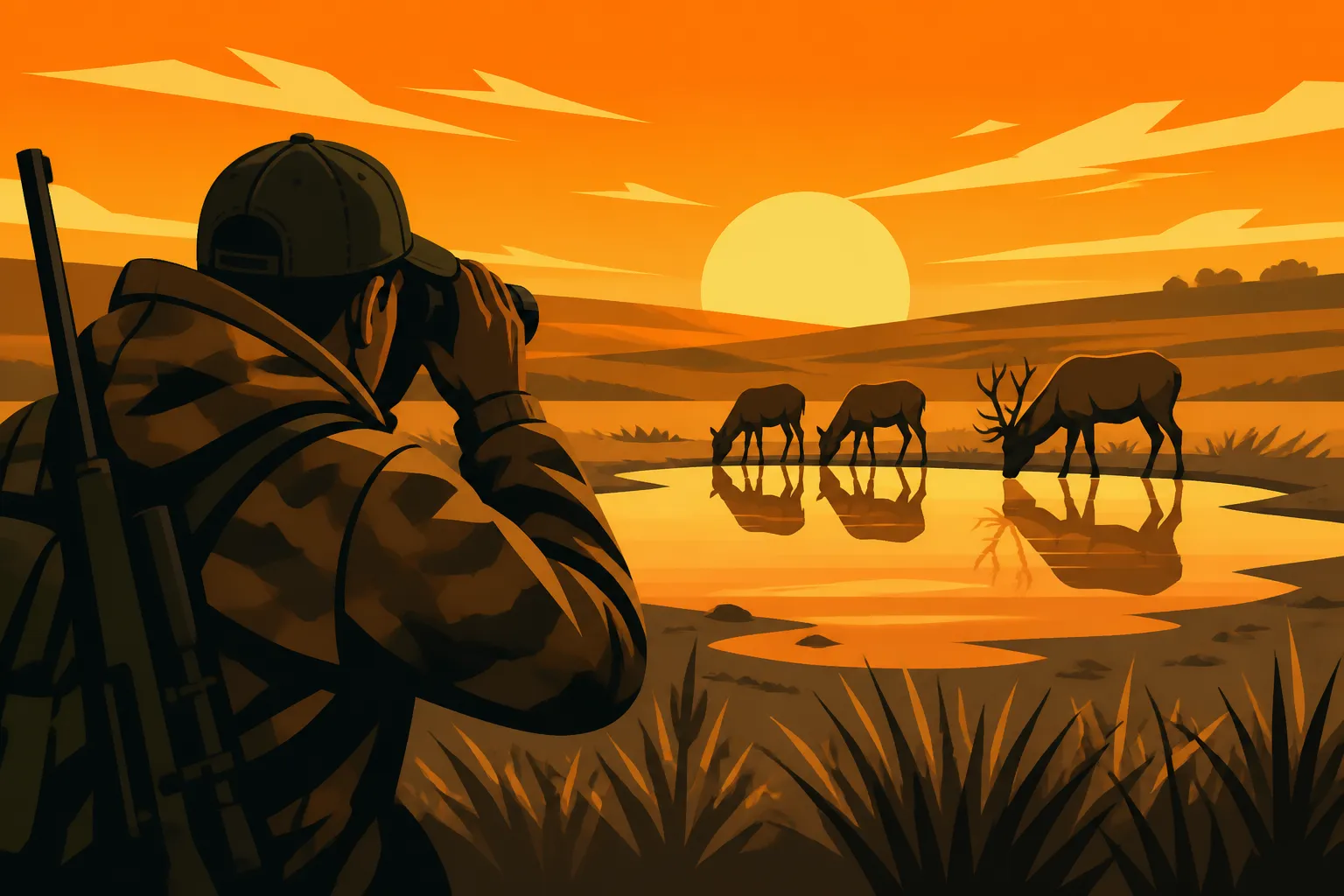
Think about it: every living creature needs water. In vast stretches of prairie, parkland, or even some foothill regions, natural water sources can be few and far between, especially during dry spells or late in the season when smaller sloughs dry up. A dug-out, a spring-fed pond, or even a cattle trough can become the only accessible water for miles. This makes these spots critical convergence points for deer, elk, moose, and even predators. During the heat of early season, animals might visit water several times a day. As the season progresses, they might stick to a more predictable dawn and dusk routine, but the draw is constant. In winter, a reliable open water source can be even more vital, as most shallow water bodies freeze solid, forcing animals to travel further for a drink. This consistent need creates predictable patterns of movement that hunters can exploit. Deer and elk aren't just drinking; they're often browsing nearby, traveling along the edges, and sometimes even bedding in cover close to the water source. It's a fundamental part of their daily routine, and understanding this need is the first step to successful hunting.
Reading Sign Around Water Sources
Once you've identified a water hole, it's time to become a detective. Animals, by their very nature, leave a wealth of clues around these vital sources. Fresh tracks in the mud around the edge are the most obvious indicator. Look for different sizes and shapes—deer, elk, coyote, even a bear print might show up. Pay attention to the direction of travel: are animals coming from a specific bedding area and heading towards a feeding field, or vice versa? Overhanging branches might have rub marks from antlers, especially during the rut, indicating where bucks or bulls have passed through. Scrapes near the water's edge are another clear sign, particularly for whitetails in the fall.
Beyond tracks and sign directly at the water, expand your search to the surrounding cover. Look for well-worn trails leading to and from the water. These "highways" will tell you where the animals are coming from and going to. Often, bedding areas aren't far from water, especially if there's good thermal or security cover nearby. A dense willow run or a thick patch of aspen bluffs adjacent to a water hole can be a perfect combination. For species like mule deer or pronghorn, water sources in open prairie often have well-used trails leading into nearby coulees or breaks. The more fresh sign you find, the more confident you can be that this water hole is a regular stop.
Seasonal Considerations for Water Hole Hunts
The effectiveness of a water hole hunt can shift dramatically with the seasons and even the prevailing weather conditions.
- Early Season (September/October): This is prime time for water hole hunting, especially if it's hot and dry. Animals are still seeking consistent water, and their patterns can be very predictable. Setting up early in the morning or late in the evening near a water source can yield great results. This is when animals are often still in their summer patterns, frequently moving from dense cover to feed and water.
- The Rut (November): While the rut often involves more active chasing and less predictable patterns, water sources can still be key. Bucks and bulls are constantly on the move, burning energy, and they need to replenish fluids. Does will still visit water, and a rutting buck will follow them. If you're hunting during Hunting the Rut in Early November, a water hole can be a good pinch point where deer may pass through.
- Late Season (December/January): As temperatures drop and snow covers the landscape, most surface water freezes. A spring-fed water hole, a cattle trough with a heater, or a stream that remains open can become absolutely critical. Animals will travel further for these reliable sources. However, hunting in deep cold requires special preparation, as outlined in Hunting Alberta Winter Weather Safely or Hunting Deep Cold Late in the Season. Animals will be trying to conserve energy, so their movements might be slower and more deliberate, but their need for water remains. Understanding these seasonal nuances allows you to adapt your strategy and increase your chances of success.
Scouting and Setting Up for a Water Hole Hunt
Successful water hole hunting isn't just about finding water; it's about smart scouting and a meticulous setup that accounts for wind, cover, and animal behavior. You want to be as invisible and non-intrusive as possible.
Pre-Season Scouting Strategies
Your pre-season scouting for water holes should start long before you ever step foot on the lease. Begin with digital mapping tools like onX Hunt or GoHunt. Look for natural depressions, darker green patches indicating moisture, or obvious man-made dugouts or stock ponds. Use the satellite imagery to identify potential travel corridors leading to these water sources—thick bush lines, creek bottoms, draws, or the edges of crop fields. Pay attention to the surrounding cover: are there dense aspen bluffs nearby that could serve as bedding areas? How far is the water from prime feeding grounds?
Once you have permission from the leaseholder, it’s time for boots on the ground. Visit the water holes you identified digitally. Look for fresh tracks, game trails, rubs, and droppings. Note which species are frequenting the water. Is it primarily deer, or do you see elk sign too? Walk the edges of the fields and the fringes of the bush adjacent to the water. Observe the terrain for natural funnels or pinch points that guide animals towards the water. Take note of prevailing wind directions and potential access routes that won't spook game. Even though it's a grazing lease, remember to be respectful of cattle and farm equipment. Scouting smart means gathering as much information as possible without disturbing the area. When looking at larger grazing units, keep in mind how Hunting a Cattle Pasture Draw or Hunting a Slough Edge for Whitetails might integrate into a larger movement pattern.
Choosing Your Setup Location
Selecting the right spot to set up near a water hole is crucial. Your primary concerns should be concealment, wind direction, and shot opportunity. Always prioritize the wind. If your scent is blowing into the travel corridors or directly over the water, your hunt will likely be over before it begins. Use a wind-checker frequently throughout your hunt.
For concealment, you have a few options:
- Ground Blinds: These offer excellent concealment and scent control, especially if brushed in naturally. Set them up well in advance of your hunt, if possible, to allow animals to get used to their presence. Position the blind downwind from the primary travel routes to the water.
- Treestands: If there are suitable trees and permission allows, a treestand can provide a higher vantage point, often helping with scent dispersal and offering better visibility. Again, position it based on prevailing winds and the most likely approach angles for game. Make sure you understand the regulations and best practices for Hanging a Stand on an Alberta Bush Edge.
- Natural Cover: Sometimes, a strategically placed clump of willows, a rock outcropping, or a small depression can offer enough cover for a successful ambush. This requires extra discipline in remaining still and blending in.
Consider the sun's position for both visibility and glare, and always have a clear shooting lane to the water's edge and along anticipated travel routes. If you're hunting in broken country, a water source in a low point might have animals approaching from all directions, so consider the high ground nearby, similar to tactics for Hunting a Foothills Bench Above a Creek.
Minimizing Your Impact and Scent
Animals are incredibly attuned to their environment, and anything out of the ordinary will quickly raise their alarm. Minimizing your impact is vital.
- Scent Control: This is non-negotiable. Shower with scent-free soap, wash your hunting clothes in scent-free detergent, and store them in airtight bags. Use scent-eliminating sprays on your clothes and gear. Even more importantly, avoid walking directly on game trails leading to the water hole when you enter or exit your stand. Take a circuitous route if necessary, to avoid leaving your human odor where animals are most likely to travel.
- Noise and Movement: Be as quiet as possible when approaching and setting up. Avoid snapping branches or dragging gear. Once in your spot, remain absolutely still. Even subtle movements can be detected by sharp eyes.
- Vehicle Access: Park your vehicle well away from the water hole and animal travel routes. The sound and sight of a vehicle can spook game for hours or even days. Walk the rest of the way, and consider what time of day you'll be entering and exiting to minimize disturbances. This attention to detail can be the difference between seeing a trophy and seeing nothing at all.
Effective Hunting Tactics for Water Hole Success
You've done your scouting, secured permission, and set up your blind or stand. Now comes the exciting part: the hunt itself. Patience, timing, and adapting to the situation are key to success.
Timing Your Hunt
The best times to hunt a water hole often coincide with the animals' most active periods: dawn and dusk. In the early morning, animals will be moving from their feeding areas to bedding cover, often stopping for a drink along the way. In the evening, they'll reverse this pattern, leaving cover to feed and rehydrating before or after.
- Morning Hunts: Get into your setup well before first light, giving the woods time to settle down after your arrival. You want to be completely still and ready as the sky begins to lighten. Animals are often moving right at first light, sometimes even before you can clearly see.
- Evening Hunts: Arrive several hours before sunset, especially if you're targeting a mature animal. This allows the area to calm down and gives animals time to emerge naturally. Stay until true dark, as some animals, particularly mature bucks and bulls, may hold up until the very last light before venturing out. For a visual of this, consider the strategies for Hunting a Grain Bin Yard at Dusk or Hunting a Swathed Grain Field at Dusk, which rely on similar timing principles.
- Mid-day: While typically slower, mid-day can be productive, especially on hot days when animals might visit water for a quick drink before settling back into dense cover. It's often less predictable, but don't count it out entirely if conditions are right.
Always be mindful of the weather. A warm, dry day will increase activity at water holes, while a cold, wet day might see less movement as animals can get moisture from vegetation.
Still-Hunting and Ambush Techniques
While sitting in a blind or stand is often the go-to for water hole hunting, understanding how to apply still-hunting or ambush techniques can broaden your options.
- Ambush: This is the classic water hole strategy. Get into your chosen setup location (blind, stand, or natural cover) early, remain still, and be patient. Focus your attention on the approach trails and the water source itself. Use binoculars to scan for movement, especially in thick cover. Be ready for a shot at any moment, as animals can appear silently.
- Still-Hunting: If you're not seeing activity directly at the water, or if the water hole is part of a larger system with multiple access points, you might slowly still-hunt the perimeter. Move incredibly slowly, taking a few steps then pausing for several minutes to scan for movement. Focus on the trails leading to and from the water. This is more about intercepting an animal on its way to or from the drink. This tactic works well in areas with good cover like Hunting a Willow Run in Farm Country where you can weave through the trees while watching openings.
- Calling: While not always necessary for water hole hunts, subtle calling can sometimes draw an animal closer or reveal its presence. A soft grunt for whitetails, or a cow call for elk, might pique curiosity if an animal is in range but hesitant. However, be cautious; too much calling can be detrimental.
Dealing with Hunting Pressure and Other Users
Grazing leases, while offering great opportunities, can sometimes see more human activity than remote Crown land. You might encounter other hunters, the leaseholder, or even other recreational users.
- Other Hunters: Be courteous and respectful. If you arrive and see another hunter's vehicle or stand, consider moving to another spot or another lease entirely. A simple conversation, if appropriate, can often resolve potential conflicts. Many hunters might overlook grazing leases, so sometimes you'll have it all to yourself, but be prepared for company.
- Leaseholders and Livestock: Remember, the leaseholder's primary business is grazing livestock. You might encounter cattle, horses, or even the rancher themselves. Always give livestock a wide berth; do not disturb them or chase them. If the leaseholder approaches, be polite, thank them for access, and confirm any specific instructions they might have given you. Their presence might temporarily disrupt game movement, but it's part of hunting these areas.
- Adapting to Pressure: If a water hole is getting too much pressure, animals will quickly become nocturnal or find alternative, less convenient water sources. Be prepared to shift your strategy. This might mean hunting further from the water on a travel corridor, trying a different water hole on the same or another lease, or even focusing on other areas like Hunting a Pipeline Right-of-Way or Hunting a Beaver Meadow in the Boreal where water is also present but the pressure might be less. Flexibility is key to consistent success.
| Water Hole Type | Description | Typical Game Activity | Best Hunting Strategy |
|---|---|---|---|
| Dugouts | Man-made excavations, often for livestock, holding standing water. | High traffic for deer, elk, moose, predators, especially in dry areas. | Ambush from a blind/stand, focusing on main trails. Best during dry periods. |
| Spring-fed Ponds | Natural ponds fed by underground springs, often remain open in winter. | Consistent year-round use by all species, crucial in cold weather. | Ambush, particularly valuable in late season when other water freezes. Scout for open water. |
| Cattle Troughs | Man-made troughs with pumped water, often heated in winter. | Very high traffic by all species, especially if only open water source. | Ambush, often from a distance to avoid spooking game near human infrastructure. |
| Natural Sloughs | Shallow, often ephemeral wetlands, typically in prairie/parkland. | High early season traffic, less reliable later in season as they dry. | Ambush, still-hunting perimeter, especially when still holding water. Hunting a Slough Edge for Whitetails |
| River/Creek Banks | Sections of rivers or creeks that flow through or border leases. | Consistent travel corridors, water source, and often good cover. | Still-hunting, setting up on benches or bends, or near crossings. Hunting a River Valley Bottom in Alberta |
| Irrigation Canals | Man-made channels for agricultural water, may have sections accessible. | Can draw game along their banks and offer water in dry regions. | Still-hunting along the bank, finding pinch points or crossings. Hunting an Irrigation Canal Corridor |
Hunting a grazing lease water hole is a rewarding endeavor that combines respect for landowners, keen scouting, and patient execution. By understanding the unique access rules of Alberta's grazing leases and the undeniable draw of water for all types of game, you can unlock incredible opportunities. Remember to always seek permission, use your mapping tools wisely, and meticulously plan your approach and setup. The more diligent you are in your preparation and execution, the better your chances of encountering that buck, bull, or bear at one of these vital natural magnets.
Disclaimer
This article is for general informational purposes only and does not constitute professional advice. Laws, prices and regulations vary by location and change over time. Consult a qualified professional for guidance on your specific situation.