Getting Meat Processed After the Hunt
You've poured your heart, sweat, and probably a few tears into scouting, calling, and finally, executing that perfect shot. The animal is down, the adrenaline is coursing, and you're filled with that profound mix of pride and gratitude. But then, almost immediately, the next challenge rears its head: what do I do with all this meat? It’s a moment of truth for every hunter, and handling your harvest correctly after the shot is just as vital as making the shot itself. This guide is here to walk you through the often-overlooked, yet absolutely critical, steps of getting your hard-earned game meat processed in Alberta, ensuring every delicious pound makes it to your table.
The First Critical Steps: Field Dressing and Cooling
The processing of your game meat doesn't start at the butcher shop door; it begins the moment the animal is down. How you handle those initial hours can profoundly impact the quality, taste, and safety of the meat you eventually put on your plate. Ignoring these crucial first steps can lead to sour, tainted, or even spoiled meat, and nobody wants that after all the effort.
Why Field Dressing Properly Matters
Imagine you've just taken a beautiful whitetail. You're elated, but the clock is already ticking. Field dressing – the rapid removal of the animal's internal organs – is your absolute top priority. This isn't just a messy chore; it's a vital part of preserving your harvest. The digestive system contains bacteria that, if left inside a warm carcass, will quickly start to break down the surrounding meat, leading to off-flavors and spoilage. Speed and cleanliness are paramount here.
Always carry a sharp knife, a small bone saw (or a heavy-duty knife that can handle bone), and disposable gloves. When opening the body cavity, be meticulously careful not to puncture any internal organs, especially the stomach or intestines. A breach can contaminate the meat with digestive fluids, which are incredibly difficult to clean thoroughly and can impart an unpleasant taste. You're aiming for a clean, swift operation that empties the cavity as completely as possible. Once the organs are out, give the cavity a quick wipe down with a clean cloth or even some snow if available, though avoid introducing excessive moisture if you can't dry it quickly. This initial step truly sets the stage for the quality of your venison. For more on this, consider checking out Meat Care in Alberta's Cold and Warm Swings.
Getting the Carcass Cooled Down Rapidly
After field dressing, cooling the carcass is the next mission-critical task. Heat is the enemy of fresh meat. If you've been lucky enough to hunt during a crisp autumn day or even a frosty late season, cooling might be as simple as leaving the animal to hang in the shade. However, many early season hunts in Alberta can be surprisingly warm, even in September. In these situations, you need to be proactive.
If possible, hang the animal to allow air circulation around it. A game pole, a sturdy tree limb, or even the rafter of an outbuilding can work. Skinning the animal quickly, especially in warmer temperatures, significantly speeds up the cooling process by exposing the meat to the ambient air. However, if temperatures are below freezing, leaving the hide on can protect the meat from freezing too fast and making it difficult to process later. Game bags are an absolute must; they protect the meat from insects, dirt, and debris while still allowing airflow. If you're hunting deep in the backcountry and need to pack the animal out on foot or horseback, quartering the carcass (breaking it down into four main sections) is often necessary. This makes it manageable to carry and also exposes more surface area to aid in cooling. Whether you choose to quarter or keep it whole, focus on getting that internal temperature down as quickly as possible. This is particularly crucial in Alberta's variable conditions, where one day can be warm and the next freezing. Learning to adapt your approach based on the forecast, as discussed in Hanging Meat in Fall Temperature Swings or Field Dressing in Alberta's Deep Cold, is key.
Deciding on Your Processing Path: DIY vs. Professional Butcher
Once the initial field dressing and cooling are handled, you're faced with a choice: are you going to tackle the butchering yourself, or are you going to entrust your harvest to a professional? Both options have their merits and their challenges, and the right path often depends on your experience, time, resources, and personal preferences.
The Do-It-Yourself Route: Rewards and Realities
There's a deep satisfaction that comes from processing your own game meat. It's the ultimate extension of the hunt, a final act of respect for the animal, and a way to truly connect with your food. For many, it's a cherished annual tradition. The most obvious benefit is cost savings; you're not paying someone else for their time and expertise. You also gain complete control over how your meat is cut – whether you want thick steaks, specific roasts, or particular grind ratios. You can experiment with different cuts, learn new skills, and truly understand where every piece of meat comes from.
However, the DIY route is not without its realities. It's a significant time commitment, often taking many hours, especially for larger animals like moose or elk. You'll need the right tools: a good set of sharp knives, a sharpening system, a sturdy cutting surface, and adequate freezer space. If you plan to make your own ground meat, a meat grinder is essential. There's also a learning curve involved. Your first attempt at boning out an animal might not yield perfect, symmetrical cuts, and you might end up with more trim than you intended. But with practice, you'll get better, more efficient, and develop your own preferred methods.
The Professional Butcher: Convenience and Expertise
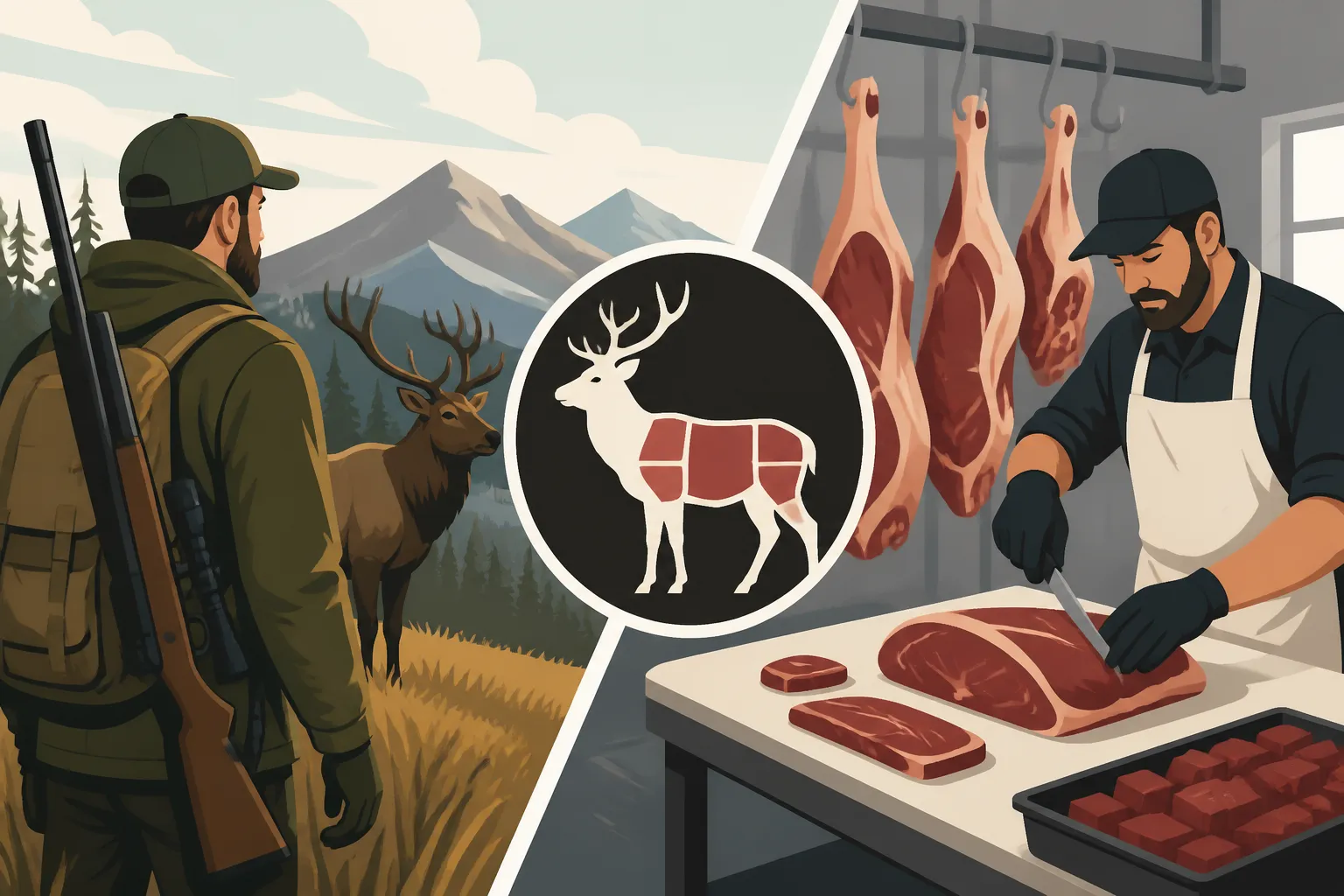
For many hunters, especially those with busy schedules, limited space, or who simply prefer to focus on the hunt itself, a professional game processor is a godsend. The convenience alone is a huge draw: you drop off your field-dressed animal (or quarters), and a few weeks later, you pick up neatly packaged, ready-to-freeze cuts of meat. The time savings are immense.
Beyond convenience, professional butchers bring expertise to the table. They have industrial-grade equipment, including band saws for precise cuts and large grinders for efficient processing. They're skilled at maximizing yield and can create a wide array of specialized products like sausages, jerky, and pepperoni, often using proven recipes. A good processor will also have proper cold storage facilities, ensuring your meat is kept at optimal temperatures throughout the processing period. The main drawback, of course, is the cost. It's an investment, but for many, it's a worthwhile one for the peace of mind, quality, and variety of products received. When planning a hunt, perhaps using platforms like GoHunt for scouting or exploring guided options on BookYourHunt, always factor in your post-harvest plan and budget for processing if you choose this route.
To help visualize the choice, here's a quick comparison:
| Feature | Do-It-Yourself Processing | Professional Butcher Service |
|---|---|---|
| Cost | Lower initial cost, requires tool investment | Higher upfront cost, but includes all labour and materials |
| Time Commitment | Significant time and effort required | Minimal time from hunter, quick drop-off and pickup |
| Skill Level | Requires knowledge of anatomy, cutting, and hygiene | Expert knowledge and specialized equipment |
| Control | Full control over every cut and product | Good communication needed, limited real-time input |
| Equipment | Knives, grinder, saw, cutting board, freezer, packaging | Industrial-grade equipment, walk-in coolers |
| Specialty Items | Possible with home equipment (e.g., sausages if you have a grinder) | Wide range of sausages, jerky, pepperoni available |
| Hygiene/Cooling | Hunter responsible for maintaining proper conditions | Controlled, sanitary environment and refrigeration |
| Convenience | Low, can be physically demanding | High, just drop off and pick up |
Navigating Professional Game Processors in Alberta
If you've decided to go the professional route, great! Now comes the practical side of finding and working with a butcher. Alberta has many excellent game processors, but hunting season brings a rush, and being prepared can save you a lot of headaches.
Finding a Butcher Near Camp or Home
One of the first questions you'll face is whether to get your animal processed near your hunting camp or transport it home first. This decision often hinges on several factors: the distance to your home freezer, the ambient temperature, and your vehicle's cooling capabilities. If you've been hunting deep in the boreal forest or far from civilization, finding a local butcher might be your best bet, especially if temperatures are mild. If you're closer to a town, or if it's consistently cold enough to safely transport the carcass, taking it to your preferred butcher near home might be more convenient in the long run.
My best advice here is always, always call ahead. Many rural butchers are swamped during peak hunting seasons, especially the November rut for deer. Some might stop taking new animals if their capacity is reached, or they might have a long waiting list. A quick phone call before you even head out on your hunt can confirm their availability, hours, and whether they accept whole animals or prefer them quartered. When you're researching potential hunting spots, perhaps using tools like GoHunt, make sure to also look into local services. Some outfitters, who you might find through BookYourHunt, also offer processing services or have established relationships with local butchers they can recommend. Don't forget to consider Alberta's Alberta's CWD Testing Requirements; certain WMUs require mandatory submission of the head for testing, which impacts how you transport and where you process.
What to Expect and Ask Your Processor
When you arrive at the butcher, clear communication is key to getting exactly what you want. Don't assume they know your preferences. Be ready to discuss:
- Standard Cuts: Most processors will offer standard cuts like steaks, roasts, and stew meat. Specify how thick you want your steaks, or if you prefer certain primal cuts left whole.
- Grinding: Nearly all game meat will have some trim that's best ground. You can often specify the fat-to-meat ratio if you want to add pork fat, for example. This is great for burger, chili, or meat sauces.
- Specialty Products: Many butchers excel at making sausages (breakfast, garlic, Italian), pepperonis, jerky, and smokies. These are fantastic ways to utilize all parts of the animal, especially less tender cuts, and they often become family favorites.
- Packaging: Ask about their packaging methods. Freezer paper is common and economical, but vacuum sealing offers superior protection against freezer burn and extends storage life significantly. While it usually comes at an extra cost, it's often worth every penny.
- Turnaround Time: Get an estimate of when your meat will be ready. This is important for managing your freezer space at home and planning your pickup.
- Pricing Structure: Costs vary, but generally, it's either a flat fee per animal, a per-pound charge for boned-out meat, or a combination. Specialty items are almost always extra. Ask for a clear breakdown so there are no surprises.
- CWD Testing: In certain WMUs, chronic wasting disease (CWD) testing is mandatory for deer, moose, and elk. Ask if the butcher facilitates head submission or if you're responsible for dropping it off at a designated CWD freezer location. Understanding Where Alberta's CWD Freezers Are and How Long CWD Results Take is very important.
Don't be shy about asking questions. A good processor will appreciate your interest in your harvest and will be happy to guide you through their options.
Specialized Products and Post-Processing Considerations
Beyond the basic steaks and roasts, your game meat can be transformed into a variety of delicious, ready-to-eat products that will keep your freezer well-stocked and your palate happy all year long. And once you pick up your neatly packaged meat, you still have a few crucial steps to ensure it makes it safely to your table.
Enhancing Your Harvest with Specialty Products
One of the great joys of using a professional game processor is the ability to turn lesser cuts or trim into incredible specialty products. Think about those tougher shoulder cuts or the abundant trim from an elk – they might not make the best steaks, but they're perfect for sausage. Many Alberta processors have their own signature recipes for breakfast sausages, Italian sausage, garlic sausage, smokies, and pepperoni sticks. Imagine pulling a package of homemade deer pepperoni out of your freezer for a quick snack, or serving up a batch of elk breakfast sausage on a frosty morning!
These options often come at an additional cost, which makes sense given the extra ingredients, labour, and specialized equipment involved. However, the value add is immense. It allows you to utilize almost every edible part of the animal, minimizing waste and maximizing your culinary enjoyment. Discuss these options with your butcher, ask about their minimum quantities for certain products, and consider trying a few different things. You might discover a new family favourite! This level of utilization ties back to the ethical hunting principle of Rules on Wasting Game Meat, ensuring no part of your hard-earned animal goes unused.
Storage, Transport, and Regulatory Compliance
You've made the shot, done the field dressing, and the butcher has worked their magic. Now you have a pile of beautifully packaged meat. But the journey isn't quite over. Proper storage and transport are essential to maintain that quality.
Firstly, ensure you have adequate freezer space at home before you pick up your meat. Game meat, especially vacuum-sealed, can last a year or more in a good deep freezer. For transport from the butcher to your home, especially if it's a long drive or a warm day, bring coolers or insulated bags. For very long distances, or if you're traveling across provincial or international borders, consider using dry ice to keep everything solidly frozen.
Finally, remember the regulatory side. In Alberta, if you're transporting game meat that is not yet fully processed or boned out, you must often retain proof of sex or other identifying features of the animal to comply with regulations. Make sure you understand the rules for Transporting Game Meat and Proof of Sex. If you're a non-resident hunter, and especially if you're taking your meat and trophies across the US border, there are very specific regulations regarding packaging, permits, and inspection. Look into Taking Meat and Antlers Home Across the Border and Shipping Meat Home From Alberta well in advance. And, of course, if you submitted your animal for CWD testing, ensure you wait for a negative result before consuming any meat.
Taking care of your game meat after the hunt is a critical part of the entire hunting experience. By understanding your options, asking the right questions, and following through with proper storage, you'll ensure that your hard-earned harvest provides delicious, healthy meals for months to come.
Disclaimer
This article is for general informational purposes only and does not constitute professional advice. Laws, prices and regulations vary by location and change over time. Consult a qualified professional for guidance on your specific situation.